 Sodate
On this page
Mint is the closest thing to an unkillable hydroponic crop: a cutting rooted in plain water and dropped into a Kratky jar or DWC bucket will produce for months. It tolerates a wide pH band (roughly 5.5-7.0) and weak-to-moderate solution (EC 1.0-1.6, and it forgives worse), and hydro even solves mint's famous vice. No soil means no invading the rest of the garden. Give it its own reservoir though: the root mat will strangle anything sharing one.
Key facts
- Mint roots from any stem cutting in plain water within days. You may never need to buy seed or a plant.
- It is the most tolerant common hydro crop: pH anywhere near 5.5-7.0 and EC 1.0-1.6 works, and it shrugs off cool rooms that stop basil cold.
- Hydroponics is arguably the *right* way to grow mint at home. Its invasive runners are physically contained in a jar.
- For soil growing (and the containment warnings that come with it), see /plants/outdoor/mint.
Care requirements#
| Growing method | Kratky jar, DWC bucket, or countertop unit. Mint succeeds in all of them, and even in plain topped-up water |
| Nutrient solution | EC 1.0-1.6 mS/cm of any balanced formula; mint keeps growing (slower) even in half that |
| Solution pH | Happiest 5.5-6.5 but tolerates up to ~7.0. The least pH-fussy herb in home hydro |
| Reservoir temperature | 15-24°C; more cold-tolerant than basil, but warm stagnant water still invites root rot |
| Light | 12-16 hours LED or a bright windowsill; mint tolerates less light than basil at the cost of leggier stems |
| Reservoir management | Full solution change every 2-3 weeks; top up between with water or half-strength solution |
| Root mat control | Mint builds a dense root mass fast. Trim up to a third of the roots at solution changes to keep water moving |
| Containment | Give mint its own reservoir; in shared units its roots overwhelm neighbouring plants' root zones |
| Algae control | Opaque or wrapped vessels; mint's dense canopy shades the jar somewhat but don't rely on it |
| Starting | Root 10cm cuttings in plain water (3-7 days) and transfer; seed is unreliable and rarely worth it |
| Harvest | Cut stems back by half above a leaf pair as often as weekly; regrowth is fast |
| Renewal | Restart from fresh cuttings every 6-12 months as stems get woody |
Growth & propagation#
| Days to harvest | Cuttings give pickable stems in 2-3 weeks; production is continuous after that |
| Growth vs soil | Comparable. Mint grows aggressively either way; hydro just contains it |
| Propagation | Any stem piece with a node roots in water; runners will even root mid-air into the reservoir |
| Productive lifespan | 6-12 months per plant before renewal from cuttings |
| Habit | Sprawling 20-40cm stems; regular cutting keeps it dense |
| Winter behavior | Unlike outdoor mint it won't die back indoors under lights, production is year-round |
Common problems & troubleshooting#
| Symptom | Likely cause | Fix |
|---|---|---|
| Reservoir turns into a solid root mass, water stagnates | Mint's runner-driven root growth outpacing the vessel | Trim a third of the roots at each solution change, or upsize the container; restart from a cutting when it's hopeless |
| Brown slimy roots in summer | Root rot in a warm, oxygen-starved reservoir | Cool and aerate the reservoir, full solution change, trim affected roots, mint usually bounces back |
| Leggy, sparse stems with small leaves | Not enough light | Move under a stronger light or brighter window and cut back hard; regrowth will be denser |
| Neighbouring plants in a shared unit decline | Mint roots colonizing the whole reservoir | Move mint to its own container, it does not share |
| White speckling on leaves, fine webbing | Spider mites. The main indoor pest of mint | Rinse foliage in the sink, raise humidity, and repeat weekly; heavily hit stems just cut off (they regrow) |
Trim before it takes over
Sodate reminds you to harvest and thin the root mat before the jar becomes solid mint.
Seasonal care#
Varieties & cultivars#
| Variety | Distinguishing trait | Note |
|---|---|---|
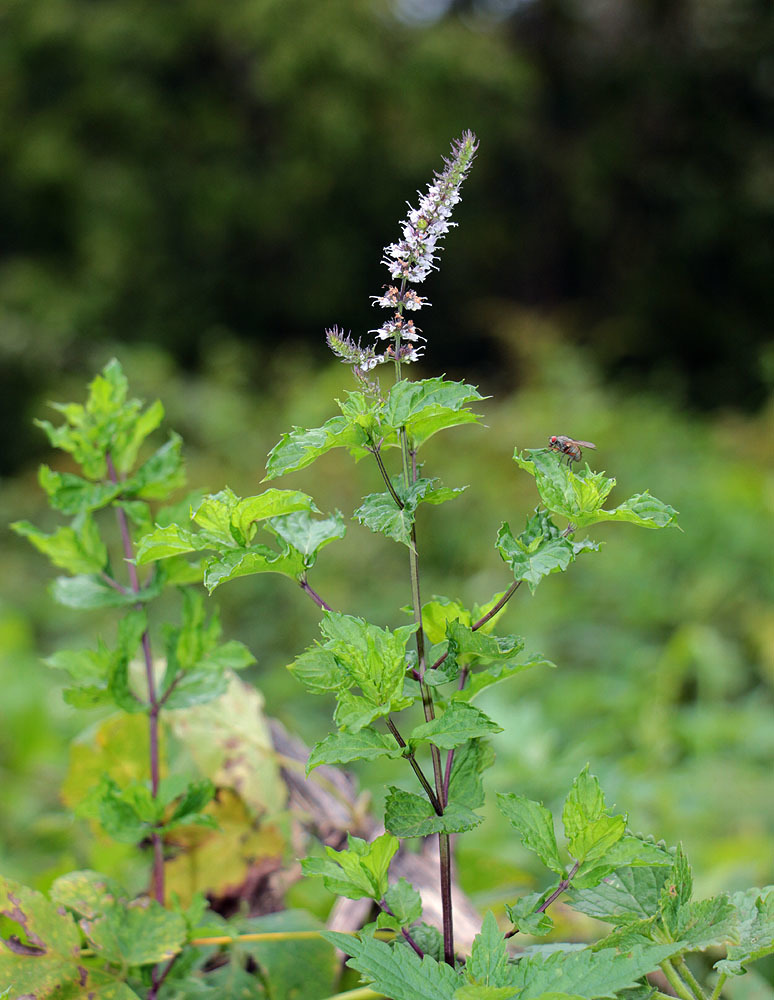
| Spearmint (Mentha spicata) | Classic sweet mint flavor | The default for tea and mojitos |
| Peppermint (M. × piperita) | Stronger menthol punch | Equally easy in water culture |
| Moroccan mint | Fine-leaved spearmint type | The tea-house standard |
| Chocolate mint | Dark stems, after-dinner-mint aroma | Novelty that grows just as aggressively |
Buying checklist#
- A bunch of grocery-store mint is a viable starter. Most stems will root in water
- Any opaque 1L+ jar with a net-pot lid is enough hardware; mint doesn't justify fancy kit
- Buy nutrient anyway: plain water works for weeks but growth thins without feed
- Skip seed: mint seed is unreliable and often not true to the variety pictured
Pricing by region#
| Region | Price range | Typical unit | Basis |
|---|---|---|---|
| US | $15 – $40 | jar setup + nutrient (cutting is free) | DIY Kratky; grocery mint as stock |
| UK | $13 – $38 | jar setup + nutrient | Supermarket mint + hydro basics |
| India | $6 – $24 | jar setup + nutrient | Market pudina bunch roots freely; kit optional |
| Australia | $16 – $46 | jar setup + nutrient | Hydro retail + grocery cutting |
| Canada | $15 – $44 | jar setup + nutrient | DIY jar + nutrient |
USD figures are approximate conversions for comparison; switch the dropdown to see each region's actual local-currency listing price.
Often confused with#
Name confusion warning#
Method page. This covers mint grown hydroponically. For soil growing, and mint's notorious garden invasiveness, see our main mint page.
Where it's actually grown#
Nobody needs to buy a hydroponic mint plant: grocery bunches and garden runners are the universal starting stock. Commercial hydro mint is grown in greenhouse NFT channels for the cut-herb trade, which is why supermarket mint often arrives with root nubs already forming.
Import & biosecurity restrictions#
| Region | Note |
|---|---|
| Australia | Live plant imports restricted under biosecurity law; several Mentha species are also declared environmental weeds regionally, source domestically. |
| US | No restriction; note mint planted outdoors is invasive in most states, another argument for jars. |
| UK | No restriction; ubiquitous. |
| India | No restriction; pudina is an everyday market herb. |
| Canada | No domestic restriction; CFIA permits for commercial imports only. |
Similar plants
Did you know?
Frequently asked questions
Can mint grow in just water?
Yes. Cuttings root and grow in plain water for weeks, but adding dilute hydroponic nutrient (EC 1.0-1.6) keeps leaves large and production going for months.
What pH does hydroponic mint need?
It's the least fussy common herb: 5.5-6.5 is ideal but it tolerates up to about 7.0 without drama.
Can I put mint in my AeroGarden or shared DWC with other herbs?
You can, but you shouldn't. Mint's root mat expands until it crowds out its neighbours. Give it a dedicated jar or unit.
How fast can I harvest?
A rooted cutting gives pickable stems in 2-3 weeks, then continuous weekly harvests; cut stems back by half above a leaf pair.
Is hydroponic mint safe for pets?
Mint is generally safe in tiny nibbles but can cause stomach upset in cats and dogs if they eat a lot; it's not a serious toxin like aroid houseplants.