 Sodate
On this page
Chinese evergreen adapts surprisingly well to permanent water culture: root stem cuttings in a vessel, change the water every 1-2 weeks, and feed a 1/4-strength liquid fertilizer monthly. Growth is slower than soil and the plant stays more compact. Expect an elegant display piece, not a bushy specimen. Aglaonema is fluoride-sensitive, so filtered or rain water prevents leaf-tip burn.
Key facts
- Aglaonema is one of the few larger-leaved houseplants that tolerates indefinite water culture, thanks to its swamp-margin ancestry in Southeast Asia.
- It is sensitive to fluoride and chlorine. Brown leaf tips in water culture usually trace back to tap water, so use filtered, distilled, or 24-hour-rested water.
- A soil plant moved to water sheds most of its soil roots before regrowing water roots; cuttings adapt much faster.
- For conventional soil growing, see /plants/indoor/chinese-evergreen. This page covers only the water method.
Care requirements#
| Growing method | Permanent water culture. Stem cuttings or a transitioned plant kept in water indefinitely |
| Vessel choice | Wide-mouthed opaque or dark vessel; the heavy stems need support, so a narrower neck or glass pebbles help |
| Water change cadence | Full change every 1-2 weeks; rinse roots and vessel each time |
| Nutrients in water | 1/4-strength balanced liquid fertilizer once a month during the growing season; none in winter |
| Algae control | Opaque vessel or regular scrubbing of clear glass; keep out of direct sun |
| Root transition | Moving a soil plant to water means old soil roots partially die and regrow as water roots over 4-8 weeks. Trim mushy roots as they fail |
| Water quality | Fluoride- and chlorine-sensitive: use filtered, distilled, or rain water, or rest tap water 24 hours |
| Light needs | Medium to bright indirect; one of the better low-light candidates for water culture |
| Temperature | 18-27°C (65-80°F); never below 15°C. Cold water chills roots faster than cold soil |
| Water level | Cover roots and the base of the stem only; submerged leaves rot |
| Toxicity | Toxic to cats, dogs, and humans (calcium oxalates). Same as the potted plant |
Growth & propagation#
| Growth rate in water | Slow. Noticeably slower than the already-unhurried soil plant |
| Mature size in water | Usually stays 30-50cm; rarely reaches potted size |
| Propagation | Stem cuttings root directly in the display vessel in 3-6 weeks |
| Refresh cycle | Restart from fresh cuttings every 2-3 years as stems get leggy |
| Root appearance | Healthy water roots are white-pink and firm |
| Pruning | Remove yellowing lower leaves at the stem |
Common problems & troubleshooting#
| Symptom | Likely cause | Fix |
|---|---|---|
| Brown, crispy leaf tips | Fluoride or chlorine in tap water. Aglaonema is notably sensitive | Switch to filtered, distilled, or rested water at every change |
| Stem base turning soft and dark | Stale water or leaves sitting below the waterline | Change water more often, lower the level so only roots and stem base are submerged, cut away rot |
| Plant collapses weeks after moving from soil | Soil root die-back outpacing new water-root growth | Trim dead roots, keep water fresh and warm; or restart from a stem cutting |
| Green film on glass and roots | Algae. Light plus dissolved nutrients | Opaque vessel, or scrub at each water change and move out of sun |
| Pale, small new leaves | Nutrient starvation in plain water | Dose 1/4-strength liquid fertilizer monthly in the growing season |
Water changes, on schedule
Sodate tracks each vessel's change cadence so the water never goes stale.
Seasonal care#
Varieties & cultivars#
| Variety | Distinguishing trait | Note |
|---|---|---|
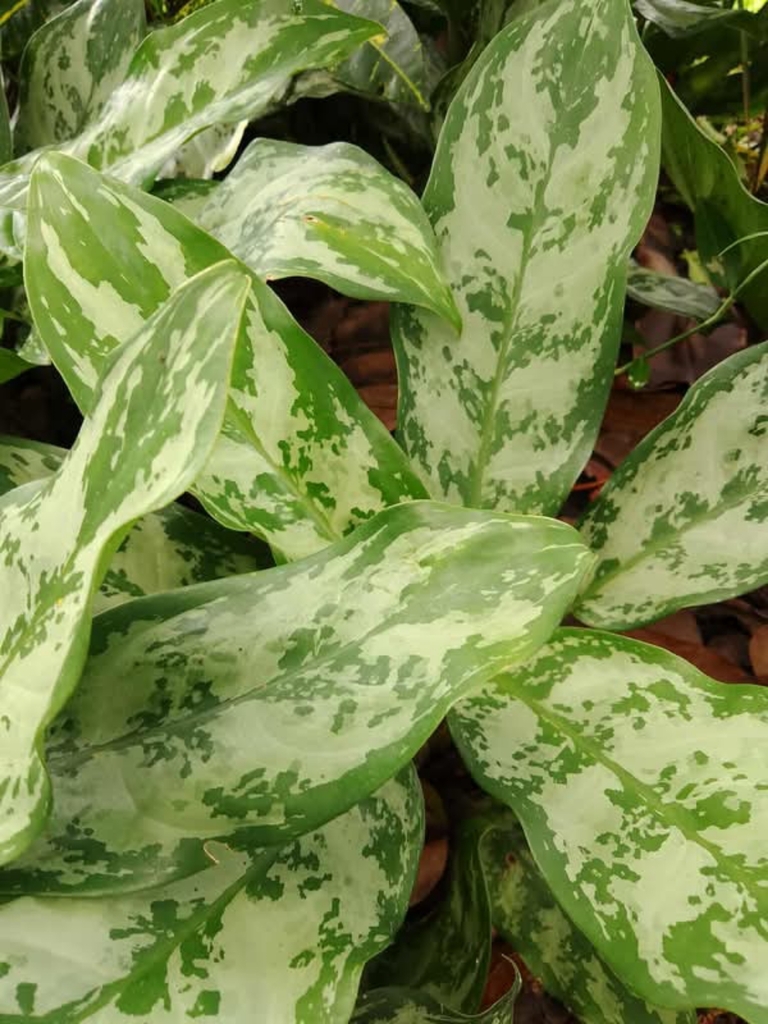
| Silver Bay | Broad silver-centred leaves | Classic choice and reliable in water |
| Red Siam / Siam Aurora | Red-edged foliage | Needs brighter light to hold colour in water culture |
| Maria | Dark green with silver banding | Among the most low-light tolerant |
Buying checklist#
- A stem cutting with a few leaves is enough to start. No need to buy a large plant
- If transitioning a potted plant, pick one with several stems so you can spare a cutting as backup
- Choose an opaque vessel heavy enough not to tip under the leaf canopy
- Have filtered or distilled water on hand. Tap water is this species' weak point
Pricing by region#
| Region | Price range | Typical unit | Basis |
|---|---|---|---|
| US | $5 – $25 | starter plant/cutting + vessel + nutrient | Small aglaonema retail + jar + liquid feed |
| UK | $5 – $22 | starter plant + vessel + nutrient | Garden centre + homewares |
| India | $1 – $5 | starter plant + bottle + feed | Nursery aglaonema is cheap and common |
| Australia | $7 – $26 | starter plant + vessel + nutrient | Nursery + homewares retail |
| Canada | $6 – $26 | starter plant + vessel + nutrient | Garden centre + jar + feed |
USD figures are approximate conversions for comparison; switch the dropdown to see each region's actual local-currency listing price.
Often confused with#
Name confusion warning#
Method page, not a species page. This is ordinary Chinese evergreen (Aglaonema) kept permanently in water. For potted care, cultivars, and pricing of the plant itself, see our main Chinese evergreen page.
Where it's actually grown#
Retail aglaonema is mass-produced in soil in Florida, Thailand, and Chinese nurseries; water culture is a home conversion. Some European 'hydroculture' suppliers sell aglaonema pre-adapted to LECA and water at roughly double the soil-plant price.
Import & biosecurity restrictions#
| Region | Note |
|---|---|
| Australia | Live plant imports restricted under biosecurity law; buy domestically and convert to water at home. |
| US | No restriction; aglaonema widely available. |
| UK | No restriction; hydroculture specimens occasionally imported from the Netherlands. |
| India | No restriction; aglaonema is a nursery staple. |
| Canada | No domestic restriction; CFIA permits for commercial imports only. |
Similar plants
Did you know?
Frequently asked questions
Can Chinese evergreen live permanently in water?
Yes. With water changes every 1-2 weeks and monthly dilute fertilizer it lives for years, though it grows slower and stays smaller than in soil.
Why are the leaf tips turning brown in water?
Almost always fluoride or chlorine. Aglaonema is sensitive to both, so switch to filtered, distilled, or 24-hour-rested water.
Can I move my potted Chinese evergreen straight into water?
Yes, but rinse all soil off and expect the old roots to partially die back over 4-8 weeks while water roots regrow; a stem cutting adapts faster.
How often should I change the water?
Fully every 1-2 weeks, rinsing the roots and vessel; stale water is the main cause of rot.
Is it safe for pets?
No. Chinese evergreen contains calcium oxalate crystals and is toxic to cats and dogs, in water or in soil.