 Sodate
On this page
Keep the roots covered with 2-5cm of water in a vase with pebbles, change the water fully every 1-2 weeks, and use filtered, distilled, or rain water. Dracaenas are sensitive to the fluoride and chlorine in tap water, which browns the leaf tips. Medium indirect light, no direct sun. Despite the name it is a Dracaena, not a bamboo, and it IS toxic to cats and dogs. $5-$25 for typical arrangements.
Key facts
- It's a Dracaena from the rainforest understory of Central Africa (Cameroon region). Completely unrelated to true bamboo, which is a grass.
- It grows for years in plain water, which is why it's sold in vases; it can also be potted in soil, where it actually grows faster.
- Dracaenas are notably fluoride-sensitive: fluoridated tap water is the usual cause of brown leaf tips.
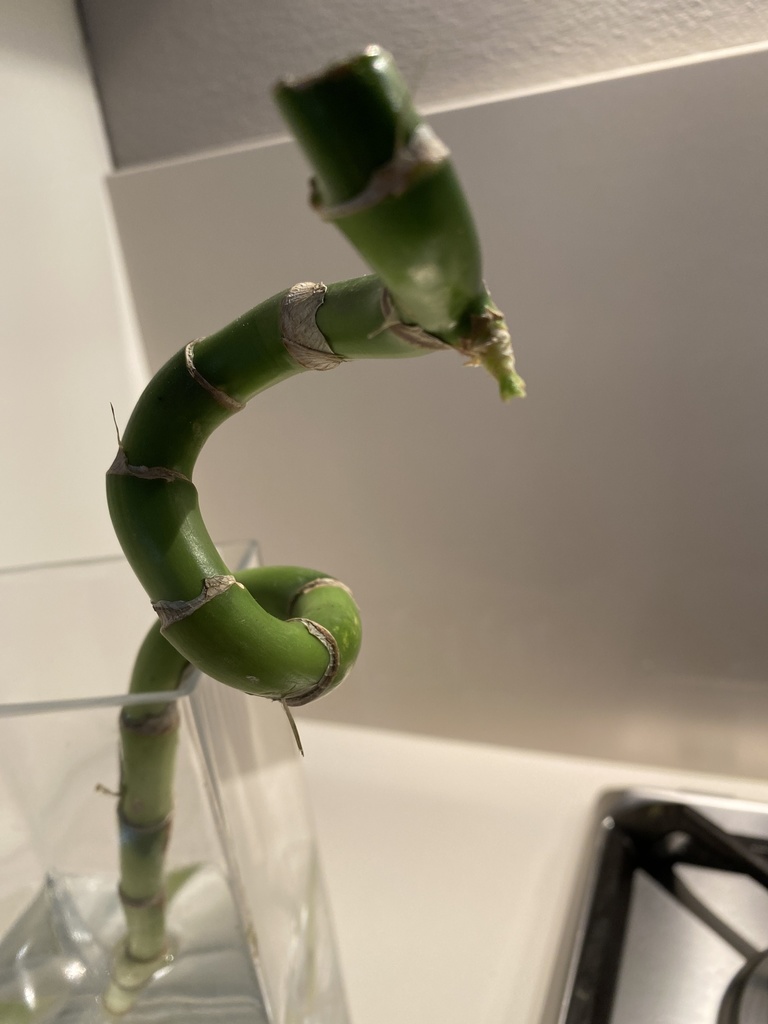
- The spirals and braids it's famous for are trained by growers rotating plants against a light source. They don't grow that way naturally.
- Toxic to cats and dogs (saponins), despite the innocent gift-plant image. A real issue since cats love chewing the strappy leaves.
Care requirements#
| Plant type | Water-grown houseplant (can also be potted in soil; outdoors only in USDA 10-12) |
| Growing medium | Vase of water with pebbles or glass stones to hold the stalks upright. Roots submerged, stalks mostly above water |
| Water level | Keep 2-5cm of water above the roots; don't submerge more of the stalk than necessary (deeper = rot risk) |
| Water changes | Full change every 1-2 weeks; top up with fresh water in between and rinse pebbles when slimy |
| Water quality | Filtered, distilled, or rain water strongly preferred. Fluoride and chlorine in tap water cause brown leaf tips; at minimum let tap water sit out 24 hours |
| Light needs | Medium to bright indirect light; tolerates low light; direct sun scorches the leaves |
| Temperature range | 18-32°C (65-90°F); keep above 13°C (55°F) and away from cold drafts and AC vents |
| Humidity | Ordinary household humidity is fine |
| Fertilizer | A drop of very dilute liquid feed (1/10 strength) every 1-2 months. Over-feeding in water burns roots and feeds algae |
| Vase hygiene | Wash the vase and pebbles at each water change to control algae; an opaque vase slows algae growth |
| Pruning | Trim shoots just above a node; the cut shoots root easily in water |
| Toxicity | Toxic to cats and dogs (vomiting, drooling, dilated pupils in cats); keep out of reach |
Growth & propagation#
| Mature size | Stalks sold at 10-100cm; shoots add 20-30cm+ per year in good light |
| Growth rate | Moderate in water, faster in soil |
| Propagation methods | Cut a healthy shoot below a node and stand it in fresh water; roots appear in 2-4 weeks |
| Propagation difficulty | Easy: nearly every cutting takes |
| Training | Spirals form only under grower rotation against a one-sided light source over months |
| Repotting/refresh | Move to a larger vase when roots crowd it; trim mushy roots at water changes |
Common problems & troubleshooting#
| Symptom | Likely cause | Fix |
|---|---|---|
| Stalk turning yellow from the bottom up, soft to the touch | Stalk rot. Old water, too-deep submersion, or a stalk that arrived damaged | A yellow, mushy stalk won't recover: cut healthy green tops off above a node and re-root them in clean water; discard the rotten section |
| Brown, dry leaf tips | Fluoride/chlorine in tap water, or fertilizer burn | Switch to distilled, filtered, or rain water and cut feeding back to 1/10 strength every couple of months |
| Green film on vase, pebbles, and roots | Algae. Light plus nutrients in the water | Scrub vase and pebbles, change water fully, move to an opaque container or out of direct light |
| Pale, stretched new growth leaning hard toward the window | Too little light | Move to brighter indirect light and rotate the vase a quarter turn weekly |
| Sudden leaf yellowing after a water change | Cold or heavily chlorinated water shock | Use room-temperature, rested or filtered water for changes |
Fresh water on schedule, not when it smells
Sodate reminds you when the vase is due for a full water change, before algae and rot get a foothold.
Seasonal care#
Varieties & cultivars#
| Variety | Distinguishing trait | Note |
|---|---|---|
| 'Ribbon' / plain green | Solid green strappy leaves | The standard vase form |
| 'White Stripe Victory' | White-edged variegated leaves | Common in braided arrangements |
| 'Gold' / yellow-stripe forms | Yellow-margined leaves | Needs a bit more light to hold variegation |
| Spiral-trained stalks | Corkscrew stems | A training style, not a cultivar, grown rotated against light |
Buying checklist#
- Stalks are firm and evenly green top to bottom. No yellow or brown sections
- Roots are orange-to-red or white and firm, not black and slimy
- Water in the display vase is clear, not murky or smelly
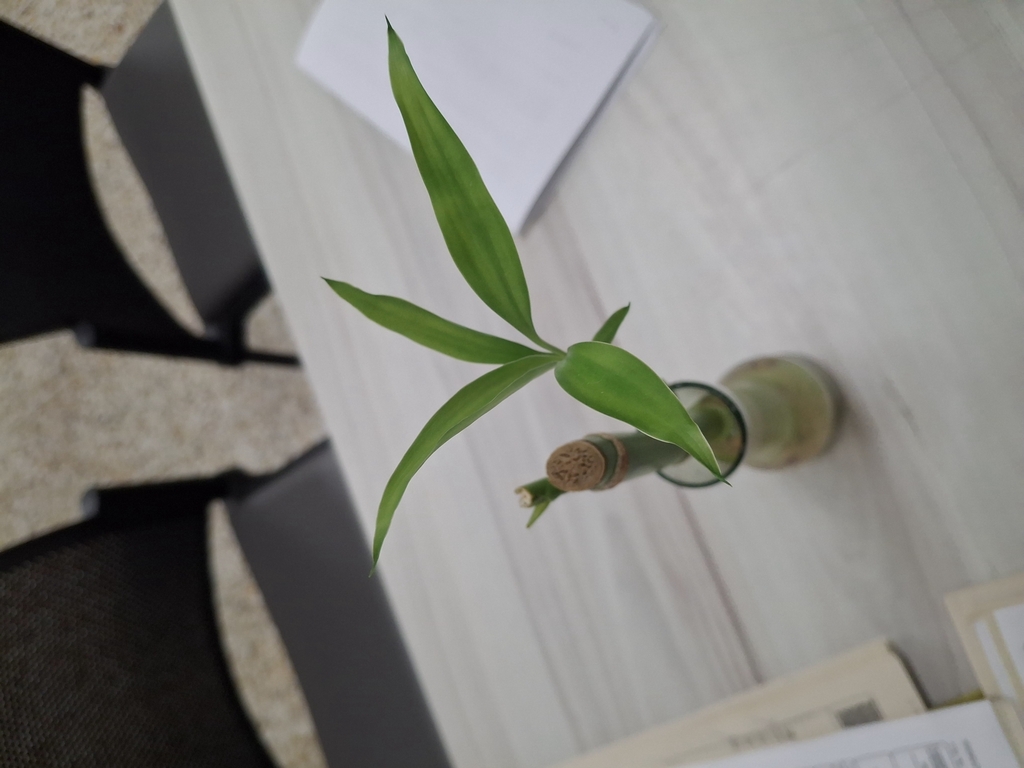
- Wax-capped tops are fine (growers seal cuts); mold under the wax is not
Pricing by region#
| Region | Price range | Typical unit | Basis |
|---|---|---|---|
| US | $5 – $25 | 3-10 stalk arrangement | Supermarket, florist + online |
| UK | $5 – $25 | arrangement with vase | Supermarket + garden centre |
| India | $1 – $8 | 3-7 stalk arrangement | Nursery, gift shop + online. Hugely popular gift plant |
| Australia | $7 – $26 | arrangement | Nursery + florist |
| Canada | $5 – $26 | arrangement | Supermarket + florist |
USD figures are approximate conversions for comparison; switch the dropdown to see each region's actual local-currency listing price.
Often confused with#
Name confusion warning#
Not a bamboo. And not pet-safe. Lucky bamboo is Dracaena sanderiana, an African dracaena, and unlike true bamboo (which is non-toxic) it is toxic to cats and dogs. The friendly name leads pet owners to assume it's harmless; it isn't.
Where it's actually grown#
Almost the entire world supply is farm-grown in southern China and Taiwan, where stalks are cut, trained into spirals and braids, wax-capped, and exported bare in the millions to florists and supermarkets worldwide.
Import & biosecurity restrictions#
| Region | Note |
|---|---|
| US | No restriction on domestic sale; imported stalks enter with phytosanitary certificates (shipments in water gel have historically drawn scrutiny for mosquito larvae). |
| UK | No specific restriction; imported stock needs standard phytosanitary paperwork. |
| Australia | Live plant imports restricted under biosecurity law; domestic stock is available from nurseries. |
| India | No restriction; one of the most popular gift plants in the country. |
| Canada | CFIA permits required for commercial imports; widely available at retail. |
Similar plants
Did you know?
Frequently asked questions
Is lucky bamboo safe for cats and dogs?
No. It's a Dracaena, and dracaenas are toxic to cats and dogs, causing vomiting, drooling, and in cats dilated pupils. Keep it well out of reach.
How often should I change lucky bamboo water?
Do a full change every 1-2 weeks with filtered, distilled, or rested tap water, rinsing the vase and pebbles to keep algae down.
Why is my lucky bamboo turning yellow?
A yellow, softening stalk is rot (old water or deep submersion) and won't recover. Cut the healthy green top off above a node and re-root it. Yellow or brown leaf tips alone usually mean fluoridated tap water; switch to filtered or distilled.
Is lucky bamboo real bamboo?
No. It's Dracaena sanderiana from Central Africa. True bamboo is a grass and can't grow in a vase of water.
Can lucky bamboo grow in soil?
Yes, and it actually grows faster in well-draining potting mix kept lightly moist. The vase-of-water style is a florist convention, not a requirement.