 Sodate

On this page
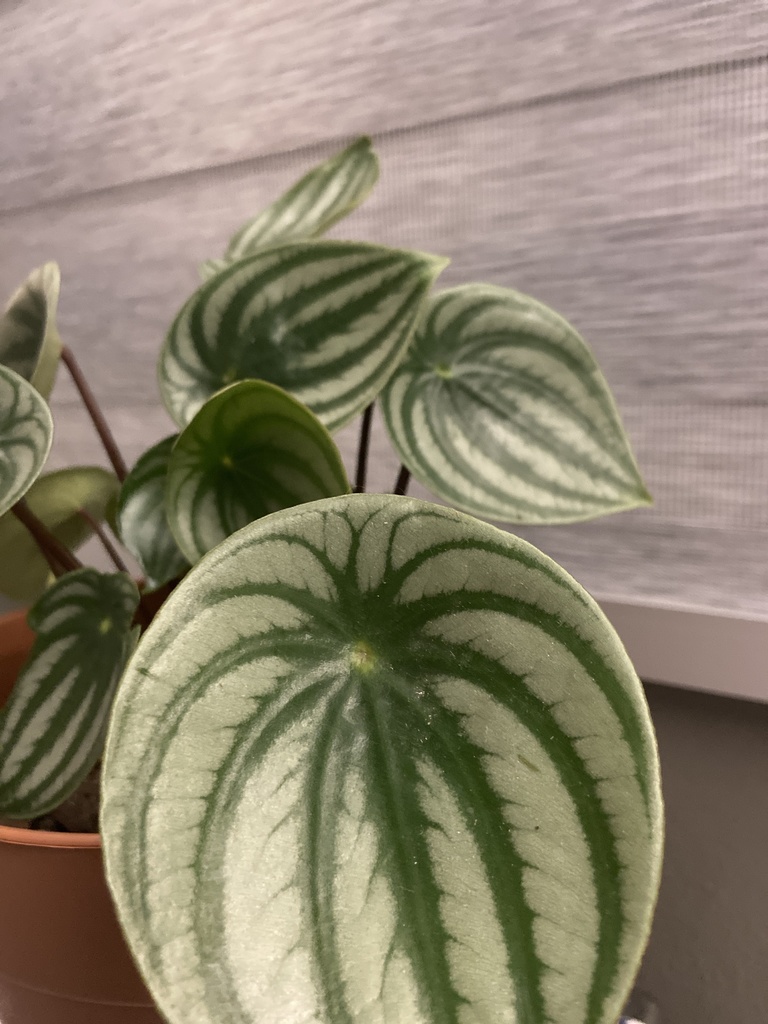
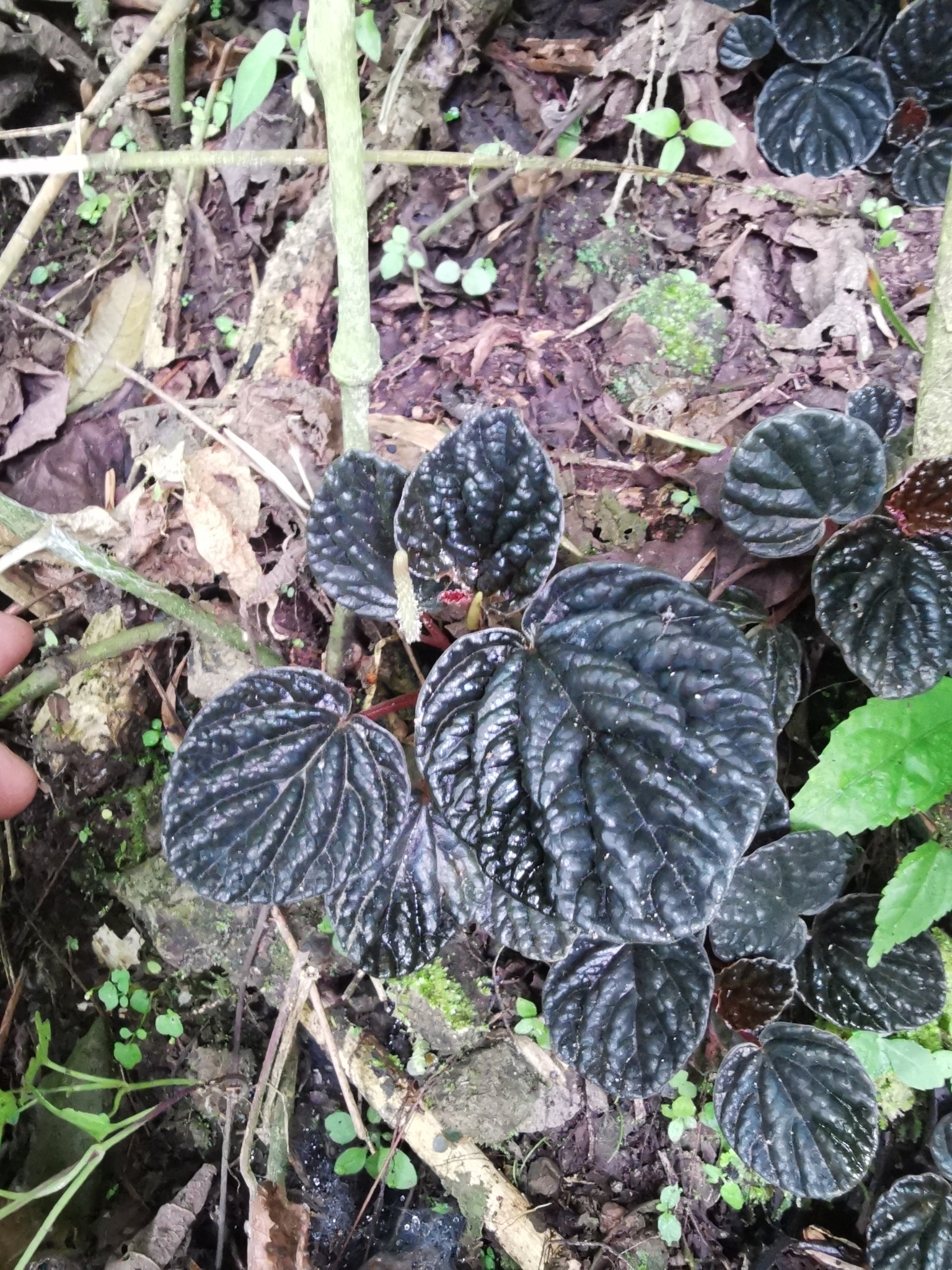
Frost is a Peperomia caperata selection whose leaves are overlaid with reflective silver tissue. Because that silvery layer reflects light away from the chlorophyll beneath, Frost needs brighter indirect light than a plain green peperomia and grows more slowly. But it keeps every bit of the genus' pet-safety and drought tolerance. Water only when the top half of the pot is dry, and expect $8-$22. Genus guide: Peperomia.
Key facts
- Frost's silver is structural, not pigment: air spaces beneath a translucent epidermis reflect light back before it reaches the chlorophyll, which is why the plant needs brighter conditions than a plain green peperomia to photosynthesise at the same rate.
- It is non-toxic to cats, dogs and humans, exactly like every other Peperomia. An unusual combination of pet safety with a striking silvery look.
- Unlike a variegated cultivar, Frost does not 'revert' to green. In poor light the silver simply looks duller and the leaf stalks stretch, and it recovers when moved somewhere brighter.
- Grown too dark it goes leggy rather than losing colour, which is a genuinely different failure mode from variegated houseplants.
Care requirements (and how Frost differs from a green peperomia)#
| Plant type | Indoor compact semi-succulent perennial; a silvery cultivar of Peperomia caperata |
| Genus page | Peperomia (baby rubber plant). Genus care and pet-safety baseline |
| Growing medium | Airy mix. Houseplant compost cut roughly half-and-half with perlite or fine bark |
| Light needs | Bright indirect light, brighter than a plain green peperomia needs, because the silvery surface reflects much of the light away. No direct midday sun |
| Water frequency | Every 7-14 days, only when the top half of the pot is dry. The deep leaf corrugations trap water, so water at the soil, not over the foliage |
| Humidity | 40-50%; average room humidity is fine |
| Temperature range | 18-26°C (65-79°F); keep above 12°C |
| Fertilizer | Half-strength balanced liquid feed every 6-8 weeks in spring and summer only |
| Soil pH | 6.0-6.6 |
| Drainage needs | Very high; the dense rosette of stalks at the crown rots quickly if water sits there |
| Pot recommendation | Small, shallow pot with drainage; terracotta suits it because it dries faster |
| Toxicity | Non-toxic to cats, dogs and humans |
Growth & propagation#
| Mature size | 20-25cm tall and wide, staying naturally compact. Slightly smaller than a mature Peperomia obtusifolia |
| Growth rate | Slow, and slower than green peperomias because of the light-reflecting leaf surface |
| Propagation methods | Leaf cuttings: take a leaf with 2-3cm of stalk and insert it into moist mix; plantlets form at the base |
| Propagation difficulty | Beginner-friendly, though plantlets from Frost take longer to appear than from green cultivars |
| Repotting schedule | Every 2-3 years; it flowers and grows better slightly rootbound |
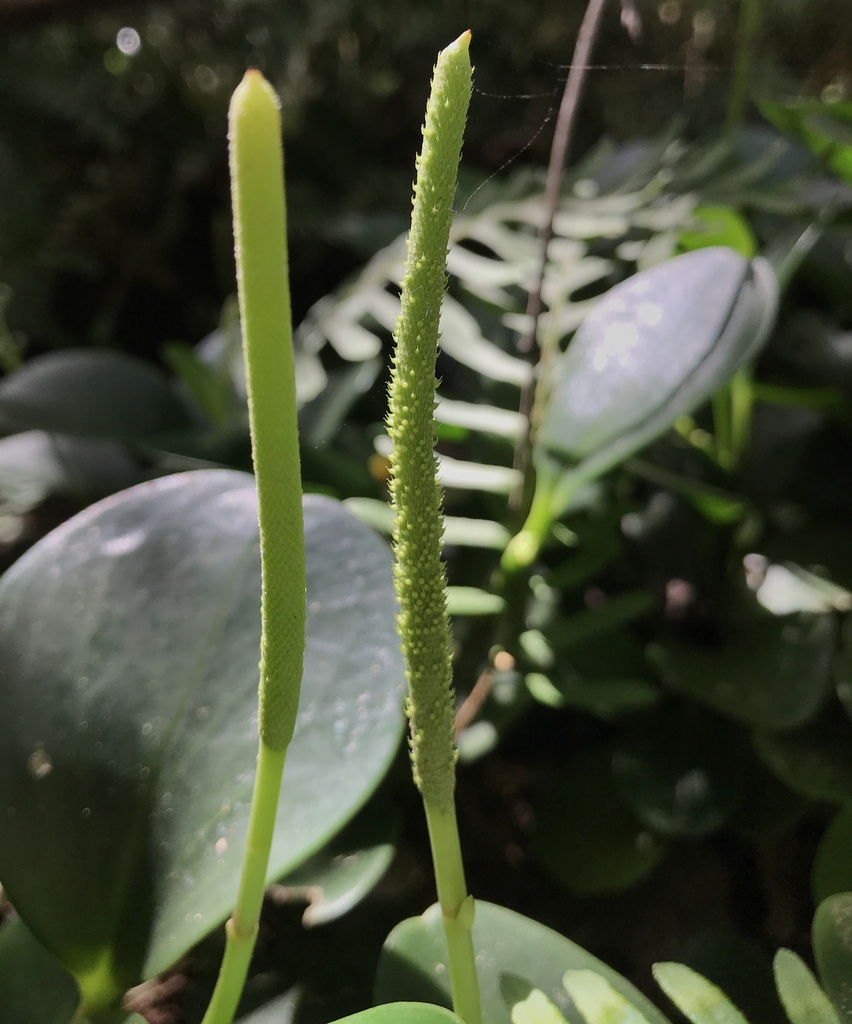
| Flowering | Produces thin greenish-white flower spikes; harmless but they divert energy, so many growers snip them off |
Common problems & troubleshooting#
| Symptom | Likely cause | Fix |
|---|---|---|
| Long bare leaf stalks with the rosette opening up and flopping | Insufficient light. Frost's main failure mode, since it needs more light than green peperomias | Move to a brighter position with strong indirect light and prune the stretched stalks back to the base |
| Crown turns black and mushy and leaves collapse together | Crown rot from water pooling in the dense rosette or from overwatering | Water at the soil line only, never over the leaves; salvage healthy leaves as cuttings, as a rotted crown cannot be saved |
| Silvery sheen looks dull and grey | Dust on the leaf surface, or low light | Wipe the leaves gently with a soft dry brush (not a wet cloth, which marks the ridges) and move it brighter |
| Pale scorched patches on the upper leaf surface | Direct sun; the thin silvery epidermis burns readily | Filter the light with a sheer curtain or move back from the glass |
| Leaves drop suddenly without rotting | Cold shock from a draught or a chilly windowsill | Move somewhere consistently above 15°C, away from doors and single glazing |
Small plant, narrow watering window
Sodate spaces Frost's watering quests around its semi-succulent leaves so you stop rotting it at the crown.
Seasonal care#
Varieties & cultivars#
| Variety | Distinguishing trait | Note |
|---|---|---|
| Peperomia caperata 'Frost' (this plant) | Silvery-white corrugated heart leaves | The brightest silver of the caperata group |
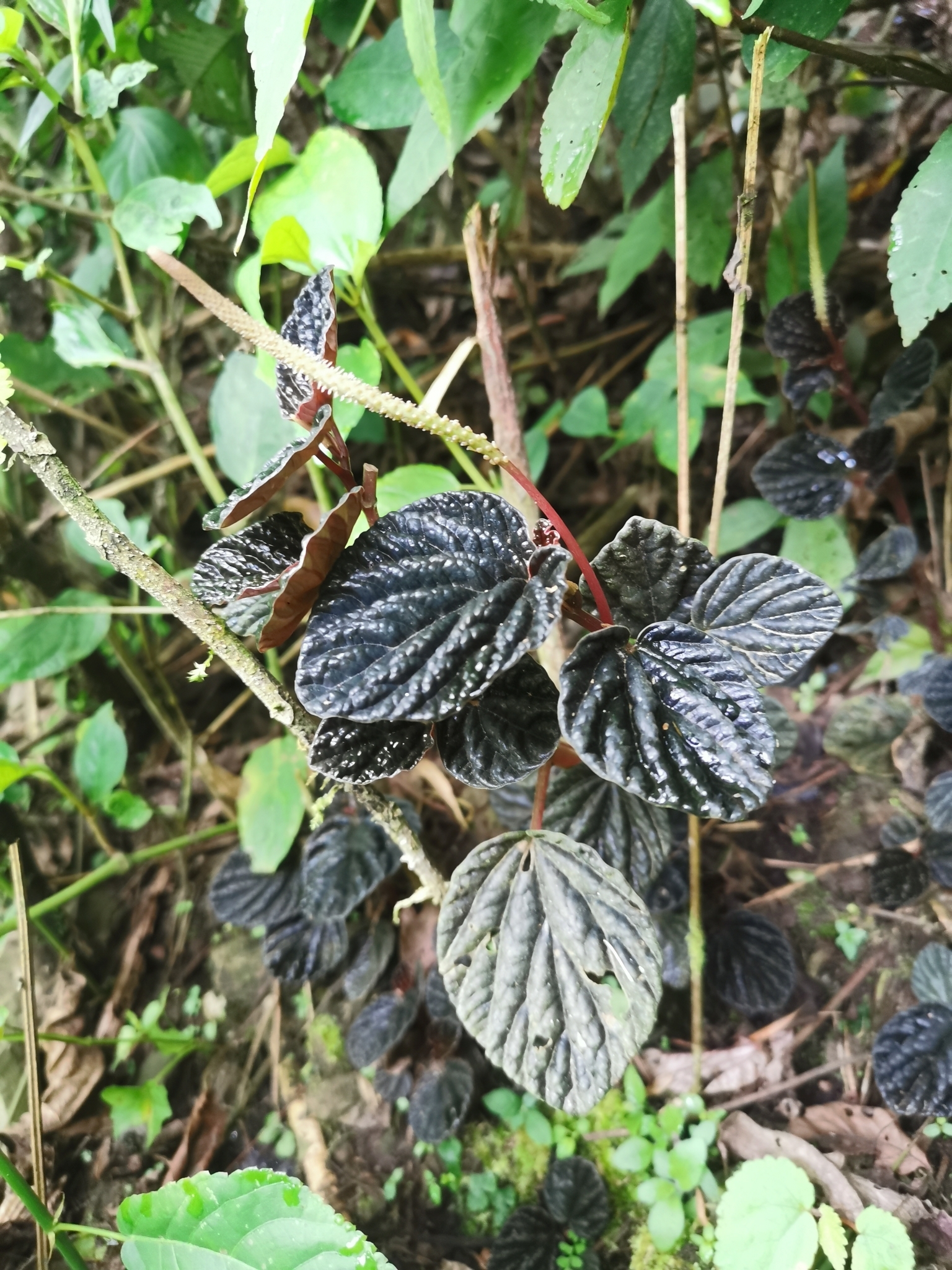
| Peperomia caperata 'Rosso' | Dark green corrugated leaves with deep red undersides | Same species, opposite colouring. See the Rosso guide |
| Peperomia caperata 'Emerald Ripple' | Deep green rippled leaves | The original caperata form; more shade-tolerant than Frost |
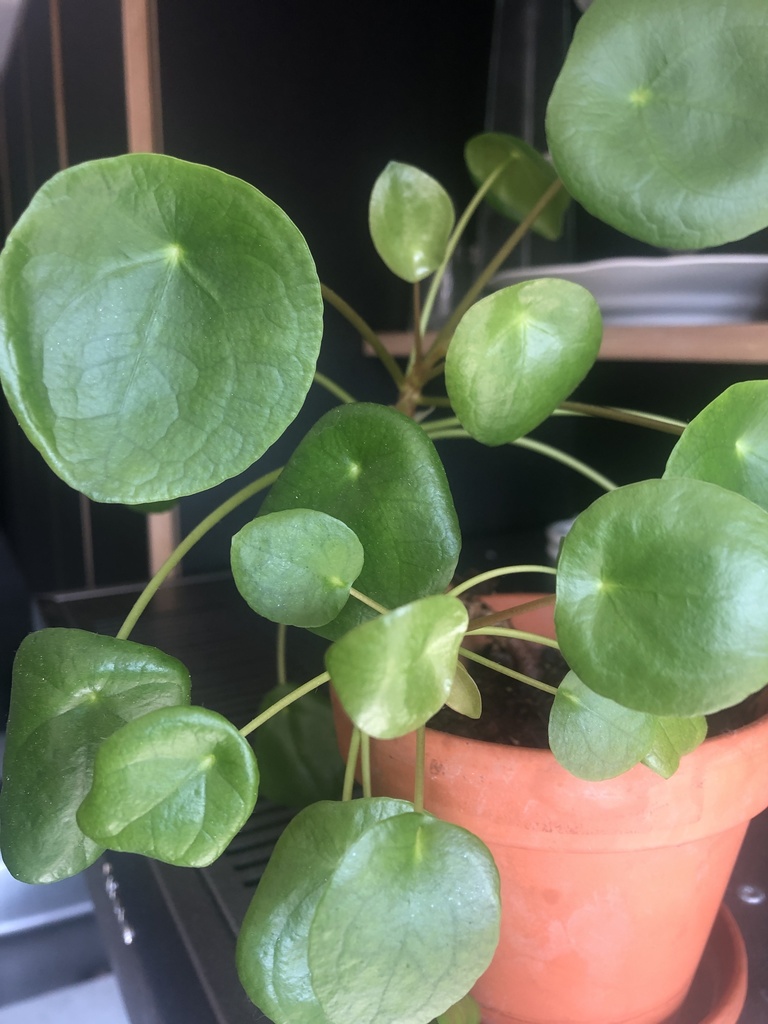
| Peperomia obtusifolia | Thick, smooth, glossy plain green leaves | The genus' easiest and cheapest member |
Buying checklist#
- Silver sheen is bright and even, not dull grey. Dullness usually means the plant was grown too dark
- The rosette is dense with many stalks emerging from the crown, not a few stretched ones
- No dark, soft tissue at the very centre of the crown, where rot always starts
- Mix is on the dry side rather than saturated
- Leaves are firm and turgid to a gentle press
Pricing by region#
| Region | Price range | Typical unit | Basis |
|---|---|---|---|
| US | $8 – $22 | 4in pot | Big-box + nursery retail |
| UK | $8 – $20 | 10-12cm pot | Garden centre retail |
| India | $3 – $9 | 4in pot | Urban nursery retail |
| Australia | $10 – $25 | 100-125mm pot | Nursery retail |
| Canada | $9 – $24 | 4in pot | Garden centre retail |
USD figures are approximate conversions for comparison; switch the dropdown to see each region's actual local-currency listing price.
Often confused with#
Where it's actually grown#
Frost is mass-produced from leaf cuttings in Dutch, Central American and Southeast Asian greenhouses and finished by regional growers. Because the cultivar propagates true from leaf cuttings, unlike chimeral variegates, production is cheap and prices stay close to those of green peperomias.
Import & biosecurity restrictions#
| Region | Note |
|---|---|
| Australia | Live plant imports restricted under biosecurity law; readily available from domestic growers. |
| US | Domestic sale unrestricted; imports need a USDA phytosanitary certificate. |
| UK | Plant health certificates required for imports; domestic sale unrestricted. |
| India | No restriction; grows well indoors but needs protection from harsh direct sun. |
| Canada | CFIA import permit required for commercial imports; domestic sale unrestricted. |
Similar plants
Ranked in these guides
Did you know?
Frequently asked questions
How is Peperomia Frost different from a normal peperomia?
Frost has deeply corrugated heart-shaped leaves covered in a reflective silver layer. That layer bounces light away from the chlorophyll, so Frost needs brighter indirect light and grows more slowly than a plain green peperomia.
Is Peperomia Frost safe for cats and dogs?
Yes. Peperomia caperata 'Frost' is non-toxic to cats, dogs and humans, like the entire Peperomia genus.
Why is my Peperomia Frost getting leggy?
Not enough light. Unlike variegated plants it will not turn green, but the leaf stalks stretch and the rosette opens up. Move it brighter and cut the stretched stalks back to the base.
How often should I water Peperomia Frost?
Every 7-14 days, and only once the top half of the pot is dry. Water at the soil line rather than over the leaves, since water pooling in the rosette causes crown rot.
Can I propagate Peperomia Frost from a leaf?
Yes. Take a leaf with two or three centimetres of stalk, insert it into moist gritty mix, and keep it warm and bright; plantlets form at the base over several weeks.