 Sodate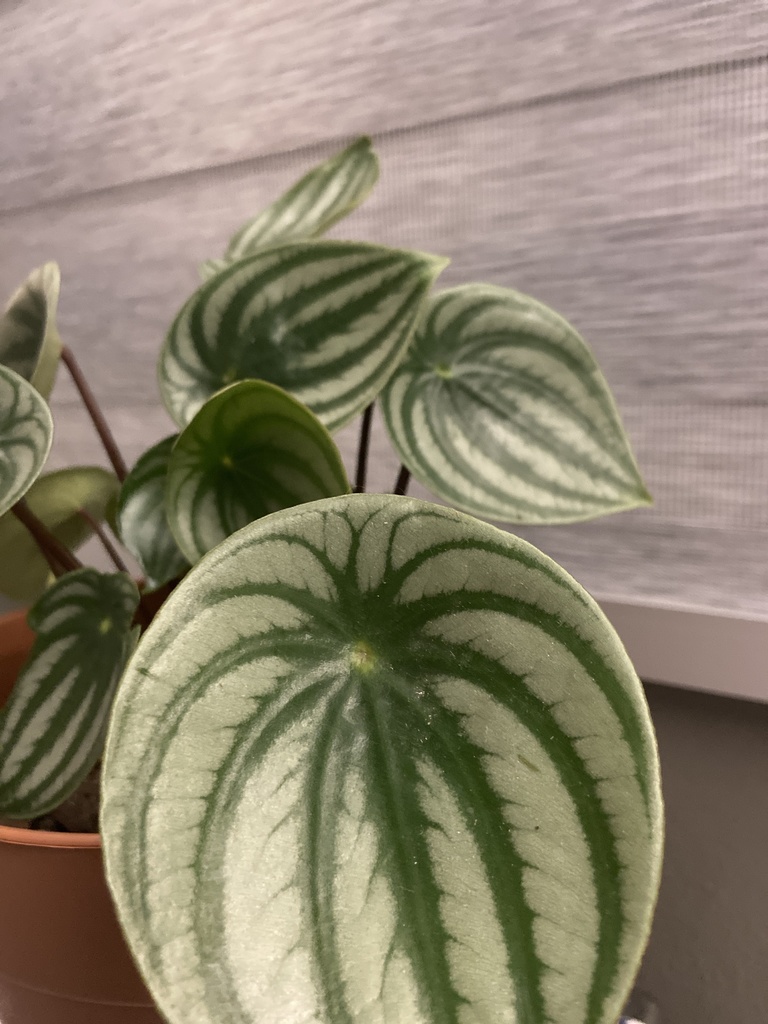
On this page
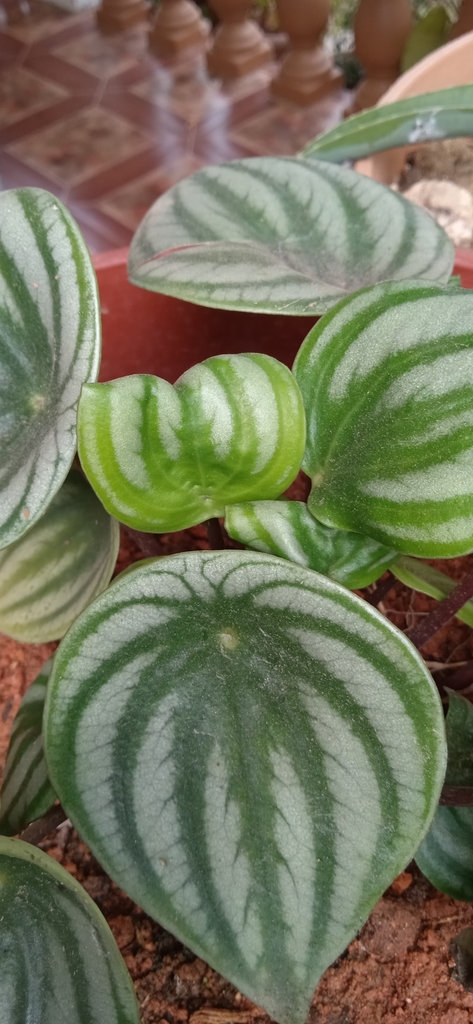
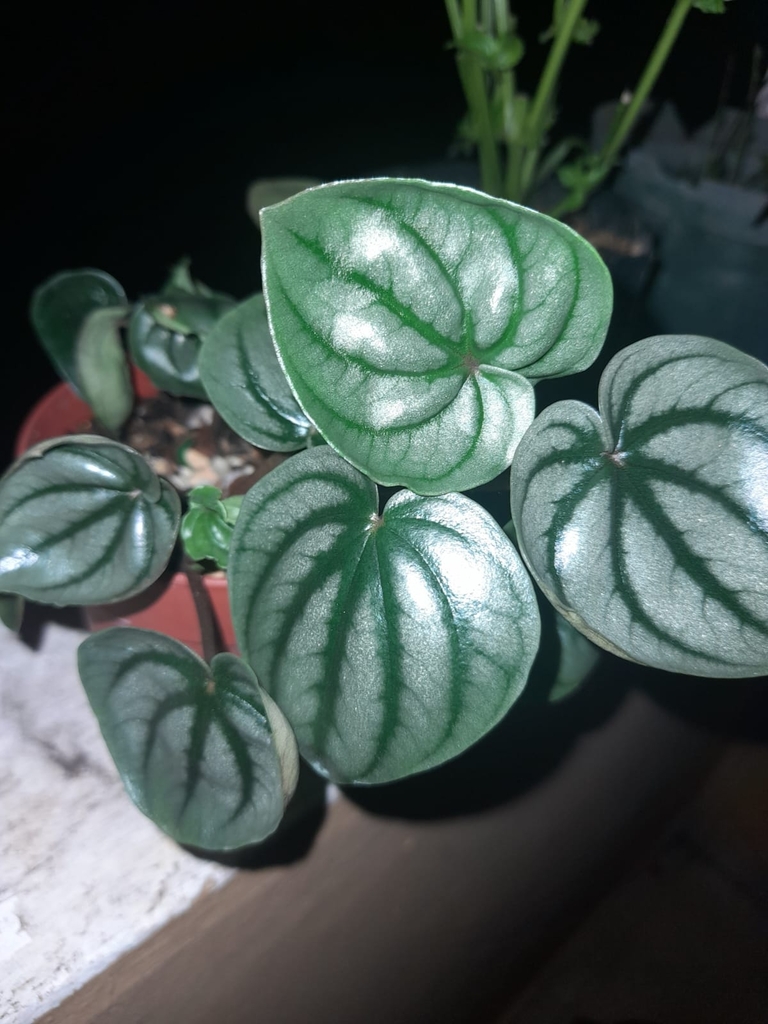
Watermelon peperomia is pet-safe, stays under 30cm, and stores water in its thick leaves. Which means the fastest way to kill it is overwatering. Let the top half of the pot dry out between waterings, give it bright indirect light to keep the silver banding crisp, and propagate it from a single leaf cut in half. Typical price is $8-$20.
Key facts
- Non-toxic to cats, dogs and humans. The whole Peperomia genus is on the ASPCA safe list, which makes it a genuinely worry-free choice for pet homes.
- The leaves are semi-succulent water stores, so the plant handles a missed watering far better than an extra one; soggy mix causes stem rot within days.
- It can be propagated from a single leaf cut crosswise in half, with the cut edge pushed into moist mix. The whole cut surface produces plantlets.
- The silver bands are structural, produced by air pockets under the leaf surface, and they fade to plain green when the plant is grown too dark.
Care requirements#
| Plant type | Indoor compact semi-succulent perennial; epiphytic in its native Brazilian forests |
| Genus page | Peperomia (baby rubber plant). Shared genus care and pet-safety notes |
| Growing medium | Light, airy mix. Houseplant compost cut roughly half-and-half with perlite or fine bark |
| Light needs | Bright indirect light. Too little and the silver banding fades and the stalks stretch; direct midday sun scorches the leaves |
| Water frequency | Every 7-14 days. Only when the top half of the pot is dry. Water less in winter |
| Humidity | 40-50%; ordinary room humidity is fine, unlike calatheas |
| Temperature range | 18-26°C (65-79°F); keep above 12°C and away from cold glass |
| Fertilizer | Half-strength balanced liquid feed every 6-8 weeks in spring and summer only |
| Soil pH | 6.0-6.6 |
| Drainage needs | Very high. This plant's shallow roots rot faster than almost any other common houseplant |
| Pot recommendation | Small, shallow pot with drainage holes; terracotta helps because it dries faster |
| Toxicity | Non-toxic to cats, dogs and humans |
Growth & propagation#
| Mature size | 20-30cm tall and wide. A naturally compact desk or shelf plant |
| Growth rate | Slow to moderate; a handful of new leaves per season |
| Propagation methods | Leaf cuttings. Cut a mature leaf in half across the veins and press the cut edge into moist mix; also propagates from a whole leaf with its petiole |
| Propagation difficulty | Beginner-friendly, though plantlets take 4-8 weeks to appear |
| Repotting schedule | Every 2-3 years; it flowers and grows better when slightly rootbound in a small pot |
| Pruning needs | Remove leggy stalks and spent leaves at the base to keep the mound dense |
Common problems & troubleshooting#
| Symptom | Likely cause | Fix |
|---|---|---|
| Leaves suddenly go limp and stems turn dark and mushy at soil level | Overwatering and stem rot. By far the most common cause of death | Cut off healthy leaves immediately and re-root them; the rotted crown cannot be saved. Repot survivors into gritty, fast-draining mix |
| Long bare stalks with leaves only at the tips | Insufficient light making the petioles stretch | Move to a brighter position with bright indirect light and prune the stretched stalks back to the base |
| Silver banding fading toward plain green | Too little light. The striping needs bright indirect conditions to develop fully | Relocate nearer a bright window; new leaves will emerge with proper contrast |
| Brown crispy leaf edges with pale patches | Direct sun scorching the thin epidermis | Pull it back from the glass or filter the light with a sheer curtain |
| Leaves dropping suddenly with no rot | Cold shock from a draught or a chilly windowsill | Move it somewhere consistently above 15°C and away from doors and single-glazed windows |
The plant most often killed by kindness
Sodate spaces your watering quests around this plant's semi-succulent leaves, so you stop watering it like a fern.
Seasonal care#
Varieties & cultivars#
| Variety | Distinguishing trait | Note |
|---|---|---|
| Peperomia argyreia (standard) | Silver-and-green striped rounded leaves, red stalks | The widely sold form |
| Peperomia argyreia 'Mini' | Smaller leaves on a tighter mound | Sold as a dwarf watermelon peperomia |
| Peperomia caperata 'Frost' | Silvery corrugated heart-shaped leaves | A different species with a similar silvery look. See the Frost guide |
| Peperomia obtusifolia | Thick glossy plain green leaves | The baby rubber plant; the genus' easiest member |
Buying checklist#
- Stems at soil level are firm and reddish, with no dark soft patches
- Silver banding is high-contrast rather than washed out
- The mix is on the dry side. A saturated nursery pot is a rot risk you inherit
- Leaves are turgid and firm to a gentle squeeze, not floppy
- Plenty of stalks emerging from the centre, giving a dense mound rather than a few leggy stems
Pricing by region#
| Region | Price range | Typical unit | Basis |
|---|---|---|---|
| US | $8 – $20 | 4in pot | Big-box + nursery retail |
| UK | $8 – $19 | 10-12cm pot | Garden centre retail |
| India | $3 – $8 | 4in pot | Urban nursery retail |
| Australia | $10 – $24 | 100-125mm pot | Nursery retail |
| Canada | $9 – $22 | 4in pot | Garden centre retail |
USD figures are approximate conversions for comparison; switch the dropdown to see each region's actual local-currency listing price.
Often confused with#
Where it's actually grown#
Retail watermelon peperomia is almost entirely greenhouse-produced from leaf cuttings in the Netherlands, Central America and Southeast Asia, then finished by regional growers. It is one of the cheapest houseplants to mass-produce because a single mother plant yields dozens of leaf cuttings.
Import & biosecurity restrictions#
| Region | Note |
|---|---|
| Australia | Live plant imports restricted under biosecurity law; readily available from domestic growers. |
| US | Domestic sale unrestricted; imports need a USDA phytosanitary certificate. |
| UK | Plant health certificates required for imports; domestic sale unrestricted. |
| India | No restriction; grows well indoors year-round, though it needs shade from harsh direct sun. |
| Canada | CFIA import permit required for commercial imports; domestic sale unrestricted. |
Similar plants
Ranked in these guides
Did you know?
Frequently asked questions
Is watermelon peperomia safe for cats and dogs?
Yes. Peperomia argyreia is non-toxic to cats, dogs and humans, and the entire Peperomia genus is considered pet-safe.
How often should I water watermelon peperomia?
Roughly every 7-14 days, and only once the top half of the pot has dried out. Its semi-succulent leaves store water, so overwatering is the main cause of death.
Why are my watermelon peperomia's stems so long and bare?
Not enough light. The stalks stretch toward the window, so move it somewhere brighter and cut the leggy stalks back to the base to force a denser mound.
Can I propagate watermelon peperomia from a leaf?
Yes. Cut a mature leaf in half across the veins and press the cut edge into moist mix; plantlets emerge from the cut surface within four to eight weeks.
Why is my watermelon peperomia losing its stripes?
Low light. The silver banding is produced by light-reflecting air pockets that develop properly only in bright indirect conditions.