 Sodate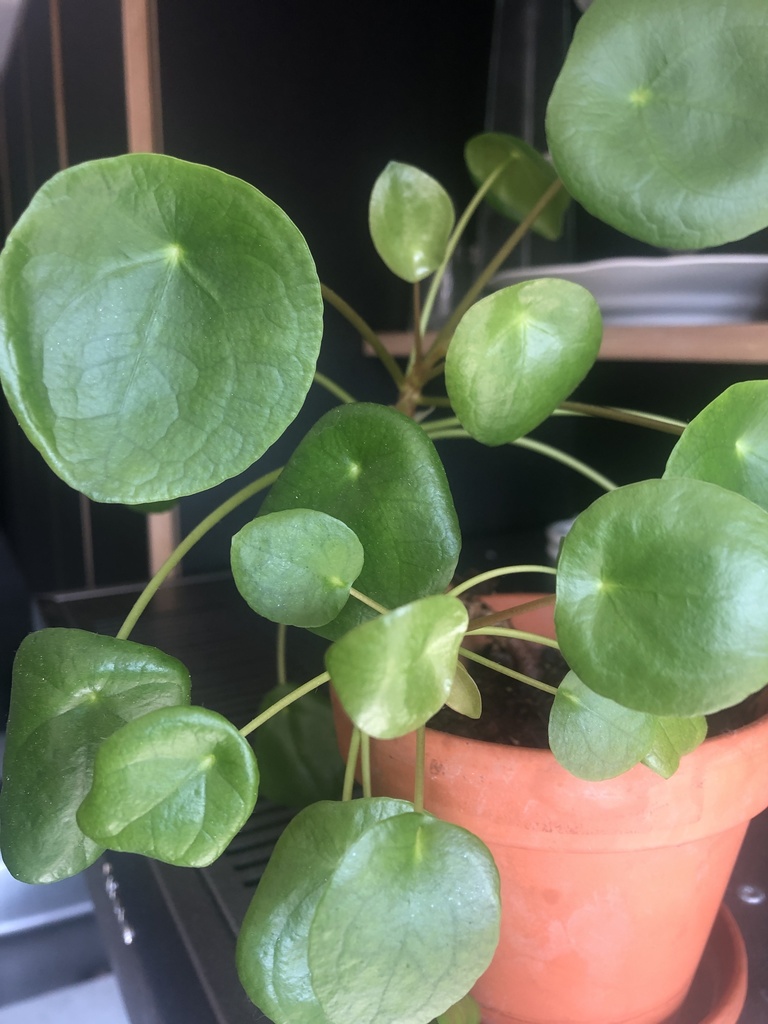
On this page
Chinese money plant is an easy, pet-safe houseplant with distinctive round, coin-shaped leaves. Give it bright indirect light, water when the top inch of soil dries, and rotate it regularly since it leans hard toward light. It produces baby plantlets (pups) freely, the source of its 'pass-it-on plant' nickname, and typically costs $10-$25.
Key facts
- Native to a small region of Yunnan Province, China; it reached Europe via a Norwegian missionary in 1946 and spread for decades through cuttings shared between friends, largely outside the commercial nursery trade.
- Produces baby plantlets (pups) from its roots and stem freely. A healthy plant generates several shareable pups a year.
- Leans noticeably toward its light source, so needs regular rotation to grow evenly.
- Non-toxic to cats and dogs.
Care requirements#
| Plant type | Indoor (tolerates mild outdoor summers in shade) |
| Growing medium | Soil, well-draining potting mix |
| Light needs | Bright, indirect light; leans toward light so rotate weekly |
| Water frequency | Every 7-10 days; water when the top inch of soil is dry |
| Humidity | Tolerates average home humidity well |
| Temperature range | 16-24°C (60-75°F); tolerates brief cooler periods |
| Fertilizer | Balanced liquid feed, half strength, monthly through spring-summer |
| Soil pH | 6.0-7.0 |
| Drainage needs | High: soggy soil causes root rot and leaf drop |
| Pot recommendation | Any well-draining pot; terracotta helps prevent overwatering |
| Hardiness zone (outdoor) | USDA 10 (rarely grown outdoors) |
| Toxicity | Non-toxic to cats, dogs, and humans |
Growth & propagation#
| Mature size | 20-30cm tall and wide |
| Growth rate | Moderate, with prolific pup production |
| Propagation methods | Separating root pups or stem plantlets. Each grows into a full plant |
| Propagation difficulty | One of the easiest houseplants to propagate. Pups often arrive already rooted |
| Repotting schedule | Every 1-2 years, or when pups crowd the pot |
| Pruning needs | Minimal: remove pups for sharing or to keep the parent plant's energy focused |
Common problems & troubleshooting#
| Symptom | Likely cause | Fix |
|---|---|---|
| Curling or doming leaves | Light imbalance (too much or too little) or temperature stress | Adjust to consistent bright indirect light; avoid heat sources |
| Yellowing lower leaves | Overwatering or natural aging | If widespread, let soil dry more between waterings |
| Lopsided, leaning growth | Phototropism. It leans hard toward light | Rotate the pot a quarter turn weekly |
| White crusty spots under leaves | Mineral excretion (normal) or, if fuzzy, powdery mildew | Small white dots at vein junctions are harmless mineral deposits; treat fuzzy patches with fungicide |
Never guess when to water this again
Sodate reads your actual light and season, then builds this plant's watering quests around them, not a fixed schedule.
Seasonal care#
Varieties & cultivars#
| Variety | Distinguishing trait | Note |
|---|---|---|
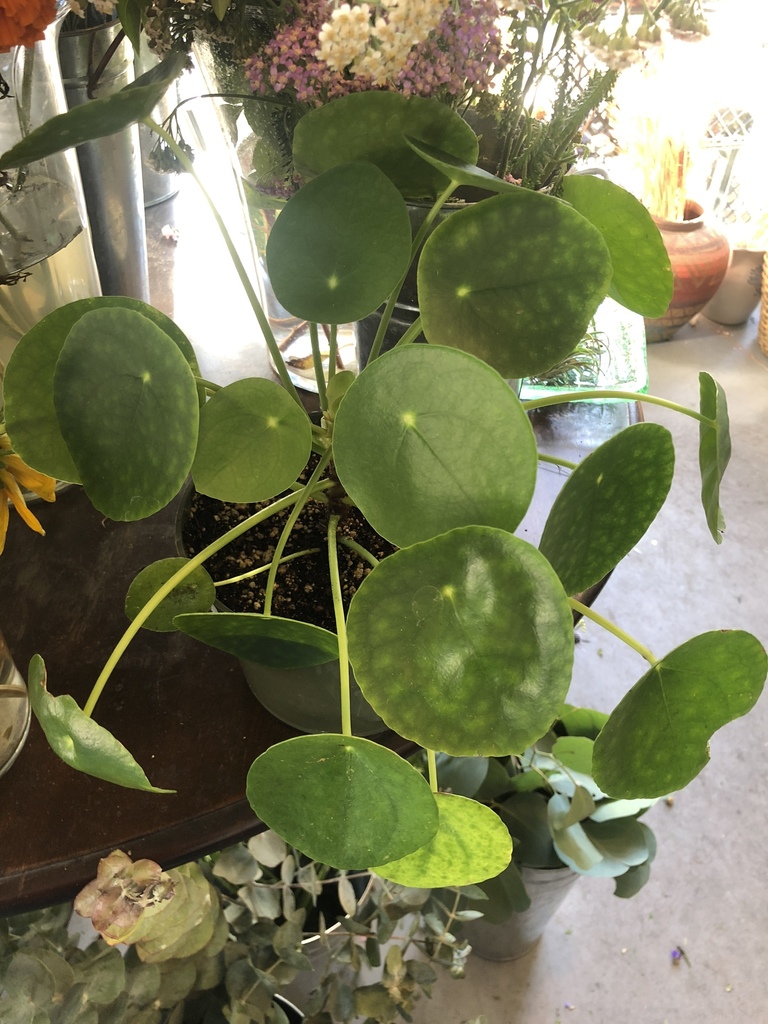
| 'Mojito' | Mottled green variegation | Uncommon collector variant |
| 'Sugar' | Fine white speckling on leaves | Rare variegated form |
| Standard Pilea peperomioides | Solid green coin-shaped leaves | The classic pass-it-on plant |
Buying checklist#
- Leaves are flat and firm, not curling or doming
- Stem is upright and sturdy, not leaning severely
- Check for pups at the soil line. A plant already producing pups is established and healthy
- No mushy tissue at the stem base
Pricing by region#
| Region | Price range | Typical unit | Basis |
|---|---|---|---|
| US | $10 – $25 | 4-6in pot | Big-box + nursery retail |
| UK | $8 – $20 | 12cm pot | Garden centre retail |
| India | $2 – $5 | 4in pot | Urban nursery retail |
| Australia | $9 – $23 | 100-140mm pot | Nursery + garden centre |
| Canada | $10 – $24 | 4-6in pot | Garden centre retail |
USD figures are approximate conversions for comparison; switch the dropdown to see each region's actual local-currency listing price.
Often confused with#
Name confusion warning#
"Money plant" means different things in different countries. In India and South Asia, "money plant" almost always means pothos (Epipremnum aureum). Chinese money plant (Pilea peperomioides) is a completely different species with different care. Always check the botanical name when buying.
Where it's actually grown#
For decades pilea was nearly absent from commercial nurseries and spread almost entirely through shared cuttings between friends. Hence 'pass-it-on plant.' Since its social-media-driven popularity surge in the mid-2010s, it's now mass-produced by tissue culture in commercial greenhouses in the Netherlands and North America.
Import & biosecurity restrictions#
| Region | Note |
|---|---|
| Australia | Live plant imports restricted under biosecurity law; now widely available domestically. |
| US | Domestic sale unrestricted. |
| UK | No specific restriction; grown as a houseplant. |
| India | No restriction; note the money plant naming confusion with pothos. |
| Canada | CFIA permits required for commercial imports; grown as a houseplant. |
Similar plants
Ranked in these guides
Did you know?
Frequently asked questions
Is Chinese money plant pet-safe?
Yes, it's non-toxic to cats and dogs.
How much does a Chinese money plant cost?
A standard 4-6 inch potted plant typically runs $10-$25 in the US. Far less than during its rarity-driven price spike in the mid-2010s.
How do I propagate pilea pups?
Cut pups from the parent's roots or stem once they're 5-7cm tall, and pot them directly in moist soil. Many arrive with roots already attached.
Why is my pilea leaning to one side?
It leans strongly toward light. Rotate the pot a quarter turn every week for even growth.
Is Chinese money plant the same as money plant?
No. In India and South Asia, 'money plant' means pothos. Chinese money plant (Pilea peperomioides) is a different species entirely, with round coin-shaped leaves on individual stems.