 Sodate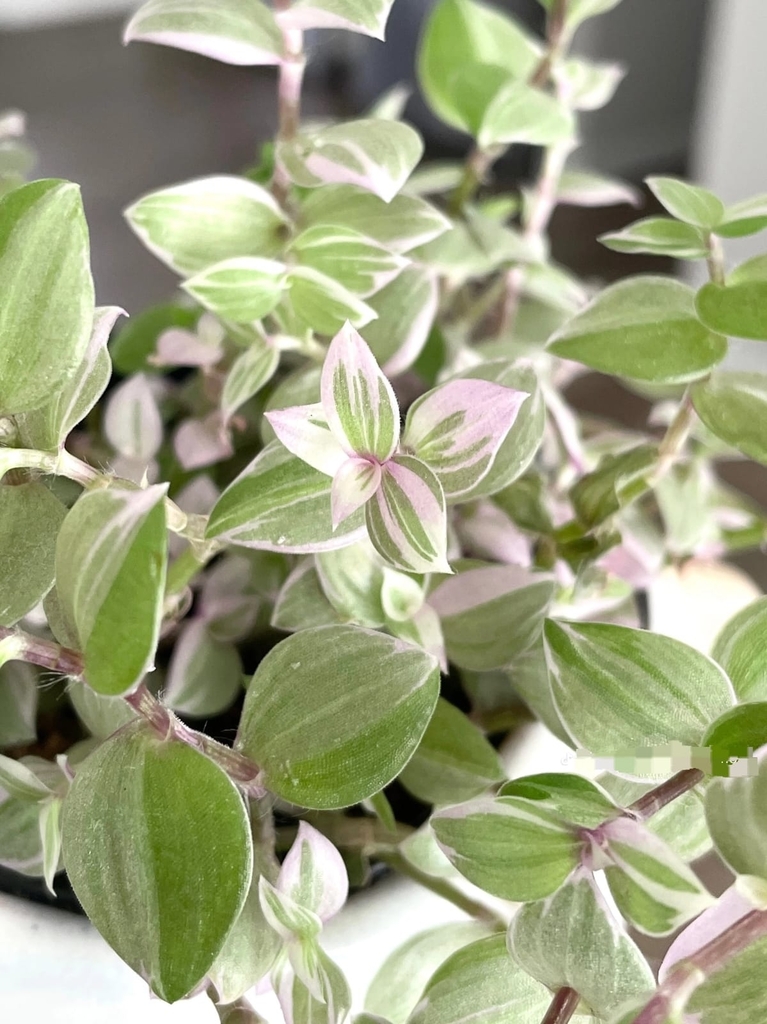
On this page
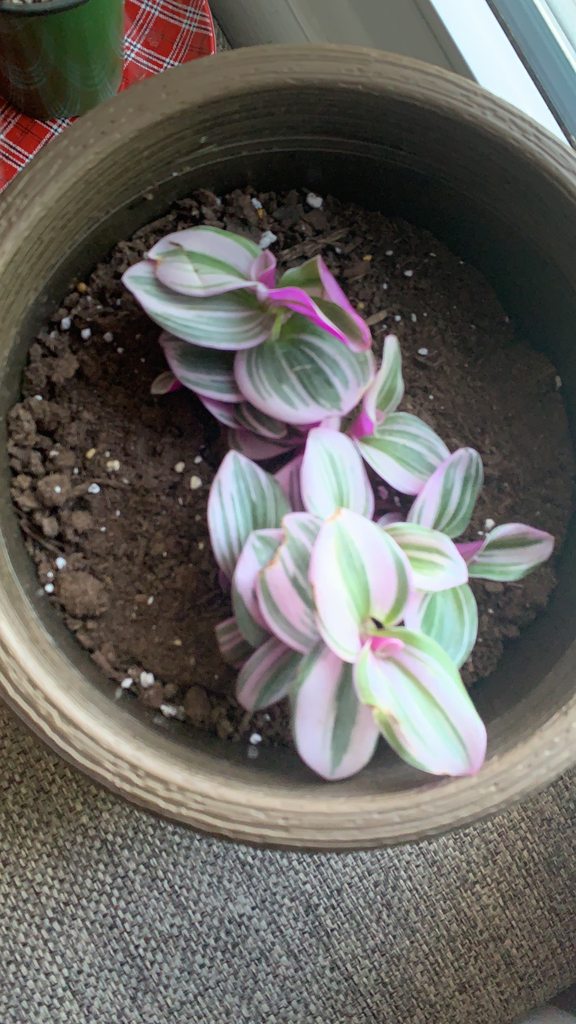
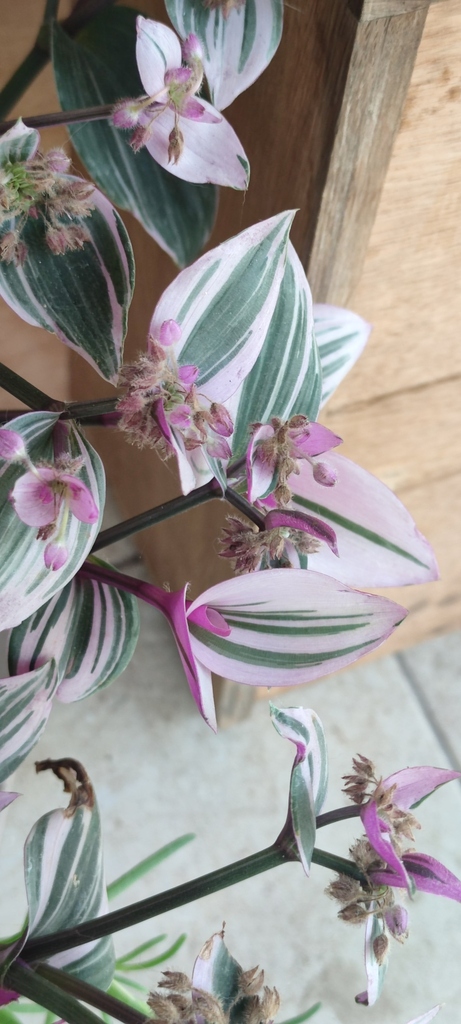
Nanouk is a patented, chunkier, slower, pinker Tradescantia. Its variegated tissue contains less chlorophyll, so it needs noticeably MORE light than green Tradescantia to keep its pink stripes. Several hours of direct morning sun is ideal, and low light turns it plain green within weeks. It costs roughly 2-4x a green Tradescantia, is mildly toxic and a known skin irritant, and legally cannot be propagated for sale while its plant patent runs. For the base species, see the Tradescantia Zebrina guide.
Key facts
- Nanouk is not a wild plant. It was bred in the Netherlands from selected Tradescantia albiflora seedlings and released in 2017 under plant patent USPP29711, which makes propagating it for sale illegal until the patent expires.
- Its pink and cream stripes are chlorophyll-free tissue, so Nanouk photosynthesises with less leaf area than green Tradescantia and therefore needs brighter light and grows more slowly.
- Leaves and stems are visibly thicker and more rigid than Tradescantia zebrina or fluminensis, which is why Nanouk mounds up before it trails.
- Sap contains calcium oxalate and irritant compounds. Mildly toxic if chewed and a common cause of contact dermatitis on bare forearms while pruning.
Care requirements (and how they differ from plain Tradescantia)#
| Plant type | Indoor trailing/mounding foliage cultivar; a patented selection of Tradescantia albiflora |
| Base species page | Tradescantia Zebrina. Read it for general Tradescantia habits |
| Growing medium | Standard peat-free houseplant mix with extra perlite; identical to the green species |
| Light needs | Brighter than green Tradescantia. Very bright indirect light plus 2-3 hours of gentle direct sun. This is the single biggest care difference |
| Water frequency | Every 5-9 days; the thicker Nanouk stems hold more water than green Tradescantia, so it tolerates a missed watering better |
| Humidity | 40%+ is fine; no humidifier required, unlike the fussier calatheas |
| Temperature range | 16-27°C (60-80°F); stop growth below 12°C |
| Fertilizer | Balanced liquid feed at half strength monthly in spring and summer. Do not over-feed: high nitrogen pushes green growth and dilutes the pink |
| Soil pH | 6.0-7.0 |
| Drainage needs | High; the fleshier Nanouk stems rot faster in sodden mix than thin green Tradescantia stems do |
| Pot recommendation | Wide, shallow pot or hanging basket; Nanouk mounds first and trails later |
| Toxicity | Mildly toxic to cats and dogs (calcium oxalate, causes mouth irritation and vomiting) and a frequent contact-dermatitis trigger for humans, wear gloves when pruning |
Growth, propagation & the patent problem#
| Mature size | 20-30cm tall mound with trails to 60-90cm. Shorter and denser than green Tradescantia, which runs to 1.5m+ |
| Growth rate | Moderate: roughly half the speed of plain green Tradescantia because of the reduced chlorophyll |
| Propagation methods | Stem cuttings root in water or moist mix in 7-14 days; take 3-4 node cuttings below a node |
| Propagation legality | USPP29711 makes asexual propagation for sale unlawful in the US while the patent stands. Propagating for your own home or as a gift is the normal practice; selling rooted cuttings is not |
| Repotting schedule | Annually in spring, or restart from cuttings every 18-24 months when the centre goes bald |
| Pruning needs | Pinch tips every few weeks. Cut any all-green stem back to variegated tissue immediately, or it will outgrow and swamp the pink growth |
Common problems & troubleshooting#
| Symptom | Likely cause | Fix |
|---|---|---|
| New growth comes in plain green with no pink | Not enough light. The most common Nanouk-specific failure | Move to your brightest window with some direct morning sun and cut the reverted stems back to variegated tissue; green shoots grow faster and will take over if left |
| Pink fades to washed-out white and leaf edges crisp | Too much harsh afternoon sun. Pale variegated tissue scorches before green tissue does | Filter midday sun with a sheer curtain; morning sun is safe, hot 2pm sun is not |
| Bald, leggy centre with all growth at the trailing ends | Normal Tradescantia ageing, accelerated in low light | Pinch tips regularly and lay a few cuttings back into the pot centre to refill it |
| Mushy, translucent stem bases | Stem rot. Nanouk's thicker, water-storing stems rot more readily than thin green Tradescantia stems | Cut above the rot, discard the wet mix, and re-root the healthy top in fresh, gritty medium |
| Itchy red rash on forearms after pruning | Contact dermatitis from Tradescantia sap, well documented for this genus | Wear gloves and long sleeves when cutting back, and wash arms afterwards |
Keep the pink, not just the plant
Sodate reads the real light level at your window and tells you when Nanouk is drifting into the light range where it reverts to green.
Seasonal care#
Varieties & cultivars#
| Variety | Distinguishing trait | Note |
|---|---|---|
| Tradescantia 'Nanouk' (this plant) | Thick stems, broad pink-cream-green striped leaves | Patented USPP29711; also branded 'Fantasy Venice' |
| Tradescantia zebrina | Thin stems, silver-banded purple leaves | The cheaper, faster, lower-light base plant. See the Zebrina guide |
| Tradescantia fluminensis 'Tricolor' | Thin stems with irregular pink and white streaks | Frequently mis-sold as Nanouk; much finer-stemmed and reverts even faster |
| Tradescantia pallida 'Purple Heart' | Solid deep purple leaves, no variegation | Full-sun tolerant; no reversion risk |
Buying checklist#
- Stems are thick and fleshy, not thin and wiry. Thin stems mean you are looking at 'Tricolor', not Nanouk
- Pink is present in the leaf body itself, not just as an underside blush
- Fewer than a couple of all-green stems in the pot; heavy green reversion is hard to reverse
- Ask whether it is sold under licence. Legitimate Nanouk is usually tagged with the patent number or the Fantasy Venice brand
- No mushy dark patches at the soil line
Pricing by region#
| Region | Price range | Typical unit | Basis |
|---|---|---|---|
| US | $12 – $30 | 4-6in pot | Licensed grower + nursery retail |
| UK | $11 – $25 | 12cm pot | Garden centre + online plant shops |
| India | $4 – $10 | 4in pot | Urban nursery + online sellers |
| Australia | $13 – $28 | 125mm pot | Nursery retail |
| Canada | $13 – $28 | 4-6in pot | Garden centre retail |
USD figures are approximate conversions for comparison; switch the dropdown to see each region's actual local-currency listing price.
Often confused with#
Name confusion warning#
Nanouk is sold under at least three names. Tradescantia 'Nanouk', Tradescantia albiflora 'Nanouk' and the trade brand 'Fantasy Venice'. They are the same patented plant. Anything labelled simply 'pink Tradescantia' or 'Tradescantia Tricolor' at a low price is almost certainly Tradescantia fluminensis 'Tricolor' instead.
Where it's actually grown#
Nanouk originated at a Dutch breeding programme and is grown under licence by a limited number of European and North American nurseries, which is why it carries a price premium over unpatented Tradescantia. Most retail stock is tissue-cultured or cutting-grown by those licensed producers rather than propagated locally.
Import & biosecurity restrictions#
| Region | Note |
|---|---|
| Australia | Live plant imports restricted under biosecurity law; Tradescantia fluminensis is also a declared environmental weed in parts of AU, so never plant any Tradescantia outdoors. |
| US | Sold freely, but plant patent USPP29711 prohibits propagating it for sale. |
| UK | No import restriction on domestic sale; keep all Tradescantia indoors as garden escapes naturalise easily in mild areas. |
| India | No restriction; widely available from urban nurseries and grows quickly in Indian indoor conditions. |
| Canada | CFIA permits required for commercial imports; retail sale unrestricted. |
Similar plants
Did you know?
Frequently asked questions
How is Tradescantia Nanouk different from a normal Tradescantia?
Nanouk has much thicker stems and broader pink-cream-green striped leaves, grows roughly half as fast, needs noticeably more light to hold its colour, and costs two to four times as much as a plain green or zebrina Tradescantia.
Why is my Nanouk turning green?
Almost always insufficient light. Variegated tissue has no chlorophyll, so in dim conditions the plant favours green shoots. Move it to a brighter window and prune reverted stems back to variegated growth.
Is Tradescantia Nanouk safe for cats and dogs?
No. Like all Tradescantia it is mildly toxic, causing mouth irritation, drooling and vomiting if chewed, and the sap commonly causes a skin rash on humans.
Can I sell cuttings of my Nanouk?
Not in the US while plant patent USPP29711 is in force. Asexual propagation for sale is prohibited. Rooting cuttings for your own home is the normal, accepted practice.
Why does Nanouk cost so much more than green Tradescantia?
Licence fees paid by growers plus its slower growth rate; a green Tradescantia fills a pot in weeks, while Nanouk takes roughly twice as long.