 Sodate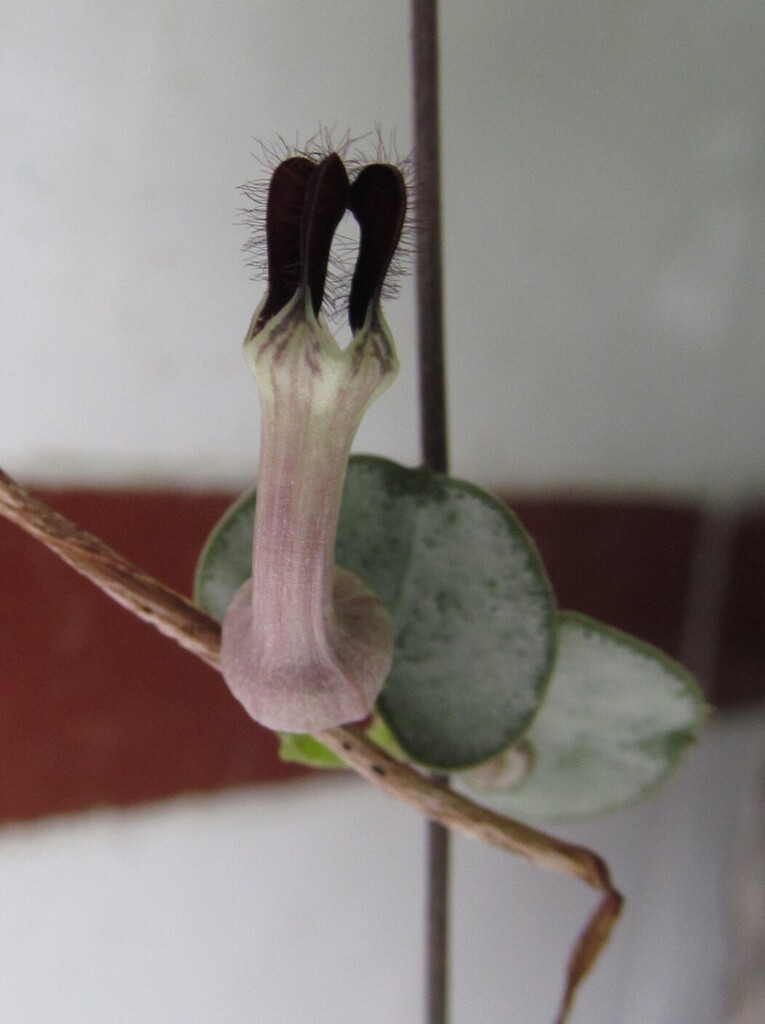

On this page
Treat it like a succulent that happens to trail: bright light with some gentle direct sun, water only when the pot has dried out (every 1-2 weeks in summer, monthly in winter), and a gritty, fast-draining mix in a smallish pot. Strong light keeps the marbling silver and the leaves close-set; dim light makes long bald strands. Pet-safe, fast-growing, and absurdly easy to propagate from the little stem tubers. $8-$25.
Key facts
- Native to South Africa, Eswatini, and Zimbabwe, trailing from a woody caudex tuber in rocky outcrops.
- The 'beads' that form along stems are aerial tubers. Each one pressed onto moist soil grows into a new plant.
- Its lantern-shaped flowers are insect traps: downward-pointing hairs hold small flies overnight to load them with pollen, releasing them unharmed the next day.
- Semi-succulent leaves store water, so it forgives drought readily and resents wet soil.
- Non-toxic to cats and dogs.
Care requirements#
| Plant type | Indoor trailing semi-succulent (outdoors year-round in USDA 10-12) |
| Growing medium | Gritty, fast-draining mix. Cactus mix cut with extra perlite or pumice |
| Light needs | Bright light with 2-3 hours of gentle direct sun; a south or west window slightly set back is ideal |
| Water frequency | Only when the soil has dried fully. Every 1-2 weeks in the growing season, every 3-4 weeks in winter |
| Watering method | Drench until it drains, then leave alone; the leaves soften and flatten slightly when genuinely thirsty |
| Humidity | Ordinary household humidity; no misting needed |
| Temperature range | 18-27°C (65-80°F); keep above 10°C (50°F) |
| Fertilizer | Half-strength balanced feed monthly in spring-summer only |
| Pot recommendation | Small, snug pot with drainage. A hanging pot or high shelf shows off the trails; the caudex sits at the surface, never buried |
| Drainage needs | High: the tuberous base rots in soggy soil |
| Pruning | Trim leggy strands anytime; every cutting is propagation material |
| Toxicity | Non-toxic to cats, dogs, and humans |
Growth & propagation#
| Mature size | Vines trail 60cm-2m+ indoors from a compact crown |
| Growth rate | Fast in good light. Strands can add 30-60cm a season |
| Bloom | Small pink-purple lantern flowers along the vines in summer-autumn |
| Propagation methods | Press aerial tubers onto moist soil, lay stem cuttings across a tray of mix ('butterfly method'), or root cuttings in water |
| Propagation difficulty | Very easy. The tubers root almost automatically |
| Repotting schedule | Every 2-3 years; it flowers and trails best slightly root-bound |
Common problems & troubleshooting#
| Symptom | Likely cause | Fix |
|---|---|---|
| Leaves yellow and drop, stems mushy near the soil | Overwatering. The tuberous caudex is rotting | Unpot, cut away soft tissue, let the plant dry a day, and repot in fresh gritty mix; water only after full dry-out from then on |
| Long bald gaps between small pale leaves | Too little light. The most common cosmetic complaint | Move to a brighter window; existing gaps stay, so trim and re-plant cuttings into the top of the pot to refill the crown |
| Leaves thin, papery, and curling inward | Prolonged drought past the point of succulent reserve | A thorough drench restores plumpness in days; shorten the dry interval slightly |
| Marbling fades to plain green | Insufficient light. Variegation and silver patterning need sun | More direct light brings back the silvering on new growth; purple undersides deepen too |
| White cottony tufts in leaf axils | Mealybugs. The dense strands hide them well | Dab with 70% alcohol, follow up weekly; badly infested strands are easiest to cut off and discard |
Dry-out first, water second
Sodate waits until your string of hearts has actually dried out before it nudges you, no calendar-guess watering.
Seasonal care#
Varieties & cultivars#
| Variety | Distinguishing trait | Note |
|---|---|---|
| 'Variegata' (variegated string of hearts) | Cream-and-pink margined leaves | Needs more light; commands 2-3x the price |
| 'Silver Glory' | Almost fully silver leaf faces, rounder hearts | Popular collector form |
| 'Heartless' / string of spades types | Narrower, arrow-shaped leaves | Sold under various trade names |
Buying checklist#
- Multiple strands rising from the soil, not two lonely vines in a big pot
- Close-set, well-marbled leaves: wide bald gaps mean light-starved stock
- Firm caudex/crown at soil level with no mushiness
- Check strand undersides and axils for mealybugs before buying
Pricing by region#
| Region | Price range | Typical unit | Basis |
|---|---|---|---|
| US | $8 – $25 | 4in hanging pot | Nursery + online retail |
| UK | $8 – $23 | 10-12cm pot | Garden centre + online |
| India | $2 – $8 | 4in pot | Urban nursery + online |
| Australia | $8 – $26 | 130mm hanging pot | Nursery retail |
| Canada | $8 – $26 | 4in hanging pot | Garden centre + online |
USD figures are approximate conversions for comparison; switch the dropdown to see each region's actual local-currency listing price.
Often confused with#
Where it's actually grown#
Mass-produced from cuttings in houseplant nurseries in the Netherlands, Florida, and Southeast Asia. Its speed from cutting to saleable basket keeps prices low; variegated stock is propagated more slowly, hence the premium.
Import & biosecurity restrictions#
| Region | Note |
|---|---|
| US | No restriction on domestic sale. |
| UK | No specific restriction; standard phytosanitary paperwork for imports. |
| Australia | Live plant imports restricted under biosecurity law; domestically grown stock is common. |
| India | No restriction; increasingly stocked by urban nurseries and online sellers. |
| Canada | CFIA permits required for commercial imports; widely available at retail. |
Similar plants
Ranked in these guides
Did you know?
Frequently asked questions
Is string of hearts safe for cats and dogs?
Yes. Ceropegia woodii is non-toxic to cats and dogs, making it a safe hanging plant even where cats bat at the strands.
How often should I water string of hearts?
Only when the soil has fully dried. Typically every 1-2 weeks in the growing season and every 3-4 weeks in winter. It handles drought far better than wet feet.
What are the little balls on my string of hearts stems?
Aerial tubers. Natural storage organs that form along the vines. Press one onto moist soil and it will root into a new plant.
Why is my string of hearts sparse and leggy?
Not enough light. Move it brighter (some direct sun is welcome), then loop cuttings back over the soil surface to refill the bald crown.
How do I make string of hearts fuller?
Take cuttings or tubers and plant them back into the top of the same pot. Most full display plants are many plants in one basket.