 Sodate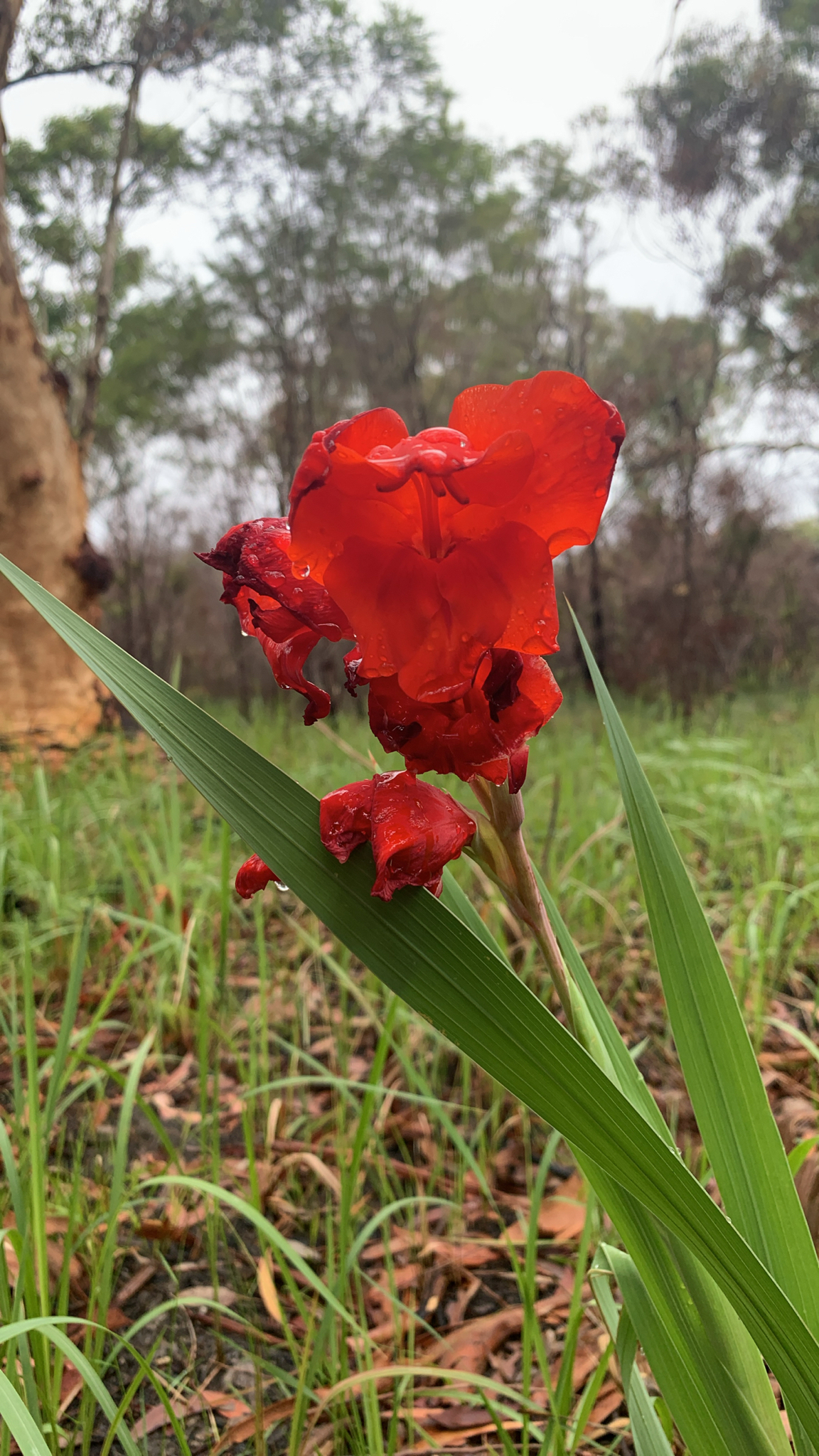
On this page
Gladiolus is an easy summer corm: plant 10-15cm deep and 15cm apart in full sun after the last frost, and it flowers about 90 days later. Plant a new batch every two weeks from spring to late spring for continuous spikes. Hardy in USDA zones 8-10 (RHS H3); in colder gardens lift the corms after the first frost blackens the foliage and store them dry over winter. Toxic to cats and dogs if the corms are chewed. Corms cost about $0.50-$2 each.
Key facts
- Roughly 90 days from planting to flowering, which makes succession planting every two weeks the standard way to get spikes all summer.
- Plant 10-15cm deep: deeper planting for tall cultivars anchors the spike and often removes the need for staking.
- Hardy only to USDA zone 8 (RHS H3). In zones 3-7 the corms are lifted after the first frost, dried for two weeks, and stored frost-free at 5-10°C.
- The corms are toxic to cats and dogs, causing drooling, vomiting and lethargy; foliage is much less concentrated.
Care requirements#
| Plant type | Tender summer-flowering corm; perennial in mild zones, lifted and stored elsewhere |
| Growing medium | Free-draining fertile soil or deep container compost with added grit |
| Light needs | Full sun. At least 6 hours; shade produces weak spikes that lean |
| Planting depth | 10-15cm deep, flat side down, 12-15cm apart; plant deeper for tall cultivars |
| Planting time | Spring, after the last frost, in successive batches every two weeks until early summer |
| Water frequency | Water deeply once a week in dry weather, especially as flower spikes form |
| Hardiness zone (USDA) | 8-10 in the ground; lift and store in zones 3-7 |
| Hardiness zone (RHS) | H3. Survives mild winters outdoors, best lifted in most of the UK |
| Bloom season | Midsummer to early autumn, timed by planting date |
| Fertilizer | Balanced feed at planting, then high-potash feed once flower spikes appear |
| Soil pH | 6.0-7.0 (slightly acidic to neutral) |
| Toxicity | Corms are toxic to cats and dogs; cause drooling, vomiting and lethargy |
Growth & propagation#
| Mature size | 60-150cm tall; dwarf nanus types reach 45-60cm |
| Growth rate | Fast: spikes appear about 90 days after planting |
| Propagation methods | Cormels (small offsets) around the base of the parent corm, grown on for 1-2 years |
| Propagation difficulty | Beginner-friendly, but cormels take two seasons to reach flowering size |
| Repotting schedule | Replant lifted corms in fresh soil each spring; rotate the bed to avoid disease build-up |
| Pruning timing | Cut flower spikes for the vase when the lowest two florets open, leaving at least four leaves on the plant to feed the corm. After flowering, leave foliage until it yellows or the first frost, then cut it back to 3cm when lifting. |
Common problems & troubleshooting#
| Symptom | Likely cause | Fix |
|---|---|---|
| Silvery streaks and distorted, browning florets | Gladiolus thrips, which overwinter on stored corms | Dust stored corms with an approved insecticide or store below 5°C, and rotate planting sites |
| Spikes leaning or snapping | Shallow planting, wind exposure, or shade | Plant 15cm deep for tall types, stake or corral rows, and choose a sheltered sunny site |
| Yellowing leaves and rotting corms | Fusarium corm rot, often from wet soil or damaged corms | Discard soft corms, improve drainage, and do not replant gladiolus in the same ground for three years |
| Few or no flowers | Undersized corms or cormels, or too little sun | Plant only corms 3cm or more across for guaranteed flowers; grow cormels on separately for a season |
Succession planting without a spreadsheet
Sodate schedules each two-week batch from your last frost date so the cutting spikes never run out mid-season.
Seasonal care#
Varieties & cultivars#
| Variety | Distinguishing trait | Note |
|---|---|---|
| Grandiflorus hybrids | 120-150cm spikes with large florets | The classic cut-flower gladiolus; usually needs staking |
| Nanus group | 45-60cm, looser, earlier flowering | Hardier than the big hybrids and often left in the ground in zone 7 |
| 'Espresso' | Very dark red, near black | Popular for dramatic arrangements |
| Gladiolus murielae (Abyssinian gladiolus) | White scented flowers with a dark throat, arching stems | Botanically Gladiolus but very different in habit; strongly scented |
Buying checklist#
- Corms are firm, plump and at least 3cm across for first-year flowering
- No soft brown patches or holes on the corm surface
- Basal plate intact, with no signs of mould
- Buy a mix of early and late cultivars to spread the flowering season
Pricing by region#
| Region | Price range | Typical unit | Basis |
|---|---|---|---|
| US | $1 – $2 | single corm | Mail-order + garden centre packs |
| UK | $1 – $2 | single corm | Garden centre packs |
| India | $1 – $2 | single corm | Domestic nursery retail |
| Australia | $1 – $3 | single corm | Nursery + mail order |
| Canada | $1 – $2 | single corm | Garden centre packs |
USD figures are approximate conversions for comparison; switch the dropdown to see each region's actual local-currency listing price.
Often confused with#
Where it's actually grown#
Most gladiolus corms sold in Europe and North America are produced in the Netherlands, with additional volume from Poland and Israel. India has substantial domestic production in Maharashtra, Karnataka and Himachal Pradesh, largely for the cut-flower trade.
Import & biosecurity restrictions#
| Region | Note |
|---|---|
| Australia | Imported corms subject to quarantine; domestic production available and some species have naturalised. |
| US | Corm imports permitted under APHIS inspection; widely sold as a spring-planted summer bulb. |
| UK | No restriction on sale; commercial imports need plant health certification. |
| India | No restriction; a major domestic cut-flower crop, especially in the hills and in winter in the plains. |
| Canada | CFIA rules apply to commercial imports; corms must be lifted and stored over winter in most provinces. |
Similar plants
Ranked in these guides
Did you know?
Frequently asked questions
How deep should gladiolus corms be planted?
10-15cm deep with the flat side down and 12-15cm apart. Planting tall cultivars towards the deeper end anchors the spikes and often avoids the need for staking.
Do I have to lift gladiolus corms for winter?
In USDA zones 8-10 they can stay in the ground. In zones 3-7, lift them after the first frost blackens the foliage, dry them for two weeks, and store them at 5-10°C somewhere frost-free.
Are gladiolus toxic to pets?
Yes. The corms are toxic to cats and dogs and cause drooling, vomiting and lethargy if chewed. The leaves are far less concentrated but still best kept away from pets.
How do I get gladiolus flowering all summer?
Plant a new batch of corms every two weeks from after the last frost until early summer. Each batch flowers about 90 days after planting.
When should I cut gladiolus for the vase?
Cut when the lowest one or two florets have opened, and leave at least four leaves on the plant so the corm can recharge for next year.