 Sodate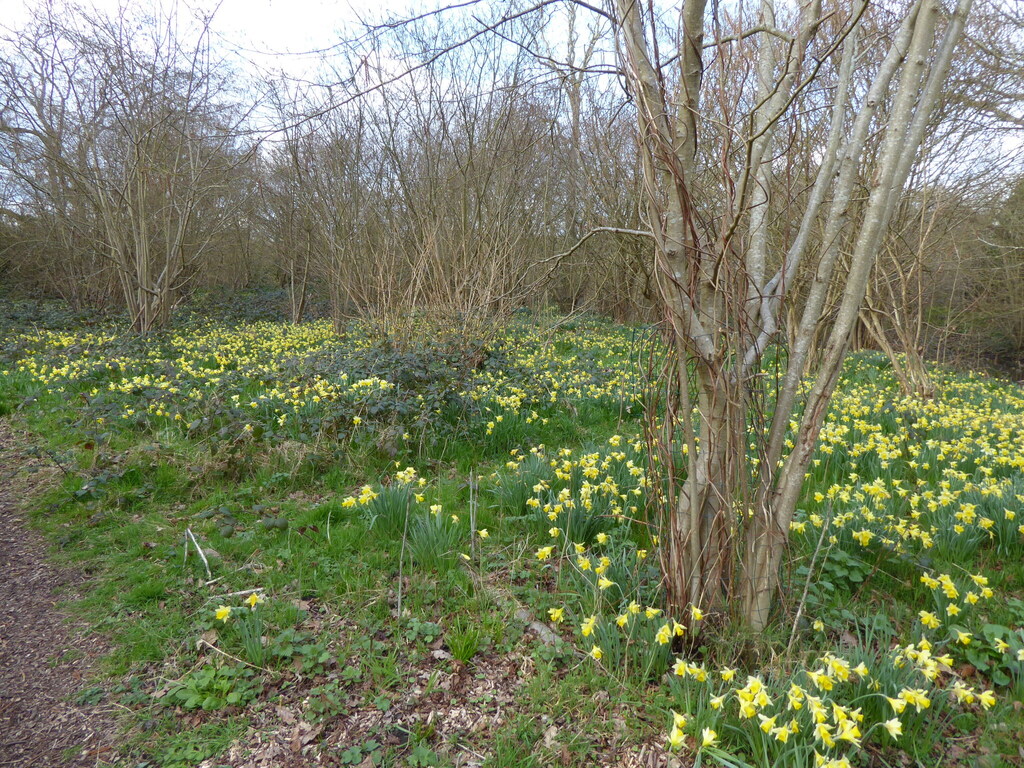
On this page
Daffodils are among the most forgiving bulbs you can plant: hardy in USDA zones 3-8 (RHS H6), they naturalise in grass and come back for decades with no feeding or lifting. Plant in early to mid autumn, 10-15cm deep and twice the bulb's width apart, in sun or light shade. Deadhead after flowering but leave the foliage for six weeks. Every part is poisonous, and the bulbs are the most dangerous part. Bulbs cost about $0.40-$1.50 each.
Key facts
- The bulbs are highly toxic and have repeatedly been mistaken for onions or shallots in kitchens and food-service settings, causing serious poisoning outbreaks. Never store daffodil bulbs near food.
- All parts contain lycorine and calcium oxalate crystals, toxic to cats, dogs, horses and people. The bulb has the highest concentration.
- That toxicity is also why daffodils are one of the few bulbs deer, squirrels and voles leave alone. Useful for planting where tulips get eaten.
- Long-lived and self-multiplying: a single clump left undisturbed can flower for decades and slowly spread into a drift.
Care requirements#
| Plant type | Hardy perennial spring bulb; naturalises and returns for decades |
| Growing medium | Any reasonable free-draining garden soil; tolerates heavier ground than tulips |
| Light needs | Full sun to light shade; happy under deciduous trees that leaf out after flowering |
| Planting depth | 10-15cm deep (two to three times bulb height), pointed end up, 8-15cm apart |
| Planting time | Early to mid autumn. Earlier than tulips, so roots establish before winter |
| Water frequency | Rain is usually enough; water only during a dry spring while in growth |
| Hardiness zone (USDA) | 3-8; a few tazetta types such as 'Paperwhite' suit zones 8-10 without chilling |
| Hardiness zone (RHS) | H6. Fully hardy across the UK |
| Bloom season | Early to mid spring; sequential planting of early, mid and late cultivars extends this to 8 weeks |
| Fertilizer | Rarely needed; a low-nitrogen bulb feed after flowering helps clumps that have stopped blooming |
| Soil pH | 6.0-7.0 (slightly acidic to neutral) |
| Toxicity | Highly toxic to cats, dogs, horses and humans. Bulbs are the most concentrated part and have been mistaken for onions. Store them away from food. |
Growth & propagation#
| Mature size | 15cm miniature types such as 'Tête-à-Tête' to 50cm trumpet daffodils |
| Growth rate | Clumps thicken noticeably within 3-4 years |
| Propagation methods | Division of offsets after foliage dies down in early summer |
| Propagation difficulty | Beginner-friendly: simply lift, pull the bulbs apart and replant immediately |
| Repotting schedule | Lift and divide only when flowering declines from congestion, roughly every 5-7 years |
| Pruning timing | Deadhead spent flowers so the plant does not waste energy on seed, but leave the foliage completely alone for at least six weeks until it yellows. Cutting, mowing, folding or tying the leaves early is the number one reason daffodils stop flowering. |
Common problems & troubleshooting#
| Symptom | Likely cause | Fix |
|---|---|---|
| Healthy leaves but no flowers (blindness) | Congested clumps, foliage cut too early, or too much shade | Lift and divide the clump after foliage dies down, feed with a low-nitrogen bulb food, and never mow the leaves before they yellow |
| Bulbs soft and rotten with maggots inside | Narcissus bulb fly larvae | Lift and bin affected bulbs; firm soil around the necks as leaves die back so flies cannot lay eggs |
| Yellow streaking on leaves and distorted flowers | Narcissus virus, spread by aphids | Remove and destroy affected plants; there is no cure |
| Flowers flop or fail to open fully | Unusually warm spring or too-shallow planting | Plant at the full 10-15cm depth; shallow bulbs are also more prone to heat stress |
One autumn task, twenty springs of flowers
Sodate tells you when your soil has cooled enough to plant and reminds you to leave the foliage alone afterwards.
Seasonal care#
Varieties & cultivars#
| Variety | Distinguishing trait | Note |
|---|---|---|
| 'Tête-à-Tête' | 15-20cm miniature, very early, multi-headed | The most widely sold pot and container daffodil |
| 'King Alfred' type trumpets | Tall classic yellow trumpet | The image most people picture; strong and reliable in borders |
| 'Thalia' | Pure white, multi-headed, scented | Late flowering and excellent for naturalising |
| Narcissus poeticus (pheasant's eye) | White petals, small red-rimmed eye, strong scent | The latest to flower, extending the season into May |
Buying checklist#
- Bulbs are firm and heavy for their size, with no soft necks
- No blue-green mould or holes at the basal plate
- Double-nosed bulbs (two growing points) give more flowers in year one
- Buy early in autumn. Daffodils should go in before tulips
Pricing by region#
| Region | Price range | Typical unit | Basis |
|---|---|---|---|
| US | $1 – $2 | single bulb | Mail-order + garden centre packs |
| UK | $1 – $2 | single bulb | Garden centre packs |
| India | $1 – $3 | single imported bulb | Imported bulb retail |
| Australia | $1 – $3 | single bulb | Nursery + mail order |
| Canada | $1 – $2 | single bulb | Garden centre packs |
USD figures are approximate conversions for comparison; switch the dropdown to see each region's actual local-currency listing price.
Often confused with#
Name confusion warning#
Daffodil bulbs have repeatedly been mistaken for onions and eaten, causing severe vomiting and, in large doses, cardiac symptoms. Store bulbs clearly labelled and well away from any food, and never plant them in an edible bed alongside alliums.
Where it's actually grown#
Commercial daffodil bulb production is dominated by the Netherlands and by Cornwall and Lincolnshire in the UK, which together supply most of the world's dry bulbs and cut daffodil stems. Cornwall's mild climate produces the earliest cut flowers in Europe.
Import & biosecurity restrictions#
| Region | Note |
|---|---|
| Australia | Imported bulbs subject to quarantine conditions; strong domestic production in Victoria and Tasmania. |
| US | Bulb imports permitted under APHIS inspection; naturalises freely across the north and midwest. |
| UK | No restriction; the UK is itself a major producer, with Cornwall supplying early cut stems. |
| India | Imported bulbs sold mainly for Kashmir and hill-station gardens; the plains lack sufficient winter chill. |
| Canada | CFIA import rules apply; fully hardy and long-lived across most provinces. |
Similar plants
Ranked in these guides
Did you know?
Frequently asked questions
Are daffodils poisonous?
Yes, every part is poisonous, and the bulb most of all. Daffodil bulbs are sometimes mistaken for onions and eaten, which causes severe vomiting and abdominal pain and, in large quantities, heart symptoms. They are also toxic to cats, dogs and horses.
How deep do you plant daffodil bulbs?
10-15cm deep, roughly two to three times the height of the bulb, pointed end up and 8-15cm apart. Plant in early to mid autumn, before tulips go in.
Why have my daffodils stopped flowering?
Usually congestion or foliage that was cut too soon. Lift and divide crowded clumps after the leaves die down, and always leave the foliage in place for at least six weeks after flowering.
Do squirrels and deer eat daffodil bulbs?
No. The lycorine that makes daffodils poisonous also makes them unpalatable, so they are a reliable choice where tulips get dug up or grazed.
How much do daffodil bulbs cost?
Around $0.40-$1.50 per bulb in the US and £0.30-£1.20 in the UK, with bulk naturalising sacks costing much less per bulb.