 Sodate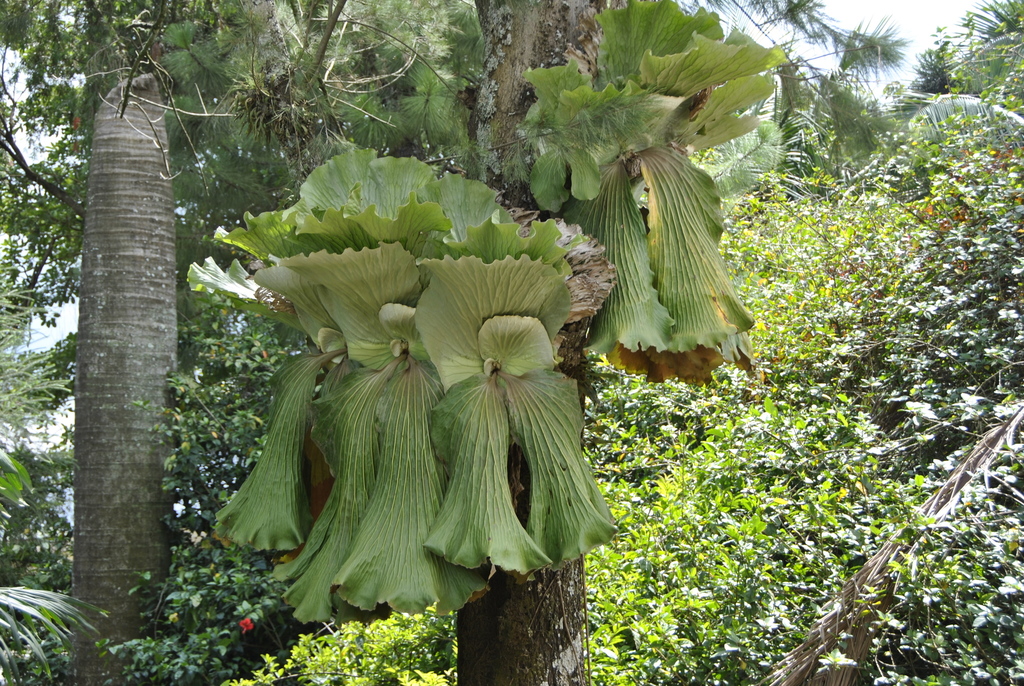
On this page
Elkhorn ferns grow on wood, not in soil. Mount the rhizome against a board over a sphagnum pad, give bright indirect light and moving air, and water by soaking the whole mount until the moss is saturated, then letting it drain and dry back. Never peel off the brown shield fronds. They are the plant's root system. Pet-safe. Typically $20-$60 mounted.
Key facts
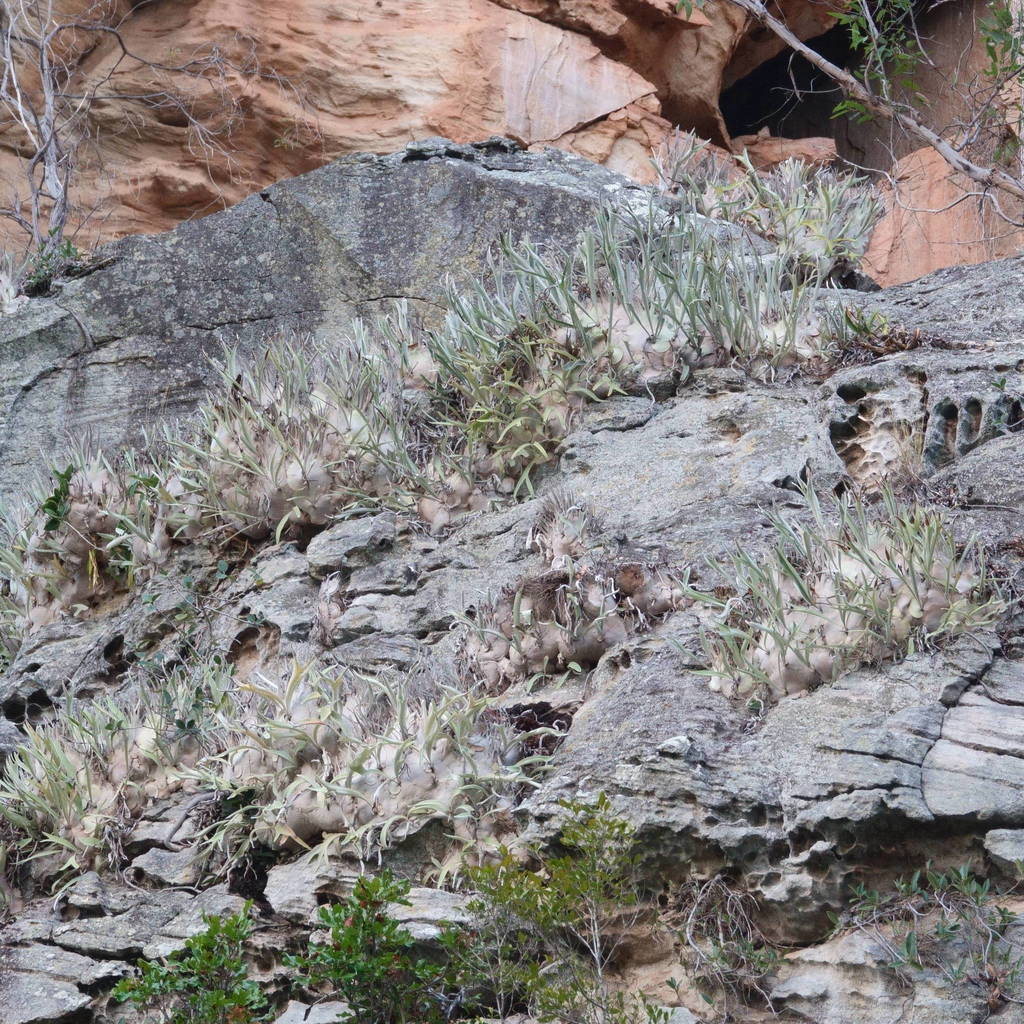
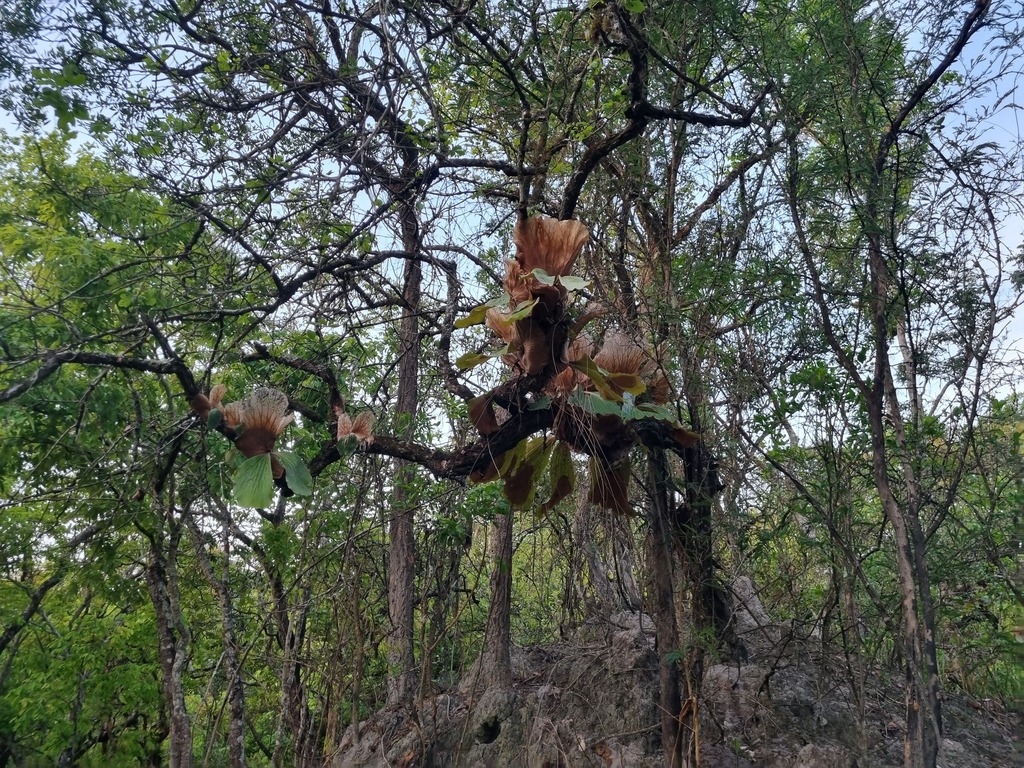
- Native to eastern Australia, New Guinea and Java, where it grows in colonies on tree trunks and rock faces, never in the ground.
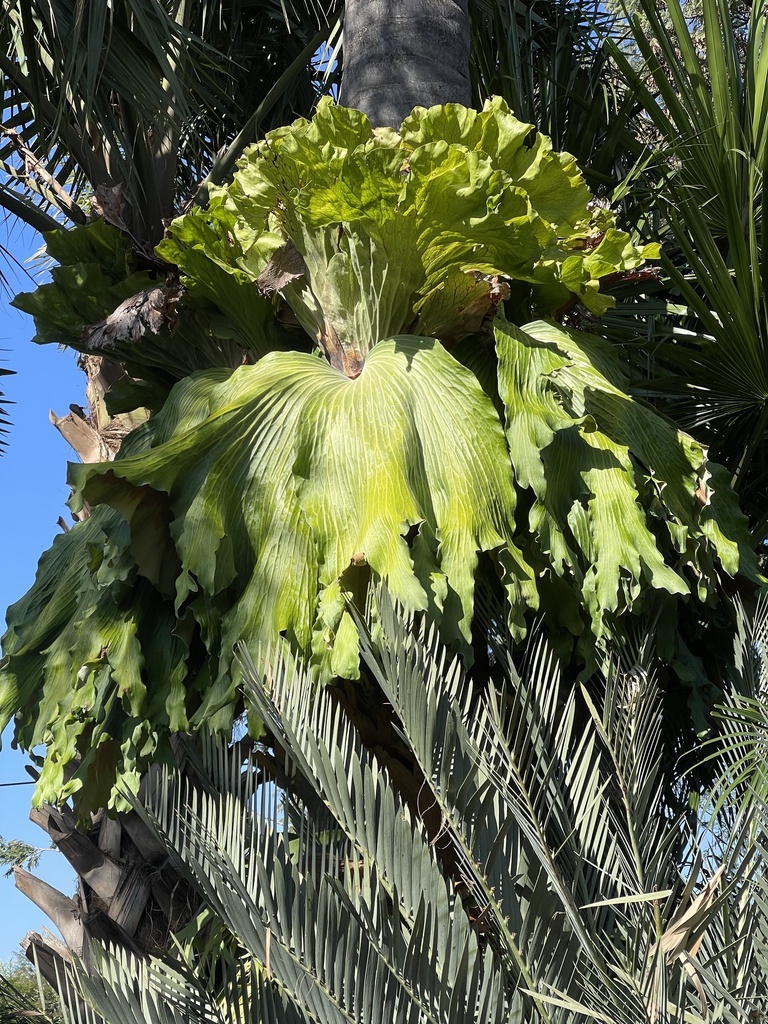
- It produces two frond types: flat shield fronds that turn brown and clasp the mount, and forked fertile fronds shaped like antlers.
- The brown shield fronds are alive and functional. They catch falling leaf litter and rainwater and must never be removed.
- Watering is done by soaking the whole mount rather than pouring water at a base; the sphagnum pad is the reservoir.
- Non-toxic to cats and dogs.
Care requirements#
| Plant type | Epiphytic fern grown mounted; outdoors year-round only in USDA 9-11 |
| Mounting substrate | Hardwood or cedar board, cork bark, or a wire basket, with a sphagnum moss pad behind the rhizome |
| Fixing method | Fishing line, nylon cord, or plastic-coated wire across the shield frond; never copper wire, never glue on the rhizome |
| Light needs | Bright indirect light; an hour of gentle morning sun is fine, hot midday sun scorches the fronds |
| Watering method | Soak the whole mount in a sink or tub for 10-20 minutes until the moss pad is saturated |
| Soak-vs-mist schedule | Soak every 7-10 days indoors, every 3-5 days in hot dry weather; mist between soaks only as a supplement, never as a substitute |
| How to judge thirst | Lift the mount. A light mount and a soft, limp antler frond means soak now |
| Air circulation | Important; needs moving air to dry the moss surface between soaks and prevent rhizome rot |
| Humidity | 50-70% ideal; bathrooms and kitchens suit it well |
| Temperature range | 10-30°C (50-86°F); briefly tolerates a light frost but should be protected |
| Fertilizer | Dilute balanced liquid feed at quarter strength in the soak water monthly through spring and summer |
| Toxicity | Non-toxic to cats, dogs, and humans |
Growth & propagation#
| Mature size | 60-90cm spread on a mount; established colonies reach well over a metre |
| Growth rate | Moderate: one to three new fertile fronds a year on a healthy mount |
| Propagation methods | Pups (offsets) that form around the edge of the shield; cut with a sliver of rhizome and mount separately |
| Propagation difficulty | Moderate: pups must keep some rhizome tissue attached to survive |
| Remounting schedule | Every 3-5 years, or when the fern outgrows and starts wrapping the board edge |
| Pruning needs | Remove only fully dead, blackened fronds; leave every brown shield frond in place |
Common problems & troubleshooting#
| Symptom | Likely cause | Fix |
|---|---|---|
| Black, mushy patch behind the shield frond | Rhizome rot from a permanently soggy moss pad and no airflow | Cut away rotten tissue, remount on fresh dry sphagnum, and let the pad dry back noticeably between soaks |
| Antler fronds limp and drooping | The moss pad has gone completely dry | Soak the mount for 20 minutes; fronds usually firm up within a day |
| Pale, bleached or brown-scorched frond patches | Direct midday sun on the mount | Move to bright indirect light or filter the window with a sheer |
| Fuzzy grey coating rubbed off and fronds now spotted | The fine hairs on the fronds were wiped off. They are sun and moisture protection, not dust | Never wipe or polish the fronds; damaged areas will not recover but new fronds will be normal |
| Brown crispy edges on new fronds | Low humidity plus tap water salts building up in the moss | Raise humidity, and flush the pad periodically with rainwater or filtered water |
Soak it when it needs it, not on a calendar
Sodate learns how fast your mount dries in your actual room and reminds you before the moss goes bone dry.
Seasonal care#
Varieties & cultivars#
| Variety | Distinguishing trait | Note |
|---|---|---|
| P. bifurcatum (species) | Clumping habit, many pups, narrow forked fronds | The standard, hardiest and cheapest elkhorn |
| P. bifurcatum 'Netherlands' | Broader, more upright fronds, very vigorous | Common in commercial mounted stock |
| P. superbum (staghorn) | Single-crowned, huge upright nest shield | A different species often sold alongside; does not pup |
Buying checklist#
- Shield fronds are intact and firmly attached to the mount, not peeling away
- No black or slimy tissue at the rhizome behind the shield
- Antler fronds are firm with an even grey-green fuzz, not wiped bare
- The mount itself is sound wood, not already soft or rotting
Pricing by region#
| Region | Price range | Typical unit | Basis |
|---|---|---|---|
| US | $20 – $60 | mounted plant | Nursery + online mounted stock |
| UK | $22 – $65 | mounted plant | Garden centre + specialist |
| India | $8 – $25 | mounted plant | Urban exotic nurseries |
| Australia | $15 – $50 | mounted plant | Nursery retail (native, widely grown) |
| Canada | $22 – $65 | mounted plant | Garden centre + online |
USD figures are approximate conversions for comparison; switch the dropdown to see each region's actual local-currency listing price.
Often confused with#
Name confusion warning#
In Australia 'elkhorn' means Platycerium bifurcatum and 'staghorn' means the much larger P. superbum. In the US and UK both are usually sold as 'staghorn fern', so check the growth habit rather than the label.
Where it's actually grown#
Almost all commercial elkhorns are nursery-divided from pups rather than wild-collected, grown at scale in Florida, the Netherlands, Australia and Southeast Asia, then mounted either at the nursery or by the retailer.
Import & biosecurity restrictions#
| Region | Note |
|---|---|
| Australia | Live plant imports restricted under biosecurity law; the species is native and abundant in domestic nurseries. |
| US | No restriction on domestic sale; Platycerium is not CITES-listed. |
| UK | Imports need phytosanitary paperwork; widely stocked domestically as a houseplant. |
| India | No specific restriction; sold by exotic plant nurseries, best in humid coastal cities. |
| Canada | CFIA permits required for commercial imports; readily available at retail. |
Similar plants
Ranked in these guides
Did you know?
Frequently asked questions
Should I cut off the brown shield fronds on my elkhorn fern?
No. The brown shields are living tissue that anchors the plant and collects nutrients. Removing them badly weakens or kills the fern.
How often should I water a mounted elkhorn fern?
Soak the whole mount for 10-20 minutes roughly every 7-10 days indoors, more often in hot dry weather; judge by the weight of the mount rather than the calendar.
Is a staghorn or elkhorn fern safe for cats and dogs?
Yes, Platycerium ferns are non-toxic to cats and dogs.
Can I grow an elkhorn fern in a pot with soil?
It survives briefly but declines. The rhizome needs air and soil holds too much water against it, so mounted culture or a very open basket mix is far better.
How much does a mounted elkhorn fern cost?
Mounted plants typically run $20-$60 in the US, with large multi-crowned specimens costing considerably more.