 Sodate
Home / Guides / Fast-growing plants for small spaces
Best Fast-Growing Plants for Small Spaces: 15 Ranked (2026)
The best fast-growing plants for small spaces are Aquatic bladderwort, Impatiens, Polka Dot Plant. Sodate ranked 16 qualifying plants from a database of 208 profiles on a published 100-point rubric weighted to growth speed (40), care difficulty (25), pet safety (20) and cost (15). Aquatic bladderwort scores 100/100, the highest in this group.
Aquatic bladderwort, Impatiens, Polka Dot Plant lead this ranking of fast-growing plants for small spaces. Entry requires scored from the growth rate stated in each profile, with full marks for plants described as fast with a figure attached. 9 of the 15 listed are non-toxic to cats and dogs. Every score is computed from the same four measures, growth speed, care difficulty, pet safety and cost, and the rubric is published below so you can recompute any ranking yourself.
Why trust this list
Fast growth is the most underrated quality for a first plant, because visible progress is what keeps people caring for it. It cuts both ways though: a fast plant in the wrong spot gets leggy fast, and a fast climber needs support and pruning within a season. Scores come from the growth rate stated in each profile, and the fastest plants here are also the ones you will be pruning. Every plant here stays under about 45cm at maturity, taken from the mature size on its own profile rather than the size of the pot it ships in. Small plants have one real drawback worth knowing: a small volume of soil dries out much faster than a large one, so they need checking more often, not less.
At a glance: all 15 ranked
| Rank | Plant | Best for | Score | Growth speed | Pet safety | US price |
|---|---|---|---|---|---|---|
| #1 | Aquatic bladderwort | Filling a space quickly, in a home with pets | 100 | Fast, visible monthly | Pet-safe | $5–$12 |
| #2 | Impatiens | Filling a space quickly, in a home with pets | 100 | Fast, visible monthly | Pet-safe | $2–$8 |
| #3 | Polka Dot Plant | Filling a space quickly, in a home with pets | 100 | Fast, visible monthly | Pet-safe | $5–$12 |
| #4 | Upright air plant | Filling a space quickly, in a home with pets | 100 | Fast, visible monthly | Pet-safe | $5–$12 |
| #5 | Philodendron Micans | Filling a space quickly, if you forget to water | 88 | Fast, visible monthly | Toxic | $10–$25 |
| #6 | Peperomia 'Hope' | Steady, predictable growth: pet-safe and beginner-friendly | 85 | Moderate | Pet-safe | $10–$25 |
| #7 | Prayer Plant | Steady, predictable growth: pet-safe and beginner-friendly | 85 | Moderate | Pet-safe | $10–$25 |
| #8 | Dahlia | Filling a space quickly | 78 | Fast, visible monthly | Toxic | $5–$20 |
| #9 | Foxglove | Filling a space quickly | 78 | Fast, visible monthly | Toxic | $5–$15 |
| #10 | Chinese Money Plant | Steady, predictable growth, in a home with pets | 75 | Moderate | Pet-safe | $10–$25 |
| #11 | Pink quill plant | Steady, predictable growth, in a home with pets | 75 | Moderate | Pet-safe | $10–$25 |
| #12 | Red-blushing air plant | Steady, predictable growth, in a home with pets | 75 | Moderate | Pet-safe | $5–$12 |
| #13 | Anthurium (Flamingo Flower) | Steady, predictable growth: forgiving of mistakes | 70 | Moderate | Toxic | $15–$40 |
| #14 | Milkweed | Steady, predictable growth | 63 | Moderate | Toxic | $8–$20 |
| #15 | Rex Begonia | Steady, predictable growth | 63 | Moderate | Toxic | $8–$25 |
How we scored these
Every plant is scored out of 100 on four measures, each pulled directly from its care profile. No score is assigned by hand, so the ranking can be reproduced from the data:
Ties are broken alphabetically. Prices are researched typical retail ranges, not live quotes. Check each plant's profile for the regional breakdown. 16 plants in the directory met the entry bar; the top 15 are listed here.
All 15 fast-growing plants for small spaces, ranked
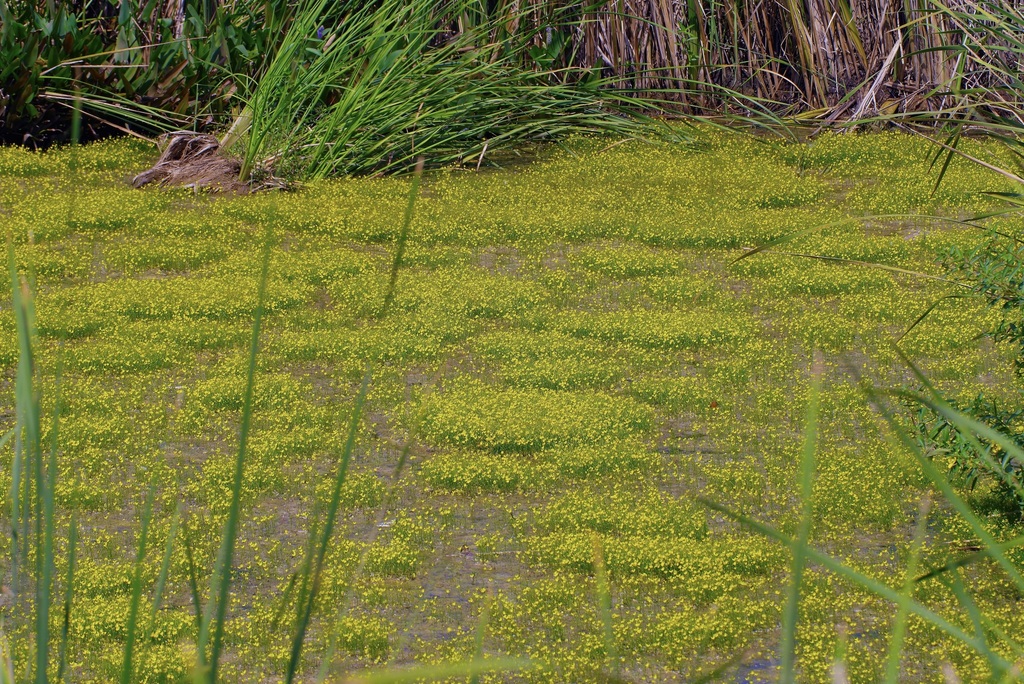
Aquatic bladderwort
Utricularia gibba
Best for: Filling a space quickly, in a home with pets
Elite tier: top-scoring on every measure
✓ Strong signal Light tolerance:
⚠ Watch out for Mat thinning and turning brown: usually water too hard/alkaline or too little light
Our take Bladderwort is the easiest carnivorous plant you can keep: it floats free in ponds or tanks, needs no substrate, no soil, and no feeding. Its microscopic bladder traps vacuum up daphnia, cyclops, and mosquito larvae on their own.
Strengths
- Fast enough to see progress month to month
- Non-toxic to cats and dogs
- Beginner-friendly and forgiving of missed waterings
Trade-offs
- Watch for: mat thinning and turning brown
Care details
| Light | : |
| Water | : |
| Humidity | : |
| Temperature | : |
| Toxicity | Non-toxic to fish, cats, dogs, and humans |
| US price | $5–$12 |
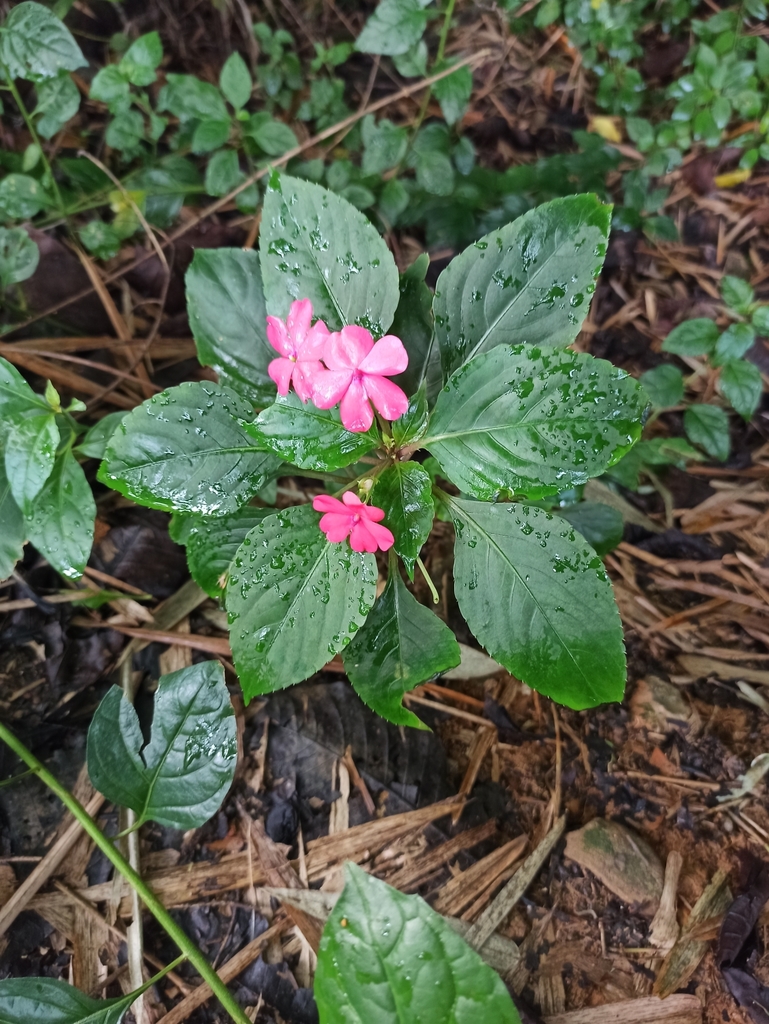
Impatiens
Sultana
Best for: Filling a space quickly, in a home with pets
Elite tier: top-scoring on every measure
✓ Strong signal Light tolerance: Part to full shade; scorches and stalls in hot afternoon sun
⚠ Watch out for Sudden collapse, leaves fall, white fuzz on leaf undersides: usually impatiens downy mildew
Our take Impatiens is a forgiving shade annual that flowers non-stop from late spring to first frost and is genuinely one of the easiest bedding plants to grow. It needs part to full shade, consistently moist soil, and no deadheading at all.
Strengths
- Fast enough to see progress month to month
- Non-toxic to cats and dogs
- Beginner-friendly and forgiving of missed waterings
Trade-offs
- Watch for: sudden collapse, leaves fall, white fuzz on leaf undersides
Care details
| Light | Part to full shade; scorches and stalls in hot afternoon sun |
| Water | Keep consistently moist. Check daily in containers during summer; wilts dramatically when dry |
| Humidity | : |
| Temperature | 15-25°C (60-77°F); growth stops below 10°C (50°F) |
| Toxicity | Non-toxic to cats, dogs, horses and humans |
| US price | $2–$8 |
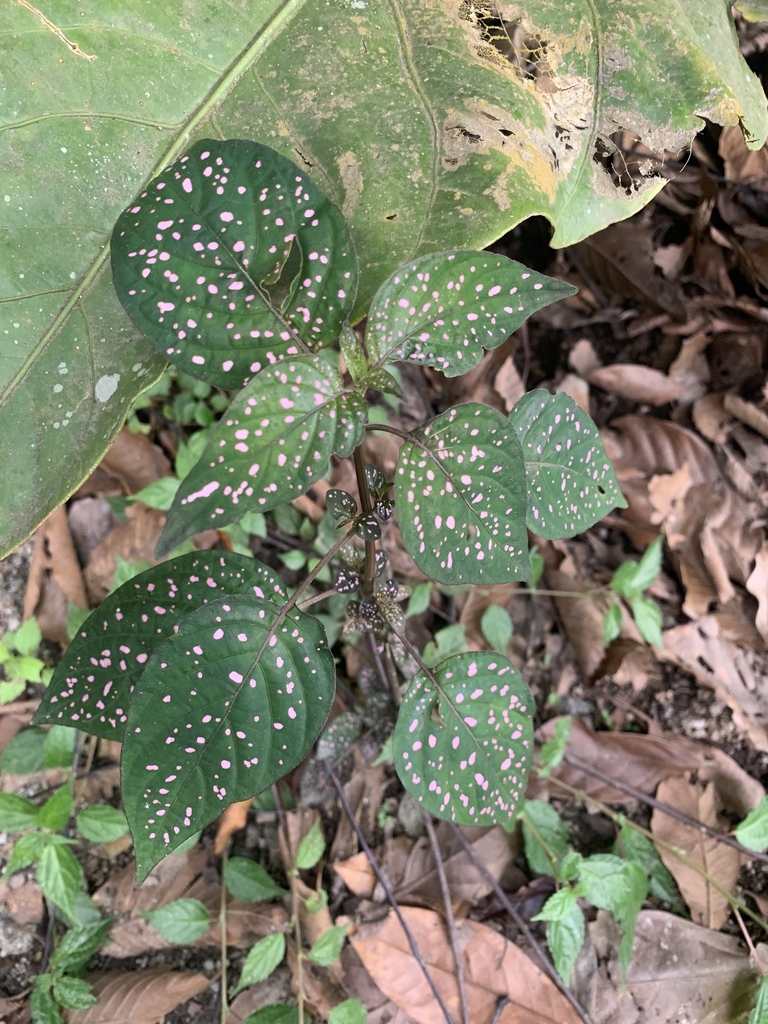
Polka Dot Plant
Confetti plant
Best for: Filling a space quickly, in a home with pets
Elite tier: top-scoring on every measure
✓ Strong signal Light tolerance: Bright indirect light; the speckling fades in shade and bleaches in direct sun
⚠ Watch out for Whole plant collapsed and limp: usually the pot dried out
Our take The polka dot plant is an easy, cheap, colourful little plant that is non-toxic to cats and dogs, which makes it a good pick for a pet household. Two things to know: it needs bright indirect light to keep its speckles (in shade it reverts towards plain green), and it wilts fast w
Strengths
- Fast enough to see progress month to month
- Non-toxic to cats and dogs
- Beginner-friendly and forgiving of missed waterings
Trade-offs
- Wants higher humidity than most homes provide
- Watch for: whole plant collapsed and limp
Care details
| Light | Bright indirect light; the speckling fades in shade and bleaches in direct sun |
| Water | Every 3-5 days; keep evenly moist and do not let the pot dry out fully |
| Humidity | 50%+ preferred; browning leaf tips are the first sign the air is too dry |
| Temperature | 18-27°C (65-80°F); keep above 13°C (55°F) |
| Toxicity | Non-toxic to cats, dogs and humans |
| US price | $5–$12 |
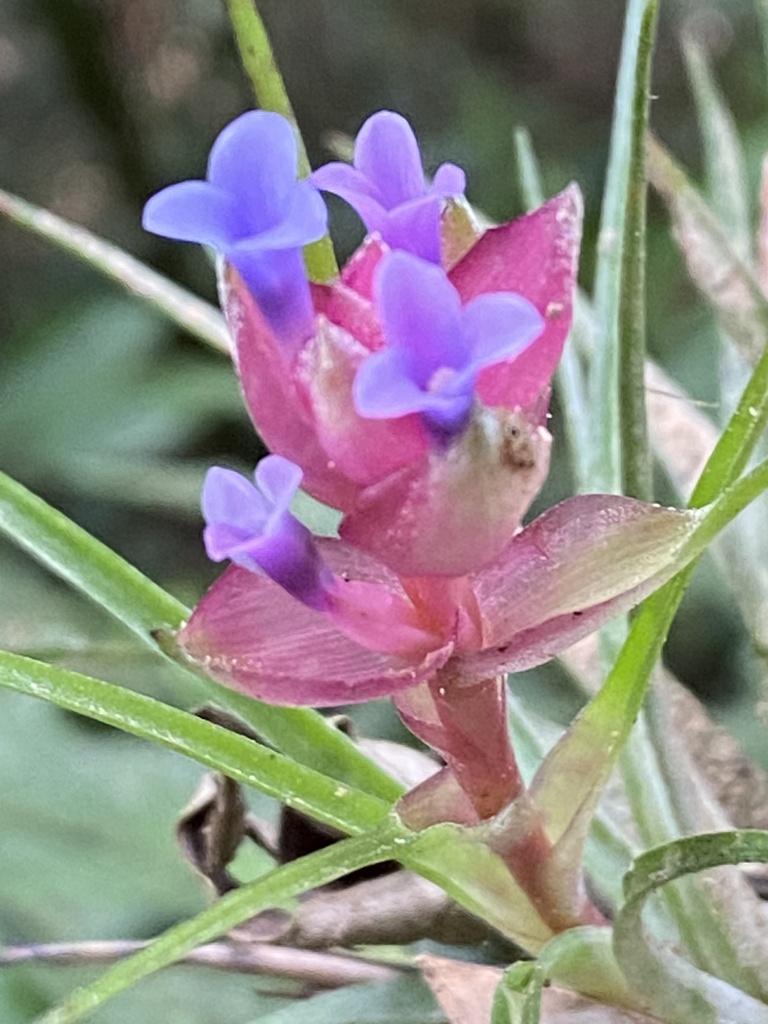
Upright air plant
Pink-spike air plant
Best for: Filling a space quickly, in a home with pets
Elite tier: top-scoring on every measure
✓ Strong signal Light tolerance: Bright indirect light; soft-leaf forms take less sun, hard-leaf forms take more
⚠ Watch out for Centre leaves pull out easily, base darkens: usually crown rot from water sitting in the dense rosette
Our take Stricta is one of the fastest and most forgiving air plants: bright indirect light, a 20-30 minute weekly soak, then shake and dry upside down so no water sits in the rosette. Unlike blushing species, it blooms with a distinct pink bract spike and blue flowers, and it clumps quic
Strengths
- Fast enough to see progress month to month
- Non-toxic to cats and dogs
- Beginner-friendly and forgiving of missed waterings
Trade-offs
- Wants higher humidity than most homes provide
- Watch for: centre leaves pull out easily, base darkens
Care details
| Light | Bright indirect light; soft-leaf forms take less sun, hard-leaf forms take more |
| Water | : |
| Humidity | 40-60% ideal; increase watering frequency in heated winter rooms |
| Temperature | 10-32°C (50-90°F); protect from frost |
| Toxicity | Non-toxic to cats, dogs, and humans |
| US price | $5–$12 |
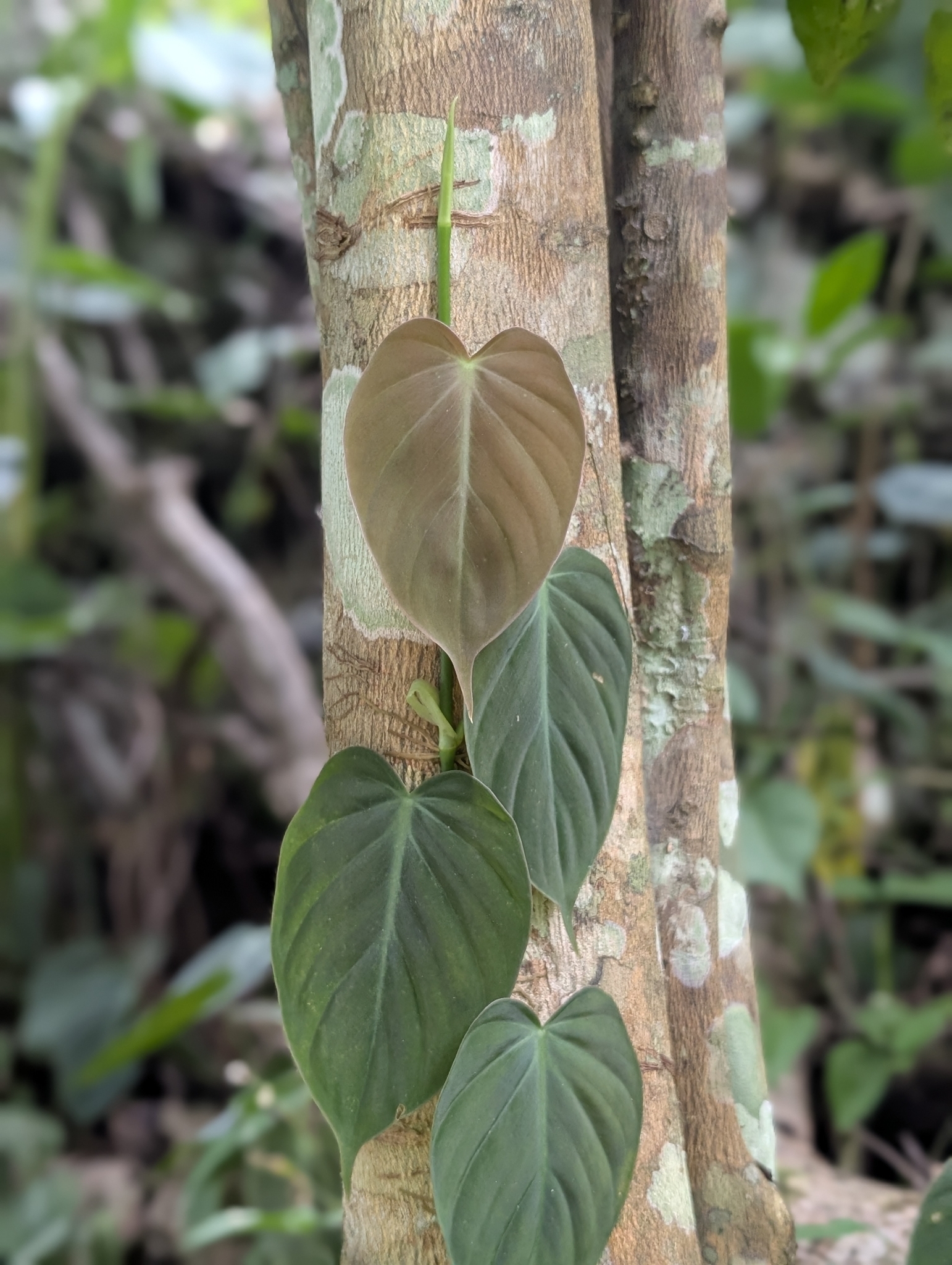
Philodendron Micans
Philodendron scandens micans
Best for: Filling a space quickly, if you forget to water
Elite tier: top-scoring on every measure
✓ Strong signal Light tolerance: Bright indirect light; tolerates medium light with slower, greener growth, but direct midday sun burns the velvet surfac
⚠ Watch out for Long bare stems with widely spaced small leaves: usually too little light
Our take Micans is the velvet form of the heartleaf philodendron, and it keeps that plant's forgiving nature: bright indirect light, water when the top few centimetres dry out, and it will trail a metre or more. New leaves emerge pinkish-bronze and darken to deep green with an iridescent
Strengths
- Fast enough to see progress month to month
- Beginner-friendly and forgiving of missed waterings
- Inexpensive to start ($10–$25 in the US)
Trade-offs
- Toxic to pets if chewed
- Wants higher humidity than most homes provide
- Watch for: long bare stems with widely spaced small leaves
Care details
| Light | Bright indirect light; tolerates medium light with slower, greener growth, but direct midday sun burns the velvet surface |
| Water | Every 7-10 days; water when the top 3-4cm of mix is dry |
| Humidity | 50%+ preferred; tolerates average indoor humidity better than a calathea |
| Temperature | 18-27°C (65-80°F); keep above 13°C (55°F) |
| Toxicity | Toxic to cats and dogs; irritating to humans if chewed or if sap contacts skin |
| US price | $10–$25 |
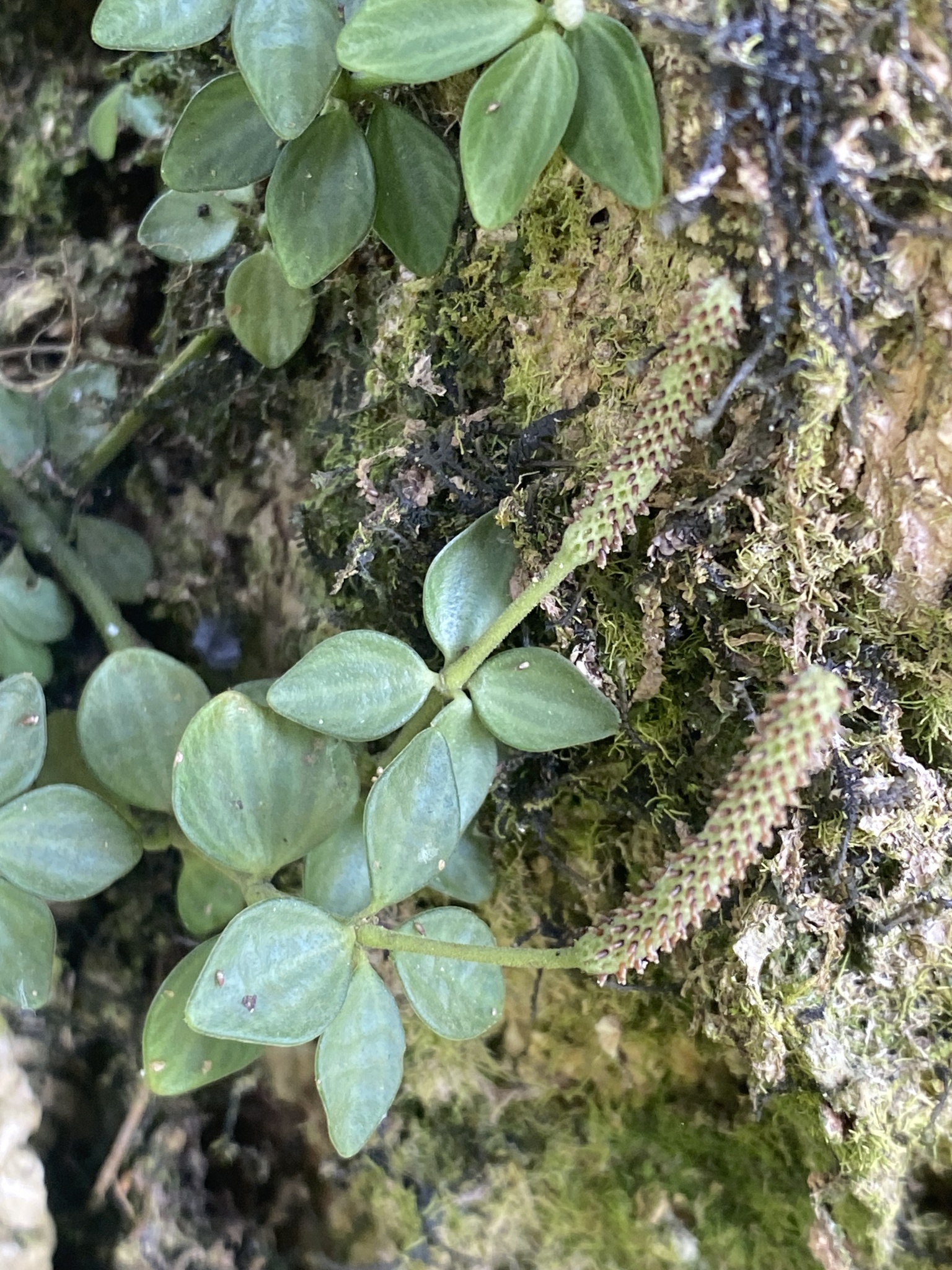
Peperomia 'Hope'
Acorn Peperomia
Best for: Steady, predictable growth: pet-safe and beginner-friendly
Elite tier: top-scoring on every measure
✓ Strong signal Non-toxic to cats and dogs. Verified per species, not assumed from its family
⚠ Watch out for Long bare stems with widely spaced whorls: usually insufficient light causing the internodes to stretch
Our take Hope is the trailing peperomia: thick coin-shaped leaves in whorls of three or four on stems that reach 30-45cm. It is a hybrid, not a species, so it is propagated only from cuttings.
Strengths
- Moderate, steady growth
- Non-toxic to cats and dogs
- Beginner-friendly and forgiving of missed waterings
Trade-offs
- Watch for: long bare stems with widely spaced whorls
Care details
| Light | Bright indirect light. In low light the internodes stretch and the tidy whorls space out into a sparse vine |
| Water | Every 10-14 days, longer than for broad-leaved peperomias, because the thick coin leaves store water. Let the pot dry out most of the way first |
| Humidity | 40%+; ordinary room humidity is fine and no misting is needed |
| Temperature | 18-26°C (65-79°F); keep above 12°C |
| Toxicity | Non-toxic to cats, dogs and humans |
| US price | $10–$25 |
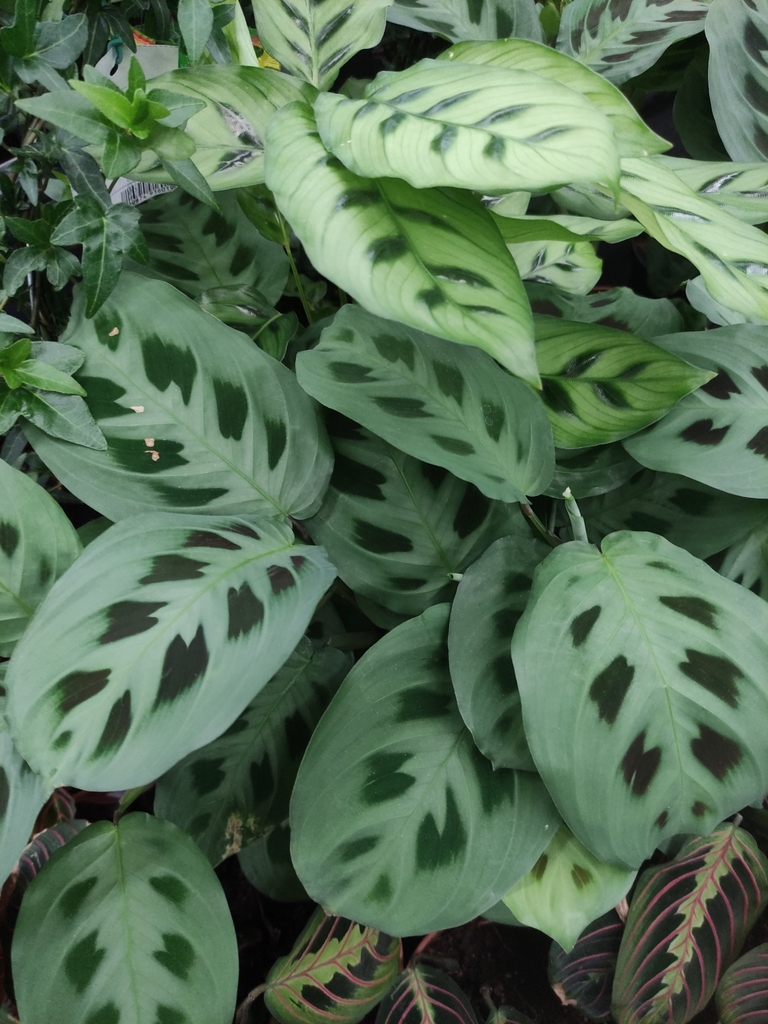
Prayer Plant
Maranta leuconeura
Best for: Steady, predictable growth: pet-safe and beginner-friendly
Elite tier: top-scoring on every measure
✓ Strong signal Non-toxic to cats and dogs. Verified per species, not assumed from its family
⚠ Watch out for Brown, crispy leaf edges: usually tap water minerals (fluoride, salts) or low humidity
Our take Prayer plant folds its leaves upward every night. A normal circadian movement, not stress.
Strengths
- Moderate, steady growth
- Non-toxic to cats and dogs
- Beginner-friendly and forgiving of missed waterings
Trade-offs
- Wants higher humidity than most homes provide
- Watch for: brown, crispy leaf edges
Care details
| Light | Medium to bright indirect light; tolerates lower light better than most patterned plants |
| Water | Every 5-7 days; keep soil consistently moist, never fully dry |
| Humidity | 50-60%+ preferred; brown edges appear in chronically dry air |
| Temperature | 18-27°C (65-80°F); avoid below 15°C (60°F) |
| Toxicity | Non-toxic to cats, dogs, and humans |
| US price | $10–$25 |
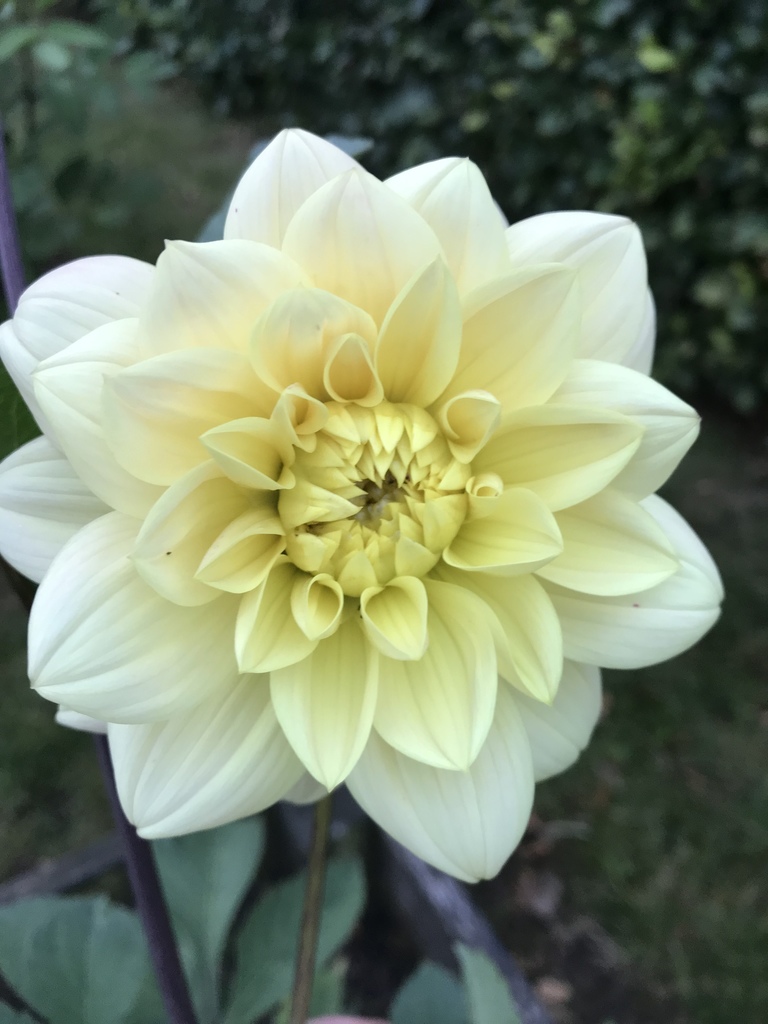
Dahlia
Dinnerplate dahlia (large types)
Best for: Filling a space quickly
Strong pick: one clear trade-off
✓ Strong signal Light tolerance: Full sun. 6-8 hours; blooms drop off sharply in shade
⚠ Watch out for Tubers rotted before sprouting: usually planted into cold, wet soil or watered before shoots emerged
Our take Dahlias are tender tuberous perennials, winter-hardy in the ground only in USDA zones 8-10. Plant tubers after the last frost 10-15cm deep in full sun; they bloom from midsummer until frost, and constant deadheading keeps flowers coming.
Strengths
- Fast enough to see progress month to month
- Inexpensive to start ($5–$20 in the US)
Trade-offs
- Toxic to pets if chewed
- Watch for: tubers rotted before sprouting
Care details
| Light | Full sun. 6-8 hours; blooms drop off sharply in shade |
| Water | None until shoots appear, then deeply 2-3x weekly in summer |
| Humidity | : |
| Temperature | : |
| Toxicity | Mildly toxic to cats and dogs. Skin irritation and stomach upset if chewed |
| US price | $5–$20 |
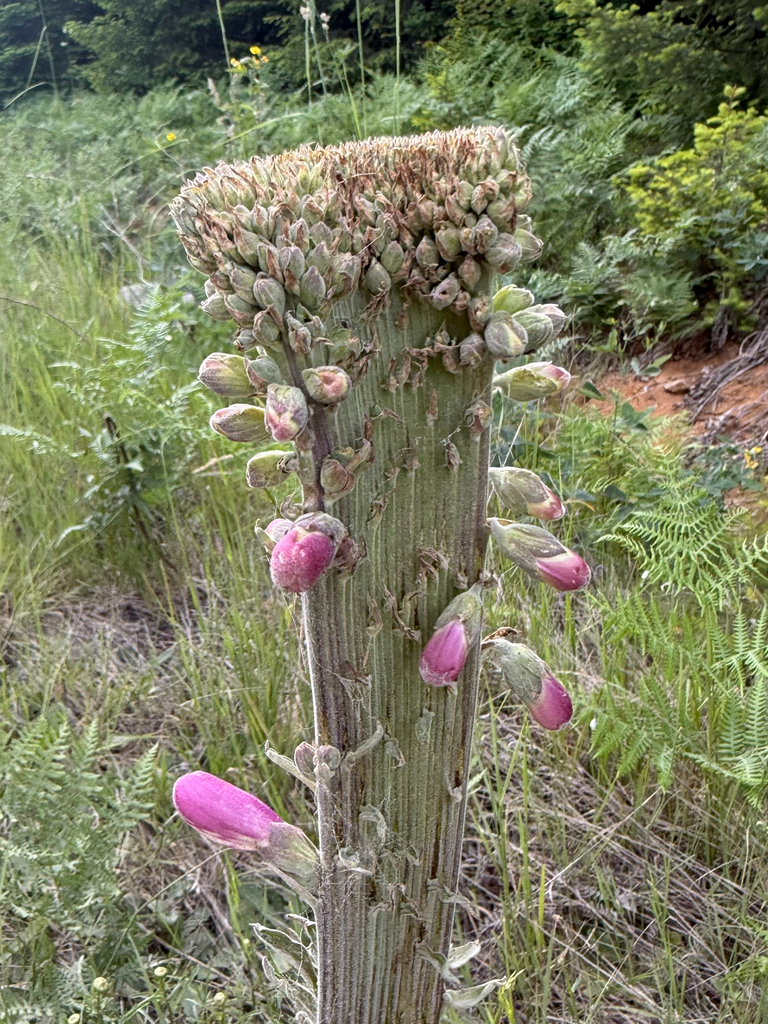
Foxglove
Digitalis
Best for: Filling a space quickly
Strong pick: one clear trade-off
✓ Strong signal Light tolerance: Part shade to dappled woodland-edge light; tolerates full sun in cool climates if soil stays moist
⚠ Watch out for Pet or child has chewed any part of the plant: usually cardiac glycoside poisoning risk. this is an emergency, not a gardening problem
Our take Safety first: every part of a foxglove, leaves, flowers, seeds, sap, even the water in a vase of cut stems, contains cardiac glycosides, the compounds refined into the heart drug digoxin. Ingestion can cause vomiting, visual disturbance, and dangerous heart-rhythm changes in peop
Strengths
- Fast enough to see progress month to month
- Inexpensive to start ($5–$15 in the US)
Trade-offs
- Toxic to pets if chewed
- Watch for: pet or child has chewed any part of the plant
Care details
| Light | Part shade to dappled woodland-edge light; tolerates full sun in cool climates if soil stays moist |
| Water | Keep rosettes from drying out in year one; established plants need water only in drought |
| Humidity | : |
| Temperature | Fully hardy in the UK; USDA 4-9 |
| Toxicity | SEVERELY toxic to humans, dogs, cats, and horses. Every part, fresh or dried; keep away from children, pets, and forage |
| US price | $5–$15 |
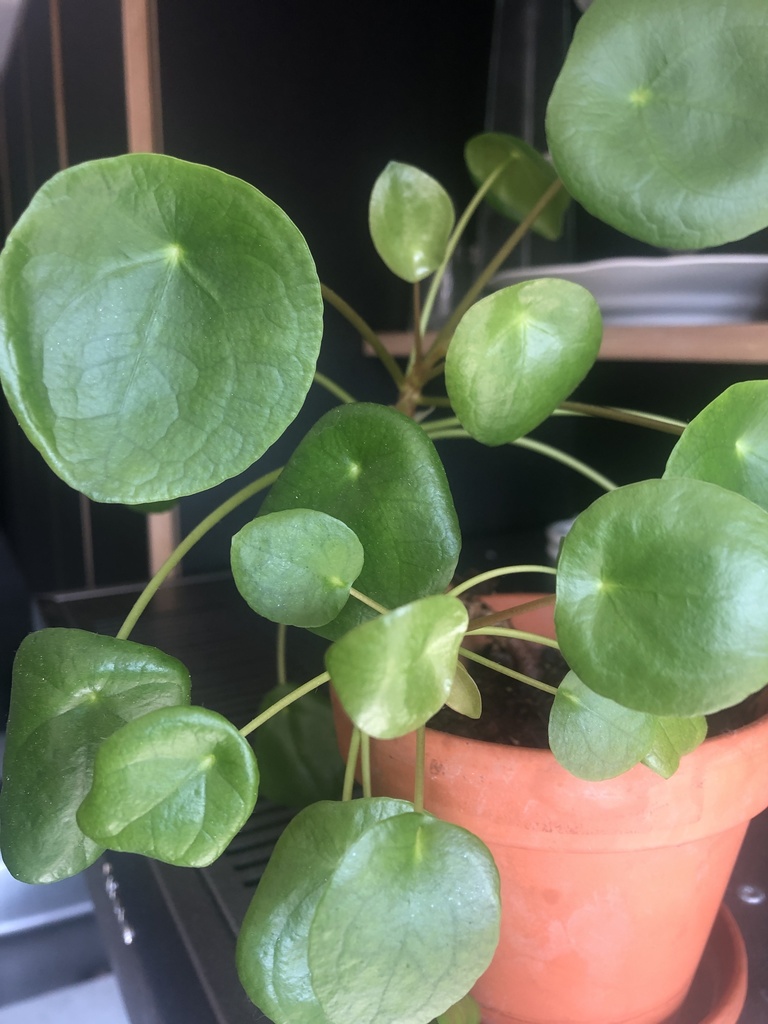
Chinese Money Plant
Pilea peperomioides
Best for: Steady, predictable growth, in a home with pets
Strong pick: one clear trade-off
✓ Strong signal Non-toxic to cats and dogs. Verified per species, not assumed from its family
⚠ Watch out for Curling or doming leaves: usually light imbalance (too much or too little) or temperature stress
Our take Chinese money plant is an easy, pet-safe houseplant with distinctive round, coin-shaped leaves. Give it bright indirect light, water when the top inch of soil dries, and rotate it regularly since it leans hard toward light.
Strengths
- Moderate, steady growth
- Non-toxic to cats and dogs
- Inexpensive to start ($10–$25 in the US)
Trade-offs
- Watch for: curling or doming leaves
Care details
| Light | Bright, indirect light; leans toward light so rotate weekly |
| Water | Every 7-10 days; water when the top inch of soil is dry |
| Humidity | Tolerates average home humidity well |
| Temperature | 16-24°C (60-75°F); tolerates brief cooler periods |
| Toxicity | Non-toxic to cats, dogs, and humans |
| US price | $10–$25 |
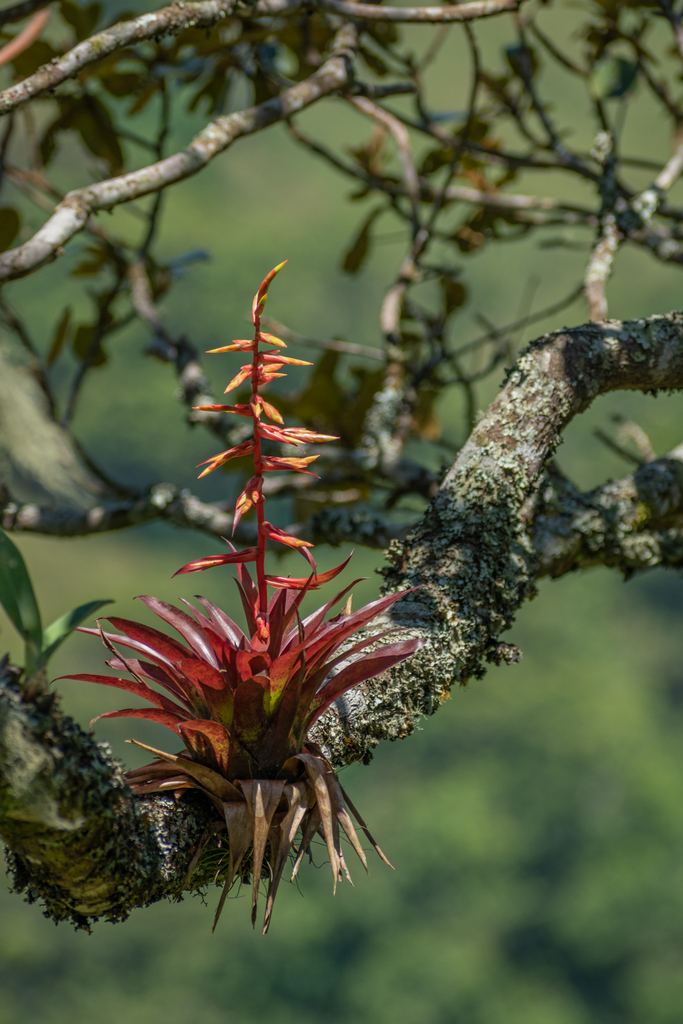
Pink quill plant
Pink quill bromeliad
Best for: Steady, predictable growth, in a home with pets
Strong pick: one clear trade-off
✓ Strong signal Non-toxic to cats and dogs. Verified per species, not assumed from its family
⚠ Watch out for Base rots and the rosette collapses: usually grown in dense potting soil or watered like a normal houseplant
Our take Here is the contrast that trips people up: almost every tillandsia is grown bare with no medium at all, but T. cyanea is a potted plant.
Strengths
- Moderate, steady growth
- Non-toxic to cats and dogs
- Inexpensive to start ($10–$25 in the US)
Trade-offs
- Watch for: base rots and the rosette collapses
Care details
| Light | Bright indirect light; a little gentle morning sun deepens the bract colour, harsh midday sun scorches leaves |
| Water | : |
| Humidity | 50-70% preferred; brown leaf tips are the first sign the air is too dry |
| Temperature | 16-27°C (60-80°F); protect from cold draughts and never below 10°C |
| Toxicity | Non-toxic to cats, dogs, and humans |
| US price | $10–$25 |
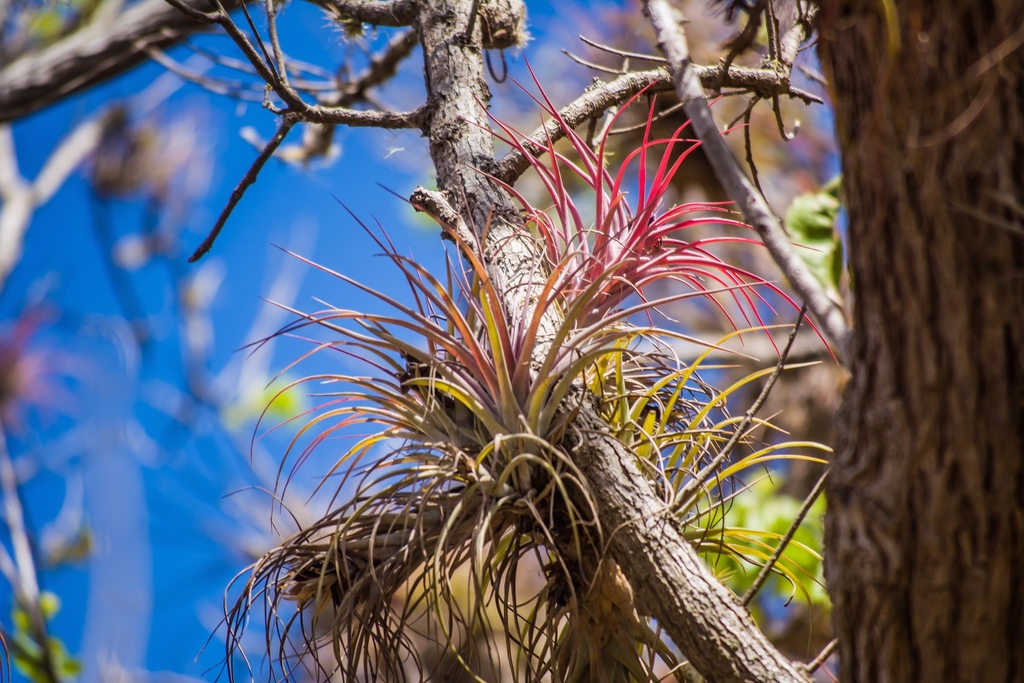
Red-blushing air plant
Flame air plant
Best for: Steady, predictable growth, in a home with pets
Strong pick: one clear trade-off
✓ Strong signal Non-toxic to cats and dogs. Verified per species, not assumed from its family
⚠ Watch out for Centre turns brown-black and leaves shed from the middle: usually crown rot. water sat in the dense rosette
Our take Brachycaulos has soft, almost trichome-free green leaves, so it wants more water and humidity than silvery species but less direct sun: bright indirect light, a 20-30 minute weekly soak plus misting in dry rooms, and a thorough upside-down dry so no water sits in the dense rosett
Strengths
- Moderate, steady growth
- Non-toxic to cats and dogs
- Inexpensive to start ($5–$12 in the US)
Trade-offs
- Watch for: centre turns brown-black and leaves shed from the middle
Care details
| Light | Bright indirect light; soft leaves scorch in hot direct sun, but good light is needed for the red flush |
| Water | : |
| Humidity | 50-70% ideal; among the more humidity-hungry common species |
| Temperature | 12-32°C (54-90°F); protect from frost |
| Toxicity | Non-toxic to cats, dogs, and humans |
| US price | $5–$12 |
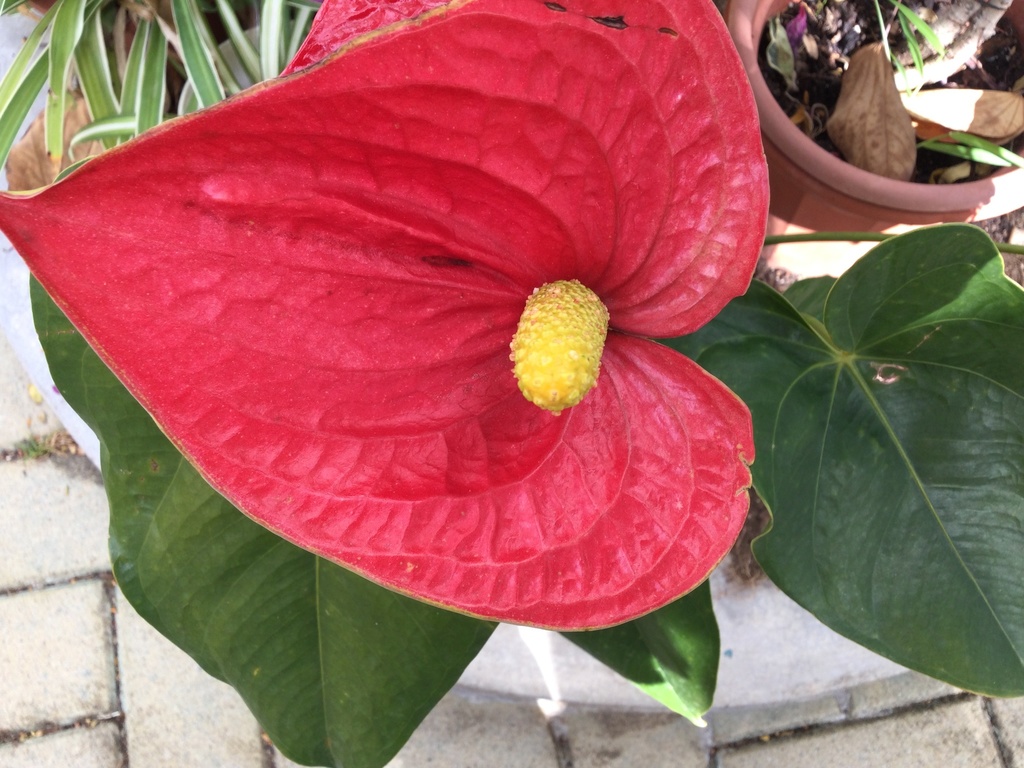
Anthurium (Flamingo Flower)
Laceleaf
Best for: Steady, predictable growth: forgiving of mistakes
Strong pick: one clear trade-off
✓ Strong signal Care difficulty: Moderate: divisions establish reliably; keep warm and humid
⚠ Watch out for No flowers, just leaves, for months: usually not enough light. the most common anthurium complaint
Our take Anthurium is the easiest way to keep real colour in the house year-round: bright indirect light, chunky orchid-style mix, water when the top few centimetres dry (about weekly), and it cycles through long-lasting red spathes continuously. The whole plant contains calcium oxalate c
Strengths
- Moderate, steady growth
- Beginner-friendly and forgiving of missed waterings
- Inexpensive to start ($15–$40 in the US)
Trade-offs
- Toxic to pets if chewed
- Wants higher humidity than most homes provide
- Watch for: no flowers, just leaves, for months
Care details
| Light | Bright indirect light for reliable blooming; tolerates medium light but flowers taper off; no harsh direct sun |
| Water | About weekly; water when the top 2-3cm of mix is dry, and let it drain fully |
| Humidity | 50%+ preferred; tolerates average homes but leaf tips brown in very dry air |
| Temperature | 18-29°C (65-85°F); keep above 15°C (60°F); hates cold drafts |
| Toxicity | Toxic to cats, dogs, and humans (calcium oxalate crystals in all parts) |
| US price | $15–$40 |
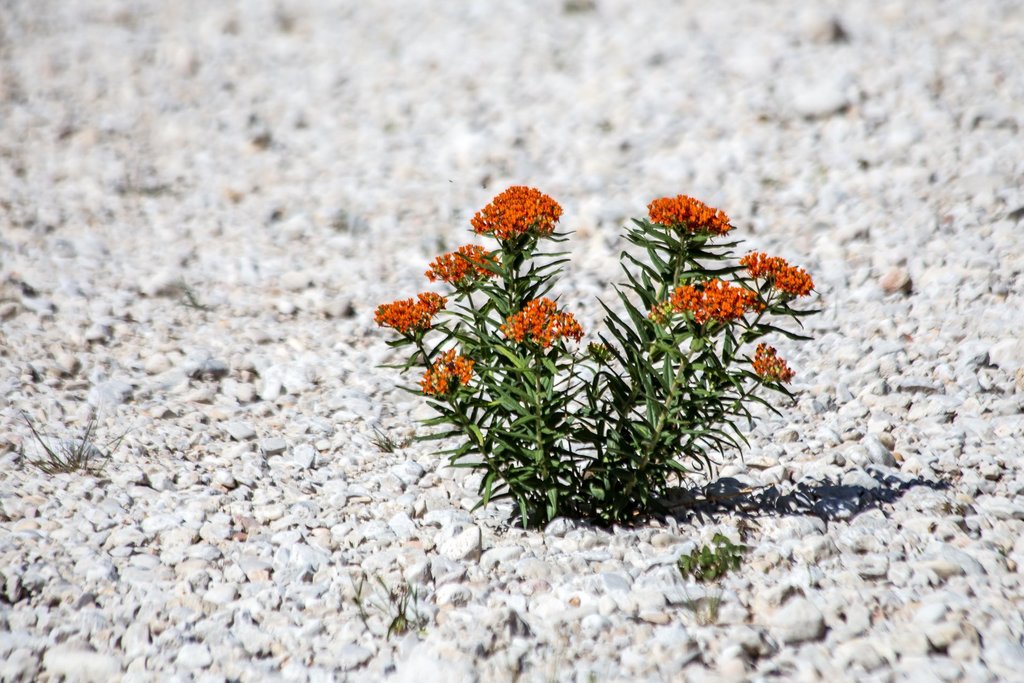
Milkweed
Silkweed
Best for: Steady, predictable growth
Situational: works if the trade-offs suit you
✓ Strong signal Care difficulty: Easy from stratified seed; taprooted species dislike transplanting once established
⚠ Watch out for Dense orange aphid colonies on stems: usually oleander aphids, a milkweed specialist
Our take Milkweed is the only plant monarch caterpillars can eat, so it is the single highest-value plant in a monarch garden. Plant species native to your own region, not tropical milkweed (Asclepias curassavica).
Strengths
- Moderate, steady growth
- Inexpensive to start ($8–$20 in the US)
Trade-offs
- Toxic to pets if chewed
- Watch for: dense orange aphid colonies on stems
Care details
| Light | Full sun for nearly all species; at least six hours |
| Water | : |
| Humidity | : |
| Temperature | : |
| Toxicity | Toxic to cats, dogs, horses and livestock if eaten; the sap irritates skin and can seriously damage eyes |
| US price | $8–$20 |
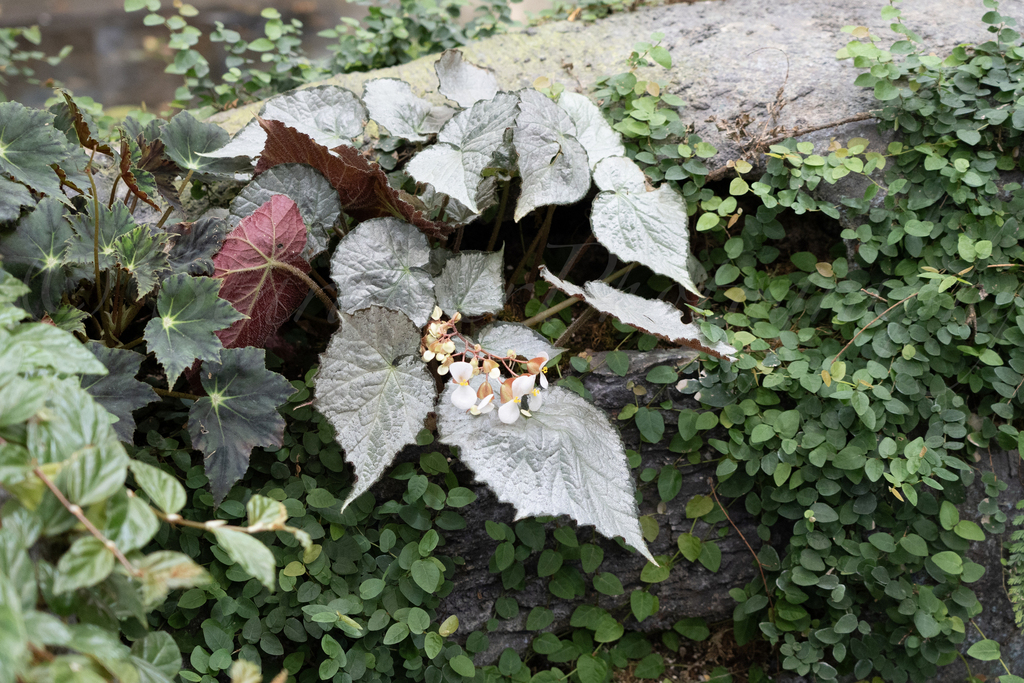
Rex Begonia
Fancy-leaf begonia
Best for: Steady, predictable growth
Situational: works if the trade-offs suit you
✓ Strong signal Care difficulty: Moderate: leaf cuttings root reliably in high humidity but take 6-10 weeks
⚠ Watch out for White powdery patches on leaves: usually powdery mildew. rex begonias are highly susceptible, especially with misting or poor airflow
Our take Rex begonia is a humidity-loving foliage plant with some of the most dramatic leaves in the houseplant world. Give it bright indirect light, 50%+ humidity, and water when the top inch of soil dries.
Strengths
- Moderate, steady growth
- Inexpensive to start ($8–$25 in the US)
Trade-offs
- Toxic to pets if chewed
- Watch for: white powdery patches on leaves
Care details
| Light | Bright indirect light; an east window is ideal; direct sun bleaches the leaf colors |
| Water | When the top 2-3cm of soil is dry. Roughly weekly; water the soil, never the leaves |
| Humidity | 50-70%; use a pebble tray or humidifier. Do NOT mist, it triggers powdery mildew |
| Temperature | 16-24°C (60-75°F); below 13°C growth stalls and leaves drop |
| Toxicity | Toxic to cats and dogs (soluble calcium oxalates, concentrated in the rhizome) |
| US price | $8–$25 |
Stop guessing whether that corner is bright enough
Sodate measures the actual light where your plant sits and builds its watering schedule from that reading and your season, not a fixed interval. Currently in development.
See Sodate: coming soonWhat to check before buying
- Ask where the plant was grown. Greenhouse-grown stock looks perfect for weeks on stored energy before it shows dim-room stress
- Check leaf spacing on the stem: wide gaps mean it was already stretching for light before you bought it
- Choose plain-green over variegated for genuinely dim spots. Variegated leaves have less chlorophyll and need more light
- Inspect leaf undersides and stem joints for pests, which spread faster on plants stressed by low light
- Confirm pet toxicity yourself if you have cats or dogs, rather than relying on shelf labels
Red flags to walk away from
- Fast growth promised without a light requirement attached. Nearly every fast plant is only fast in bright light.
- Vining plants sold without a support. They grow quickly and then sprawl, which is a pruning commitment, not a decor choice.
- 'Grows quickly' used to sell a plant that will outgrow the room. Check the mature size before the growth rate.
- Young specimens of large species sold as tabletop or desk plants. The label describes today, not maturity.
Best time to buy
Buy in early spring. You get the entire growing season ahead of you, the plant establishes before winter, and you see the growth these plants are bought for rather than waiting months for it to start.
Frequently asked questions
Why has my fast-growing plant stopped growing?
Almost always light, and secondarily season. Most of these plants slow or stop from late autumn to early spring regardless of care, and a plant described as fast will be slow in a dim corner.
Do fast-growing plants need more fertiliser?
More than slow ones, yes, but only during active growth. Feeding a dormant plant in winter does nothing useful and salt build-up in the soil can burn the roots.
Will a fast grower outgrow my space?
Several here will. Check the mature size row on each profile. Fast plus large is a pruning commitment; fast plus compact is the combination most people actually want.
Do small plants need less water?
Less water per watering, but more often. A 10cm pot can dry out in two days in summer, where a floor-standing plant might go two weeks.
Can I keep these on a desk under office lighting?
Only the ones that also score well on light tolerance. Ceiling lighting is far dimmer than it looks, so check the light row on each profile as well as the size.
Limitations of this ranking
Stated plainly, so you can judge how much weight to give it:
- No physical testing. Nothing here was grown, timed or measured by us. Every score is computed from the structured care data on this site, which is compiled from the botanical and horticultural sources listed below.
- Prices are researched ranges, not live quotes. They are typical retail for a standard starter size and will drift. Each plant profile carries the regional breakdown for five countries.
- Scores are relative to this directory, which holds 208 profiles. A plant absent from the directory cannot appear here, so this is not a claim about every plant in existence.
- Care data is species-level. Your light, your water and your home will move any of these plants up or down more than the gap between adjacent ranks.
- No credentialed horticulturist has reviewed this. These pages are compiled and edited against a published rubric and cited sources. Where a claim matters, the source is linked below so you can check it rather than take it on authority. Our review panel page lists every section that has no expert reviewer yet and the credential we require to fill it.
Sources
Of the 208 plant profiles in this directory, 16 meet the entry bar for fast-growing plants for small spaces (8%). 9 of the 15 ranked here are non-toxic to cats and dogs, and the median entry price across the list is $8.
- ASPCA Toxic and Non-Toxic Plant List. Species-level toxicity to cats and dogs, used for every pet-safety score.
- GBIF (Global Biodiversity Information Facility). Accepted botanical names and taxon identifiers for every profile.
- iNaturalist. Source of the CC-licensed photographs, with photographer and licence credited per image.
- RHS Plant Finder. UK cultivation guidance, hardiness ratings and cultivar naming.
- Missouri Botanical Garden Plant Finder. Cross-checked culture notes, mature size and problem diagnosis.
Editorial disclosure: no plant on this page is sponsored, and Sodate takes no payment, commission or affiliate revenue for placement. Rankings are generated from the data by the scoring code in this site's repository, not chosen by hand. Published , last updated .