 Sodate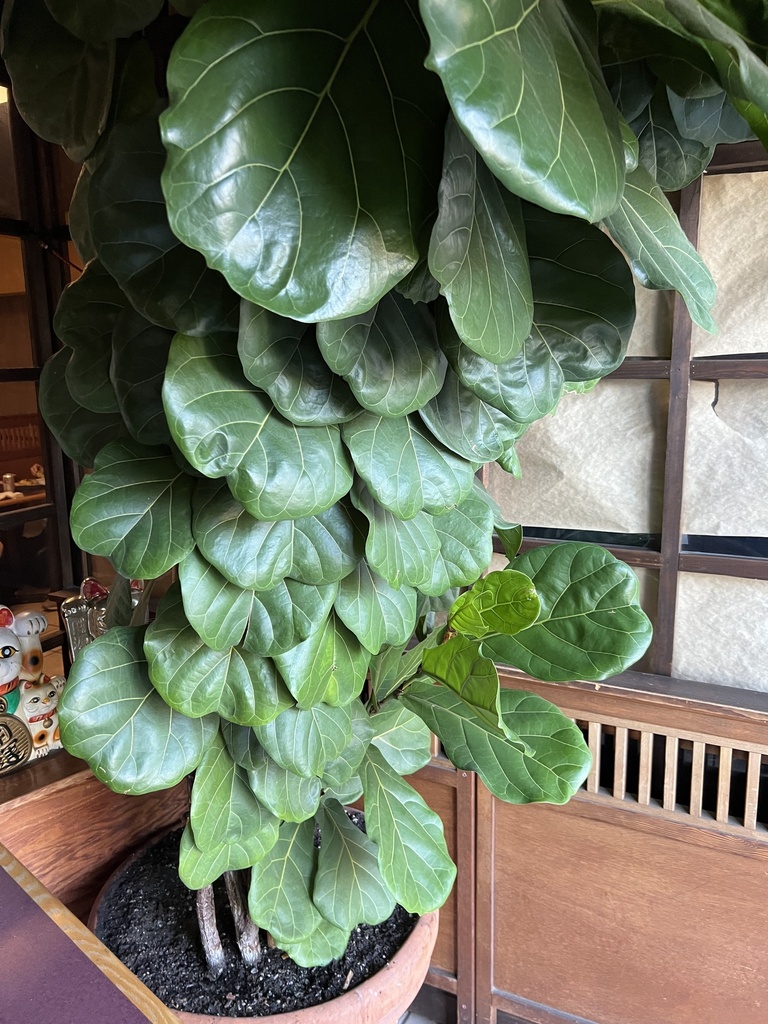
On this page
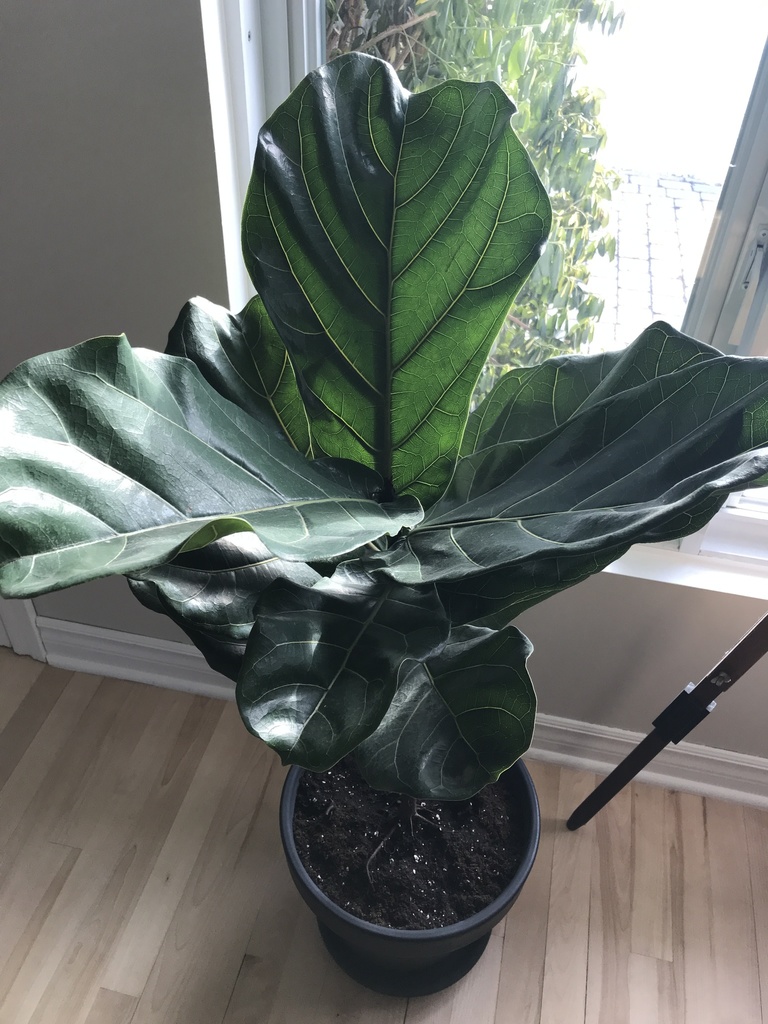
Fiddle leaf figs need one thing above all: several hours of bright light near an east or south window. Pick a spot, don't move it, water thoroughly when the top 5cm of soil is dry (roughly weekly), and rotate a quarter turn each watering. The sap is mildly toxic to pets. Expect $20-$40 for a small plant, $100-$300 for a tree-sized one.
Key facts
- Native to lowland tropical rainforests of West Africa (Sierra Leone to Cameroon), where it can start life as an epiphyte in another tree's canopy before rooting to the ground.
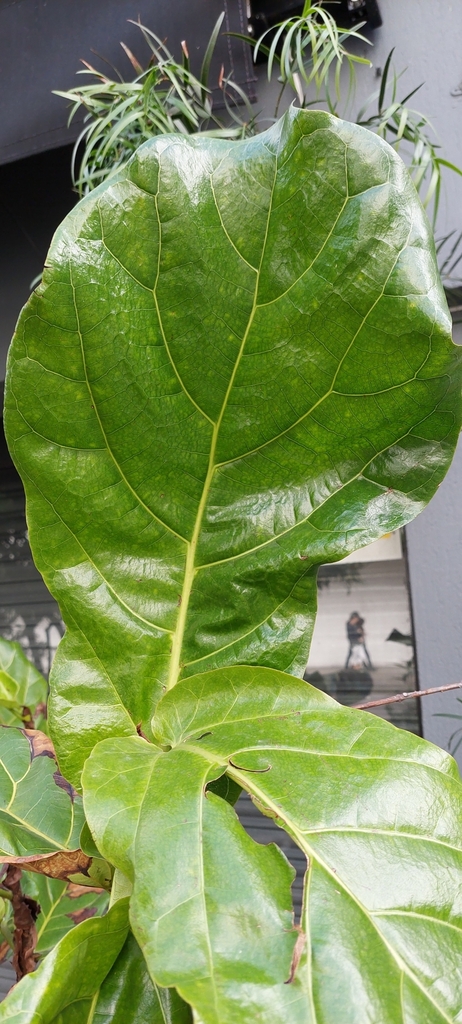
- The violin (fiddle) shaped leaves can exceed 45cm long. Among the largest of any common houseplant.
- It drops leaves in response to change: moving it, drafts, sudden light shifts, and irregular watering all trigger shed.
- The milky latex sap is mildly toxic to cats and dogs and can irritate skin, typical of all ficus.
Care requirements#
| Plant type | Indoor tree (outdoor year-round only in USDA 10-12) |
| Growing medium | Rich, well-draining potting mix with added perlite or bark |
| Light needs | Bright light, several hours daily; an east or south-facing window is ideal; gentle direct morning sun is fine |
| Water frequency | Roughly weekly; water thoroughly when the top 5cm (2in) of soil is dry, then let excess drain |
| Humidity | 40-60%; tolerates average home humidity but browns at tips in very dry air |
| Temperature range | 18-27°C (65-80°F); keep above 13°C (55°F) and away from cold drafts and heat vents |
| Fertilizer | Balanced liquid feed monthly through spring and summer; none in winter |
| Soil pH | 6.0-7.0 |
| Drainage needs | High: root rot from soggy soil is a common killer |
| Pot recommendation | Heavy pot with drainage hole, one size up from the root ball; oversized pots hold too much water |
| Placement | Pick one bright spot and leave it there. This species resents being moved |
| Toxicity | Mildly toxic to cats, dogs, and humans (irritating latex sap) |
Growth & propagation#
| Mature size | 2-3m indoors; up to 15m in the wild |
| Growth rate | Moderate: 30-60cm per year in good light |
| Propagation methods | Stem cuttings with a leaf node, rooted in water or soil; air layering for thick stems |
| Propagation difficulty | Moderate: cuttings root in 4-8 weeks; single leaves root but never grow into plants |
| Repotting schedule | Every 1-2 years in spring, or when roots circle the pot |
| Pruning needs | Prune the top in spring to control height and trigger branching; notching can force side branches |
Common problems & troubleshooting#
| Symptom | Likely cause | Fix |
|---|---|---|
| Brown, crispy-edged spots spreading from leaf margins | Underwatering or low humidity, often combined with root-bound soil that sheds water | Water thoroughly until it drains, check the root ball actually gets wet, and keep the schedule consistent |
| Dark brown blotches starting mid-leaf or near the base, lower leaves dropping | Root rot from overwatering or a pot without drainage | Slide the plant out, trim mushy brown roots, repot in fresh fast-draining mix, and water only when the top 5cm is dry |
| Sudden leaf drop after bringing it home or moving it | Shock from changed light, temperature, or drafts. A classic ficus response | Put it in a bright, stable spot and leave it alone; it usually stabilises within a few weeks |
| Small red-brown dots on new leaves | Edema. Cells bursting from irregular watering while young leaves expand | Mostly cosmetic; even out the watering rhythm and new leaves will emerge clean |
| New leaves small and pale, plant leaning | Insufficient light | Move closer to a bright window (do it once, not repeatedly) and rotate a quarter turn at each watering |
The plant that hates surprises
Sodate keeps your fiddle leaf fig on the boring, consistent watering rhythm it actually wants, no more guessing.
Seasonal care#
Varieties & cultivars#
| Variety | Distinguishing trait | Note |
|---|---|---|
| 'Bambino' | Dwarf form with smaller, rounder leaves | Better for desks and small rooms; often sold simply as dwarf fiddle leaf |
| 'Compacta' | Denser habit, leaves closer together on the stem | Intermediate between the species and 'Bambino' |
| 'Variegata' | Cream-and-green marbled leaves | Rare and expensive; needs even more light to hold variegation |
Buying checklist#
- Leaves are deep green, firm, and free of brown blotches. Spotting at purchase rarely improves
- Multiple new leaves or a visible new bud at the top shows active growth
- Trunk is sturdy and stands without staking (floppy trunks were grown too fast, too close together)
- Soil is lightly moist, not swampy; check the pot has drainage
- No webbing under leaves (spider mites) or sticky residue (scale)
Pricing by region#
| Region | Price range | Typical unit | Basis |
|---|---|---|---|
| US | $20 – $300 | 6in pot to 6ft tree | Big-box + nursery retail |
| UK | $18 – $250 | 12cm pot to 1.8m tree | Garden centre + online retail |
| India | $4 – $60 | small pot to 5ft plant | Urban nursery + online |
| Australia | $16 – $260 | 130mm pot to 1.8m tree | Nursery + garden centre |
| Canada | $18 – $290 | 6in pot to 6ft tree | Garden centre retail |
USD figures are approximate conversions for comparison; switch the dropdown to see each region's actual local-currency listing price.
Often confused with#
Where it's actually grown#
Nearly all retail fiddle leaf figs are produced in high-volume foliage nurseries. South Florida (Apopka/Homestead) supplies most of North America, while Dutch and Belgian glasshouses supply Europe; plants are grown from cuttings or tissue culture, which is why store stock looks so uniform.
Import & biosecurity restrictions#
| Region | Note |
|---|---|
| Australia | Live plant imports restricted under biosecurity law; buy from domestic nurseries, where it is widely grown. |
| US | Domestic sale unrestricted; most stock ships from Florida. |
| UK | Post-Brexit imports from the EU need phytosanitary certificates at trade level; retail availability is unaffected. |
| India | No restriction; grows well in Indian climates but protect from full afternoon sun. |
| Canada | CFIA import permits apply to commercial shipments; retail plants arrive via US and domestic greenhouses. |
Similar plants
Did you know?
Frequently asked questions
Is a fiddle leaf fig toxic to pets?
Yes, mildly. The milky sap irritates the mouth and stomach of cats and dogs, causing drooling or vomiting if chewed. It's rarely dangerous but keep it away from persistent chewers.
Why is my fiddle leaf fig dropping leaves?
Almost always a reaction to change: a recent move, drafts, or a swing in watering. Give it a bright, stable spot and a consistent routine and it usually settles within a few weeks.
How much light does a fiddle leaf fig really need?
More than most houseplants. Several hours of bright light right beside an east or south-facing window. It survives but slowly declines in the middle of a room.
How often should I water it?
Roughly weekly: water thoroughly when the top 5cm of soil is dry and let the excess drain. Erratic watering causes the classic brown spots.
How do I make my fiddle leaf fig branch?
Prune the growing tip in spring, or notch the trunk just above a node. Both push the plant to activate dormant side buds. Pruned tips can be rooted as new plants.