 Sodate
On this page
Asparagus is a genuine long-term investment: plant crowns in a permanent weed-free bed, cut nothing in years one and two, take a light two-week harvest in year three, then a full six to eight week harvest every spring for twenty years or more. Spears are cut at 15-20cm, and the summer fern must be left standing to feed next year's crop. The red berries on female plants are mildly toxic to cats and dogs, though the spears themselves are safe.
Key facts
- A true perennial. Nothing is harvested in years one and two, and a well-managed bed then crops for 20 years or more.
- The feathery summer fern is not decoration. It is what recharges the crown for next spring, so cutting it down early permanently weakens the bed.
- Spears grow astonishingly fast in warm spring weather, sometimes 5-10cm in a single day, so beds are cut every day or two in season.
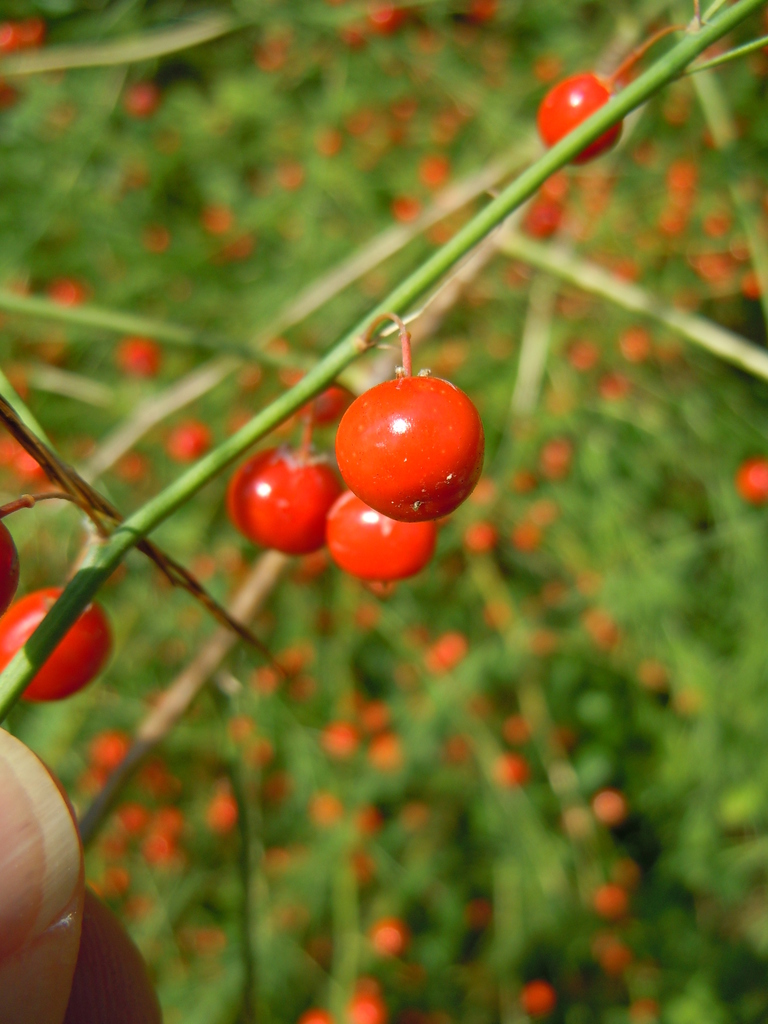
- Female plants set red berries which are mildly toxic to cats and dogs if eaten; all-male hybrids avoid the issue and yield more.
Growing requirements#
| Plant type | Outdoor hardy perennial vegetable, occupying a permanent bed for two decades |
| Growing medium | Deep, free-draining, weed-free soil with plenty of organic matter; raised beds suit heavy clay |
| Light needs | Full sun, 6-8 hours daily |
| Water frequency | 25mm a week in the first two establishment years and through the fern season; established beds are fairly drought-tolerant |
| Spacing | 30-45cm between crowns in a trench, with 90-120cm between rows |
| Planting season (northern hemisphere) | Plant bare-root crowns in early spring, March to April, before spears emerge |
| Planting season (southern hemisphere) | Plant crowns in winter to early spring, July to September, in Australia and New Zealand |
| Temperature range | 15-25°C (60-77°F) for spear growth; needs a cold or dry dormant period each year |
| Fertilizer | Generous compost or well-rotted manure each spring, plus a balanced feed immediately after the harvest window closes |
| Soil pH | 6.5-7.5: one of the few vegetables that actively prefers a neutral to slightly alkaline soil |
| Container suitability | Poor. Crowns are large, long-lived and deep-rooted; only a very large permanent raised planter is worth attempting |
| Hardiness | Very hardy, down to around -30°C when dormant |
| Toxicity | Spears are edible and safe. The red berries on female plants are mildly toxic to cats and dogs, and the fern sap can irritate sensitive skin |
Harvest, yield & propagation#
| Years to first harvest | Year 1 and 2: no cutting at all. Year 3: light 2-week harvest. Year 4 onward: full 6-8 week harvest |
| Yield per plant | About 250-500g of spears per crown per season once mature; plan 8-10 crowns per person |
| Harvest signal | Spears 15-20cm tall with tight, unopened tips; open feathery tips mean you left it too long |
| Harvest technique | Cut or snap at ground level, ideally with a knife just below the surface, every one to two days through the season |
| Storage | Stand cut spears upright in 2cm of water in the fridge for up to a week, or blanch and freeze for 8-12 months |
| End of harvest | Stop cutting completely after 6-8 weeks and let all remaining spears grow into fern for the rest of the summer |
| Propagation methods | One-year-old bare-root crowns are standard. Seed works but adds two more years before any harvest |
| Companion plants | Tomatoes, basil and parsley; keep alliums and perennial weeds well away from the bed |
Common problems & troubleshooting#
| Symptom | Likely cause | Fix |
|---|---|---|
| Thin, spindly spears in an established bed | Overharvesting, exhausted crowns, or competition from weeds | Stop cutting for the season, feed generously, weed thoroughly, and let the fern build reserves back up |
| Spear tips open and feather while still short | Hot weather forcing rapid development, or harvesting too late in the season | Cut daily during warm spells, and end the harvest window on time rather than pushing it |
| Small orange-black beetles chewing spears and fern | Asparagus beetle (Crioceris asparagi) | Hand-pick beetles and rub off the dark eggs on spears; clear all fern debris in late winter to remove overwintering adults |
| Yellowing fern and rotten crowns | Fusarium crown rot, usually in poorly drained soil | No practical cure. Plant into raised free-draining beds, use resistant all-male hybrids, and never replant asparagus into an old asparagus bed |
| Bed swamped by weeds and grass | Perennial weeds establishing in a bed that cannot be dug over | Mulch thickly every spring and hand-weed regularly. Clearing perennial weeds completely before planting is the single most important preparation step |
| Self-seeded asparagus seedlings everywhere | Female plants dropping berries | Pull the seedlings, and plant all-male hybrid varieties, which set no berries and produce more spears |
Know exactly which year you can start cutting
Sodate tracks the age of each asparagus bed and tells you when to stop cutting, when to leave the fern, and when the crowns are ready for a full harvest.
Seasonal care#
Varieties & cultivars#
| Variety | Distinguishing trait | Note |
|---|---|---|
| 'Gijnlim' | All-male hybrid, early and heavy cropping | Popular European choice |
| 'Jersey Knight' | All-male, disease-tolerant, thick spears | Widely grown in North America |
| 'Purple Passion' | Purple spears, sweeter and tender enough to eat raw | Colour fades on cooking |
| 'Connover's Colossal' | Traditional open-pollinated variety, mixed male and female | Heirloom, sets berries |
| 'Mary Washington' | Reliable rust-resistant classic | Good widely available all-rounder |
Buying checklist#
- Buy one-year-old crowns rather than older ones; they establish faster despite looking smaller
- Prefer all-male hybrids for higher yields and no self-seeding berries
- Check crowns have plump, flexible roots, not dried brittle ones
- Reject any crown with soft, dark or mouldy tissue at the centre
- Buy enough for a real crop, around 8-10 crowns per person, since the bed is permanent
Pricing by region#
| Region | Price range | Typical unit | Basis |
|---|---|---|---|
| US | $15 – $40 | Bundle of 10-25 bare-root crowns | Nursery + mail-order retail |
| UK | $13 – $32 | Pack of 5-10 crowns | Garden centre retail |
| India | $2 – $7 | Pack of 5-10 crowns | Specialist nursery + online |
| Australia | $16 – $40 | Bundle of 6-12 crowns | Nursery + mail order |
| Canada | $15 – $38 | Bundle of 10-25 crowns | Garden centre retail |
USD figures are approximate conversions for comparison; switch the dropdown to see each region's actual local-currency listing price.
Often confused with#
Name confusion warning#
"Asparagus fern" is not asparagus. The plant sold in garden centres as an asparagus fern is an ornamental relative in the same genus with no edible spears, and its berries are toxic to cats and dogs. If you want the vegetable, buy Asparagus officinalis crowns specifically. Note also that the feathery summer growth on real asparagus is called the "fern" too, which adds to the confusion.
Where it's actually grown#
Asparagus crowns are raised by specialist perennial nurseries in the Netherlands, the UK, Michigan, California and New Zealand, where hybrid seed is grown on for a full year before the crowns are lifted dormant and shipped. Almost all modern commercial varieties are all-male hybrids developed at breeding programmes in the Netherlands and at Rutgers University in New Jersey, since male plants put energy into spears rather than seed.
Import & biosecurity restrictions#
| Region | Note |
|---|---|
| Australia | Live crown imports are restricted under biosecurity law; buy from domestic nurseries. |
| US | Domestic crown sales are unrestricted; some states require phytosanitary certificates for interstate plant shipments. |
| UK | Crowns widely sold domestically; post-Brexit imports require phytosanitary certification. |
| India | Grown in hill regions; imported crowns require quarantine clearance. |
| Canada | CFIA permits apply to imported plant material; domestic nursery crowns are the practical route. |
Similar plants
Ranked in these guides
Did you know?
Frequently asked questions
How long before you can harvest asparagus?
You take nothing at all in years one and two, a light harvest of about two weeks in year three, and a full six to eight week harvest from year four onward. Cutting early stunts the crown permanently, so the wait genuinely pays.
How long does an asparagus bed last?
Twenty years or more if it is kept free of perennial weeds, fed each spring, and never over-cut. Some well-managed beds are still productive after thirty years.
Why should I not cut down the asparagus fern in summer?
The fern is what refuels the crown for next spring's spears. Cutting it before it yellows in late autumn removes that year's stored energy and weakens the bed for seasons to come.
Is asparagus toxic to cats or dogs?
The spears are safe. However, female plants produce red berries in autumn that are mildly toxic to cats and dogs and can cause vomiting. Planting an all-male hybrid variety avoids berries entirely and also increases the spear yield.
Can I grow asparagus in a container?
Not really. Crowns are large, deep-rooted and stay in place for two decades, so a pot rarely gives enough root volume or longevity. A large permanent raised bed is a far better option where ground soil is poor.