 Sodate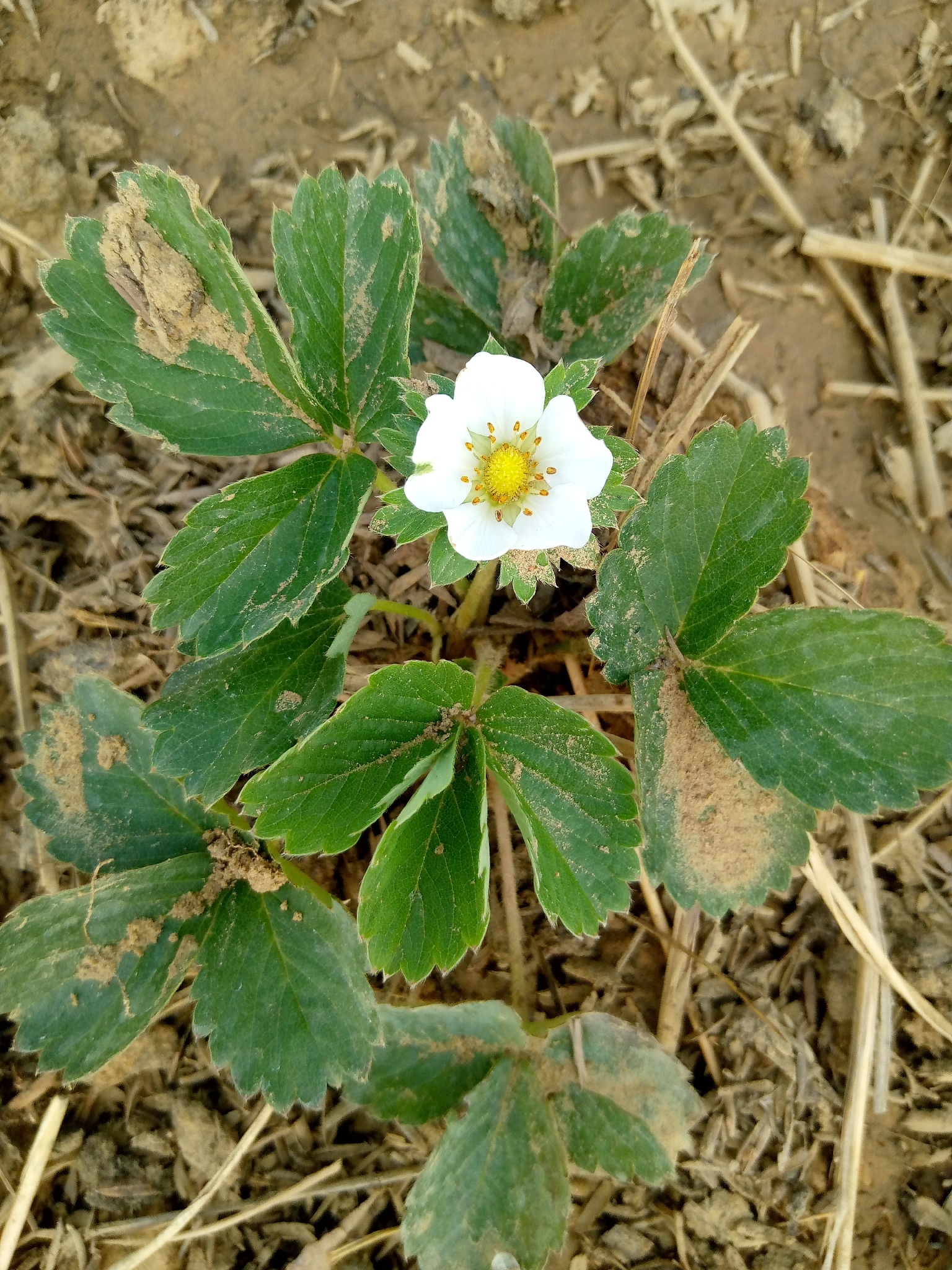
On this page
Strawberries come in two useful types: June-bearing, which gives one heavy crop in early summer, and everbearing or day-neutral, which trickles fruit from early summer to autumn. Plant with the crown exactly at soil level, mulch with straw to keep fruit off the ground, and expect 250-500g per plant per season. Plants propagate free from runners but decline after 3-4 years, so replace them on rotation. Non-toxic to cats and dogs.
Key facts
- June-bearing varieties crop heavily over 2-3 weeks; everbearing and day-neutral types spread a smaller total yield across the whole season.
- Propagates itself by runners, so a bed of a dozen plants can replace itself indefinitely for free.
- The crown must sit exactly at soil level. Buried crowns rot and exposed crowns dry out, and this is the most common planting error.
- Plants lose vigour after 3-4 years, so productive beds are kept going by rooting runners and discarding the oldest mothers.
Growing requirements#
| Plant type | Outdoor hardy perennial groundcover; also excellent in containers, baskets and towers |
| Growing medium | Free-draining, compost-rich soil or quality potting mix; never heavy waterlogged clay |
| Light needs | Full sun for best sweetness. 6-8 hours; tolerates light afternoon shade in hot climates |
| Water frequency | Consistent moisture, roughly 25mm a week; water at the base to keep fruit and crown dry |
| Spacing | 30-45cm between plants, 60-75cm between rows; 3-4 plants per 30cm hanging basket |
| Planting season (northern hemisphere) | Bare-root or potted plants in early spring (March-April) or late summer (August-September) |
| Planting season (southern hemisphere) | Plant runners in autumn, April to June, for a spring crop in Australia and New Zealand |
| Temperature range | 15-26°C (60-80°F) for fruiting; hardy to around -15°C when dormant and mulched |
| Fertilizer | Balanced feed in early spring, then a high-potassium tomato-style feed fortnightly once flowering begins |
| Soil pH | 5.5-6.8 (slightly acidic) |
| Container suitability | Excellent. Ideal in baskets, troughs and towers, where hanging fruit stays clean and away from slugs |
| Hardiness | Perennial in most temperate zones; mulch the crowns over hard winters |
| Toxicity | Non-toxic to cats and dogs; leaves and fruit are both safe |
Harvest, yield & propagation#
| Days to harvest | 60-90 days from spring planting; autumn-planted runners crop the following early summer |
| Yield per plant | 250-500g per season for a healthy second-year plant |
| Cropping types | June-bearing (one heavy early-summer flush), everbearing (two or three flushes), day-neutral (steady light picking all season) |
| Harvest signal | Fully red right to the shoulders under the calyx; strawberries do not sweeten after picking |
| Harvest technique | Pinch the stem above the fruit rather than pulling the berry, and pick every 2-3 days in warm weather |
| Storage | Only 2-3 days refrigerated, unwashed. Freeze whole on a tray or make jam for longer keeping |
| Propagation methods | Runners: peg a plantlet into a small pot of compost, let it root for 4-6 weeks, then sever it from the mother |
| Companion plants | Borage, thyme and chives nearby; avoid planting where potatoes or tomatoes grew (shared verticillium wilt) |
Common problems & troubleshooting#
| Symptom | Likely cause | Fix |
|---|---|---|
| Fruit rotting with fuzzy grey mould | Botrytis grey mould in damp weather or with fruit touching soil | Mulch with straw, thin congested leaves for airflow, pick daily, and remove infected fruit immediately rather than composting it |
| Berries eaten or hollowed overnight | Slugs and snails, or birds | Grow in baskets or on straw, use slug traps or wool pellets, and net the bed as the fruit starts colouring |
| Lots of leaves and runners but very little fruit | Too much nitrogen, or plant energy going into runners | Switch to a high-potassium feed and cut off runners during the fruiting period |
| Plant collapses, roots red-cored when cut open | Red stele or crown rot from waterlogged soil | No cure. Remove plants, improve drainage or move to raised beds and containers, and plant resistant varieties |
| Distorted, seedy, 'cat-faced' fruit | Incomplete pollination, or tarnished plant bug damage | Encourage bees with nearby borage, avoid spraying during flowering, and hand-brush flowers with a soft brush under cover |
| Small, sour berries in the third or fourth year | Natural plant decline | Root new runners each summer and discard the oldest mother plants on a rolling three-year cycle |
Know which runners to keep and which to cut
Sodate tracks each plant's age and cropping type, then tells you when to root runners for next year and when to cut them off so this year's fruit gets the energy.
Seasonal care#
Varieties & cultivars#
| Variety | Distinguishing trait | Note |
|---|---|---|
| 'Honeoye' | Early June-bearing, heavy reliable crop | Good for freezing and jam |
| 'Cambridge Favourite' | Mid-season June-bearing, disease-tolerant | Long-standing UK favourite |
| 'Albion' | Day-neutral, firm sweet fruit all season | Excellent in containers |
| 'Seascape' | Everbearing, tolerates heat well | Popular in warmer US and Australian gardens |
| Alpine strawberry (Fragaria vesca) | Tiny intense berries, no runners | Grows true from seed, ideal for edging |
Buying checklist#
- Decide June-bearing (one big crop for jam) or everbearing/day-neutral (steady picking) before you buy
- Choose certified virus-free stock; strawberry viruses spread easily through runners
- On potted plants, look for a firm crown with fresh white roots, not brown mushy ones
- Bare-root runners should be plump, not dried and papery
- Buy at least 8-12 plants. A few plants will not produce a meaningful picking
Pricing by region#
| Region | Price range | Typical unit | Basis |
|---|---|---|---|
| US | $8 – $20 | Bundle of 10-25 bare-root runners | Nursery + mail-order retail |
| UK | $8 – $18 | Pack of 10-12 bare-root runners | Garden centre retail |
| India | $1.2 – $4 | Pack of 10 runners | Nursery + online agri retail |
| Australia | $10 – $22 | Bundle of 10-20 runners | Nursery + garden centre |
| Canada | $9 – $20 | Bundle of 10-25 bare-root runners | Garden centre retail |
USD figures are approximate conversions for comparison; switch the dropdown to see each region's actual local-currency listing price.
Often confused with#
Name confusion warning#
Check "everbearing" against your actual expectations. The term is used loosely: in some catalogues it means two or three distinct flushes, in others it is used interchangeably with day-neutral, which fruits steadily but lightly. If you want one big harvest for jam, buy a June-bearing variety explicitly. Note also that in the southern hemisphere "June-bearing" describes the plant's physiology, not the month, and those varieties actually crop in spring.
Where it's actually grown#
Strawberry plants sold to gardeners are almost never grown from seed. Commercial propagators in the US (mainly California), Spain, the Netherlands and Poland raise certified virus-free mother plants in isolated nurseries and multiply them by runners, then ship them as bare-root runners or cold-stored plugs. Buying certified stock matters more with strawberries than most crops because the viruses that gradually reduce yields are carried within the plant itself.
Import & biosecurity restrictions#
| Region | Note |
|---|---|
| Australia | Live strawberry plant imports are tightly restricted under biosecurity law; buy certified runners from domestic nurseries. |
| US | Interstate movement of plants may need state phytosanitary certificates; domestic nursery purchase is straightforward. |
| UK | Plant imports need phytosanitary documentation post-Brexit; domestic certified runners are widely available. |
| India | Grown commercially in Mahabaleshwar and Himachal; imported planting material requires quarantine clearance. |
| Canada | CFIA import permits apply to plant material; domestic certified stock is the practical route. |
Similar plants
Did you know?
Frequently asked questions
What is the difference between June-bearing and everbearing strawberries?
June-bearing varieties respond to shortening days and produce one heavy crop over about two to three weeks in early summer, which is what you want for jam. Everbearing and day-neutral varieties fruit in smaller amounts repeatedly from early summer into autumn, which suits picking a handful at a time.
How do I propagate strawberries from runners?
In summer, find a runner with a small plantlet, peg it down into a pot of compost while still attached to the mother plant, keep it moist for four to six weeks until it roots, then cut the runner. Do this every year and replace mother plants after three to four years.
How deep should I plant a strawberry crown?
The crown must sit exactly at soil level. Buried crowns rot and exposed crowns dry out, and getting this wrong is the single most common reason new strawberry plants fail.
Can strawberries grow in containers?
Yes, they are one of the best container fruits. Hanging baskets and towers work especially well because the fruit dangles clear of the soil, which keeps it clean and out of reach of slugs.
Are strawberry plants safe for cats and dogs?
Yes. Both the leaves and the fruit are non-toxic to cats and dogs, though large amounts of fruit can cause mild stomach upset in a dog simply from the sugar.