 Sodate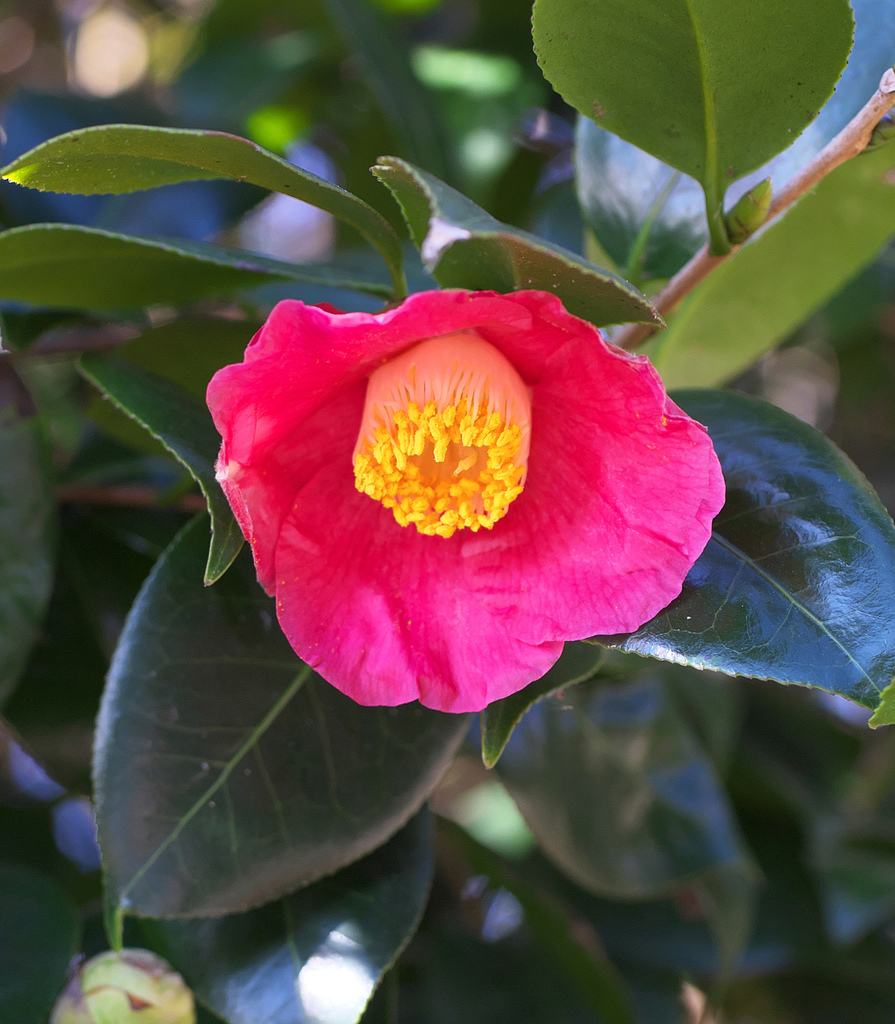
On this page
Camellia is a demanding shrub with strict requirements: it needs genuinely acidic soil (pH 5.0-6.5) or ericaceous compost, dappled shade, and shelter from early morning sun, which thaws frosted buds too fast and turns them brown. Hardy in USDA zones 7-9 (RHS H5). Prune immediately after flowering finishes in spring, because next winter's buds form in summer. It is non-toxic to cats and dogs, one of the few flowering shrubs that genuinely is. Plants cost $25-$70.
Key facts
- Requires acidic soil, pH 5.0-6.5. In alkaline or chalky ground the leaves yellow with chlorosis and the plant slowly declines, so it must be grown in a container of ericaceous compost instead.
- Never site it where early morning sun hits the flowers. Frosted buds that thaw rapidly turn brown and drop, which is why camellias do badly on east-facing walls in cold areas.
- Flower buds for next winter form during mid to late summer, so all pruning must be done right after flowering ends. Summer or autumn pruning removes the coming season's flowers.
- Non-toxic to cats and dogs. A genuinely pet-safe flowering shrub, unlike azalea, rhododendron and most of its usual planting companions.
Care requirements#
| Plant type | Evergreen flowering shrub; long-lived perennial woody plant |
| Growing medium | Acidic, humus-rich, free-draining soil, or ericaceous (lime-free) compost in containers |
| Light needs | Dappled shade or morning shade with afternoon light; avoid direct early morning sun on the buds |
| Water frequency | Keep evenly moist, especially from midsummer to autumn while buds are forming; use rainwater where tap water is hard |
| Hardiness zone (USDA) | 7-9 for C. japonica; C. sasanqua similar, some hybrids to zone 6 |
| Hardiness zone (RHS) | H5. Hardy across most of the UK, though flowers are frost-sensitive |
| Bloom season | Late winter to mid spring for C. japonica; autumn to early winter for C. sasanqua |
| Temperature range | Hardy to about -15°C (5°F) as a plant; open flowers are damaged below -2°C |
| Fertilizer | Ericaceous or azalea/camellia feed in spring and again in early summer; stop by midsummer |
| Soil pH | 5.0-6.5 (acidic), non-negotiable |
| Drainage needs | High; roots are shallow and fibrous and rot in standing water |
| Toxicity | Non-toxic to cats, dogs, horses and humans |
Growth & propagation#
| Mature size | 2-4m tall and 1.5-3m wide after many years; slow enough to keep smaller with pruning |
| Growth rate | Slow: 15-30cm a year |
| Propagation methods | Semi-ripe cuttings in late summer, or layering; grafting for difficult cultivars |
| Propagation difficulty | Demanding: cuttings need bottom heat and several months to root |
| Repotting schedule | Container plants every 2-3 years into fresh ericaceous compost, one size up |
| Pruning timing | Prune immediately after the last flowers drop in spring. Next season's buds are initiated in mid to late summer, so pruning in summer, autumn or winter removes the coming display. Light shaping and removal of dead wood is all most plants need. |
Common problems & troubleshooting#
| Symptom | Likely cause | Fix |
|---|---|---|
| Yellow leaves with green veins | Lime-induced chlorosis from alkaline soil or hard tap water | Water with rainwater, apply sequestered iron, and mulch with ericaceous compost; in chalky gardens move the plant into a container |
| Buds turn brown and drop before opening | Frost damage thawed too quickly by early morning sun, or drought during summer bud set | Move or screen the plant away from morning sun, and water thoroughly from midsummer onwards |
| Brown mushy patches on open flowers | Camellia petal blight (Ciborinia camelliae) | Collect and bin all fallen petals, replace surface mulch each spring, and avoid overhead watering |
| Sooty black film on leaves | Sooty mould growing on scale insect honeydew | Treat the scale insects on stems and leaf undersides; the mould washes off once they are gone |
Prune in the one window that keeps the buds
Sodate watches when your camellia finishes flowering and opens the pruning window before summer bud set closes it.
Seasonal care#
Varieties & cultivars#
| Variety | Distinguishing trait | Note |
|---|---|---|
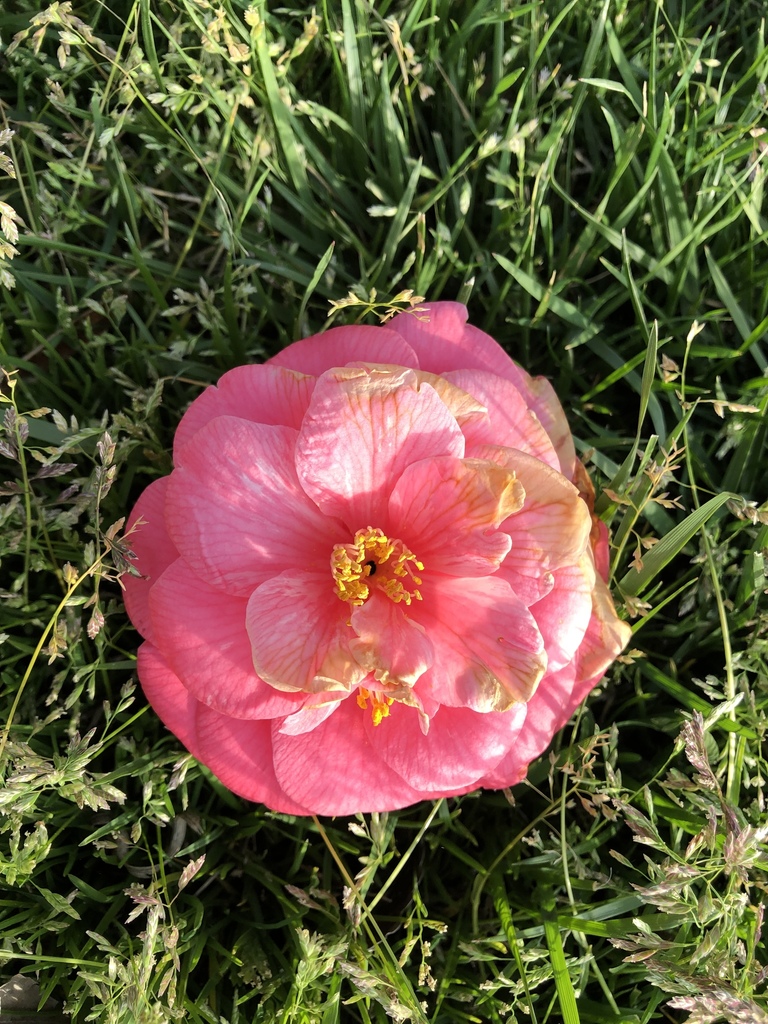
| 'Debbie' (C. x williamsii) | Pink peony-form flowers, drops spent blooms cleanly | Williamsii hybrids are hardier and more free-flowering than straight japonica |
| 'Adolphe Audusson' | Deep red semi-double blooms | One of the most reliable older japonica cultivars |
| Camellia sasanqua | Smaller scented flowers in autumn and early winter | Tolerates more sun than japonica and suits hedging |
| Camellia sinensis | Small white flowers, grown for its leaves | This is the tea plant, the same genus grown as a crop |
Buying checklist#
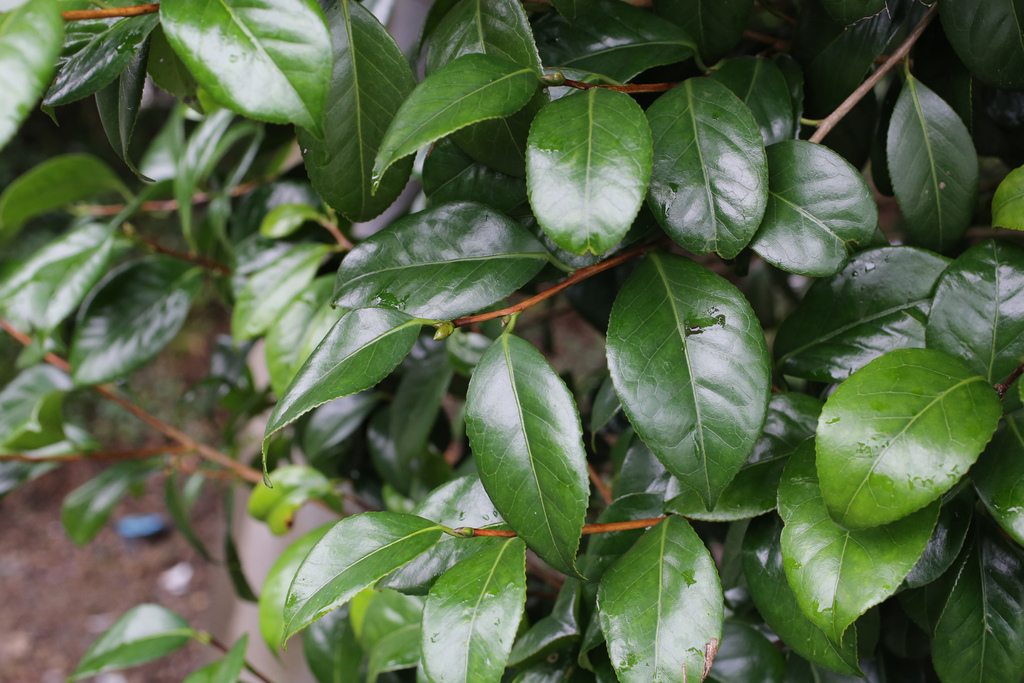
- Leaves are glossy dark green with no yellowing between the veins
- Plenty of fat rounded flower buds, not just pointed leaf buds
- Compost is moist and lime-free, with no white crust on the surface
- Confirm whether it is japonica (spring flowering) or sasanqua (autumn flowering)
Pricing by region#
| Region | Price range | Typical unit | Basis |
|---|---|---|---|
| US | $25 – $70 | 3 gallon shrub | Nursery + garden centre retail |
| UK | $20 – $60 | 3-5L pot | Garden centre retail |
| India | $4 – $15 | 8in pot | Hill-station nursery retail |
| Australia | $22 – $65 | 200mm pot | Nursery retail |
| Canada | $28 – $75 | 3 gallon shrub | Garden centre retail (coastal BC mainly) |
USD figures are approximate conversions for comparison; switch the dropdown to see each region's actual local-currency listing price.
Often confused with#
Where it's actually grown#
Ornamental camellias are propagated from cuttings and grafts by specialist nurseries in Japan, Italy, Belgium and the US Pacific Northwest. The same genus is grown as a field crop as Camellia sinensis for tea across India, China, Kenya and Sri Lanka.
Import & biosecurity restrictions#
| Region | Note |
|---|---|
| Australia | Live plant imports restricted; a very popular garden shrub domestically, especially in Victoria and NSW. |
| US | Unrestricted domestic sale; a signature shrub of the southeast and Pacific Northwest. |
| UK | No restriction on sale; imports need plant health certification. Grown widely in containers where soil is chalky. |
| India | No restriction; ornamental camellias suit Darjeeling, Assam and Nilgiri hill gardens rather than the hot plains. |
| Canada | CFIA rules apply to commercial imports; reliably grown outdoors mainly in coastal British Columbia. |
Similar plants
Ranked in these guides
Did you know?
Frequently asked questions
Is camellia poisonous to cats and dogs?
No. Camellia is non-toxic to cats, dogs and horses, which makes it one of the few genuinely pet-safe flowering shrubs. Its usual planting companions, azalea and rhododendron, are the opposite: highly toxic.
When should I prune a camellia?
Immediately after the last flowers drop in spring. Next winter's flower buds form in mid to late summer, so pruning any later than early summer removes the coming season's display.
Why are my camellia buds turning brown and dropping?
Usually frost damage on buds that thawed too quickly in early morning sun, or drought while buds were forming the previous summer. Move the plant out of direct morning sun and water thoroughly from midsummer onwards.
Can I grow camellia in alkaline soil?
Not in the ground. Camellia needs a soil pH of 5.0-6.5, and in chalky or alkaline ground the leaves yellow with chlorosis. In those gardens, grow it in a large container of ericaceous compost and water with rainwater.
How much does a camellia cost?
A 3-gallon shrub typically costs $25-$70 in the US and £16-£48 in the UK, with named or grafted cultivars at the higher end.