 Sodate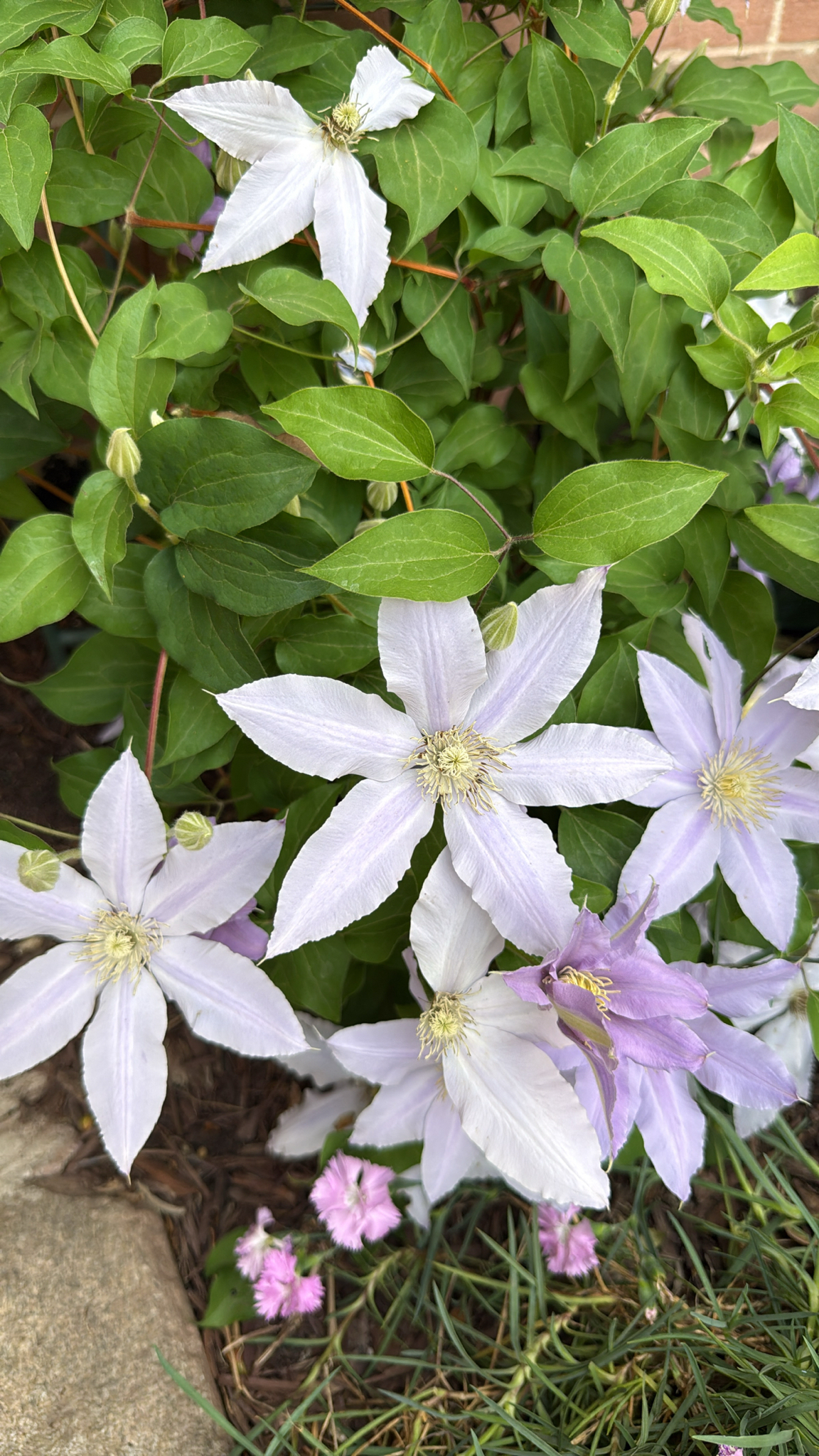


On this page
Clematis is a hardy climber (USDA zones 4-9, RHS H5-H6) whose care comes down to knowing its pruning group. Group 1 flowers on old wood and is pruned lightly right after flowering; Group 2 flowers on both and gets a light tidy in late winter; Group 3 flowers on new wood and is cut hard to 20-30cm in late winter. Plant the crown 8-10cm below soil level, keep the roots shaded and cool, and give the top growth sun. Mildly toxic to pets, and the sap can irritate skin. Plants cost $15-$45.
Key facts
- Three pruning groups: Group 1 (early, old wood) is pruned only after flowering; Group 2 (large-flowered, both woods) gets a light late-winter tidy; Group 3 (late, new wood) is cut back hard to 20-30cm in late winter. Cutting a Group 1 in late winter removes the entire season's flowers.
- Plant the crown 8-10cm deeper than it sat in the pot. Buried buds let the plant regrow from below ground if clematis wilt strikes.
- Wants its head in the sun and its roots in the shade. Mulch heavily or plant a low shrub over the root zone.
- Mildly toxic to cats and dogs, causing drooling and digestive upset, and the sap contains protoanemonin, which can blister sensitive skin. Wear gloves when pruning.
Care requirements#
| Plant type | Hardy deciduous or evergreen climbing perennial |
| Growing medium | Fertile, moisture-retentive but free-draining soil enriched with compost |
| Light needs | Top growth in full sun to part shade; root zone shaded and cool |
| Planting depth | Crown set 8-10cm below the soil surface. Deeper than almost any other perennial |
| Water frequency | Deep watering weekly in dry spells; container plants need much more |
| Hardiness zone (USDA) | 4-9 for most large-flowered hybrids; some species to zone 3 |
| Hardiness zone (RHS) | H5-H6, hardy across the UK |
| Bloom season | Group 1 late winter to spring; Group 2 early summer with an autumn repeat; Group 3 midsummer to autumn |
| Fertilizer | High-potash feed in spring and again after the first flush; avoid heavy nitrogen |
| Soil pH | 6.5-7.5 (neutral to slightly alkaline); tolerates chalk well |
| Support | Twines by leaf stalks, so it needs thin wires, netting or twiggy supports, not thick posts |
| Toxicity | Mildly toxic to cats and dogs (protoanemonin) causing drooling, vomiting and mouth irritation; sap can cause skin blistering, so wear gloves when pruning |
Growth & propagation#
| Mature size | 1m for compact patio types to 10m for C. montana |
| Growth rate | Fast once established, after a slow first year |
| Propagation methods | Internodal softwood cuttings in late spring, or layering a low stem |
| Propagation difficulty | Moderate: clematis cuttings are cut between nodes rather than below them, which catches people out |
| Repotting schedule | Container plants every 2-3 years into a deep pot at least 45cm across |
| Pruning timing | Group 1: prune immediately after flowering in spring, only to control size. Group 2: light tidy in late winter, removing dead wood and cutting to a strong pair of buds. Group 3: cut every stem back to 20-30cm above the ground in late winter. If you do not know the group, note when it flowers. Before midsummer means prune after flowering, after midsummer means prune in late winter. |
Common problems & troubleshooting#
| Symptom | Likely cause | Fix |
|---|---|---|
| A healthy stem suddenly wilts and blackens from the top down | Clematis wilt, a fungal disease affecting large-flowered hybrids | Cut affected stems back to healthy tissue or to ground level and bin them; deeply planted crowns usually resprout from below soil |
| Bare stems at the base, flowers only at the top | Natural habit plus insufficient pruning | Prune to the correct group schedule and plant a low shrub or perennial to hide the base |
| No flowers this year | Pruned in the wrong season for its group, or too much nitrogen | Identify the group by flowering time and follow that schedule; switch to a high-potash feed |
| Powdery white coating on leaves | Powdery mildew in dry root conditions | Mulch and water deeply so the root zone never dries; improve air circulation |
Never prune the wrong group again
Tell Sodate which clematis you have and it schedules the right cut in the right month, every year.
Seasonal care#
Varieties & cultivars#
| Variety | Distinguishing trait | Note |
|---|---|---|
| C. montana (Group 1) | Vigorous, masses of small spring flowers, 8-10m | Prune only after flowering, and only to keep it in bounds |
| 'Nelly Moser' (Group 2) | Large pale pink flowers with a darker bar | Fades in strong sun; best on a north or east aspect |
| 'Jackmanii' (Group 3) | Deep purple, midsummer to autumn | The classic hard-prune clematis, cut to 30cm each late winter |
| C. armandii (Group 1) | Evergreen, scented white spring flowers | Needs a sheltered wall; hardy only to about USDA zone 7 |
Buying checklist#
- Several stems from the base rather than one thin whip
- Look for the pruning group on the label and keep it
- Root ball well developed, since a two-year-old plant establishes far better than a one-year-old
- No blackened or wilted shoot tips
Pricing by region#
| Region | Price range | Typical unit | Basis |
|---|---|---|---|
| US | $15 – $45 | 1-2 gallon pot | Nursery + garden centre retail |
| UK | $12 – $38 | 2-3L pot | Garden centre retail |
| India | $4 – $15 | 8in pot | Hill-station nursery retail |
| Australia | $14 – $40 | 150-200mm pot | Nursery retail |
| Canada | $16 – $48 | 1-2 gallon pot | Garden centre retail |
USD figures are approximate conversions for comparison; switch the dropdown to see each region's actual local-currency listing price.
Often confused with#
Where it's actually grown#
Clematis is propagated from cuttings by specialist nurseries in Poland, the Netherlands, the UK and Japan. Poland in particular supplies a large share of Europe's young plants, which are then grown on for a second year before retail sale.
Import & biosecurity restrictions#
| Region | Note |
|---|---|
| Australia | Live plant imports restricted; domestic nurseries supply hybrids, mainly for cooler southern gardens. |
| US | Unrestricted domestic sale; note that Clematis vitalba is listed as a noxious weed in Oregon and Washington. |
| UK | No restriction; one of the most widely sold garden climbers, with imports requiring plant health certification. |
| India | No restriction; suits Himalayan and Nilgiri hill gardens, where several native species also grow wild. |
| Canada | CFIA rules apply to commercial imports; hardy hybrids succeed across most provinces. |
Similar plants
Ranked in these guides
Did you know?
Frequently asked questions
How do I know which clematis pruning group I have?
Go by flowering time. Flowering before midsummer on last year's stems means Group 1, pruned only after flowering. Large flowers in early summer with an autumn repeat means Group 2, given a light late-winter tidy. Flowering from midsummer onwards means Group 3, cut hard to 20-30cm in late winter.
Is clematis poisonous to cats and dogs?
Mildly. Clematis contains protoanemonin, which causes drooling, vomiting and mouth irritation in pets. The sap can also blister sensitive human skin, so wear gloves when pruning.
How deep should I plant clematis?
Set the crown 8-10cm below the soil surface, deeper than it sat in its pot. The buried buds allow the plant to regrow from below ground if clematis wilt kills the top growth.
Why did my clematis suddenly wilt and go black?
Clematis wilt, a fungal disease of large-flowered hybrids. Cut the affected stems back to healthy tissue or right to the ground and bin them. A deeply planted crown usually resprouts.
How much does a clematis cost?
A 1-2 gallon plant typically costs $15-$45 in the US and £10-£30 in the UK. Two-year-old plants cost more but establish considerably faster.