 Sodate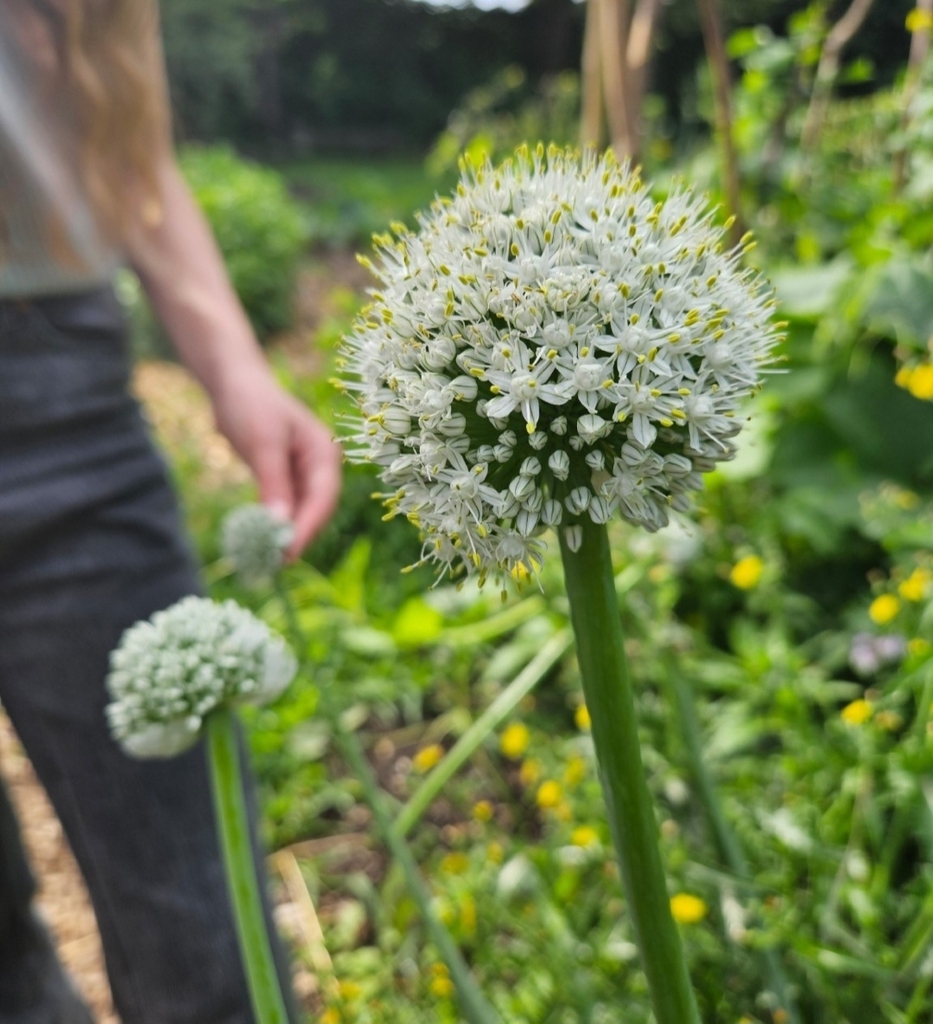
On this page
The single most important onion fact is day length. Short-day varieties bulb at 10-12 hours of daylight and suit latitudes below about 35 degrees; long-day varieties need 14-16 hours and suit higher latitudes; intermediate types sit between. Plant the wrong one for your latitude and you get leaves and no bulb, no matter how well you grow it. Plant sets 10-15cm apart, stop watering as tops fall, and cure for two to three weeks. Onions are toxic to cats and dogs in every form.
Key facts
- Day-length sensitive. Short-day varieties bulb at 10-12 hours of daylight, intermediate at 12-14, and long-day at 14-16. Mismatch the variety to your latitude and no bulb forms.
- Toxic to cats and dogs raw, cooked, dried and powdered; onion damages red blood cells and can cause anaemia.
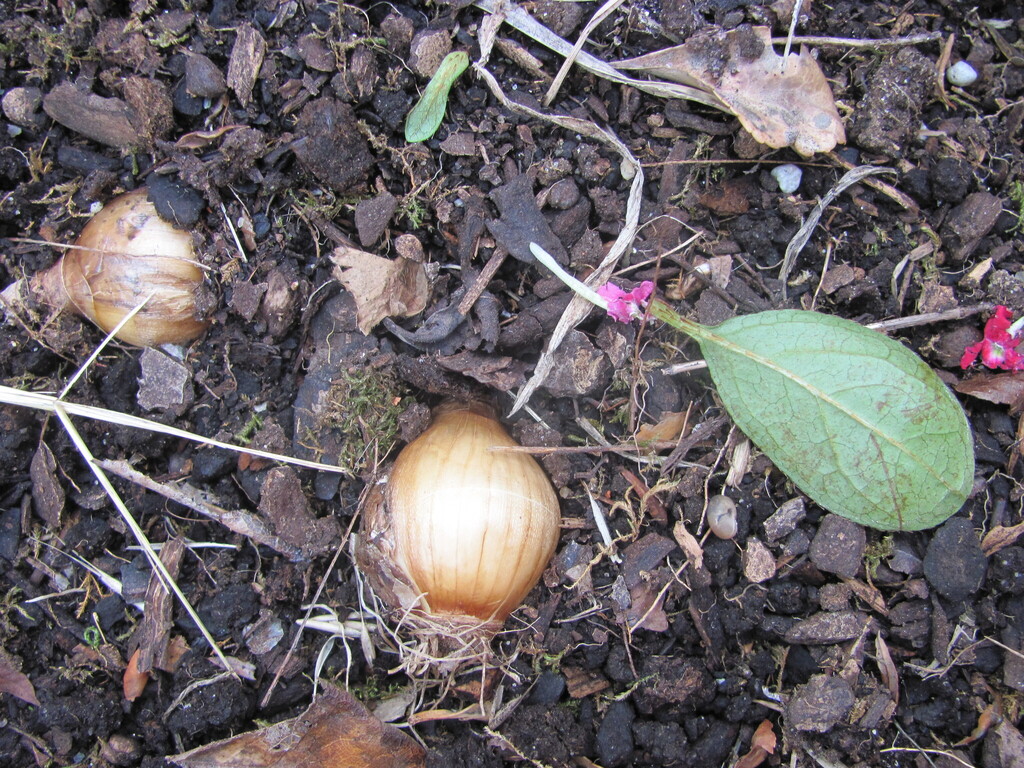
- Sets (small immature bulbs) are easier and faster than seed, but seed gives a much wider variety choice and better keeping quality.
- Onions compete very badly with weeds because their thin upright leaves cast almost no shade, so weeding is the main job of the season.
Growing requirements#
| Plant type | Outdoor hardy biennial grown as an annual bulb crop |
| Growing medium | Firm, fertile, free-draining soil; avoid fresh manure, which encourages soft bulbs that rot |
| Light needs | Full sun. 6+ hours daily, and the day length itself controls bulbing |
| Water frequency | Around 25mm a week while the leaves grow, then stop completely once the tops start to fall |
| Spacing | 10-15cm between plants, 30cm between rows; wider spacing gives larger bulbs |
| Sowing season (northern hemisphere) | Sow seed indoors January to February, or plant sets March to April. Autumn-planted overwintering sets go in September to October |
| Sowing season (southern hemisphere) | Plant sets or seedlings April to June in Australia and New Zealand, matching variety to your latitude |
| Day length requirement | Short-day below ~35° latitude, intermediate ~32-42°, long-day above ~37°. This is the key decision |
| Temperature range | 13-24°C (55-75°F); tolerates frost while leafy, but a hard cold snap on young plants triggers bolting |
| Fertilizer | Nitrogen early while leaves grow, then stop by the time bulbs start swelling |
| Soil pH | 6.0-7.0 |
| Container suitability | Possible but rarely worth it. A 30cm deep pot fits 5-6 sets, but bulbs are usually small |
| Toxicity | TOXIC to cats and dogs in every form, including cooked, dried and powdered. Also toxic to horses and livestock. Keep foliage, bulbs and kitchen scraps away from pets |
Harvest, yield & propagation#
| Days to harvest | 90-120 days from sets, 120-150 days from seed |
| Yield per plant | One bulb of 100-250g; plant 50-100 for a household's year |
| Harvest signal | The tops soften at the neck and fall over naturally. Wait until at least half the crop has flopped |
| Harvest technique | Ease out with a fork on a dry day and lay the bulbs on the surface with the foliage attached |
| Curing & storage | Cure 2-3 weeks in a dry, airy, shaded spot until the necks are papery and the skins rustle. Store at 4-10°C in nets. Pungent varieties keep 6-9 months, sweet varieties only 1-2 |
| Edible parts | Bulbs and the green tops, which can be used like spring onions early in the season |
| Propagation methods | Sets (small immature bulbs) for ease, or seed for variety choice and better storage. Onions are not divided |
| Companion plants | Carrots (mutual pest confusion), beetroot and brassicas; keep well away from beans and peas |
Common problems & troubleshooting#
| Symptom | Likely cause | Fix |
|---|---|---|
| Big healthy leaves but no bulb ever forms | Wrong day-length variety for your latitude | Check the packet: use short-day varieties in low latitudes and long-day varieties in high ones. This is the single most common onion failure and cannot be fixed mid-season |
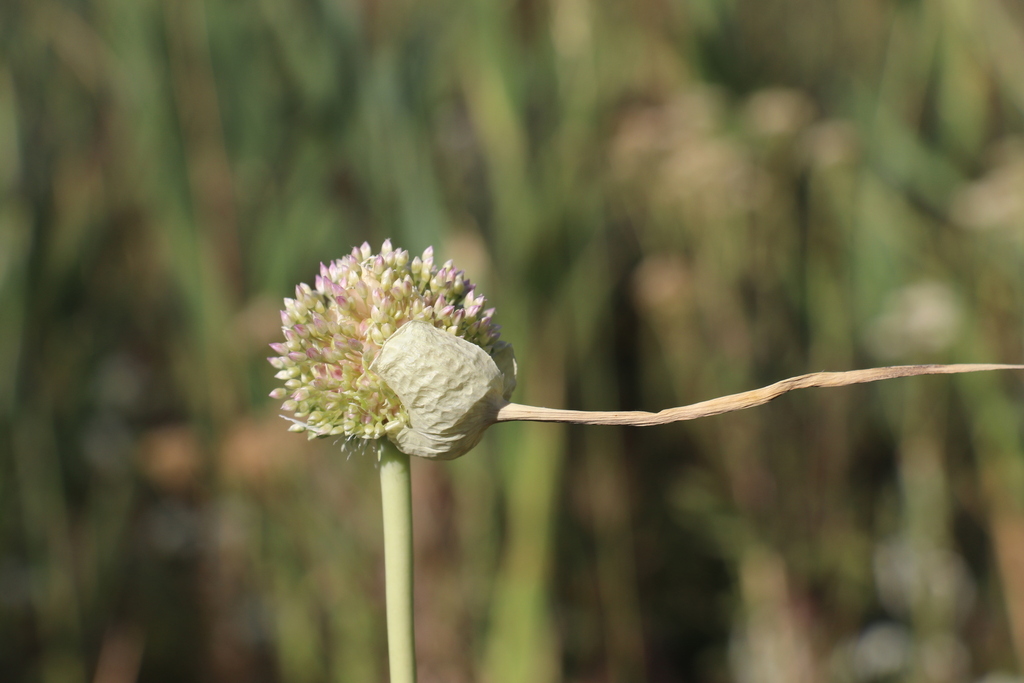
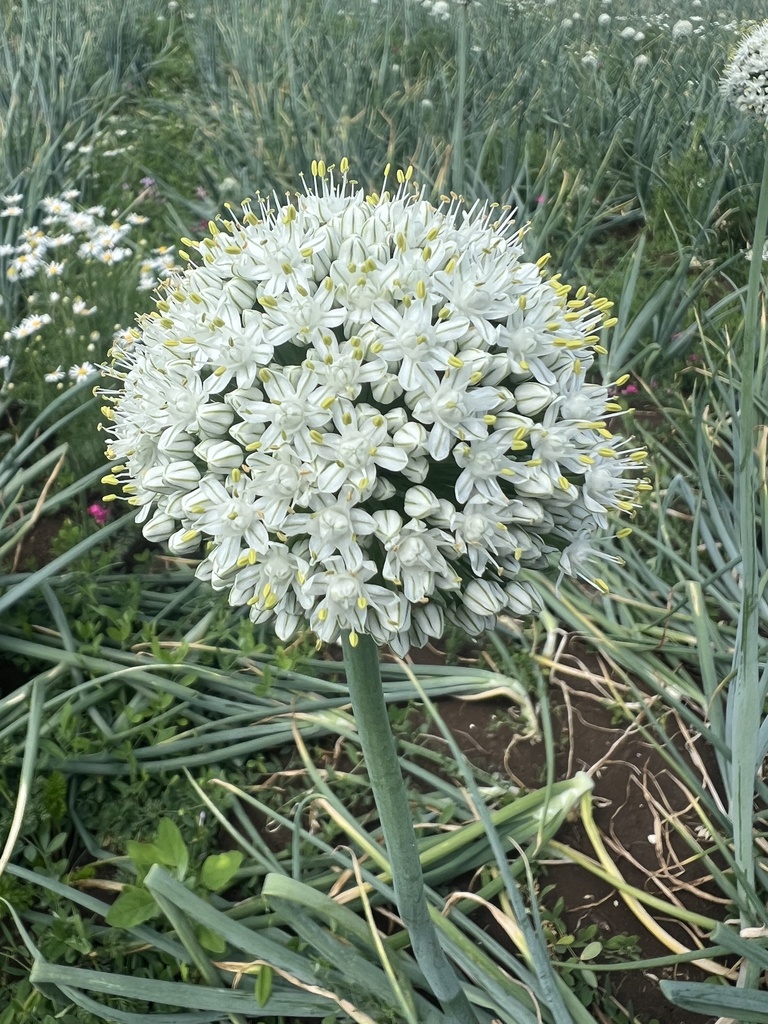
| Plant sends up a round flower head | Bolting, triggered by a cold spell on young plants or by using oversized sets | Snap off the flower stalk and use that bulb first, since it will not store. Plant heat-treated sets and choose smaller sets (under 2cm) next time |
| Bulbs rotting at the base with white fluffy mould | White rot (Sclerotium cepivorum) | No cure. Remove and bin affected plants, and avoid growing any allium on that ground for 8-15 years, since the resting bodies persist that long |
| Leaves with pale patches and a grey-purple furry growth | Downy mildew in wet weather | Space widely for airflow, avoid overhead watering, remove affected leaves, and rotate the bed |
| Maggots in the bulb base and collapsing seedlings | Onion fly larvae | Cover with fine insect mesh from planting, avoid disturbing plants (the smell attracts the fly), and rotate onto fresh ground |
| Bulbs rot in storage within weeks | Inadequate curing, thick necks, or harvesting a sweet variety and expecting it to keep | Cure until the necks are fully papery, discard any thick-necked bulbs by using them immediately, and grow a pungent variety for long storage |
Grow the right onion for your latitude
Sodate knows your location's day length through the season and flags whether a short-day, intermediate or long-day variety will actually bulb for you.
Seasonal care#
Varieties & cultivars#
| Variety | Distinguishing trait | Note |
|---|---|---|
| 'Texas Early Grano' (short-day) | Sweet mild bulbs for low latitudes | Poor keeper, use fresh |
| 'Candy' (intermediate-day) | Large sweet bulbs, wide adaptability | Good middle-latitude choice |
| 'Stuttgarter Riesen' (long-day) | Flat golden bulbs, excellent keeper | Classic European set variety |
| 'Red Baron' (long-day) | Deep red rings, strong flavour | Stores well, good raw |
| 'Walla Walla' (long-day) | Very large and sweet | Stores only a few weeks |
Buying checklist#
- Check the day-length category against your latitude before anything else
- Choose heat-treated sets to reduce bolting
- Prefer smaller sets under 2cm across; large sets bolt far more readily
- Decide storage or sweet: sweet varieties are delicious but keep only weeks
- Buy plenty: one set gives exactly one bulb, so 50-100 is a realistic household planting
Pricing by region#
| Region | Price range | Typical unit | Basis |
|---|---|---|---|
| US | $6 – $16 | Bundle of 50-100 sets or plants | Garden centre + mail order |
| UK | $4 – $11 | Net of 50-100 sets | Garden centre retail |
| India | $0.5 – $1.8 | 0.5kg sets or seed packet | Agri supply + local market |
| Australia | $5 – $14 | Seedling punnet or net of sets | Nursery + garden centre |
| Canada | $6 – $15 | Bundle of 50-100 sets | Garden centre retail |
USD figures are approximate conversions for comparison; switch the dropdown to see each region's actual local-currency listing price.
Often confused with#
Name confusion warning#
Day-length labels are the thing to read, not the variety name. Packets marked short-day, intermediate-day or long-day are telling you the latitude band the variety works in, and getting it wrong means no bulb at all. Southern-hemisphere catalogues sometimes label the same concept as "early", "mid" and "late" season instead, which is not the same thing, so check the stated hours of daylight rather than trusting a seasonal label.
Where it's actually grown#
Onion sets are produced by sowing seed very densely in the previous season so plants stay small, then lifting and curing them; most European sets come from the Netherlands, France and the UK, while North American sets come largely from the US Midwest. Onion seed itself is grown in dry-summer regions including the US Pacific Northwest, Chile, India and Australia. Day-length adaptation is bred into each variety at its region of origin, which is exactly why imported varieties so often fail to bulb.
Import & biosecurity restrictions#
| Region | Note |
|---|---|
| Australia | Allium planting material imports are restricted under biosecurity law; buy sets, seedlings or seed domestically. |
| US | Domestic sale of sets and plants is unrestricted; imported planting material requires USDA permits. |
| UK | Sets and seed widely sold domestically; post-Brexit imports require phytosanitary certification. |
| India | Major domestic crop; imported hybrid seed requires customs clearance. |
| Canada | CFIA regulates imported allium planting material; domestic sets are the practical route. |
Similar plants
Did you know?
Frequently asked questions
Why did my onions never form bulbs?
Almost certainly the wrong day-length variety for your latitude. Onions bulb in response to hours of daylight: short-day varieties need 10-12 hours and suit latitudes below about 35 degrees, long-day varieties need 14-16 hours and suit higher latitudes. Grow a long-day variety in the subtropics and it will make leaves indefinitely and never bulb.
Are onions toxic to cats and dogs?
Yes, in every form. Raw, cooked, dried and powdered onion all damage red blood cells in cats and dogs and can cause anaemia. Cats are especially sensitive. Keep pets away from the foliage and bulbs, and never feed them food cooked with onion.
Should I grow onions from sets or seed?
Sets are small immature bulbs and are much easier, faster and more forgiving, which makes them the right choice for most gardeners. Seed takes longer and needs an indoor start, but gives far more variety choice, better storage life, and avoids the bolting that oversized sets often cause.
When do I harvest onions?
When the tops soften at the neck and flop over of their own accord, usually once at least half the row has fallen. Stop watering at that point, ease the bulbs out with a fork on a dry day, and cure them for two to three weeks until the necks are papery.
Why did my onions bolt and flower?
Bolting is triggered by a cold spell hitting young plants, and it is far more common with large sets. Use heat-treated sets under 2cm across, plant at the right time for your region, and if a plant does bolt, snap off the flower stalk and eat that bulb first since it will not store.