 Sodate
On this page
Beetroot is one of the easiest crops to get right: direct sow, thin to 8-10cm, keep moisture even, and lift at golf-ball to tennis-ball size in 50-70 days. Each 'seed' is actually a cluster of several seeds, so thinning is not optional. The leaves are as good as chard, since beetroot and Swiss chard are literally the same species bred for different parts. Non-toxic to cats and dogs, though beet pigment can turn urine pink, which is harmless.
Key facts
- Beetroot and Swiss chard are the same species, Beta vulgaris, selected in opposite directions. One for a swollen root, the other for leaf and stem.
- Each beetroot 'seed' is a corky multigerm cluster containing two to four seeds, which is why clumps of seedlings appear and thinning is essential.
- Fully dual-purpose: the leaves are picked young as salad or cooked like chard while the root is still bulking.
- The betalain pigment can turn urine and stools pink after a large helping. This is beeturia, it is harmless, and it affects a minority of people.
Growing requirements#
| Plant type | Outdoor cool-season biennial grown as an annual; tolerates light frost |
| Growing medium | Loose, stone-free soil with good organic matter; stones cause forked roots |
| Light needs | Full sun to light shade. 6 hours ideal, tolerates less |
| Water frequency | Even moisture, around 25mm a week; drought then flood causes woody, cracked roots |
| Spacing | Sow 2cm deep, thin to 8-10cm apart, with 30cm between rows |
| Sowing season (northern hemisphere) | March to July, sowing successionally every 3 weeks; earliest sowings under cloches |
| Sowing season (southern hemisphere) | August to March in Australia and New Zealand; year-round in mild coastal regions |
| Temperature range | 10-24°C (50-75°F); prolonged cold below 10°C after germination can trigger bolting |
| Fertilizer | Modest balanced feed. Boron deficiency causes black internal spots, so avoid very alkaline soils |
| Soil pH | 6.0-7.5: beetroot dislikes acid soil more than most vegetables |
| Container suitability | Good. A pot at least 25-30cm deep grows a fine crop, and baby beets do well in shallower troughs |
| Hardiness | Tolerates light frost; roots can be left in the ground under mulch in mild winters |
| Toxicity | Non-toxic to cats and dogs; roots and leaves are both safe and edible |
Harvest, yield & propagation#
| Days to harvest | 50-70 days for full-size roots; baby beets from around 40 days |
| Yield per plant | One root of 100-250g, plus several pickings of leaves along the way |
| Harvest signal | Root shoulders 4-8cm across and visible at the soil surface; sweetest between golf-ball and tennis-ball size |
| Harvest technique | Twist or pull by the leaf bases, and twist off the tops rather than cutting close, so the root does not bleed colour |
| Storage | Twist off leaves, then refrigerate roots 2-4 weeks, or store in boxes of damp sand at 0-4°C for 3-5 months |
| Edible parts | Roots and leaves, both raw young or cooked; the leaves are used exactly like Swiss chard |
| Propagation methods | Direct-sown seed. Soaking clusters overnight speeds germination; transplanting is possible but risks forked roots |
| Companion plants | Onions, lettuce and brassicas; avoid planting next to runner beans |
Common problems & troubleshooting#
| Symptom | Likely cause | Fix |
|---|---|---|
| Dense clumps of seedlings from single sowings | Normal. Each seed is a multigerm cluster of 2-4 seeds | Thin to one strong seedling every 8-10cm by snipping the others at soil level rather than pulling, which disturbs the keeper |
| Roots small, tough and woody | Overcrowding, drought stress, or leaving them in too long | Thin properly, mulch and water evenly, and lift at tennis-ball size at the latest |
| Plant sends up a flower spike with no root | Bolting, usually from a cold snap on young plants or from sowing too early | Sow after soil reaches 10°C, use cloches for early sowings, and choose bolt-resistant varieties |
| Pale brown blistered patches inside the leaves | Beet leaf miner (mangold fly) larvae tunnelling within the leaf | Squash the mines between finger and thumb, remove the worst leaves, and use insect mesh. The root is unaffected |
| Black hard patches inside the root | Boron deficiency, common on alkaline or very dry soils | Keep soil moisture even, avoid overliming, and apply a trace-element feed containing boron next season |
| Round brown spots with pale centres on leaves | Cercospora leaf spot, a fungal disease in warm humid weather | Remove affected leaves, improve airflow through thinning, and rotate the bed |
Lift them before they go woody
Beetroot is sweet at golf-ball size and fibrous once it outgrows a tennis ball. Sodate counts growing days against your real temperatures and flags the window.
Seasonal care#
Varieties & cultivars#
| Variety | Distinguishing trait | Note |
|---|---|---|
| 'Boltardy' | Strongly bolt-resistant, smooth round roots | The safest choice for early sowings |
| 'Detroit Dark Red' | Classic deep red globe, good keeper | Widely available heirloom |
| 'Chioggia' | Concentric pink and white rings when sliced | Milder and sweeter; rings fade with long cooking |
| 'Golden' / 'Burpee's Golden' | Orange-gold flesh that does not bleed | Excellent leaves too |
| 'Cylindra' | Long cylindrical root | Uniform slices, good yield per row metre |
Buying checklist#
- Choose a bolt-resistant variety such as 'Boltardy' for any sowing before late spring
- Check whether the seed is monogerm (single) or the usual multigerm cluster
- Decide globe or cylindrical: cylindrical types give more even slices from the same row length
- Pick a variety with good leaf quality if you want to use the tops as chard
- Buy fresh seed where possible; beet germination drops noticeably after three or four years
Pricing by region#
| Region | Price range | Typical unit | Basis |
|---|---|---|---|
| US | $2 – $4.5 | Seed packet (~150-300 seeds) | Seed catalogue + garden centre |
| UK | $1.8 – $4 | Seed packet (~200 seeds) | Garden centre retail |
| India | $0.2 – $0.8 | Seed packet (~200 seeds) | Agri supply + local nursery |
| Australia | $2.5 – $5 | Seed packet (~150 seeds) | Nursery + seed retail |
| Canada | $2 – $4.5 | Seed packet (~200 seeds) | Garden centre retail |
USD figures are approximate conversions for comparison; switch the dropdown to see each region's actual local-currency listing price.
Often confused with#
Name confusion warning#
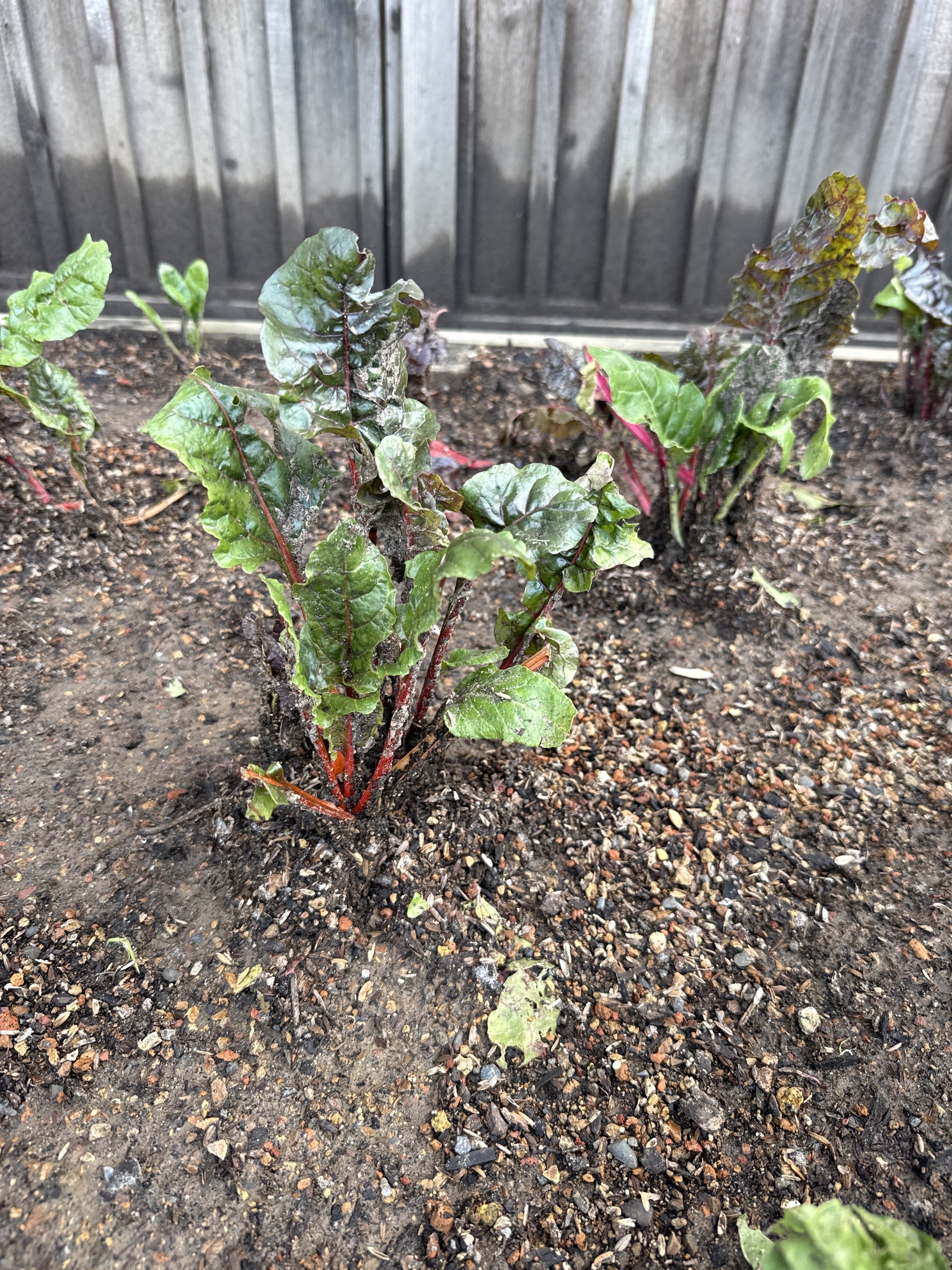
Beetroot and Swiss chard are the same plant species. Beta vulgaris was simply selected in two directions: toward a swollen root (beetroot) and toward leaf and stem (chard). That means beet tops cook exactly like chard, and chard occasionally forms a small edible root. Note also the naming split: it is "beetroot" in the UK, Australia and India, and simply "beets" in the US, while "beet greens" refers to the leaves.
Where it's actually grown#
Beetroot seed is grown mainly in the Netherlands, Denmark, Italy, the US Pacific Northwest and New Zealand, all regions with dry late summers that let the tall seed stalks of second-year plants ripen cleanly. Because beetroot is a biennial, seed production takes two seasons, which is one reason beet seed costs a little more per seed than fast annuals like radish.
Import & biosecurity restrictions#
| Region | Note |
|---|---|
| Australia | Seed imports need an import permit and phytosanitary certificate; domestic packets are freely sold. |
| US | Domestic sale unrestricted; imported seed may need a USDA small-lots-of-seed permit. |
| UK | Home-garden packets sold freely; commercial imports require phytosanitary documentation. |
| India | Widely grown domestically; imported hybrid seed requires customs clearance. |
| Canada | CFIA rules apply to commercial seed lots; home-garden packets normally clear without issue. |
Similar plants
Ranked in these guides
Did you know?
Frequently asked questions
Why do several beetroot seedlings come up in one spot?
Because a beetroot 'seed' is really a corky cluster containing two to four seeds. This is completely normal. Thin to one strong seedling every 8-10cm by snipping the extras off at soil level, so you do not disturb the roots of the one you are keeping.
Are beetroot and Swiss chard the same plant?
Yes, both are Beta vulgaris. Beetroot has been bred for a swollen root and chard for leaves and stems, but the species is identical, which is why beetroot tops can be cooked exactly like chard.
When should I harvest beetroot?
Between golf-ball and tennis-ball size, usually 50-70 days after sowing. Smaller roots are sweeter and more tender, while anything much larger than a tennis ball tends to turn fibrous and woody.
Why did my beetroot bolt instead of forming a root?
A cold spell on young plants triggers bolting, so very early sowings are the usual cause. Wait until soil is above 10°C, use cloches for early crops, and grow a bolt-resistant variety such as 'Boltardy'.
Is beetroot safe for cats and dogs?
Yes, both the roots and leaves are non-toxic. Be aware that beet pigment can turn a pet's urine pink, which looks alarming but is harmless and passes within a day.