 Sodate
On this page
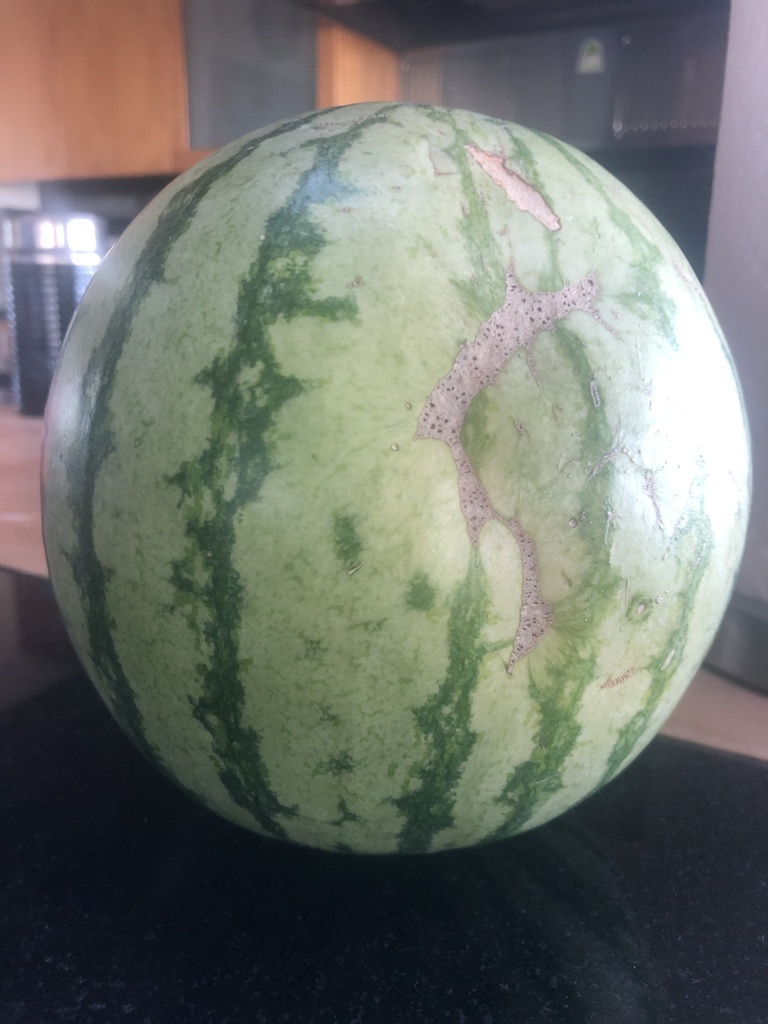
Watermelon needs 80-100 genuinely hot days, full sun, and 2-3 square metres of sprawl per plant, so it fails in cool short summers unless you use black plastic mulch and a fast icebox variety. Expect 2-4 fruits per plant. Judge ripeness by a dried tendril at the fruit stem plus a creamy-yellow ground spot, not by thumping. Reduce watering in the last two weeks for sweeter flesh. Non-toxic to cats and dogs.
Key facts
- Needs 80-100 days above roughly 21°C to ripen properly, which is why it disappoints in cool maritime climates like most of the UK without a polytunnel.
- Ripeness is read from the dried tendril nearest the fruit and a creamy-yellow ground spot; the famous thumping test is unreliable.
- Cutting back water in the final 10-14 days concentrates sugars, the opposite of what most fruiting crops want.
- Seedless varieties are triploid hybrids and must be planted alongside a normal seeded variety to supply the pollen.
Growing requirements#
| Plant type | Outdoor warm-season annual vine; strongly frost-tender and heat-demanding |
| Growing medium | Light, sandy, well-drained soil enriched with compost; heavy clay produces bland fruit |
| Light needs | Full sun, 8+ hours daily |
| Water frequency | Deep soak once or twice weekly at the base, then reduce sharply in the final 2 weeks before harvest |
| Spacing | 90-120cm between plants, 1.8-2.4m between rows; roughly 2-3 m² of sprawl each |
| Sowing season (northern hemisphere) | Start indoors April, transplant late May to June once nights stay above 15°C |
| Sowing season (southern hemisphere) | Sow September to December; ideal in northern Australia and inland regions with long hot summers |
| Temperature range | 21-32°C (70-90°F); growth effectively stops below 18°C |
| Fertilizer | Balanced feed early, then switch to low-nitrogen high-potassium once fruit sets, or you get vine and no melon |
| Soil pH | 6.0-6.8 |
| Container suitability | Only with icebox or bush varieties in a 60L+ container, trellised, with a sling supporting each fruit |
| Hardiness | Annual everywhere; frost kills it instantly |
| Toxicity | Non-toxic to cats and dogs; flesh and rind are both safe |
Harvest, yield & propagation#
| Days to harvest | 80-100 days from sowing; icebox types can finish in 70-75 |
| Yield per plant | 2-4 fruits for standard varieties; 4-6 smaller fruits for icebox types |
| Harvest signal | The curly tendril nearest the fruit stem has dried brown, the ground spot is creamy yellow rather than white, and the skin has lost its gloss |
| Harvest technique | Cut the stem with secateurs. Watermelons do not ripen further once picked, so a mistake is permanent |
| Storage | Whole uncut fruit keeps 2-3 weeks at cool room temperature; cut fruit needs refrigerating and lasts 3-5 days |
| Edible parts | Flesh, rind (pickled), and roasted seeds |
| Propagation methods | Seed. Start in biodegradable pots to avoid root disturbance, or direct sow in hot climates |
| Companion plants | Nasturtium and borage to draw pollinators; avoid crowding with other cucurbits to reduce mildew |
Common problems & troubleshooting#
| Symptom | Likely cause | Fix |
|---|---|---|
| Vigorous vine but no fruit setting | Too much nitrogen, or poor pollination | Switch to a high-potassium feed and hand-pollinate female flowers mid-morning with a picked male flower |
| Bland, watery flesh at harvest | Heavy watering right up to picking, or harvesting early | Cut watering right back for the final 10-14 days and wait for the tendril and ground-spot signs |
| Fruit split open on the vine | Heavy rain or watering after a dry spell | Keep soil moisture even with mulch; harvest ripe fruit ahead of forecast heavy rain |
| White powdery coating on leaves | Powdery mildew in humid conditions | Space plants generously, water at the base only, remove affected leaves, and treat early with potassium bicarbonate |
| Whole vine wilting despite moist soil | Fusarium wilt, a soil-borne fungus | No cure. Remove the plant, and rotate cucurbits off that bed for 5 years or grow grafted/resistant varieties |
| Rotten patch where fruit sits | Ground contact in damp soil | Rest each fruit on a tile, board or thick straw pad as soon as it starts to swell |
Stop guessing when the melon is ripe
Sodate counts days from fruit set against your accumulated heat, then tells you which ripeness signs to check and when to start drying the plant off.
Seasonal care#
Varieties & cultivars#
| Variety | Distinguishing trait | Note |
|---|---|---|
| 'Sugar Baby' | Icebox type, 3-5kg, ~75 days | Best choice for shorter or cooler seasons |
| 'Crimson Sweet' | Striped, 9-11kg, disease-tolerant | Reliable classic garden variety |
| 'Charleston Gray' | Long pale-green fruit, 12-15kg | Wilt-tolerant, needs a long season |
| 'Yellow Doll' | Yellow-fleshed icebox, very sweet | Fast and compact |
| Seedless (triploid) hybrids | No mature black seeds | Must be interplanted with a seeded variety to supply pollen |
Buying checklist#
- Match days to maturity against your genuinely hot days, not just frost-free days
- Choose an icebox variety if your season is under 90 hot days
- If buying seedless seed, buy a seeded pollinator variety at the same time
- Check mature fruit weight; a 15kg variety is unmanageable in a small bed
- Buy small seedlings rather than large pot-bound ones, melons hate root disturbance
Pricing by region#
| Region | Price range | Typical unit | Basis |
|---|---|---|---|
| US | $2 – $6 | Seed packet (~15-30 seeds) | Seed catalogue + garden centre |
| UK | $2 – $5 | Seed packet (~8-12 seeds) | Garden centre retail |
| India | $0.3 – $1.2 | Seed packet (~20 seeds) | Agri supply + local nursery |
| Australia | $3 – $6 | Seed packet (~15 seeds) | Nursery + seed retail |
| Canada | $2 – $6 | Seed packet (~20 seeds) | Garden centre retail |
USD figures are approximate conversions for comparison; switch the dropdown to see each region's actual local-currency listing price.
Often confused with#
Name confusion warning#
Melon names shift a lot between countries. Watermelon is tarbooj in India and pastèque in French-speaking regions. More confusingly, Australians call cantaloupe "rockmelon", and some catalogues list ornamental citron melons simply as "watermelon". If you want sweet red flesh, check for Citrullus lanatus plus a stated flesh colour on the packet.
Where it's actually grown#
Home-garden watermelon seed is produced mainly in the US, China, Thailand and India, where long dry summers allow seed to mature and be cleaned on the plant. Seedless triploid seed is far more expensive because it must be produced by crossing a tetraploid parent with a diploid one, a slow and low-yielding process, which is why a packet of seedless seed can cost several times a conventional one.
Import & biosecurity restrictions#
| Region | Note |
|---|---|
| Australia | Cucurbit seed imports need an import permit and phytosanitary certificate; domestic packets are freely sold. |
| US | Domestic sale unrestricted; imported seed may need a USDA small-lots-of-seed permit. |
| UK | Home-garden packets sold freely; commercial imports need phytosanitary documentation. |
| India | Major domestic crop; imported hybrid seed requires customs clearance. |
| Canada | CFIA rules apply to commercial seed lots; small home packets normally clear without issue. |
Similar plants
Ranked in these guides
Did you know?
Frequently asked questions
How do I tell if a watermelon is ripe on the vine?
Check three signs together: the curly tendril nearest the fruit stem has dried brown, the ground spot where it rests on the soil has turned creamy yellow rather than white, and the skin has gone dull instead of glossy. Thumping is unreliable, and watermelon does not ripen after picking.
Can I grow watermelon in a cool climate?
Only with help. You need 80-100 genuinely hot days, so in cool maritime climates use black plastic mulch to warm the soil, start seed indoors, pick a fast icebox variety like Sugar Baby, and ideally grow under a polytunnel or cloche.
Why is my homegrown watermelon bland?
Usually too much water in the final fortnight, or picking early. Cut watering right back for the last 10-14 days and wait for the tendril and ground-spot signals.
Do seedless watermelons need a pollinator plant?
Yes. Seedless varieties are triploid and produce little viable pollen, so you must interplant a conventional seeded variety nearby or almost no fruit will set.
Is watermelon safe for cats and dogs?
Yes, the plant and the flesh are non-toxic. Remove seeds and rind before offering it to a dog, since those can upset the stomach or cause a blockage.