 Sodate

On this page
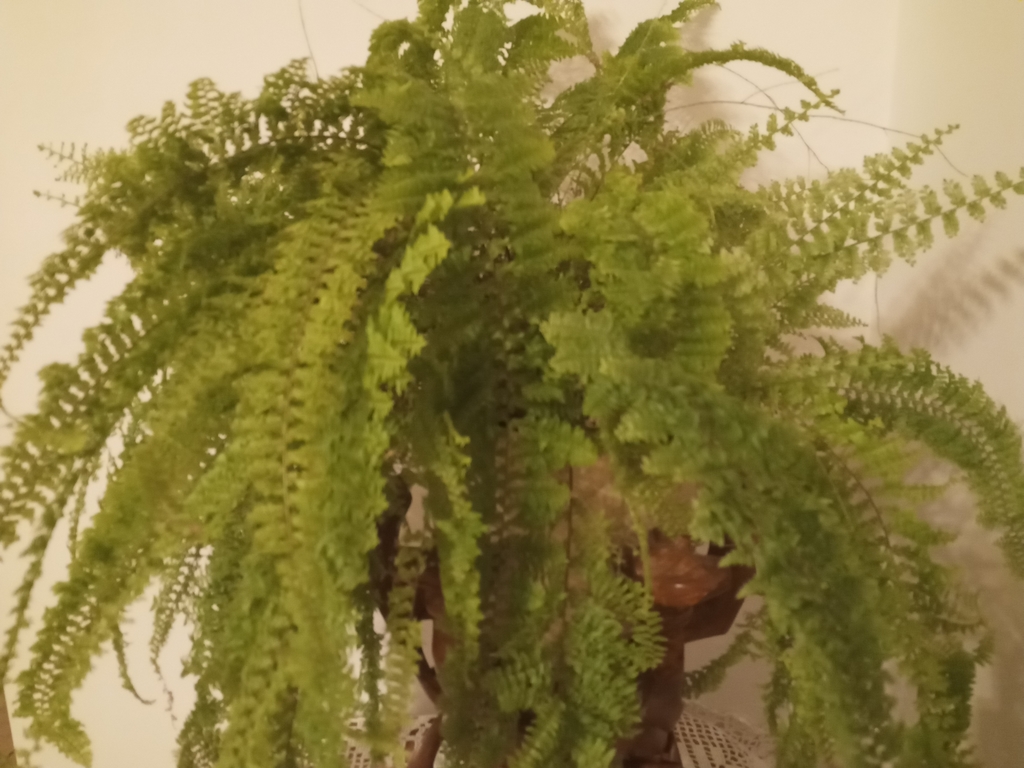
This is a method page: how to grow a Boston fern mounted rather than potted. Tie the crown to cork or hardwood over a damp sphagnum pad using fishing line or nylon cord (never glue on living tissue), hang it in bright indirect light with humidity above 50%, and expect to water every 1-3 days. A mounted fern dries several times faster than the same plant in a pot. For standard potted care see the base guide at /plants/indoor/boston-fern. Pet-safe.
Key facts
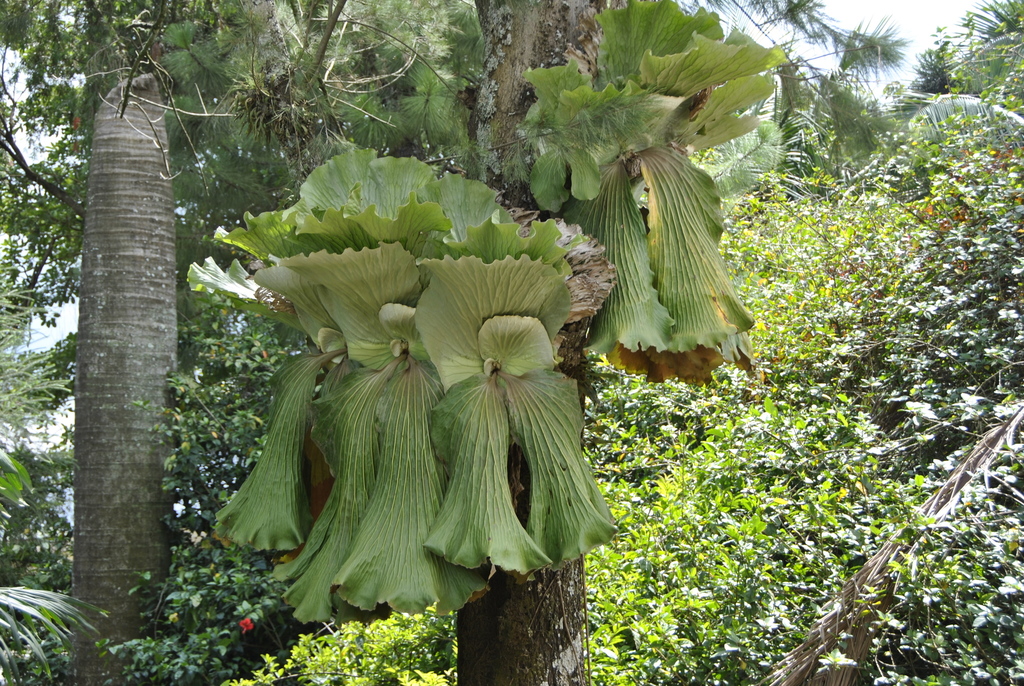
- Nephrolepis exaltata grows semi-epiphytically on trunks and rock ledges in the wild, which is why board mounting works at all.
- A mounted fern dries out several times faster than a potted one. Watering every 1-3 days is normal, not excessive.
- The sphagnum pad, not soil, is the entire water reservoir; its size directly sets how long the plant can go between waterings.
- Tie with fishing line or nylon cord; adhesive should only ever touch the moss or the board, never the crown or roots.
- Boston fern is non-toxic to cats and dogs, mounted or potted.
Care requirements#
| Growing method | Mounted: crown tied to a slab with a sphagnum pad, no pot and no potting soil |
| Mounting substrate | Cork bark, untreated hardwood, or a tree-fern slab; cork lasts longest under constant wetting |
| Moss pad | A generous handful of soaked, squeezed sphagnum behind the crown; more moss buys you more time between waterings |
| Wire vs glue | Fishing line, nylon cord, or plastic-coated wire wrapped over the crown base. Plant-safe silicone may anchor the moss pad to the board, but never glue the roots or crown |
| Light needs | Bright indirect light; direct sun dries the pad and scorches fronds within a day |
| Watering method | Take the mount down and soak it in a sink for 10-15 minutes until the pad is saturated, or drench it under a tap |
| Soak-vs-mist schedule | Soak every 1-3 days. Far more often than a potted fern. Misting the fronds daily helps humidity but does not water the plant |
| How to judge thirst | Lift the mount: a mounted fern that feels light is already stressed, so water on weight, not on a fixed day |
| Air circulation | Moderate air movement is good, but avoid a draught or fan pointed at the mount. It will dry the pad in hours |
| Humidity | 50-70% minimum; below that a mounted Boston fern browns off no matter how often you water |
| Temperature range | 16-24°C (60-75°F); keep away from radiators, which are lethal to mounted ferns |
| Fertilizer | Quarter-strength balanced liquid feed in the soak water every 3-4 weeks in spring and summer |
| Toxicity | Non-toxic to cats, dogs, and humans |
Growth & propagation#
| Mature size | 50-80cm frond spread on a mount, cascading below the board |
| Growth rate | Fast in humidity, and noticeably slower than the same plant potted if the pad dries repeatedly |
| Propagation methods | Runners (stolons) that root into the moss pad, or division of the crown before mounting |
| Propagation difficulty | Easy: pin a runner onto a second moss pad and it roots in a few weeks |
| Remounting schedule | Every 1-2 years; sphagnum breaks down and stops holding water long before the board fails |
| Pruning needs | Trim browned fronds at the base to keep airflow through the crown |
Common problems & troubleshooting#
| Symptom | Likely cause | Fix |
|---|---|---|
| Fronds crisp brown within days of mounting | The mount dries far faster than the pot the fern came from, and the watering routine was not changed | Move to watering every 1-3 days, add more sphagnum at the next remount, and raise ambient humidity |
| Crown goes black and mushy | The mount was kept permanently sodden with no drying phase, or glue was applied to living tissue | Cut out rotten tissue, remount on fresh moss with cord rather than adhesive, and let the pad surface dry slightly between soaks |
| Fern slides off or loosens from the board | Cord tied only around the fronds, or the moss pad decomposed and shrank | Retie across the firm crown base and remount on fresh sphagnum |
| Heavy frond drop and constant shedding | Low humidity, the classic mounted-fern failure in heated rooms | Relocate to a bathroom or add a humidifier; misting alone will not fix a dry room |
| Green algae and a sour smell on the board | Constant wetting with no airflow | Increase air movement, and choose cork or cedar rather than plain softwood at the next remount |
Mounted plants dry out on their own schedule
Sodate tracks how fast your slab actually dries in your room, so a mounted fern never crisps between waterings.
Seasonal care#
Varieties & cultivars#
| Variety | Distinguishing trait | Note |
|---|---|---|
| 'Bostoniensis' | The classic arching Boston fern | Best all-round choice for mounting |
| 'Dallas Jewel' | Compact, denser habit | Suits small slabs and holds shape on a wall |
| 'Fluffy Ruffles' | Short, stiff, heavily ruffled fronds | Attractive mounted but less tolerant of drying |
Buying checklist#
- If buying pre-mounted, check the crown is tied at its base and not glued
- The moss pad is generous and still springy, not thin and decomposed
- Board is cork, cedar or hardwood rather than untreated softwood that will rot
- Fronds are green to the tips, with no widespread browning from a dried-out pad
Pricing by region#
| Region | Price range | Typical unit | Basis |
|---|---|---|---|
| US | $25 – $60 | mounted plant | Nursery + maker-mounted online |
| UK | $25 – $65 | mounted plant | Garden centre + online |
| India | $7 – $22 | mounted plant | Urban nursery retail |
| Australia | $25 – $60 | mounted plant | Nursery retail |
| Canada | $28 – $68 | mounted plant | Garden centre + online |
USD figures are approximate conversions for comparison; switch the dropdown to see each region's actual local-currency listing price.
Often confused with#
Where it's actually grown#
Boston ferns themselves are mass-produced in Florida, Costa Rica and the Netherlands as potted stock; mounted versions are almost always ordinary nursery plants remounted by small makers or by the grower at home.
Import & biosecurity restrictions#
| Region | Note |
|---|---|
| Australia | Live plant imports restricted under biosecurity law; Boston fern is widely available domestically. |
| US | No restriction on domestic sale; Nephrolepis exaltata is a standard nursery crop. |
| UK | Imports need phytosanitary paperwork; sold in every garden centre domestically. |
| India | No restriction; grows well mounted in humid coastal cities, poorly in dry inland heat. |
| Canada | CFIA permits required for commercial imports; potted stock is ubiquitous at retail. |
Similar plants
Ranked in these guides
Did you know?
Frequently asked questions
Can you grow a Boston fern mounted without soil?
Yes. Tie the crown to a cork or hardwood slab over a damp sphagnum pad. It works because Nephrolepis grows semi-epiphytically in the wild, but you must water far more often.
How often do you water a mounted Boston fern?
Every 1-3 days. A mounted fern dries several times faster than the same plant in a pot, so judge by the weight of the mount rather than a weekly schedule.
Should I use glue or wire to mount a fern?
Use fishing line or nylon cord tied across the crown base. Adhesive should only ever contact the moss or the board. Glue on living tissue causes rot.
Is a mounted Boston fern still pet-safe?
Yes, Nephrolepis exaltata is non-toxic to cats and dogs however it is grown.
Where can I read normal potted Boston fern care?
The full potted care guide, including soil mix and repotting, is at /plants/indoor/boston-fern.