 Sodate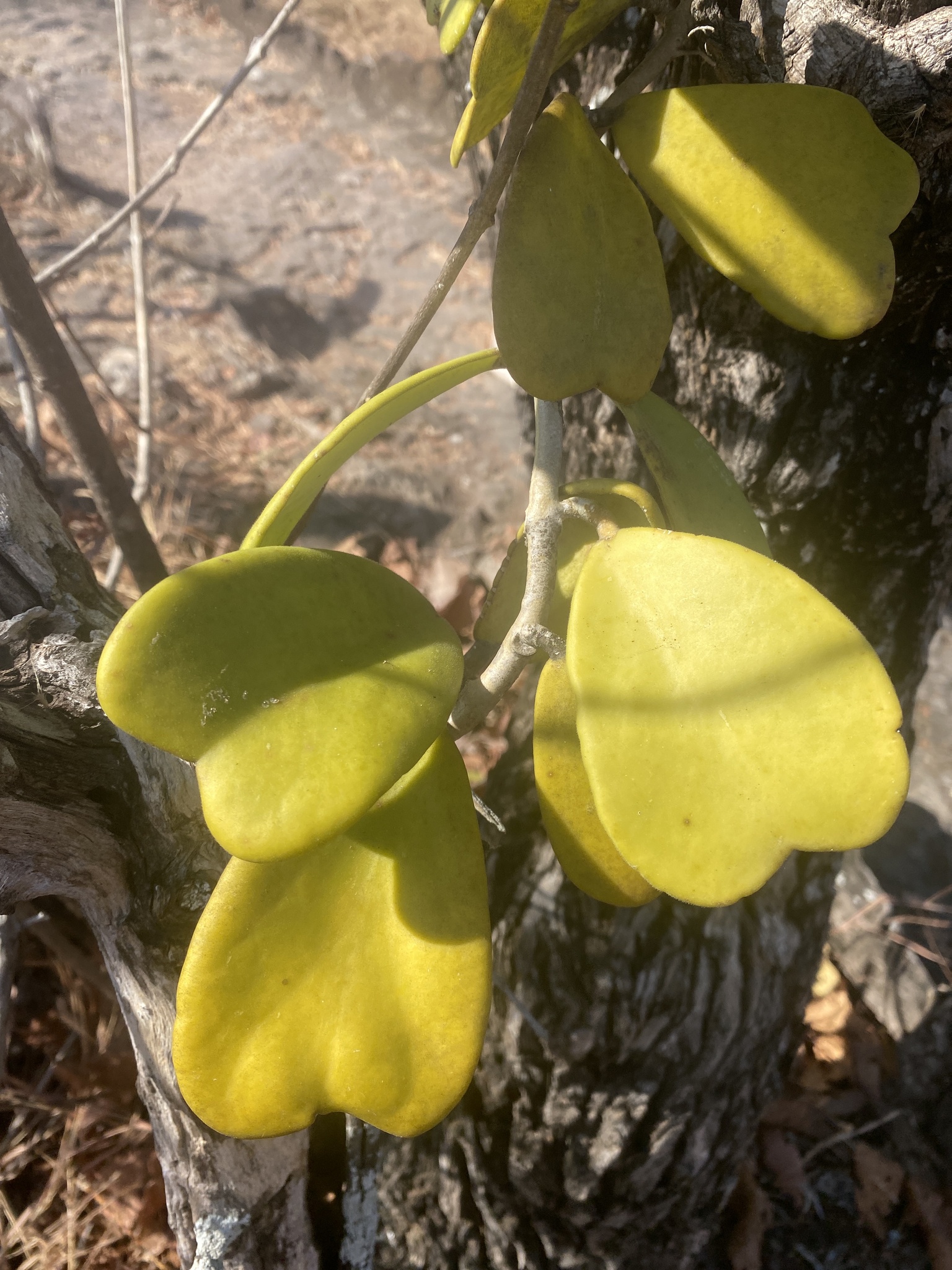
On this page
This is a method page for growing a hoya mounted instead of potted. Tie the vine to a cork slab over a thin sphagnum pad, give bright indirect light, and water every 1-3 days. A mount dries far faster than a pot, though a hoya's succulent leaves buy you more slack than a fern's fronds do. Never cut off the bare flower peduncles; they rebloom for years. Pet-safe. For standard potted care see /plants/indoor/hoya-carnosa.
Key facts
- Hoyas are genuine epiphytes that grip bark with adventitious roots, so mounting matches their natural habit better than a pot does.
- A mounted plant dries several times faster than a potted one, meaning watering every 1-3 days rather than weekly. Though waxy leaves make hoyas the most forgiving common mounted plant.
- Use only a thin sphagnum pad. A thick wet pad is the fastest way to rot a hoya stem.
- Flowers form on permanent short spurs called peduncles that rebloom for years; cutting them off destroys future flowering.
- Hoyas are non-toxic to cats and dogs.
Care requirements#
| Growing method | Mounted: vine tied to a slab over a thin sphagnum pad, no pot and no potting soil |
| Mounting substrate | Cork bark is ideal; tree fern slab or hardwood also work. Rough bark gives adventitious roots something to grip |
| Moss pad | Thin only. A light layer under the stem. Hoyas rot in a thick, permanently wet pad |
| Wire vs glue | Soft cord, plant velcro or fishing line across the stem between nodes. Adhesive may anchor moss to the board but must never touch a node or root |
| Light needs | Bright indirect light with an hour or two of gentle direct sun; good light is what drives flowering |
| Watering method | Drench the mount thoroughly so the thin pad and roots are wet, then let it dry back properly |
| Soak-vs-mist schedule | Every 1-3 days on a mount, versus roughly weekly in a pot. Waxy leaves tolerate a missed day better than most mounted plants |
| How to judge thirst | Check the leaves as well as the pad. Slight leaf softness means water now, and a hard dry pad with firm leaves means it can wait a day |
| Air circulation | Good airflow suits them and helps the thin pad dry between waterings |
| Humidity | 50-70% is ideal for mounted culture; hoyas cope with less than a mounted fern would |
| Temperature range | 18-29°C (65-85°F); keep above 12°C in winter |
| Fertilizer | Quarter-strength balanced feed applied to the pad every 3-4 weeks in spring and summer; a higher-potassium feed encourages blooms |
| Toxicity | Non-toxic to cats, dogs, and humans |
Growth & propagation#
| Mature size | Vines run a metre or more across and beyond the mount |
| Growth rate | Moderate, with long leafless searching tendrils that later leaf out, do not cut these |
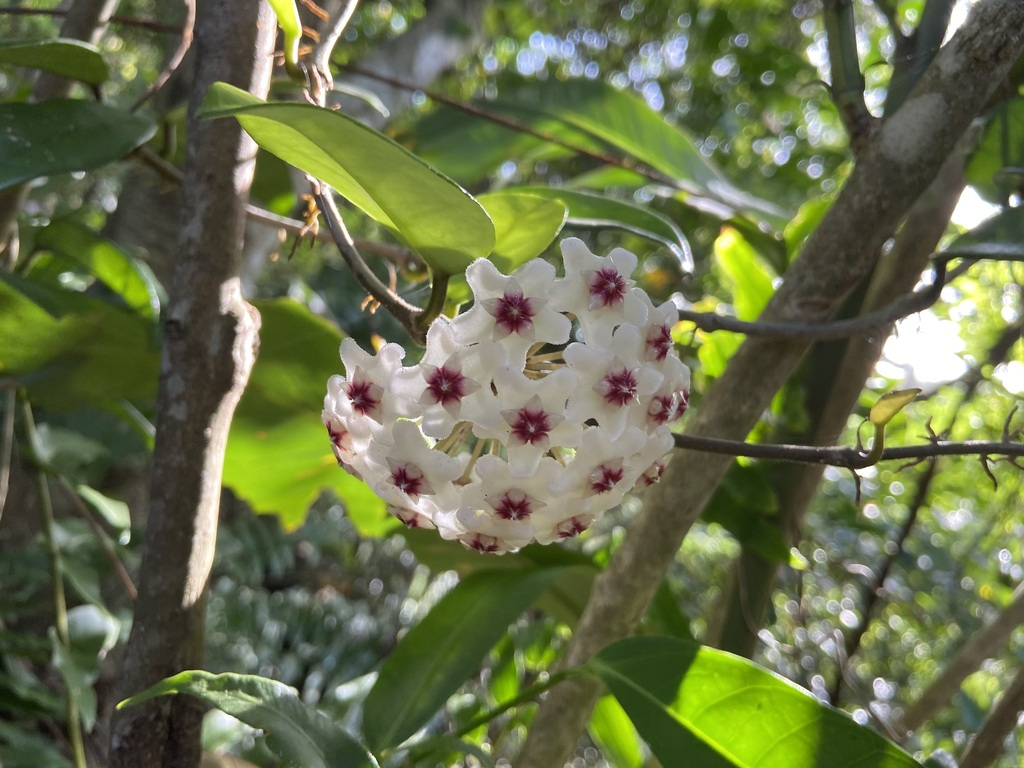
| Flowering | Umbels of waxy star flowers on permanent peduncles, usually on plants that are slightly stressed and well-lit |
| Propagation methods | Stem cuttings with two or more nodes, tied straight onto a new damp pad |
| Propagation difficulty | Easy: nodes root into sphagnum in a few weeks |
| Remounting schedule | Every 2-3 years as the moss decomposes; disturb the plant as little as possible |
Common problems & troubleshooting#
| Symptom | Likely cause | Fix |
|---|---|---|
| Stem blackens at the moss line | Too much moss holding water against the stem | Remount with a much thinner pad and let the mount dry properly between waterings |
| Leaves wrinkle and go soft | The mount has been dry too long. The leaves are the water reserve being drawn down | Drench the mount; leaves usually plump back within a day or two, then water every 1-3 days |
| Healthy vine that never flowers | Too little light, or the peduncles were cut off after a previous bloom | Increase light and never cut the short bare flower spurs. They rebloom from the same point for years |
| Long bare vine with no leaves | Normal searching growth looking for a surface to attach to | Guide it along the mount and pin it to the pad; it will leaf out once it finds contact |
| Buds form then drop before opening | The mount dried out completely, or the plant was moved during budding | Keep watering steady through budding and leave the mount in position |
Mounted plants dry on their own schedule
Sodate tracks how fast your slab dries in your room so a mounted hoya gets watered on evidence, not habit.
Seasonal care#
Varieties & cultivars#
| Variety | Distinguishing trait | Note |
|---|---|---|
| Hoya carnosa | Thick waxy leaves, very tolerant | The best hoya to mount first |
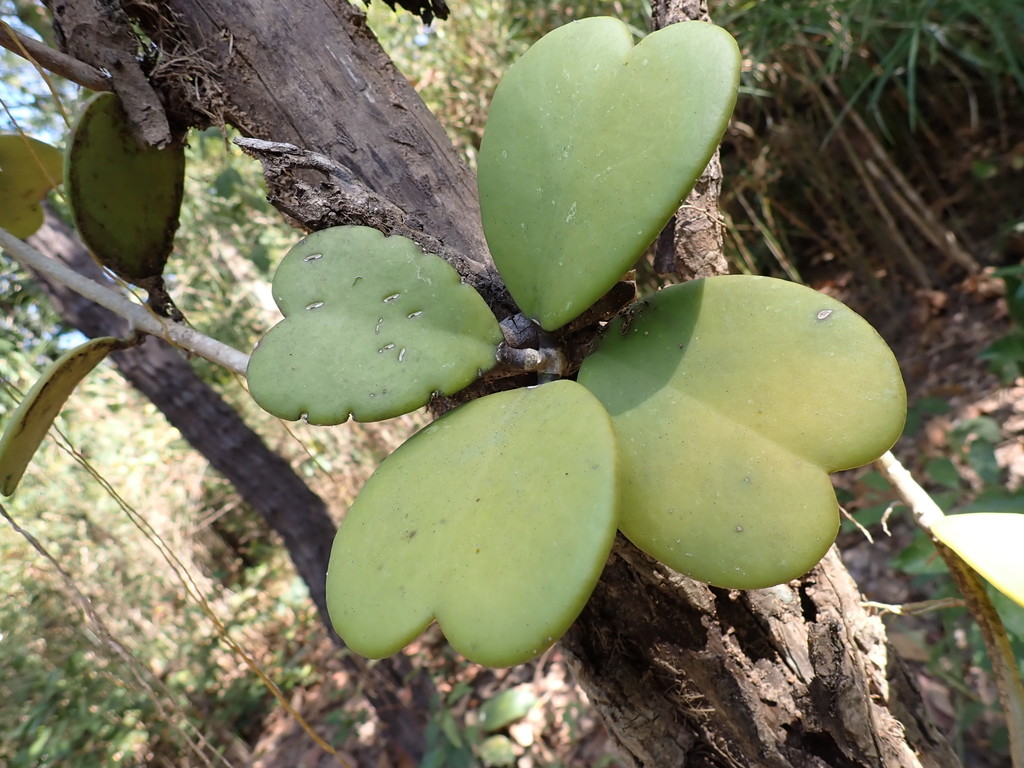
| Hoya kerrii | Thick heart-shaped leaves | Mounts well; the single-leaf 'Valentine' cuttings never grow into vines |
| Hoya linearis | Trailing needle-like fuzzy leaves | Prefers a hanging mount and cooler, more humid air |
| Hoya curtisii | Tiny speckled leaves, creeping habit | Ideal for small cork mounts as it hugs the surface |
Buying checklist#
- Stem is tied rather than glued at the nodes
- Sphagnum pad is thin, not a thick sodden wad
- Leaves are firm and waxy with no shrivelling
- Any short bare peduncles are still attached. A seller who trimmed them removed future flowers
Pricing by region#
| Region | Price range | Typical unit | Basis |
|---|---|---|---|
| US | $20 – $60 | mounted plant | Plant shop + maker-mounted online |
| UK | $22 – $68 | mounted plant | Specialist plant shop |
| India | $7 – $25 | mounted plant | Urban nursery retail |
| Australia | $25 – $70 | mounted plant | Nursery + specialist retail |
| Canada | $25 – $70 | mounted plant | Plant shop + online |
USD figures are approximate conversions for comparison; switch the dropdown to see each region's actual local-currency listing price.
Often confused with#
Where it's actually grown#
Hoyas are grown from cuttings by nurseries in Thailand, the Netherlands, Florida and the Philippines as potted stock; mounted plants are nearly always potted nursery plants remounted by small makers or hobbyists.
Import & biosecurity restrictions#
| Region | Note |
|---|---|
| Australia | Live plant imports restricted under biosecurity law; hoyas are widely available domestically. |
| US | No restriction on domestic sale; hoyas are standard nursery stock. |
| UK | Imports need phytosanitary paperwork; widely sold in garden centres domestically. |
| India | No restriction; mounted hoyas do well in humid coastal cities. |
| Canada | CFIA permits required for commercial imports; potted stock is common at retail. |
Similar plants
Ranked in these guides
Did you know?
Frequently asked questions
Can you grow a hoya mounted instead of in a pot?
Yes, and it closely matches their natural habit. Hoyas are true epiphytes that grip tree bark with adventitious roots. Use cork with only a thin sphagnum pad.
How often do you water a mounted hoya?
Every 1-3 days, because a mount dries several times faster than a pot. Waxy hoya leaves store water, so they forgive a missed day better than most mounted plants.
Should I use glue or ties to mount a hoya?
Tie with soft cord, plant velcro or fishing line across the stem between nodes. Adhesive should never contact a node or root.
Is a mounted hoya safe for cats and dogs?
Yes, hoyas are non-toxic to cats and dogs.
Where can I read normal potted hoya care?
The standard potted guide, including mix and repotting, is at /plants/indoor/hoya-carnosa.