 Sodate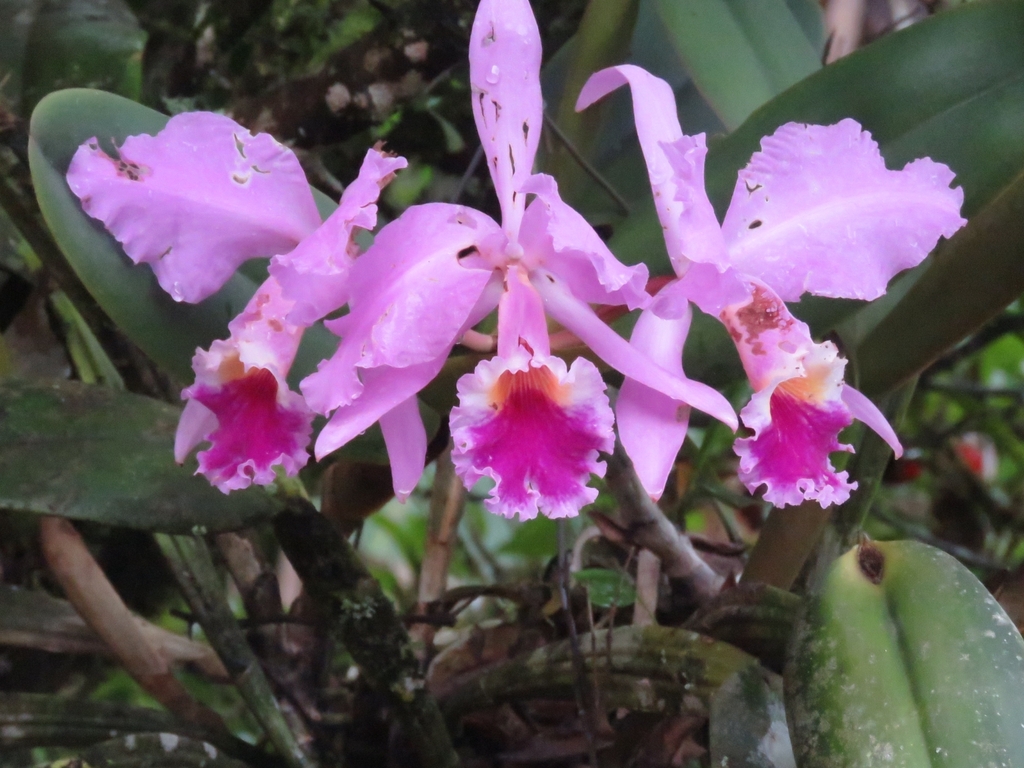
On this page
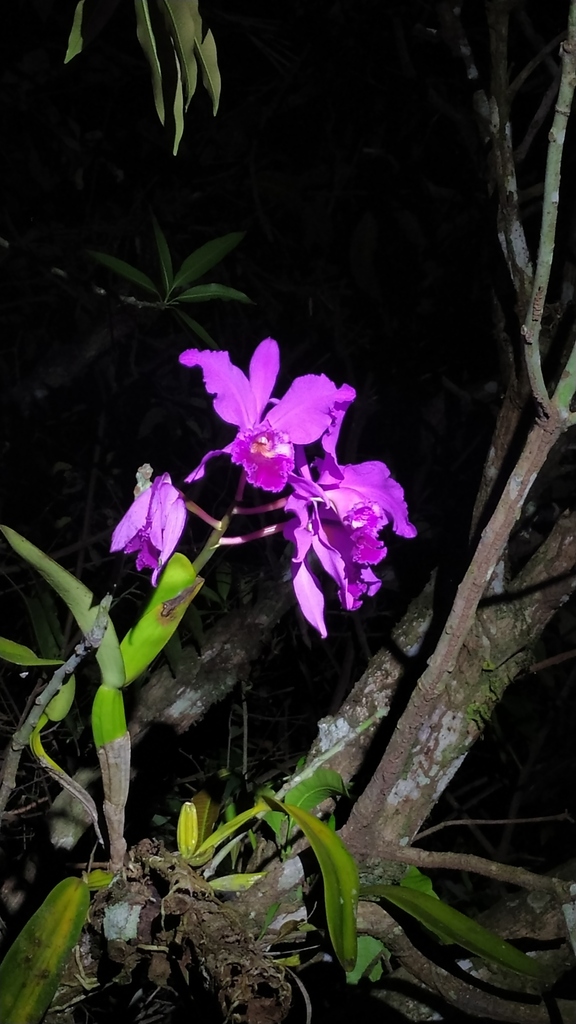
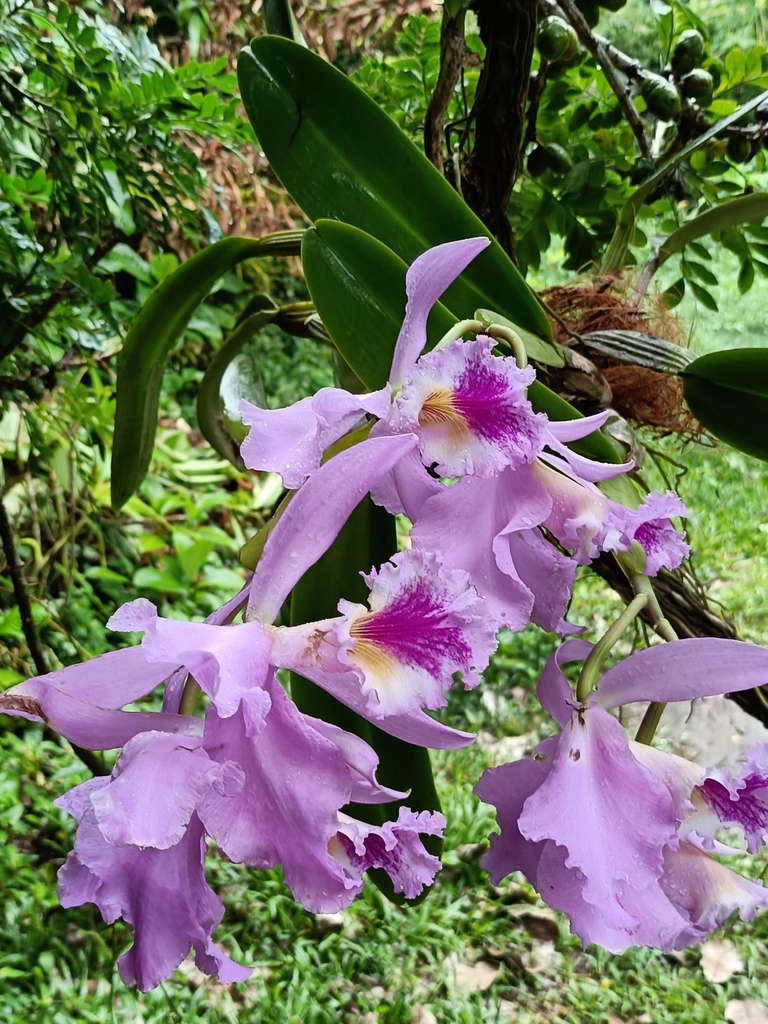
Mounted cattleyas grow bare-rooted on cork or tree fern with little or no moss. Water heavily every day or two in growth so the roots go green, then let them dry to silver before the next drenching. The wet-then-dry swing is the whole point. Give the brightest light short of leaf-burn and keep air moving. Pet-safe. Typically $30-$90.
Key facts
- Cattleyas store water in swollen pseudobulbs, which is why they tolerate mounted culture's fast drying far better than thin-leaved orchids.
- On a mount there is little or no medium. Water passes straight through, so watering is frequent but brief.
- They need high light: leaves should be a mid apple-green, not the dark green of a phalaenopsis.
- New roots emerge from the base of a developing new growth, which is the moment to mount or remount.
- Non-toxic to cats and dogs.
Care requirements#
| Plant type | Epiphytic orchid grown mounted; outdoors year-round only in USDA 10-12 |
| Mounting substrate | Cork bark or tree fern slab, with at most a thin wisp of sphagnum under new roots |
| Fixing method | Nylon cord, fishing line or plastic-coated wire over the rhizome; never copper wire, never glue on roots |
| Light needs | High: bright filtered sun, an east or lightly shaded south window; leaves should be apple-green, not dark green |
| Watering method | Drench the whole mount under a tap or dunk it for a few minutes until roots turn green |
| Soak-vs-mist schedule | Every 1-2 days in warm growing weather, every 3-5 days in winter; a morning mist between drenches helps but does not replace one |
| Drying window | Roots must return to silver-white before the next watering. A mount that never dries rots the rhizome |
| Air circulation | Essential; cattleyas on mounts need moving air around the pseudobulbs at all times |
| Humidity | 50-70%; the higher the humidity, the better mounted culture works |
| Temperature range | 16-30°C (60-86°F) with a 5-8°C night drop, which helps trigger flowering |
| Fertilizer | Quarter-strength orchid feed with most waterings in growth, flushed with plain water weekly |
| Toxicity | Non-toxic to cats, dogs, and humans |
Growth & propagation#
| Mature size | 20-60cm tall depending on hybrid, with roots spreading across the mount |
| Growth rate | Moderate: typically one or two new pseudobulbs per year |
| Flowering | Usually once or twice a year from a sheath at the top of a mature pseudobulb |
| Propagation methods | Division of the rhizome, keeping at least three pseudobulbs per piece |
| Propagation difficulty | Moderate: divide only as new roots start, and remount immediately |
| Pruning needs | Cut spent flower spikes and fully shrivelled back-bulbs; leave green pseudobulbs even if leafless |
Common problems & troubleshooting#
| Symptom | Likely cause | Fix |
|---|---|---|
| Pseudobulbs wrinkle and shrivel | Dehydration. The mount is drying faster than the watering routine allows | Water daily in warm weather, add a small sphagnum pad under the root zone, and raise humidity |
| Rhizome soft and brown at the base | The mount stays wet, usually from too much moss plus poor airflow | Remove excess moss, cut out rotten tissue, and remount bare on cork with strong air movement |
| Deep dark green leaves and no flowers | Too little light. The classic cattleya non-blooming cause | Increase light until leaves lighten to apple-green; some yellow-green is normal in well-flowered plants |
| Reddish or scorched patches on leaves | Sudden move into direct midday sun without acclimatisation | Increase light gradually over several weeks and filter harsh midday sun |
| Bud blast: sheath forms but buds dry up | Sharp humidity drop, cold draught, or the mount drying out while buds develop | Keep watering and humidity steady through the sheath-to-bloom period |
Wet, then properly dry, then wet again
Sodate paces a mounted cattleya's drench-and-dry cycle to your light and season instead of a fixed weekly slot.
Seasonal care#
Varieties & cultivars#
| Variety | Distinguishing trait | Note |
|---|---|---|
| Standard large-flowered hybrids | Big ruffled corsage flowers | Showiest but need the most light and space |
| Mini-catt hybrids (Cattleya walkeriana crosses) | Compact plants, frequent flowering | Best suited to mounting on small cork slabs |
| Cattleya aclandiae | Small species with spotted flowers, naturally a twig epiphyte | Prefers to be mounted and dislikes pots entirely |
| Cattleya intermedia | Tough, tolerant species with clusters of medium flowers | A forgiving first mounted cattleya |
Buying checklist#
- Plump, unwrinkled pseudobulbs: wrinkles mean past drought or root loss
- White-tipped active roots visible somewhere on the mount
- Rhizome firm along its length with no brown soft spots
- Leaves apple-green rather than dark green, indicating it was grown in adequate light
Pricing by region#
| Region | Price range | Typical unit | Basis |
|---|---|---|---|
| US | $30 – $90 | blooming-size mounted plant | Orchid nursery + online |
| UK | $35 – $100 | blooming-size mounted plant | Specialist orchid nursery |
| India | $10 – $40 | blooming-size plant | Orchid nurseries |
| Australia | $30 – $85 | blooming-size plant | Orchid society + nursery sales |
| Canada | $35 – $100 | blooming-size plant | Orchid nursery + online |
USD figures are approximate conversions for comparison; switch the dropdown to see each region's actual local-currency listing price.
Often confused with#
Name confusion warning#
Older labels such as Sophrolaeliocattleya, Brassolaeliocattleya and Laeliocattleya have largely been folded into Cattleya. The name changed; the mounted culture did not.
Where it's actually grown#
Nursery cattleyas are seed-raised or meristem-cloned by orchid growers in Taiwan, Thailand, Brazil, Hawaii and Florida; mounted plants are usually potted nursery stock remounted by specialists or hobbyists.
Import & biosecurity restrictions#
| Region | Note |
|---|---|
| Australia | Live plant imports restricted under biosecurity law; buy from domestic orchid nurseries and society sales. |
| US | All orchids are CITES-listed, so imports need CITES paperwork; nursery-propagated plants sold domestically are unrestricted. |
| UK | CITES documentation required for import; readily available from domestic orchid specialists. |
| India | No restriction on domestic sale; cattleyas are grown commercially in the northeast and Kerala. |
| Canada | CITES permits plus CFIA import requirements apply; retail plants are unrestricted. |
Similar plants
Ranked in these guides
Did you know?
Frequently asked questions
Can you grow a cattleya orchid mounted instead of potted?
Yes, and many species prefer it. Their pseudobulbs store water, so they handle a mount's fast wet-dry cycle well as long as humidity and airflow are good.
How often do you water a mounted cattleya?
Every one to two days in warm growing weather and every three to five days in winter, drenching until the roots turn green and letting them dry to silver in between.
Why won't my cattleya flower?
Almost always too little light. Cattleya leaves should be apple-green, not the dark green people associate with a healthy houseplant.
Are cattleya orchids toxic to cats or dogs?
No, cattleyas and orchids generally are non-toxic to cats and dogs.
Should I use moss on a cattleya mount?
Use very little or none. A thin wisp under new roots helps establishment, but a thick pad keeps the rhizome wet and causes rot.