 Sodate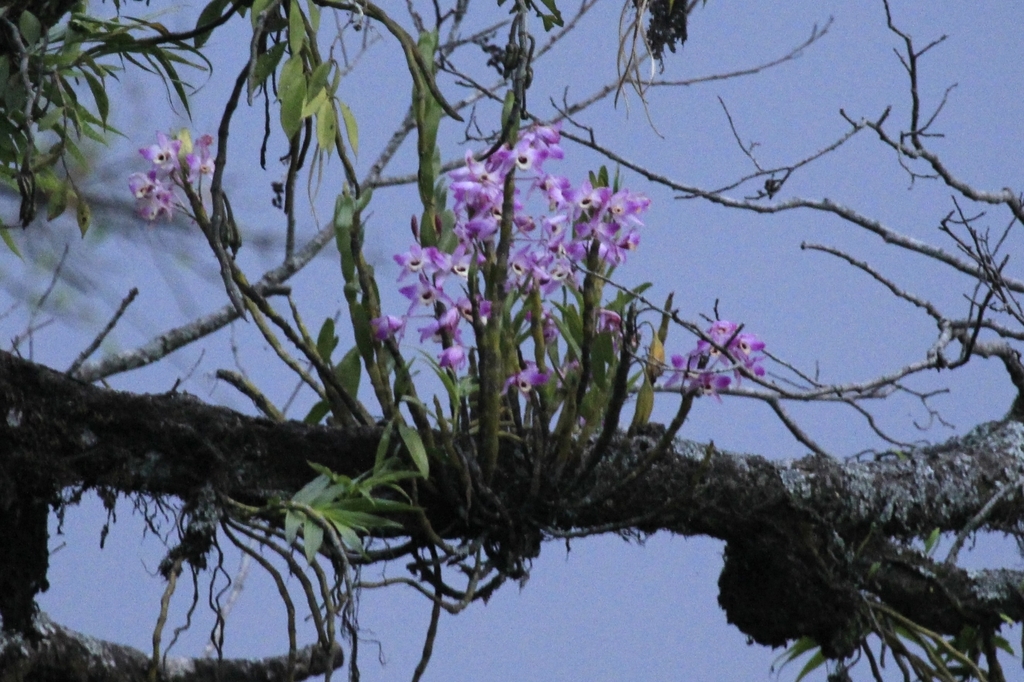
On this page
The single most important dendrobium fact: most types need a cool, dry winter rest, roughly 8-12 weeks at 10-16°C with little or no water and no fertiliser, or they simply will not bloom. Grow it mounted on cork with bare roots, drench and dry through the growing season, then stop almost completely in winter. Do not cut the leafless old canes; they carry next year's flowers. Pet-safe. Typically $25-$70.
Key facts
- Most dendrobiums need a cool, dry winter rest of 8-12 weeks to initiate flower buds; watered warmly all year they produce keikis instead of flowers.
- Flowers form along the older, often leafless canes, so cutting back bare canes destroys the coming bloom.
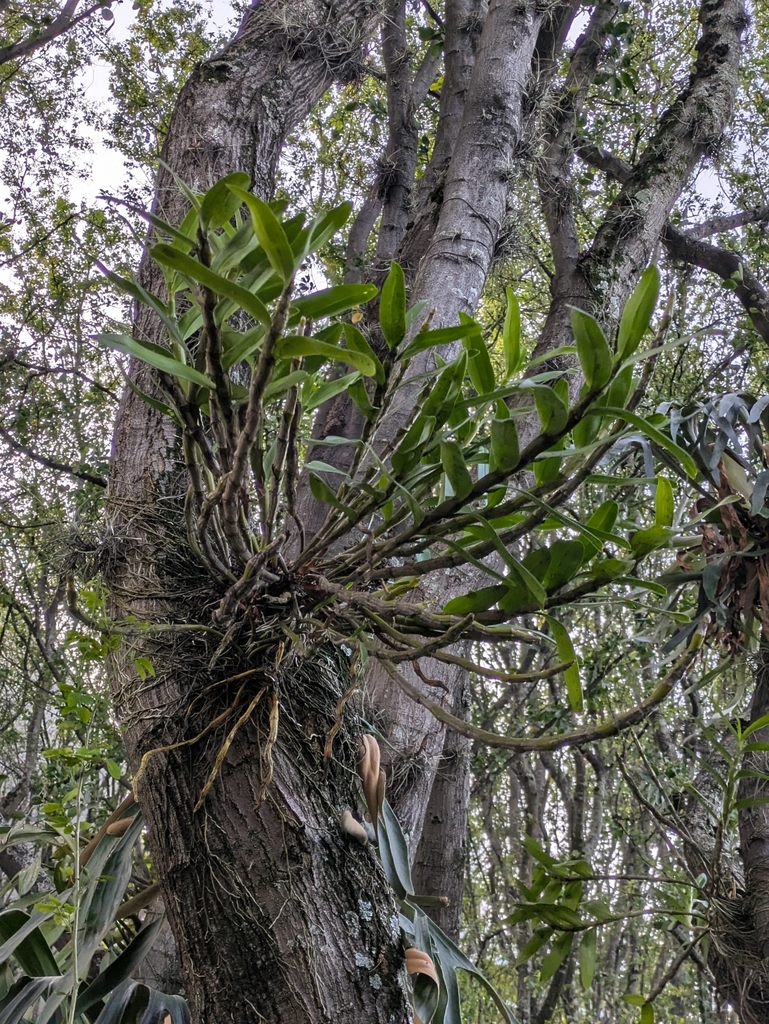
- Mounted culture suits them because the canes and roots dry quickly, mimicking the seasonal bark habitat.
- During the rest period, feed stops entirely and water drops to an occasional light misting if canes shrivel badly.
- Non-toxic to cats and dogs.
Care requirements#
| Plant type | Epiphytic orchid grown mounted; outdoors year-round only in USDA 9-12 depending on type |
| Mounting substrate | Cork bark or tree fern slab, bare or with the barest wisp of sphagnum at the root base |
| Fixing method | Nylon cord or fishing line over the rhizome and lower canes; never copper wire, never glue on living tissue |
| Light needs | Bright: comparable to a cattleya; most dendrobiums want more light than a phalaenopsis |
| Watering method | Drench the mount thoroughly so roots green up, then let them dry to silver |
| Soak-vs-mist schedule | Every 1-2 days through spring and summer growth; drop to almost nothing during the winter rest |
| Winter rest | 8-12 weeks at 10-16°C with bright light, no fertiliser, and water only if canes shrivel severely. This is what triggers flowering |
| Air circulation | Essential year-round, and especially during rest when the plant should stay dry |
| Humidity | 50-70% in growth; rest can be drier |
| Temperature range | 18-30°C in growth; 10-16°C nights during the rest period |
| Fertilizer | Quarter-strength orchid feed with most waterings from spring to late summer, then stop completely |
| Toxicity | Non-toxic to cats, dogs, and humans |
Growth & propagation#
| Mature size | 30-90cm canes depending on species and hybrid |
| Growth rate | Fast in summer. A new cane can grow to full height in a single season |
| Flowering | Spring, on buds that form along mature canes after the winter rest |
| Propagation methods | Keikis (plantlets) that form on canes, or division of a clump with several canes per piece |
| Propagation difficulty | Easy where keikis form. Pot or mount them once they have 5cm roots |
| Pruning needs | Remove only fully dead brown canes; leafless green or yellowish canes still flower and store water |
Common problems & troubleshooting#
| Symptom | Likely cause | Fix |
|---|---|---|
| Healthy plant, plenty of new canes, no flowers | No cool dry winter rest. It was watered and fed all year | Give 8-12 weeks at 10-16°C, bright light, no feed and virtually no water, then resume watering as buds appear |
| Plantlets (keikis) form along the canes instead of flowers | Too warm and too wet in winter, or over-feeding with nitrogen | Enforce the rest period; the keikis can be removed and mounted once rooted |
| Canes shrivel badly over winter | The rest was too dry for too long, or the root system is poor | A light misting every couple of weeks during rest is enough; check roots and improve them in the growing season |
| Leaves yellow and drop in autumn | Normal for deciduous (nobile-type) dendrobiums heading into rest | Nothing needed. Do not cut the bare canes, they are where the flowers come from |
| Black soft rot at the cane base | Mount kept wet with no airflow, often during a cool period | Cut out affected tissue, remount bare on cork, and never water into cool stagnant conditions |
The rest period is the whole reason it blooms
Sodate marks the seasonal switch so you stop watering at the right time and start again when buds appear.
Seasonal care#
Varieties & cultivars#
| Variety | Distinguishing trait | Note |
|---|---|---|
| Nobile-type dendrobiums | Deciduous, flowers along the whole cane | Need the strictest cool dry rest of all |
| Phalaenopsis-type (D. bigibbum hybrids) | Evergreen, flower sprays from cane tips | Warm-growing; needs only a mild reduction in winter water |
| Dendrobium kingianum | Compact Australian rock orchid, very tough | An excellent, forgiving first mounted dendrobium |
| Dendrobium aggregatum (lindleyi) | Short bulbs and golden flower clusters | Almost always grown mounted; hates pots |
Buying checklist#
- Canes are plump and firm rather than deeply grooved
- Live white-tipped roots gripping the mount
- Old leafless canes still present. A seller who has cut them has cut the flowers
- Ask which type it is: nobile-type and phalaenopsis-type have quite different winter needs
Pricing by region#
| Region | Price range | Typical unit | Basis |
|---|---|---|---|
| US | $25 – $70 | blooming-size mounted plant | Orchid nursery + online |
| UK | $28 – $80 | blooming-size mounted plant | Specialist orchid nursery |
| India | $6 – $30 | blooming-size plant | Orchid nurseries (many native species) |
| Australia | $22 – $65 | blooming-size plant | Orchid society + nursery sales |
| Canada | $30 – $85 | blooming-size plant | Orchid nursery + online |
USD figures are approximate conversions for comparison; switch the dropdown to see each region's actual local-currency listing price.
Often confused with#
Name confusion warning#
Supermarket 'dendrobiums' are nearly always warm-growing phalaenopsis-type plants, which need only a mild winter dry-off. Giving one a strict cold nobile-type rest can damage it, so identify the type before changing its winter care.
Where it's actually grown#
Commercial dendrobiums are produced at scale in Thailand, Taiwan and Singapore for the cut-flower and pot trade, with species stock from specialist growers in Australia, Japan and the US; mounted plants are usually remounted nursery stock.
Import & biosecurity restrictions#
| Region | Note |
|---|---|
| Australia | Live plant imports restricted under biosecurity law; many dendrobiums are native and sold domestically. |
| US | All orchids are CITES-listed, so imports need CITES paperwork; nursery-propagated plants sold domestically are unrestricted. |
| UK | CITES documentation required for import; readily available from domestic orchid specialists. |
| India | Many dendrobiums are native and protected in the wild; buy nursery-propagated plants, which are freely sold. |
| Canada | CITES permits plus CFIA import requirements apply; retail plants are unrestricted. |
Similar plants
Ranked in these guides
Did you know?
Frequently asked questions
Why won't my dendrobium orchid bloom?
Most dendrobiums need a cool, dry winter rest of 8-12 weeks at around 10-16°C with no feed and almost no water. Without it they grow leaves and keikis but no flowers.
Should I cut off the bare canes on a dendrobium?
No. Leafless canes are alive and are where next season's flowers form. Remove only canes that are fully brown and dead.
How often do you water a mounted dendrobium?
Every one to two days during spring and summer growth, drenching until the roots green up, then almost not at all through the winter rest.
Are dendrobium orchids safe for cats and dogs?
Yes, dendrobiums are non-toxic to cats and dogs.
Do all dendrobiums need the cold rest?
No. The warm-growing phalaenopsis-type dendrobiums sold in supermarkets need only slightly drier winter conditions. Nobile-type and deciduous species need the strict rest.