 Sodate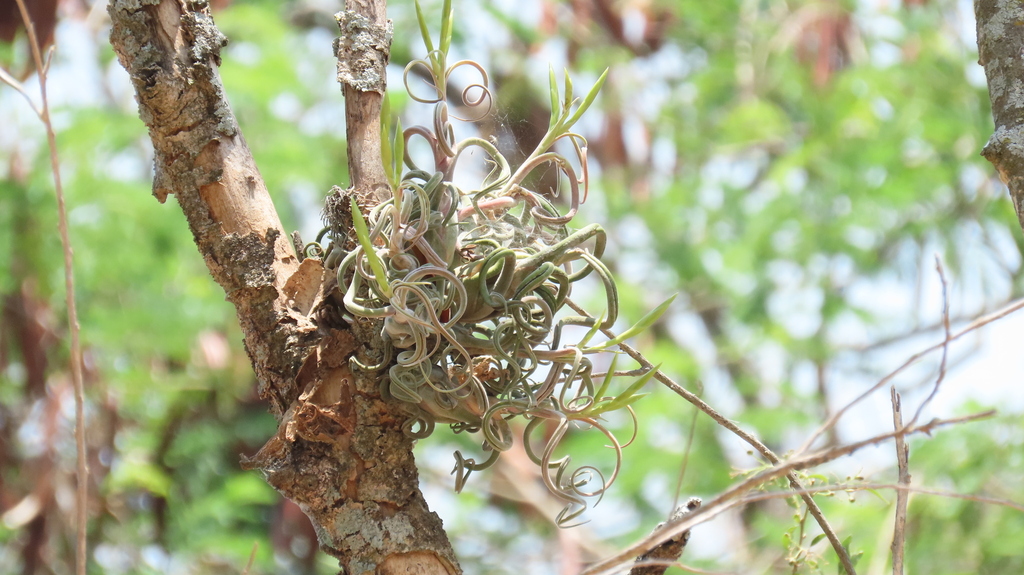
On this page
Medusa's head is an easy, sculptural air plant: bright indirect light, a 20-30 minute soak once a week, and, critically, a firm shake and upside-down drying afterwards, because water trapped in its hollow bulb causes rot faster than in any flat-rosette tillandsia. Pet-safe. Typically $6-$14.
Key facts
- Native to Mexico and Central America, growing anchored to trees in seasonally dry forest.
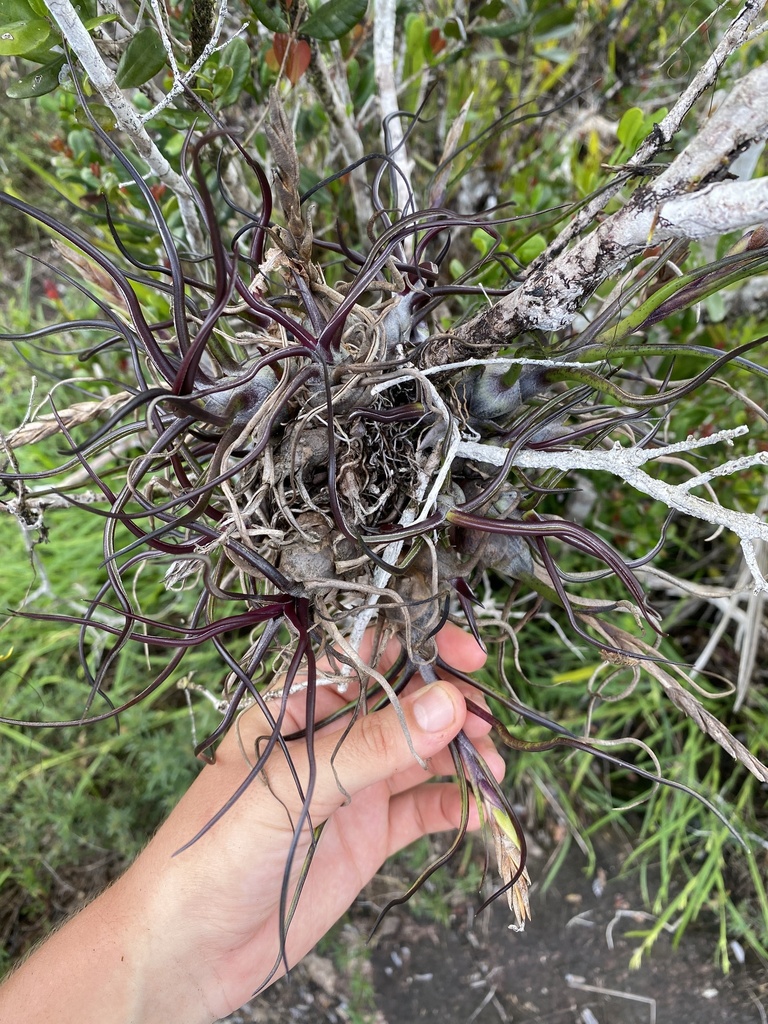
- It is a myrmecophyte: the hollow, bulbous leaf base shelters ant colonies in the wild, and the ants' debris feeds the plant.
- The twisting, channelled leaves are covered in grey trichomes that absorb all its water and nutrients, roots are anchors only.
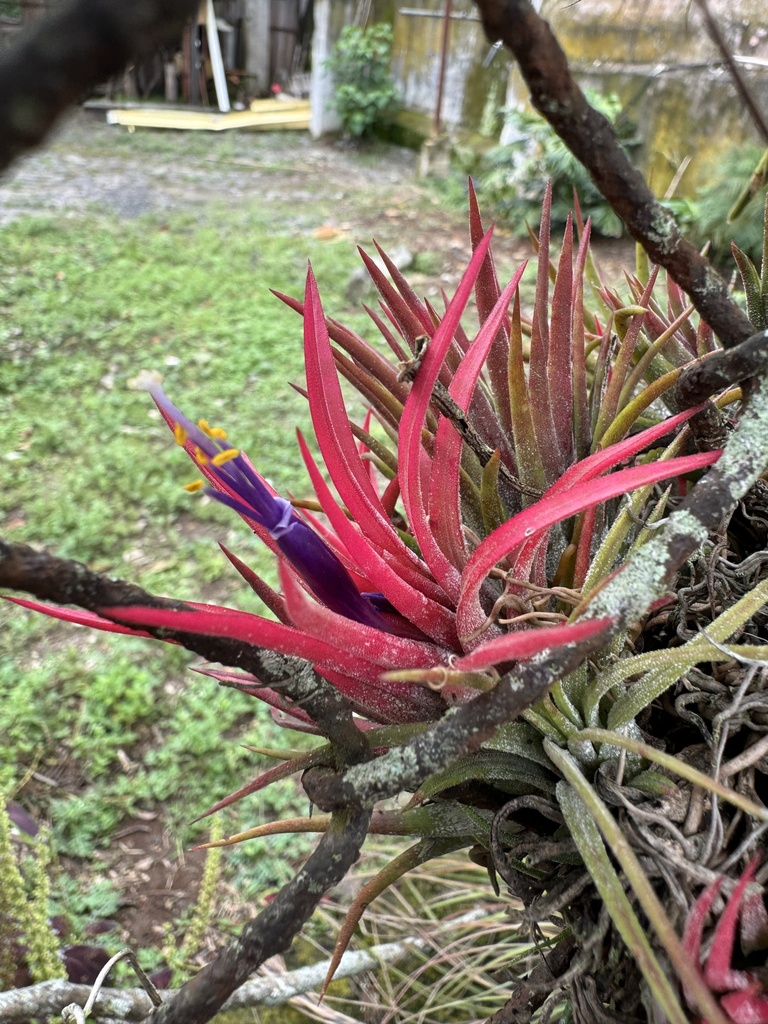
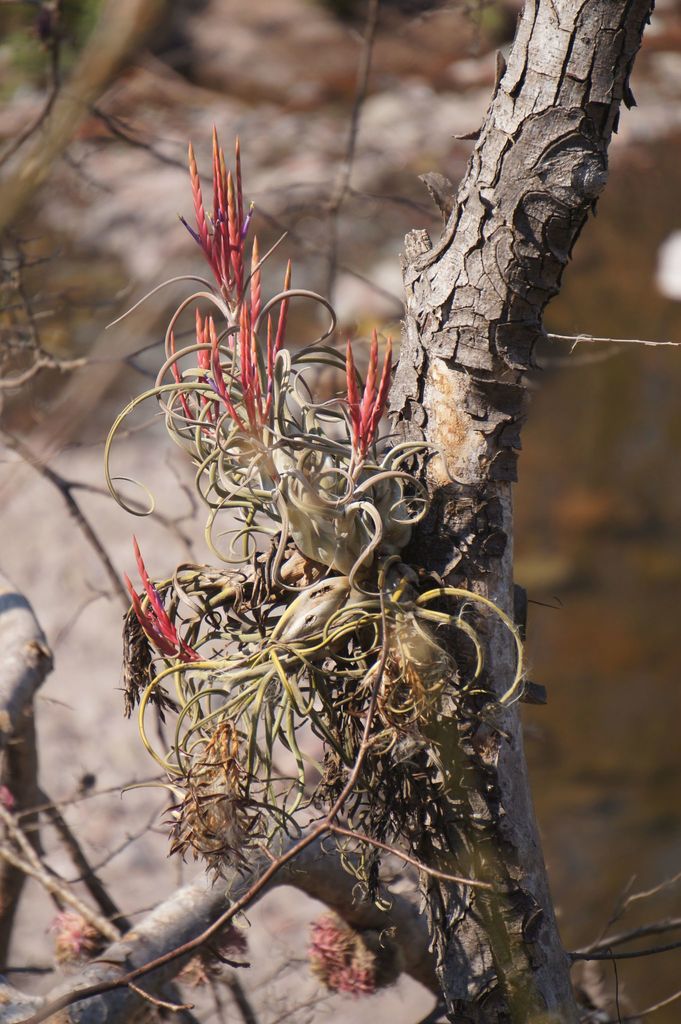
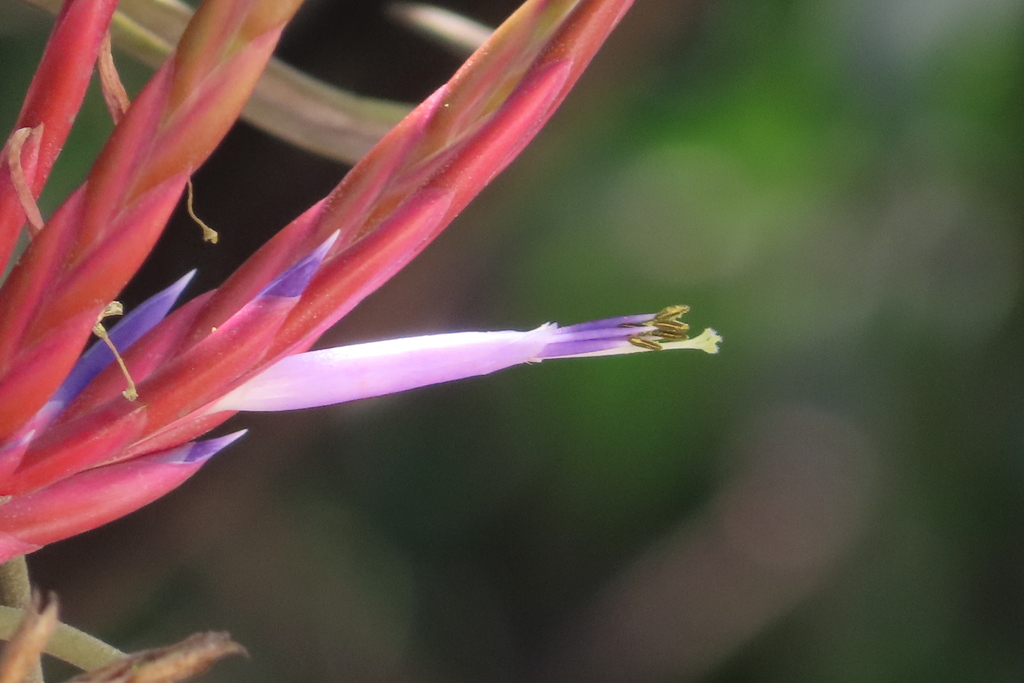
- Blooms with red bracts and violet tubular flowers, then produces pups and slowly fades (monocarpic).
- Non-toxic to cats and dogs.
Care requirements#
| Plant type | Epiphytic air plant (indoor; outdoors year-round only in USDA 9-11) |
| Growing medium | None: display loose, in an open shell, or wired to driftwood or cork; never plant in soil |
| Light needs | Bright indirect light; tolerates a little gentle morning sun |
| Watering method | Soak 20-30 minutes in room-temperature water once a week; mist between soaks in dry rooms |
| Drying after watering | Shake hard and dry upside down. The hollow bulb traps water, and drying upside down is what prevents crown rot |
| Water quality | Rain, pond, or tap water rested overnight; never softened water |
| Air circulation | Essential: moving air dries the bulb; never seal in a closed terrarium |
| Humidity | 40-60% ideal; increase misting in heated winter rooms |
| Temperature range | 10-32°C (50-90°F); protect from frost |
| Fertilizer | Tillandsia feed at 1/4 strength in the soak water monthly, spring-summer |
| Mounting | Wire or plant-safe glue to a base, bulb pointing slightly down so water drains; never copper wire |
| Toxicity | Non-toxic to cats, dogs, and humans |
Growth & propagation#
| Mature size | 15-25cm leaves from a 5-8cm bulb |
| Growth rate | Slow: pups take 1-2 years to reach blooming size |
| Bloom cycle | Red-bracted spike with violet flowers, usually spring; each rosette flowers once |
| Propagation methods | Pups at the base after flowering; twist off at 1/3 the mother's size or grow as a clump |
| Propagation difficulty | Easy |
| Pruning needs | Trim dried leaf tips and spent flower spikes only |
Common problems & troubleshooting#
| Symptom | Likely cause | Fix |
|---|---|---|
| Base of the bulb turns dark and soft; leaves pull out from the centre | Water trapped inside the hollow bulb after soaking. The classic caput-medusae killer | Usually fatal once the centre releases; prevent by shaking hard and drying fully upside down within 4 hours |
| Leaves curl and channel more tightly than usual | Dehydration | Overnight soak (6-8 hours), then return to weekly soaks; mist midweek in dry air |
| Brown crispy leaf tips | Softened/chlorinated water or very low humidity | Switch to rainwater or rested tap water; trim tips at an angle |
| Plant fades after its red bloom spike | Normal monocarpic cycle | Leave the mother while pups develop, then separate or keep as a clump |
| Grey fuzz stays wet and dull, no growth | Too little light or constant sogginess | Move within 1m of a bright window and let it dry fully between waterings |
Never forget an air plant soak again
Sodate reminds you when your last soak was and nudges you before your medusa's head starts curling from thirst.
Seasonal care#
Varieties & cultivars#
| Variety | Distinguishing trait | Note |
|---|---|---|
| T. caput-medusae 'Sonoran Snow' | Extra-silvery, heavily trichomed form | Collector form, tolerates drier air |
| Large-form Guatemala | Bigger bulb and longer, wilder leaves | Most common commercial form |
Buying checklist#
- Bulb is firm with no dark, soft, or hollow-feeling patches
- Leaves are pliable and silvery, not crisp or translucent at the base
- No sour smell from the bulb (a rot giveaway)
- Avoid plants glued upright into closed glass globes
Pricing by region#
| Region | Price range | Typical unit | Basis |
|---|---|---|---|
| US | $6 – $14 | single plant | Air plant nursery + online retail |
| UK | $6 – $15 | single plant | Garden centre + online |
| India | $3 – $8 | single plant | Online exotic plant sellers |
| Australia | $6 – $14 | single plant | Tillandsia specialists |
| Canada | $6 – $15 | single plant | Garden centre + online |
USD figures are approximate conversions for comparison; switch the dropdown to see each region's actual local-currency listing price.
Often confused with#
Where it's actually grown#
Commercial stock is farm-grown in Guatemala, the global air plant nursery hub, with additional growers in Florida and the Netherlands; wild collection is discouraged and now rare in trade.
Import & biosecurity restrictions#
| Region | Note |
|---|---|
| Australia | Live plant imports restricted under biosecurity law; buy from domestic tillandsia nurseries. |
| US | No restriction on domestic sale; imported Guatemalan stock enters with standard phytosanitary certificates. |
| UK | Post-Brexit imports need phytosanitary paperwork; widely available domestically. |
| India | No specific restriction; sold by online exotic plant nurseries. |
| Canada | CFIA permits required for commercial imports; readily available at retail. |
Similar plants
Ranked in these guides
Did you know?
Frequently asked questions
Is Tillandsia caput-medusae safe for pets?
Yes. Like all tillandsias it is non-toxic to cats and dogs.
How do I water a medusa's head air plant?
Soak it for 20-30 minutes once a week, then shake it out firmly and dry it upside down so no water sits inside the hollow bulb.
Are there really ants inside Tillandsia caput-medusae?
Only in the wild. It is a myrmecophyte whose bulb naturally shelters ant colonies, but nursery plants are grown ant-free.
Why is my caput-medusae rotting at the base?
Water almost certainly pooled inside the bulb after watering; always drain and dry the plant upside down and give it moving air.
How big does caput-medusae get?
Leaves reach about 15-25cm from a fist-sized bulb, making it one of the larger easy-care air plants.