 Sodate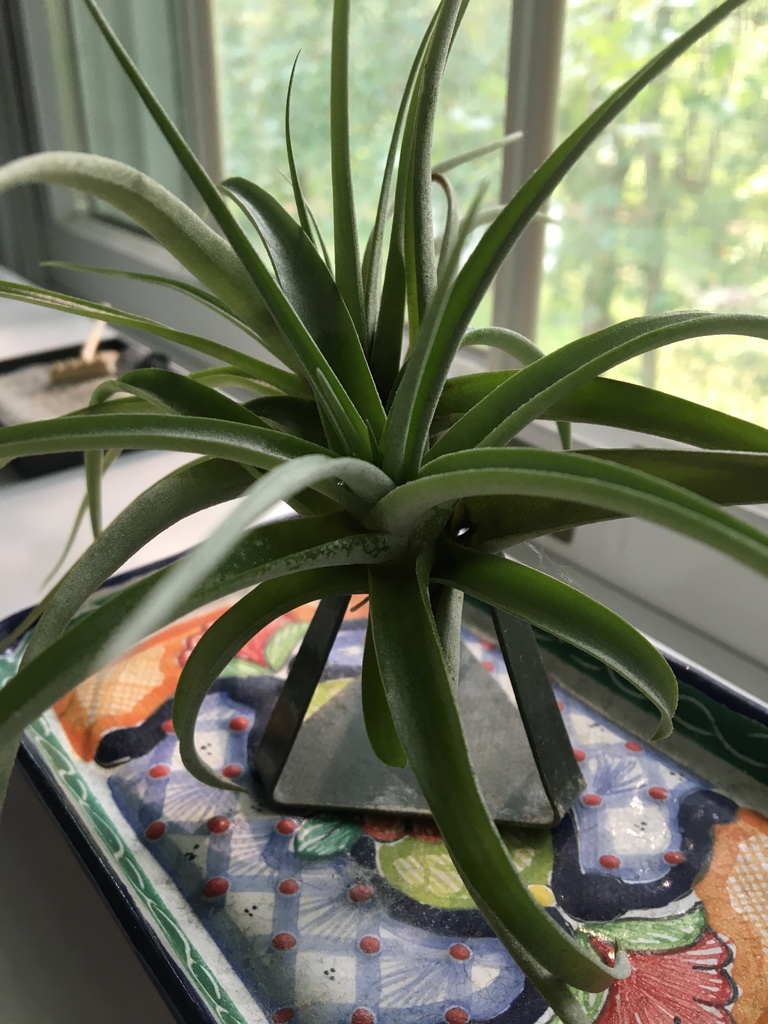
On this page
T. harrisii is a soft silvery air plant grown with no soil: soak it for 20-30 minutes weekly, shake it out, and dry it upside down. Trapped water in the crown is the main killer of air plants. It is CITES Appendix II listed after heavy wild collection in Guatemala, so buy only nursery-propagated plants. Bright indirect light, constant airflow. Pet-safe. Typically $6-$18.
Key facts
- Listed on CITES Appendix II. International trade is regulated, and only nursery-propagated plants should ever be bought.
- Endemic to a very small area of the Motagua valley in Guatemala, where wild populations were heavily depleted by collectors.
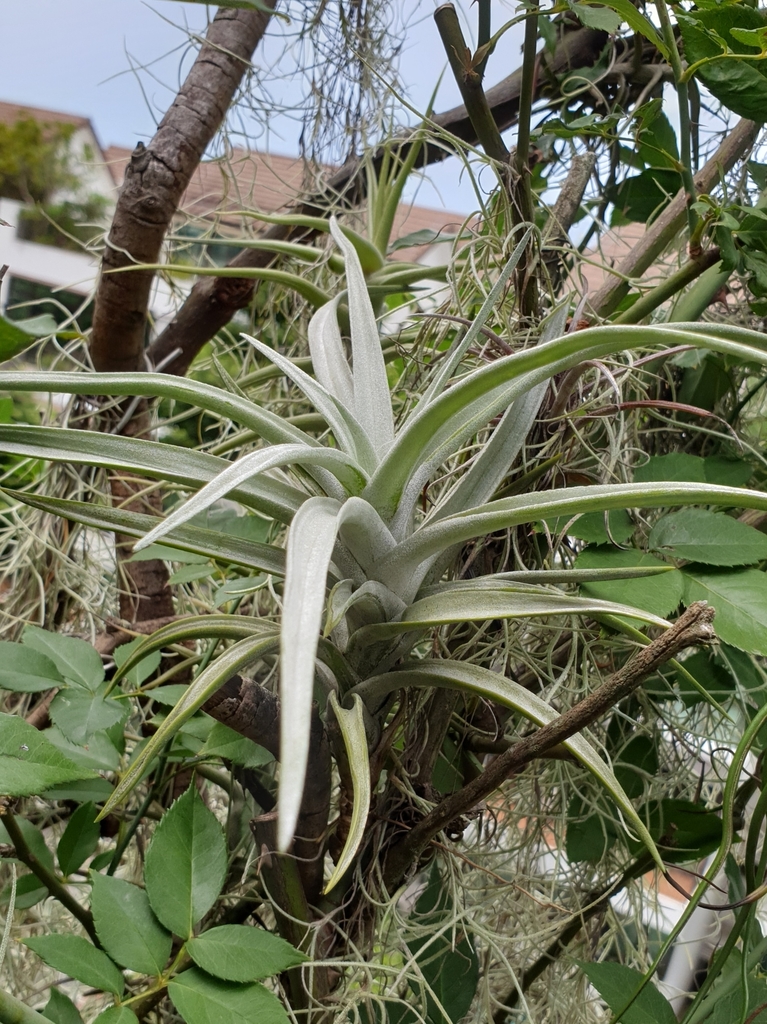
- Its dense silver trichomes are the water-absorbing organs; the plant has no functional feeding roots.
- Soak weekly, then shake out and dry upside down. Water trapped in the crown is the main cause of air plant death.
- Non-toxic to cats and dogs.
Care requirements#
| Plant type | Epiphytic air plant; outdoors year-round only in USDA 9-11 |
| Growing medium | None: displayed bare on driftwood, cork or wire; never plant it in soil or a pot |
| Mounting | Plant-safe silicone or nylon wire to a base; never copper wire, which is toxic to tillandsias |
| Light needs | Bright indirect light with some gentle morning sun; the silver coating handles more light than green tillandsias |
| Watering method | Soak the whole plant in room-temperature water for 20-30 minutes |
| Soak-vs-mist schedule | Soak weekly; in very dry homes soak weekly and mist lightly midweek, but misting alone is not enough |
| Drying after watering | Shake off firmly and dry upside down within 4 hours. Trapped water in the crown is the main killer |
| Water quality | Rainwater or tap water left out overnight; avoid softened water, whose salts damage trichomes |
| Air circulation | Essential: never seal it in a closed terrarium or glass globe |
| Humidity | 40-60%; being a dry-valley species it tolerates lower humidity than most tillandsias |
| Temperature range | 10-32°C (50-90°F); protect from frost |
| Fertilizer | Bromeliad feed at a quarter strength added to the soak once a month in spring and summer |
| Toxicity | Non-toxic to cats, dogs, and humans |
Growth & propagation#
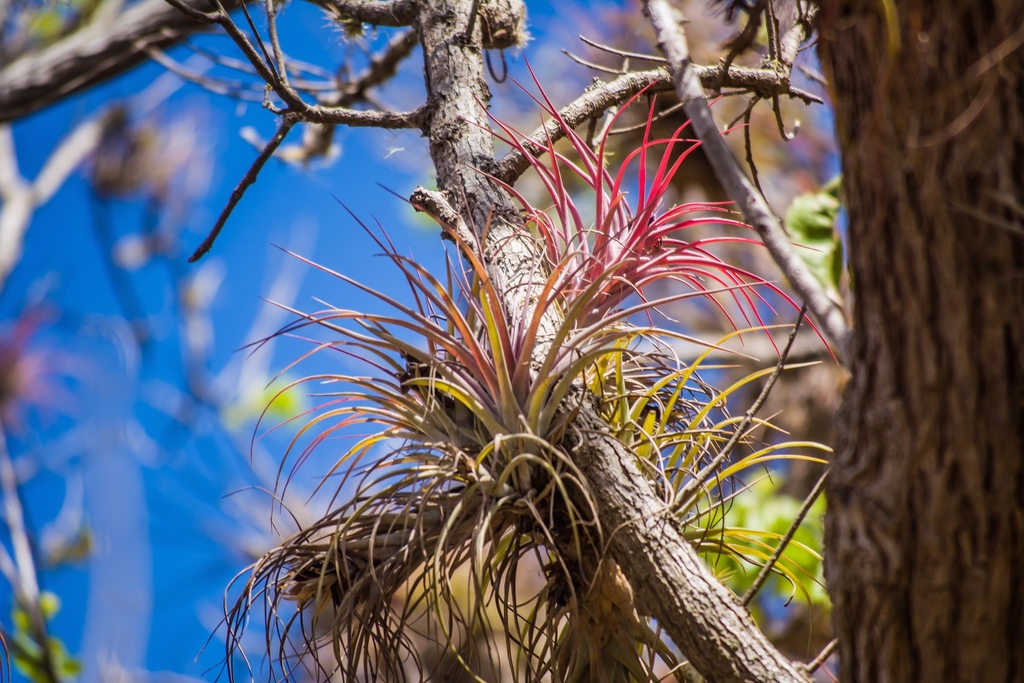
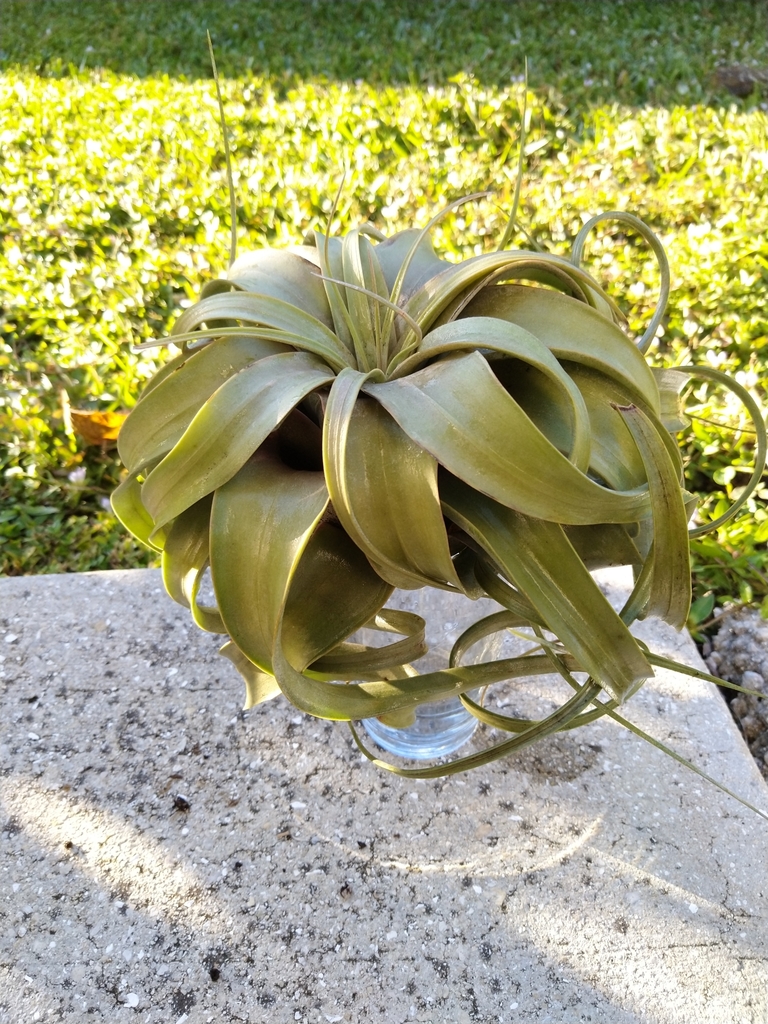
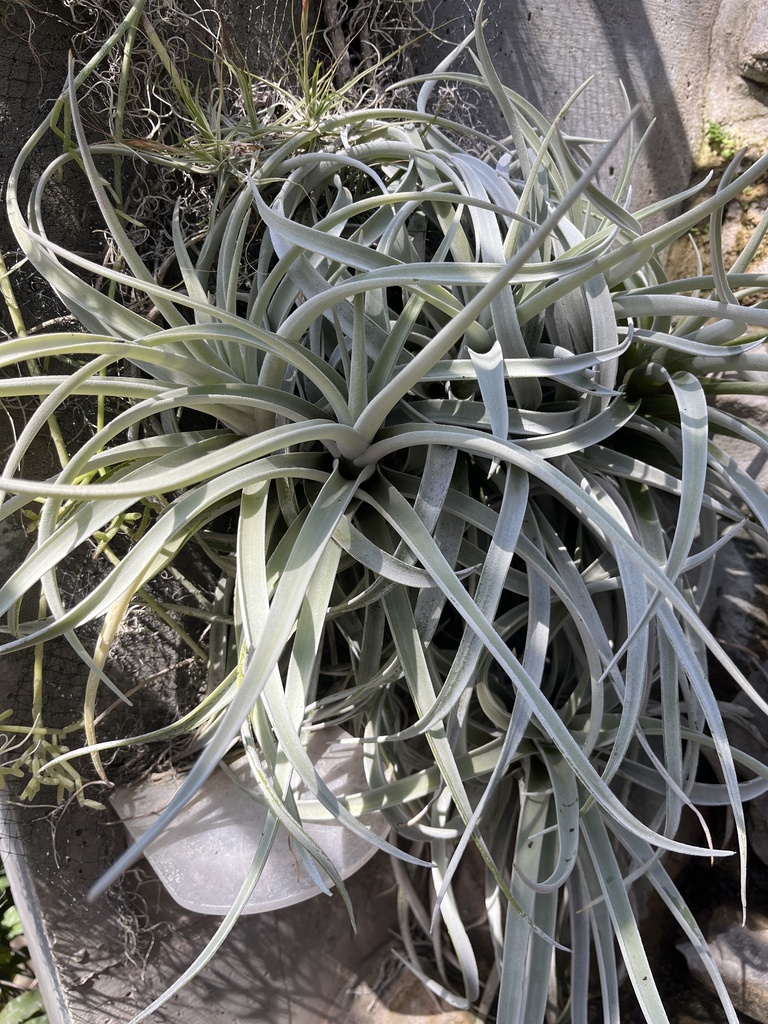
| Mature size | 15-25cm tall rosette of soft, recurved silver leaves |
| Growth rate | Slow: several years from pup to blooming size |
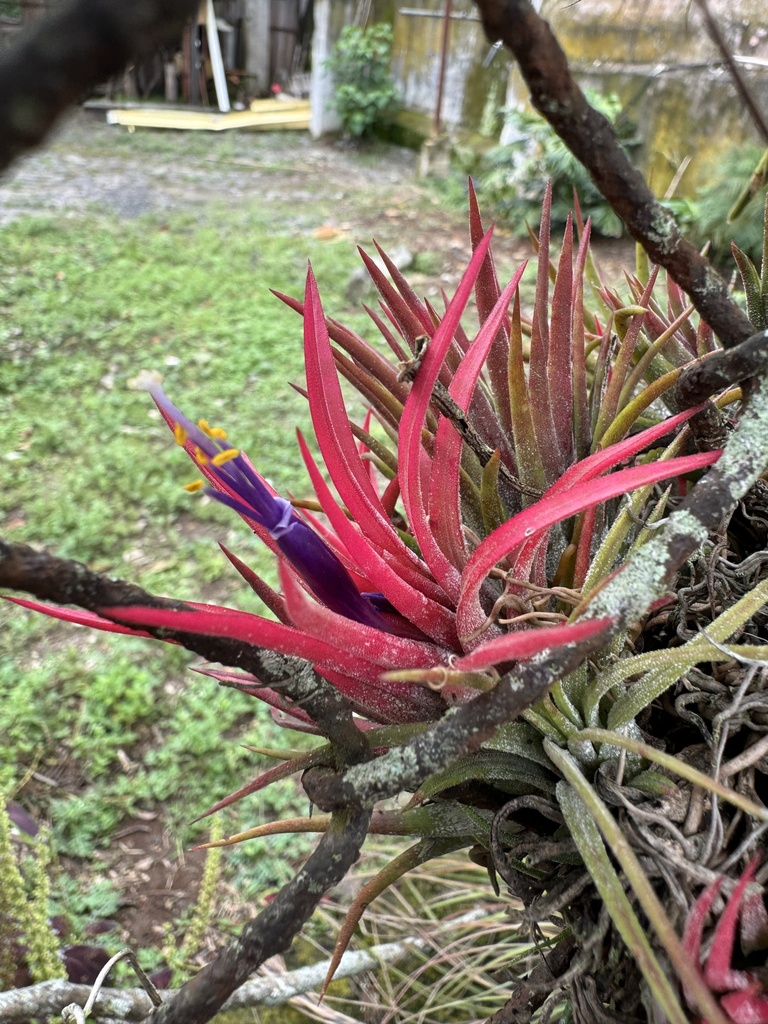
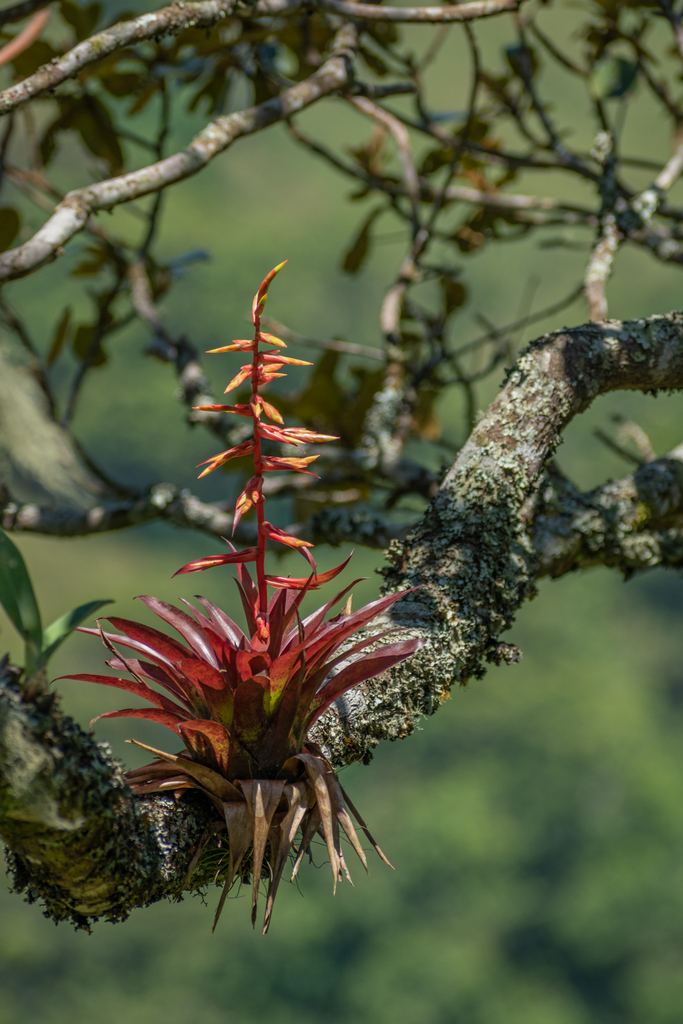
| Bloom cycle | A bright red-orange bract with violet tubular flowers, once per rosette |
| Propagation methods | Pups at the base after flowering; twist off at about a third of the mother's size or grow on as a clump |
| Propagation difficulty | Easy, though slow |
| Pruning needs | Trim dried leaf tips and the spent flower spike only |
Common problems & troubleshooting#
| Symptom | Likely cause | Fix |
|---|---|---|
| Base turns brown-black and the centre pulls out | Rot from water left sitting in the crown after soaking | Usually fatal; prevent by shaking firmly and drying upside down within four hours in moving air |
| Leaves curl tightly inward and feel papery | Dehydration between soaks | Give a longer soak of a few hours, then return to weekly soaks and consider a midweek mist |
| Silver coating looks patchy and dull | Trichomes damaged by softened water, handling, or salt build-up | Switch to rainwater or rested tap water and handle by the base |
| Plant fades slowly after flowering | Normal monocarpic cycle | Leave it in place while pups develop, then separate them or grow the clump on |
| Weak, stretched, pale growth | Too little light | Move within a metre of a bright window; harrisii wants more light than most green tillandsias |
Never forget an air plant soak again
Sodate tracks your last soak and nudges you before a silver tillandsia starts curling from thirst.
Seasonal care#
Varieties & cultivars#
| Variety | Distinguishing trait | Note |
|---|---|---|
| T. harrisii (species) | Soft recurved silver leaves, red bloom bract | The standard nursery-propagated form |
| T. harrisii clumps | Multiple rosettes grown on together | Sold at a premium and flower over successive years |
Buying checklist#
- Ask explicitly for nursery-propagated stock. This is a CITES Appendix II species
- Base is firm and dry; a gently tugged lower leaf should not pull free
- Even, intact silver fuzz across the leaves with no bald or scarred patches
- Avoid plants glued into sealed glass globes, which rot quickly
Pricing by region#
| Region | Price range | Typical unit | Basis |
|---|---|---|---|
| US | $6 – $18 | single plant | Air plant nursery + online |
| UK | $7 – $20 | single plant | Specialist + garden centre |
| India | $4 – $12 | single plant | Online exotic plant sellers |
| Australia | $8 – $22 | single plant | Tillandsia specialists |
| Canada | $8 – $20 | single plant | Garden centre + online |
USD figures are approximate conversions for comparison; switch the dropdown to see each region's actual local-currency listing price.
Often confused with#
Where it's actually grown#
Legitimate stock is nursery-propagated from seed and pups in Guatemala, Florida and the Netherlands under CITES paperwork. Suspiciously cheap, uniformly large plants can indicate wild collection, which is exactly what depleted the species in the Motagua valley.
Import & biosecurity restrictions#
| Region | Note |
|---|---|
| US | CITES Appendix II. Imports require CITES export documentation; nursery-propagated plants sold domestically are unrestricted. |
| Australia | Live plant imports restricted under biosecurity law, plus CITES Appendix II permit requirements; buy from domestic tillandsia nurseries. |
| UK | CITES Appendix II documentation required for import alongside phytosanitary paperwork. |
| India | CITES Appendix II rules apply to imports; domestic sale of nursery stock is unrestricted. |
| Canada | CITES permits plus CFIA import requirements apply; retail nursery plants are unrestricted. |
Similar plants
Ranked in these guides
Did you know?
Frequently asked questions
Is Tillandsia harrisii protected or illegal to buy?
It is listed on CITES Appendix II, so international trade is regulated but legal with permits. Buy nursery-propagated plants, never wild-collected ones.
How often should I water Tillandsia harrisii?
Soak it for 20-30 minutes once a week, then shake it out and dry it upside down within about four hours.
Why dry an air plant upside down?
Water trapped in the crown between the leaf bases is the main cause of air plant rot. Inverting the plant lets it drain out.
Is Tillandsia harrisii safe for cats and dogs?
Yes, tillandsias are non-toxic to cats and dogs.
Can I plant Tillandsia harrisii in soil?
No. It is an epiphyte with no functional feeding roots, and potting it in soil rots the base.