 Sodate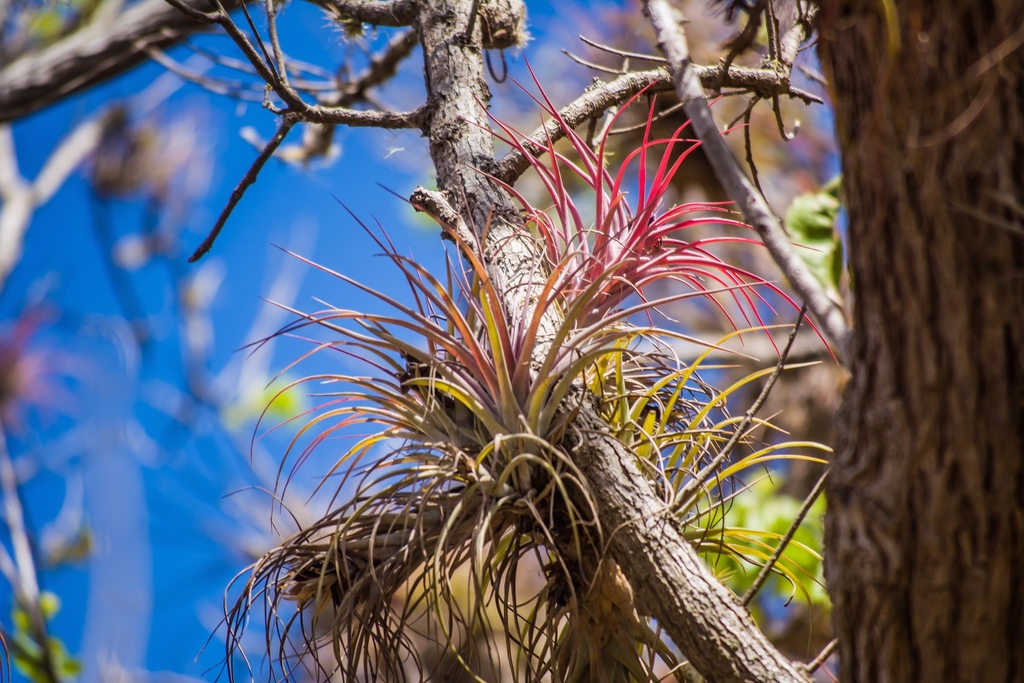
On this page
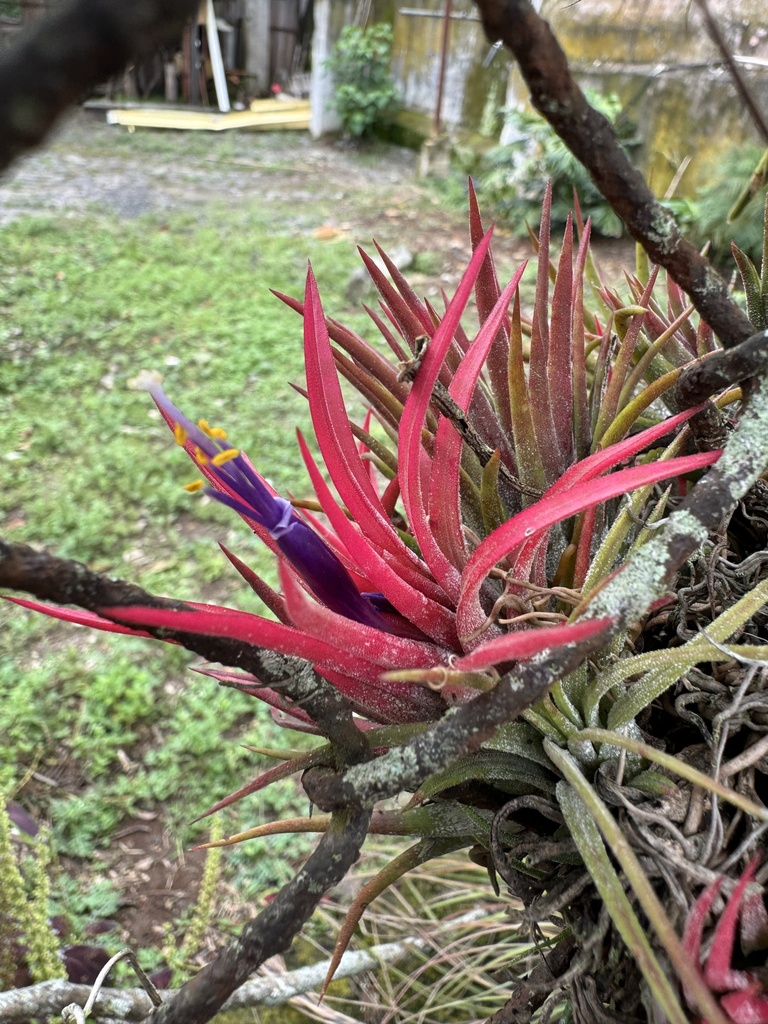
Brachycaulos has soft, almost trichome-free green leaves, so it wants more water and humidity than silvery species but less direct sun: bright indirect light, a 20-30 minute weekly soak plus misting in dry rooms, and a thorough upside-down dry so no water sits in the dense rosette. At bloom the whole plant turns scarlet. Pet-safe. Typically $5-$12.
Key facts
- Native to southern Mexico and Central America in seasonally humid forest.
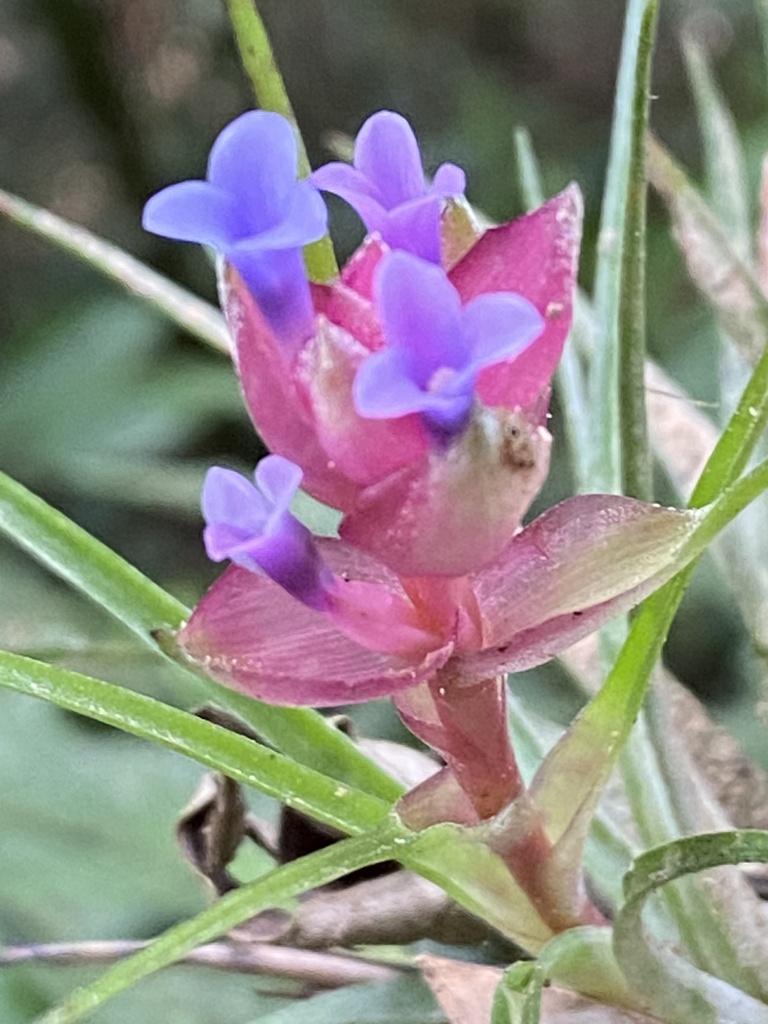
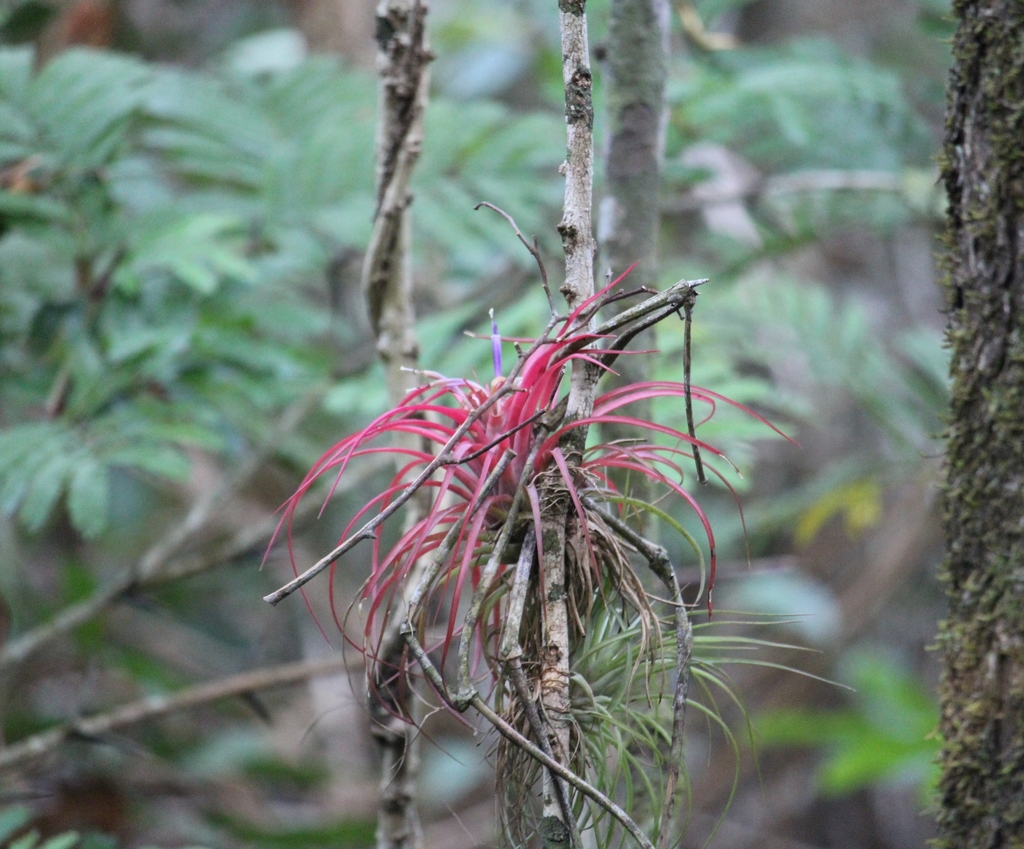
- At bloom the entire rosette flushes brilliant red, not just bracts, before violet tubular flowers appear from the centre.
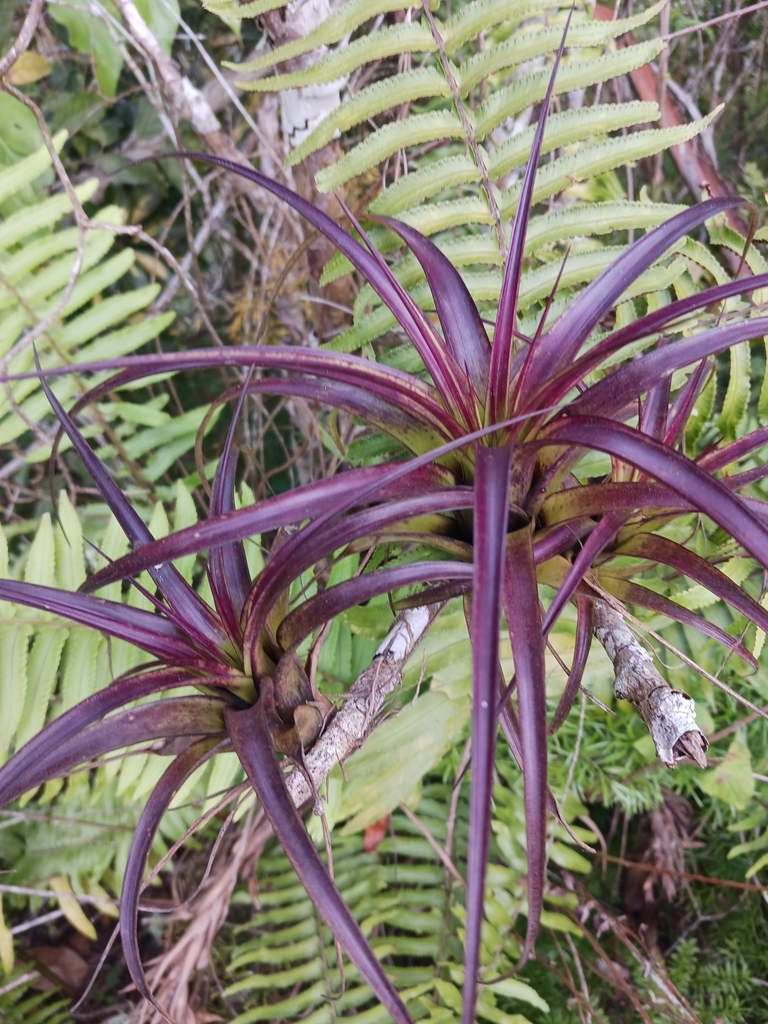
- Soft green low-trichome leaves mean it dries fast and prefers higher humidity and gentler light than grey species.
- Monocarpic: each rosette blooms once, then feeds its pups.
- Non-toxic to cats and dogs.
Care requirements#
| Plant type | Epiphytic air plant (indoor; outdoors year-round only in USDA 9-11) |
| Growing medium | None: loose, on driftwood, or in an open hanging display; never plant in soil |
| Light needs | Bright indirect light; soft leaves scorch in hot direct sun, but good light is needed for the red flush |
| Watering method | Soak 20-30 minutes weekly; add misting 2-3x weekly in dry rooms. Soft green leaves lose water fast |
| Drying after watering | Shake and dry upside down within 4 hours. The dense rosette traps water and drying upside down is what prevents crown rot |
| Water quality | Rain, pond, or rested tap water; never softened water |
| Air circulation | Essential: never a sealed terrarium |
| Humidity | 50-70% ideal; among the more humidity-hungry common species |
| Temperature range | 12-32°C (54-90°F); protect from frost |
| Fertilizer | Tillandsia feed at 1/4 strength in the soak monthly, spring-summer |
| Mounting | Wire or plant-safe glue to cork or wood; never copper wire |
| Toxicity | Non-toxic to cats, dogs, and humans |
Growth & propagation#
| Mature size | 10-18cm rosette |
| Growth rate | Moderate; pups bloom in 1-2 years |
| Bloom cycle | Whole plant flushes red, violet flowers emerge from the centre, usually late spring-summer |
| Propagation methods | Pups at the base after flowering; separate at 1/3 size or grow as a clump |
| Propagation difficulty | Easy |
| Pruning needs | Remove spent flowers and dried lower leaves |
Common problems & troubleshooting#
| Symptom | Likely cause | Fix |
|---|---|---|
| Centre turns brown-black and leaves shed from the middle | Crown rot. Water sat in the dense rosette | Usually fatal; prevent with a hard shake and full upside-down drying after every soak |
| Leaves curl, feel thin and papery | Dehydration. This soft-leaf species dries faster than silvery ones | Overnight soak, then weekly soaks plus midweek misting |
| Bleached or brown scorch patches | Hot direct sun on soft leaves | Move to bright indirect light; morning sun only |
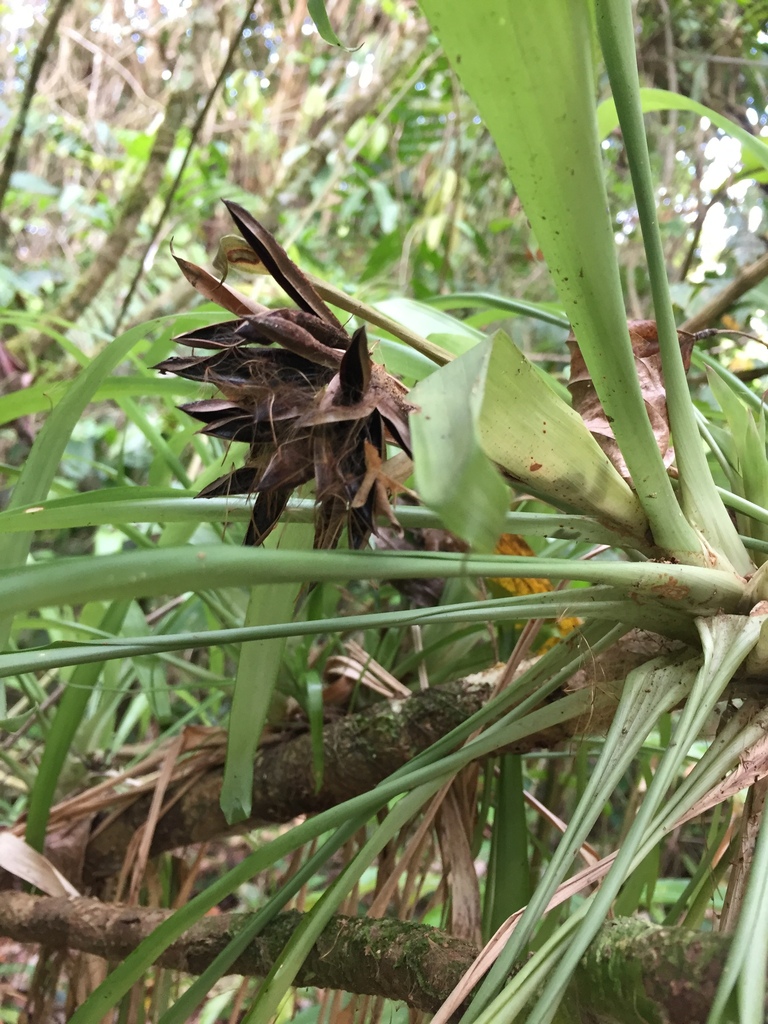
| Plant declines after its red display | Normal monocarpic cycle after flowering | Leave the mother while pups develop |
| Stays plain green, never blushes | Too little light | Brighter (still indirect) position; the flush is light-driven |
Never forget an air plant soak again
Sodate reminds you when your last soak was and nudges you before your brachycaulos starts curling from thirst.
Seasonal care#
Varieties & cultivars#
| Variety | Distinguishing trait | Note |
|---|---|---|
| T. brachycaulos 'Multiflora' | Larger form with more flowers per bloom | Common commercial form |
| T. 'Eric Knobloch' (brachycaulos × streptophylla) | Hybrid with curlier leaves and strong red blush | Popular collector hybrid |
Buying checklist#
- Rosette centre is tight and pale, no dark, damp base
- Soft leaves are hydrated and springy, not papery
- Red plants are in bloom now: gorgeous, but the rosette will fade afterwards. Pups included is a plus
- Avoid closed glass globe displays
Pricing by region#
| Region | Price range | Typical unit | Basis |
|---|---|---|---|
| US | $5 – $12 | single plant | Air plant nursery + online retail |
| UK | $5 – $13 | single plant | Garden centre + online |
| India | $2 – $7 | single plant | Online exotic plant sellers |
| Australia | $5 – $13 | single plant | Tillandsia specialists |
| Canada | $5 – $13 | single plant | Garden centre + online |
USD figures are approximate conversions for comparison; switch the dropdown to see each region's actual local-currency listing price.
Often confused with#
Name confusion warning#
Much of the 'brachycaulos' in trade is actually Tillandsia velutina. Care is nearly identical, but collectors should buy from sellers who distinguish the two.
Where it's actually grown#
Farm-grown in huge numbers in Guatemala, with additional production in Florida; among the most-exported tillandsia species.
Import & biosecurity restrictions#
| Region | Note |
|---|---|
| Australia | Live plant imports restricted under biosecurity law; buy from domestic tillandsia nurseries. |
| US | No restriction on domestic sale; imported Guatemalan stock enters with standard phytosanitary certificates. |
| UK | Post-Brexit imports need phytosanitary paperwork; widely available domestically. |
| India | No specific restriction; sold by online exotic plant nurseries. |
| Canada | CFIA permits required for commercial imports; readily available at retail. |
Similar plants
Ranked in these guides
Did you know?
Frequently asked questions
Why is my Tillandsia brachycaulos turning red?
It's coming into bloom. The whole rosette flushes scarlet before violet flowers emerge from the centre, and good light intensifies the show.
Is brachycaulos safe for cats and dogs?
Yes, all tillandsias are non-toxic to pets.
How do I water Tillandsia brachycaulos?
Soak 20-30 minutes weekly plus misting in dry rooms, then shake and dry upside down within 4 hours so water can't rot the dense rosette.
Can brachycaulos take direct sun?
Only gentle morning sun. Its soft, low-trichome leaves scorch in hot direct light, unlike silvery species.
Does the plant die after turning red?
The flowering rosette slowly fades after blooming, but it produces pups first. Leave them attached and they replace the mother.