 Sodate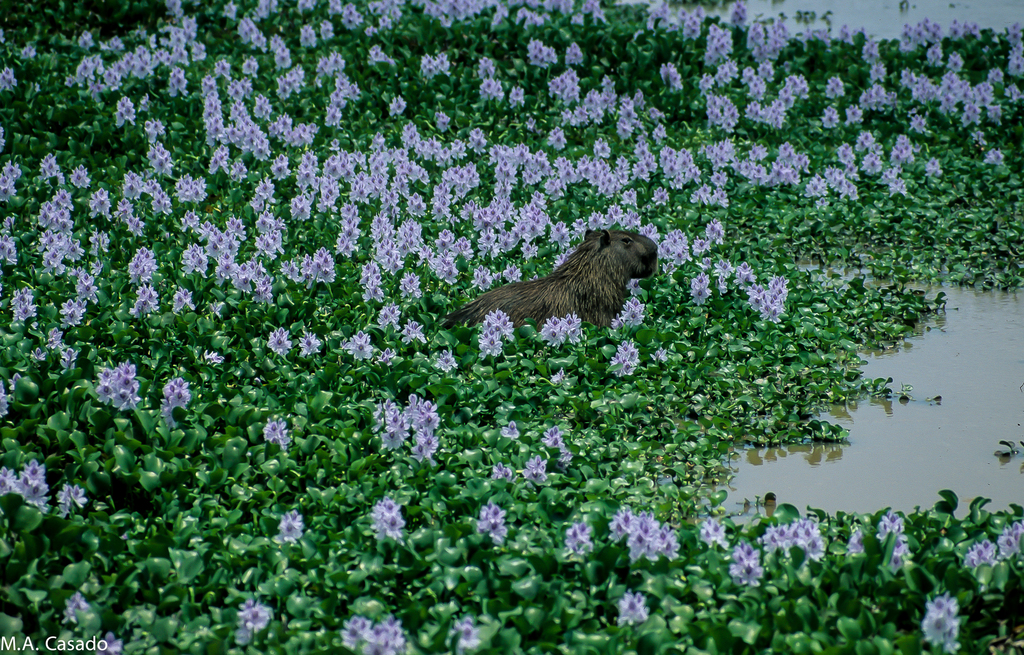
On this page
Before anything else: check whether water hyacinth is legal where you live. It is a US federal noxious weed, banned from sale or possession in many US states (including Florida, Texas, and California restrictions), prohibited throughout the EU, and a catastrophic invasive across Africa and Asia. Where legal, it is an easy floating pond annual: full sun, warm water, and it doubles in as little as two weeks. Which is exactly the problem. Never release it into natural water.
Key facts
- Listed among the world's worst invasive species; mats can double in area in 1-2 weeks, blocking waterways, killing fish by deoxygenation, and harboring mosquitoes.
- Legal status is the first care fact: banned from sale/possession in numerous US states, on the EU list of Invasive Alien Species of Union concern (sale prohibited EU-wide since 2016), and restricted in Australia, New Zealand, and elsewhere.
- In India it is called 'the terror of Bengal'. It chokes lakes and wetlands from Kerala's backwaters to Bengal, despite still being informally sold as a pond ornamental.
- Where legal, it grows with almost no care: it floats free, feeds directly from the water column, and flowers in full sun and warm water.
Care requirements#
| Plant type | Free-floating aquatic perennial (grown as a pond annual in cold climates) |
| Legality check | REQUIRED first step. Verify state/country law before buying, keeping, or transporting |
| Growing medium | None: floats on the surface; dangling roots feed from the water column |
| Water temperature | 21-30°C (70-86°F) optimum; growth stops below ~13°C; killed by frost |
| Light | Full sun (6+ hours) for growth and flowering; sulks in shade |
| Nutrients | Thrives in nutrient-rich water; in clean ponds may need occasional aquatic fertilizer. It is a heavy nitrogen/phosphorus feeder |
| Water hardness | Undemanding; tolerates soft to hard water, pH ~6.0-8.0 |
| Flow preference | Still or very slow-moving water; mats break up in current |
| Containment | Keep only in fully enclosed ponds/tubs with no outflow to natural water; corral with a floating ring |
| Thinning | Remove and compost (or bin, per local rules) excess plants weekly in summer, never dump in waterways |
| Overwintering | Not frost-hardy; treat as annual or hold a few plants in a warm, bright indoor tub |
| Toxicity | Not significantly toxic to cats/dogs; raw foliage contains calcium oxalate and can irritate mouths, decorative use only |
Growth & propagation#
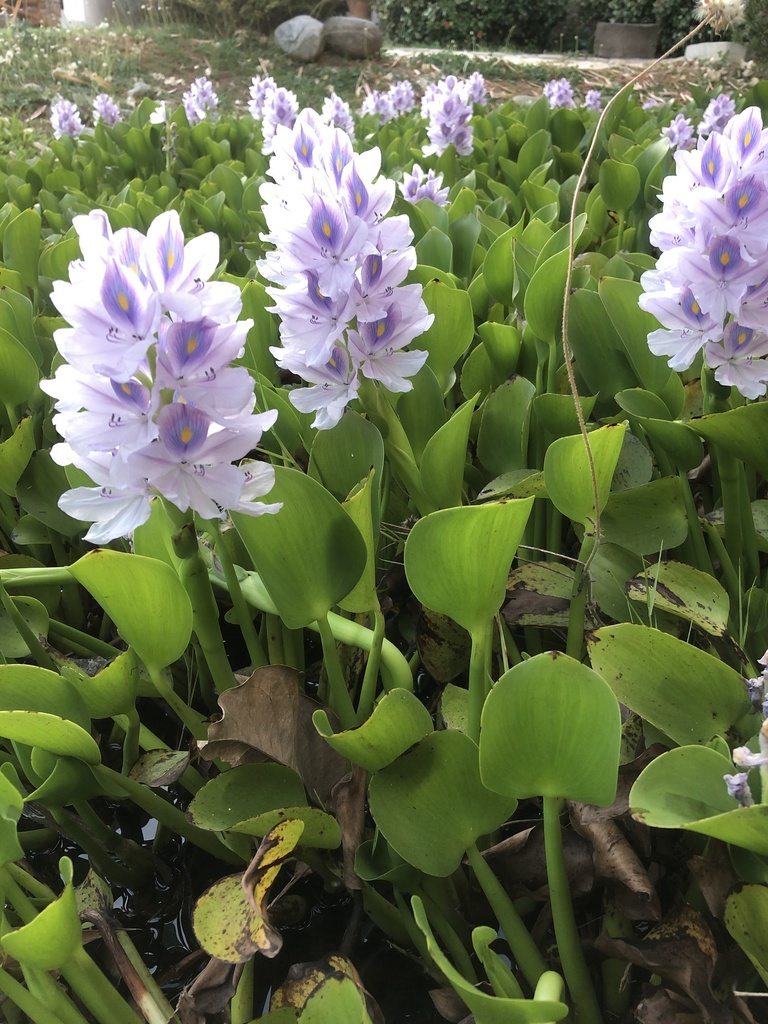
| Mature size | Rosettes 15-50cm across; flower spikes to ~50cm above water |
| Growth rate | Explosive: among the fastest-growing plants known; mats can double in 1-2 weeks |
| Propagation methods | Stolons (daughter plants) constantly; also seed, which stays viable in sediment for years |
| Propagation difficulty | Involuntary: the challenge is stopping it, not starting it |
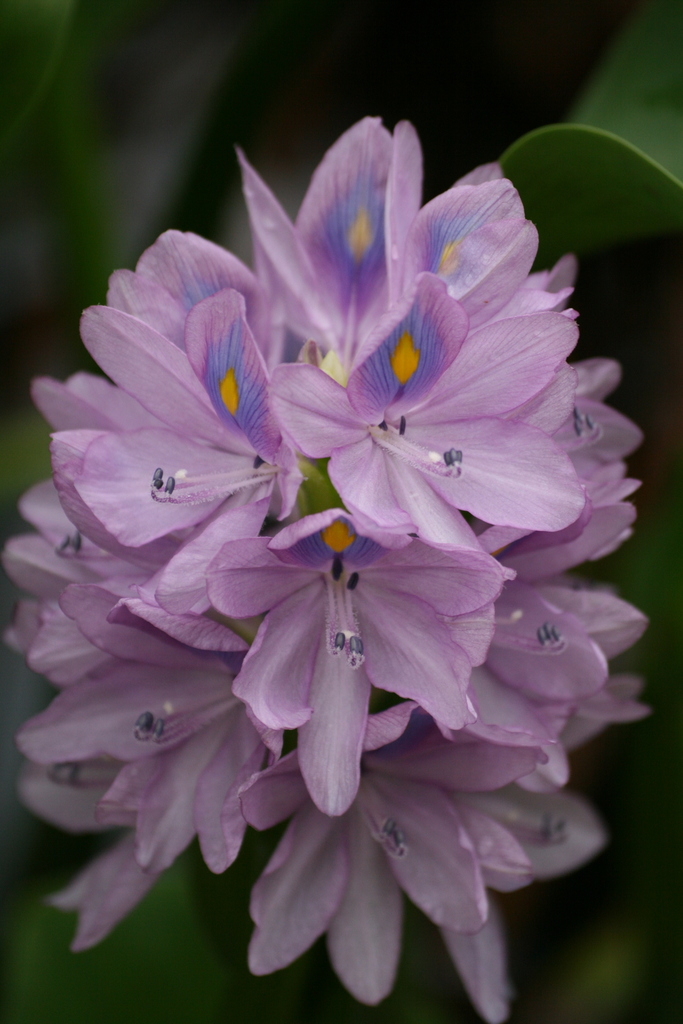
| Flowering | Showy lavender-blue spikes with a yellow eye-spot, summer, in full sun |
| Lifespan | Perennial in frost-free climates; killed by freezing |
Common problems & troubleshooting#
| Symptom | Likely cause | Fix |
|---|---|---|
| Pond surface completely covered | Normal growth rate. This is what the species does | Thin hard weekly in summer; dispose of pulled plants in trash/compost far from water, never in drains or waterways |
| Yellow, stunted rosettes | Nutrient-poor water or water too cold | Wait for warmth; in very clean ponds add a small dose of aquatic fertilizer to a corralled area |
| No flowers | Insufficient sun or crowding | Give 6+ hours full sun and thin the mat so rosettes have room |
| Plants blackened and mushy | Frost | None. It is not frost-hardy; remove dead material before it decays and fouls the water |
| Fish gasping at the surface | Dense mat blocking gas exchange and light, deoxygenating the water | Immediately remove most of the mat; keep coverage under ~50% of the surface |
Track the pond, not just the pots
Sodate reminds you to thin floating plants before they cover the surface. The single task that keeps a hyacinth pond legal-adjacent and alive.
Seasonal care#
Buying checklist#
- FIRST: confirm possession and sale are legal in your state/country. In many places they are not, and fines apply
- Buy only from local sources; shipping across state lines can itself be illegal (US federal noxious weed)
- Your pond must be fully self-contained with no overflow path to storm drains, streams, or lakes
- Healthy plants have firm, inflated leaf bases and dark trailing roots, avoid yellowed, rotting rosettes
Pricing by region#
| Region | Price range | Typical unit | Basis |
|---|---|---|---|
| US | $4 – $10 | per plant (where legal) | Pond/water-garden retail in permitted states |
| UK | $0 – $0 | n/a | Banned from sale under retained EU invasive species rules |
| India | $0 – $1 | per plant | Informally sold/given away despite invasive status |
| Australia | $0 – $0 | n/a | Declared weed; sale and possession banned nationally |
| Canada | $4 – $9 | per plant (where permitted) | Pond retail; restricted in Ontario and other provinces |
USD figures are approximate conversions for comparison; switch the dropdown to see each region's actual local-currency listing price.
Often confused with#
Name confusion warning#
Legal warning, not just a naming one. Sold under names like "pond hyacinth" or its newer botanical name Pontederia crassipes. The different label does not change its status. It is a US federal noxious weed, banned from sale in many US states, prohibited across the EU, and a declared weed in Australia and elsewhere. Buying it under any name where it is banned is an offence.
Where it's actually grown#
Where legal, stock is grown in outdoor nursery ponds in warm regions (Florida-adjacent trade historically, now heavily restricted) and sold seasonally by water-garden retailers; in much of Asia and Africa there is no commercial sourcing because wild mats are ubiquitous.
Import & biosecurity restrictions#
| Region | Note |
|---|---|
| US | Federally listed noxious weed: interstate transport prohibited without permit; sale/possession banned in numerous states (e.g. Florida, Texas, South Carolina, Louisiana restrictions). Check your state list before buying. |
| UK | Banned from sale since 2016 under invasive alien species regulations retained post-Brexit; do not keep or release. |
| India | No effective sale ban and still traded informally, but it is one of India's worst aquatic invasives, 'the terror of Bengal', choking lakes, backwaters, and irrigation systems. Do not introduce to any open water. |
| Australia | Weed of National Significance; import, sale, and possession prohibited, heavy penalties apply. |
| Canada | Import restricted; listed as a prohibited invasive in Ontario and regulated elsewhere, verify provincial rules. |
Similar plants
Did you know?
Frequently asked questions
Is water hyacinth legal to buy?
In many places, no: it is a US federal noxious weed banned in many states, prohibited from sale across the EU/UK, and banned in Australia. Always check your state or country's invasive species list before buying.
Is water hyacinth toxic to pets?
It is not significantly toxic to cats or dogs, though raw foliage contains irritating calcium oxalate; the bigger risks around it are water quality and legality, not poisoning.
Why is water hyacinth so invasive?
It doubles its mat area in as little as two weeks, spreads by both runners and long-lived seed, and dense mats deoxygenate water, kill fish, and block boats and irrigation.
How do I keep water hyacinth under control in a pond?
Keep it only in a fully enclosed pond with no outflow, corral it with a floating ring, and thin it weekly in summer, disposing of plants in the trash or compost, never in waterways.
Does water hyacinth clean water?
Yes. It strips nitrogen, phosphorus, and even heavy metals so effectively it is used in wastewater treatment, but that same appetite is what fuels its explosive growth in nutrient-rich lakes.