 Sodate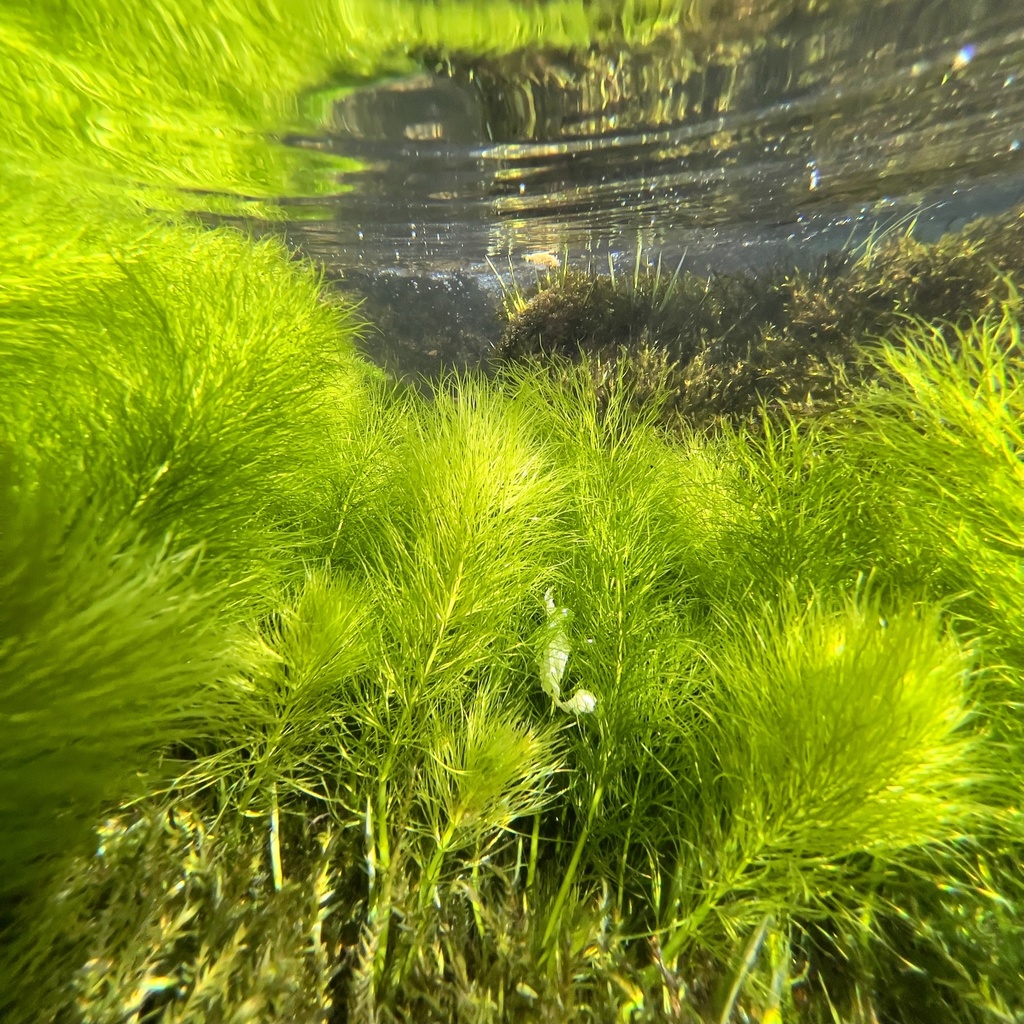
On this page
Hornwort is the fastest nutrient sponge in the aquarium hobby: rootless, coldwater-tolerant, and capable of growing several centimetres a week while stripping nitrates and starving algae. Float it free or anchor the stem base loosely under a rock or in a weight. Never plant it deep, it has no roots to grow. Its one vice is shedding needles when conditions change. $3-8 a bunch, safe with all fish, and legal to keep almost everywhere (it's native across much of the world. Still never dump it in waterways).
Key facts
- Completely rootless: it absorbs everything through its stems and leaves, which is why it works floating free; 'planting' it just means loosely anchoring the stem base.
- One of the best nutrient sponges available: rapid growth strips nitrates and phosphates from the water, out-competing algae and helping new tanks through cycling.
- Extremely temperature-tolerant (roughly 10-30°C), happy in unheated tanks and outdoor ponds; hardy strains overwinter as sunken buds.
- The classic fry and shrimp refuge. Dense needle whorls give babies cover no fish can follow them into.
Care requirements#
| Plant type | Fully submerged, rootless stem plant; floats or anchors loosely |
| Growing medium | None required. Float it, or tuck the stem base under a rock, plant weight, or hairgrip; do not bury deeply |
| Water temperature | 10-30°C (50-86°F); one of the few plants happy in unheated and coldwater tanks |
| Lighting | Moderate to high light over the tank; survives low light but sheds needles and thins out |
| Nutrients | Feeds from the water column only. Liquid fertilizer helps in low-bioload tanks; root tabs are useless for it |
| Water hardness | Very adaptable: pH 6.0-8.5, soft to hard water, dGH 3-15+; slightly hard, alkaline water suits it well |
| Flow preference | Gentle to moderate flow; heavy current snaps the brittle stems |
| CO2 | Not needed; grows fast without injection |
| Trimming | Cut and discard or replant top sections; stems get bare at the base over time, so keep the tops |
| Tankmates | Safe with all fish and shrimp; even goldfish usually leave the stiff needles alone |
| Pond use | Excellent oxygenator; hardy forms sink as winter buds and return in spring |
| Toxicity | Non-toxic to fish, shrimp, cats, and dogs |
Growth & propagation#
| Mature size | Stems 30cm-2m+ long; grows until trimmed or it hits the surface |
| Growth rate | Very fast. Several centimetres a week under good light |
| Propagation methods | Cuttings/fragmentation: every side shoot or broken piece grows on |
| Propagation difficulty | Trivial; snap a 10cm top and float it |
| Form | Bushy whorls of forked needle leaves; denser in high light |
| Lifespan | Indefinite as a clonal colony; individual lower stems go bare and are replaced |
Common problems & troubleshooting#
| Symptom | Likely cause | Fix |
|---|---|---|
| Needles shedding everywhere | Adjustment shock. The classic hornwort move after a change in light, temperature, or water | Leave it be; new adapted growth appears within 1-2 weeks. Net out the debris so it doesn't foul the filter |
| Stems bare and stringy at the bottom | Lower stems shaded by the plant's own upper growth | Trim and keep the healthy tops, discard the bare bases. Normal maintenance, not a disease |
| Pale, yellowing growth | Nutrient depletion in a lightly stocked tank (it eats fast) | Dose an all-in-one liquid fertilizer weekly |
| Plant disintegrating in a heated tank | Sustained water above ~30°C | Move it to a cooler tank; it is fundamentally a temperate/coolwater plant |
| It's taking over the tank | Its normal growth rate | Trim weekly and remove cuttings; never dump surplus in ponds or streams |
The plant that does the water chores
Sodate tracks trims and water tests while the hornwort quietly eats your nitrates.
Seasonal care#
Buying checklist#
- Choose deep-green, densely needled stems. Avoid yellowed bunches already shedding in the shop tank
- Expect a rubber-banded bunch of 4-6 loose stems; there are no roots and there shouldn't be
- Rinse or quarantine to avoid importing snails and hair algae tangled in the needles
- Expect some needle drop the first week at home, it's adjustment, not death
Pricing by region#
| Region | Price range | Typical unit | Basis |
|---|---|---|---|
| US | $3 – $8 | bunch of stems | Chain and local fish store retail |
| UK | $3 – $8 | bunch | Aquatics retail |
| India | $0 – $2 | bunch | Local aquarium shops |
| Australia | $3 – $9 | bunch | Domestic aquarium retail (native species) |
| Canada | $3 – $8 | bunch | Fish store retail |
USD figures are approximate conversions for comparison; switch the dropdown to see each region's actual local-currency listing price.
Often confused with#
Name confusion warning#
Not the moss. "Hornwort" is also the common name of an unrelated land plant group (Anthocerotophyta) that appears in botany texts. The aquarium plant is Ceratophyllum demersum, sometimes sold as "coontail". If a listing shows a tiny land moss, it's the wrong hornwort.
Where it's actually grown#
Grown by aquatic-plant farms in Southeast Asia, Florida, and Europe, but also endlessly redistributed within the hobby. Most local shops sell trimmings from their own or hobbyists' tanks because it multiplies faster than it sells.
Import & biosecurity restrictions#
| Region | Note |
|---|---|
| US | Native and unrestricted in most states; a few states regulate it as a nuisance in waterways, never release trimmings. |
| UK | Native and legal; dispose of trimmings in compost, never in ponds or streams. |
| India | No restriction; widely available and thrives in unheated Indian tanks. |
| Australia | Live plant imports restricted by biosecurity; C. demersum occurs natively and is sold domestically (it is however a nuisance weed in Tasmanian and NZ waterways, never release). |
| Canada | Native and legal; standard 'don't let it loose' aquatic plant rules apply. |
Similar plants
Ranked in these guides
Did you know?
Frequently asked questions
Should hornwort be planted or floated?
Either. It has no roots, so float it free or anchor the stem base loosely under a rock or plant weight. Never bury it deeply; buried stems just rot.
Why is my hornwort dropping needles?
Needle shed is its standard response to any change in light, temperature, or water chemistry; leave it alone and new adapted growth appears within a week or two.
Is hornwort good for cycling a new tank?
Yes. It's one of the best plants for new tanks because it absorbs ammonia and nitrates rapidly from the water column and out-competes algae.
Does hornwort need CO2 or special lighting?
No CO2 needed; moderate light is enough, though it grows denser and greener under stronger lighting.
Is hornwort safe for ponds in winter?
Yes in temperate ponds. Hardy strains form buds that sink to the bottom in autumn and regrow in spring; it tolerates water down to around 10°C actively growing.