 Sodate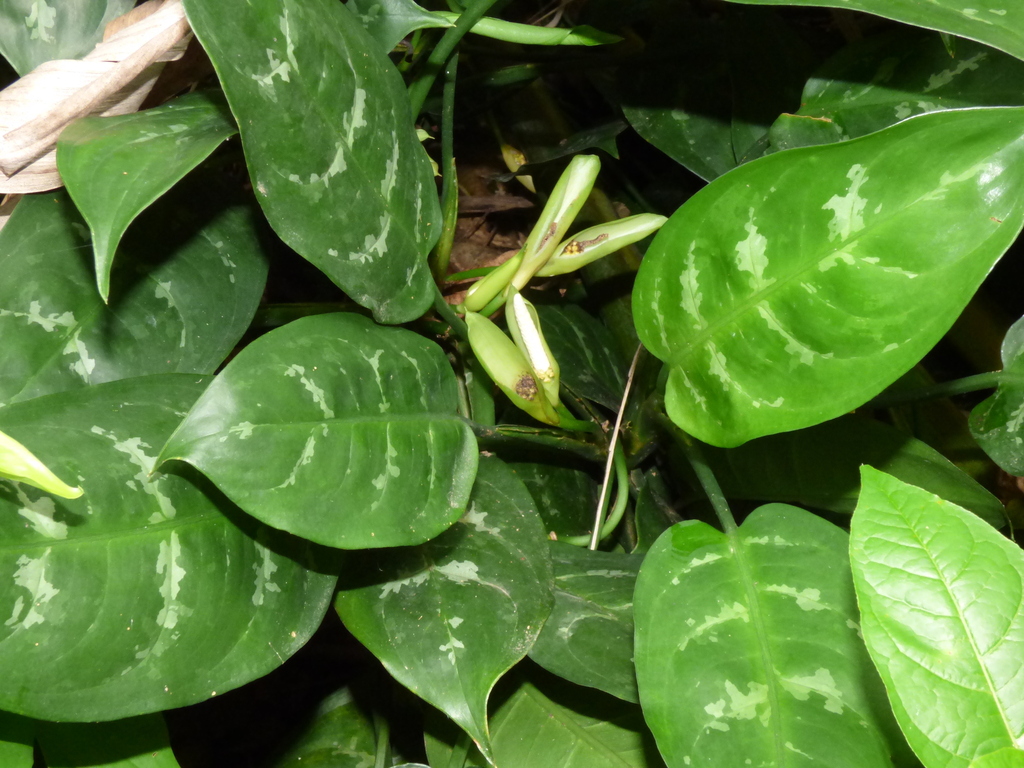
On this page
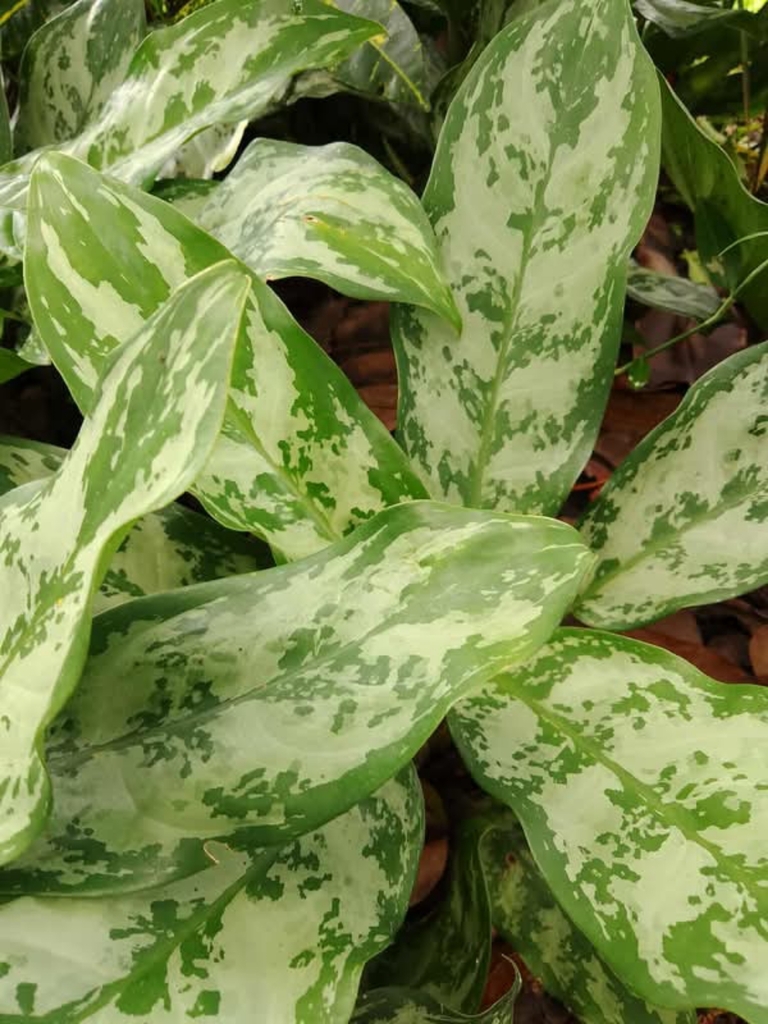
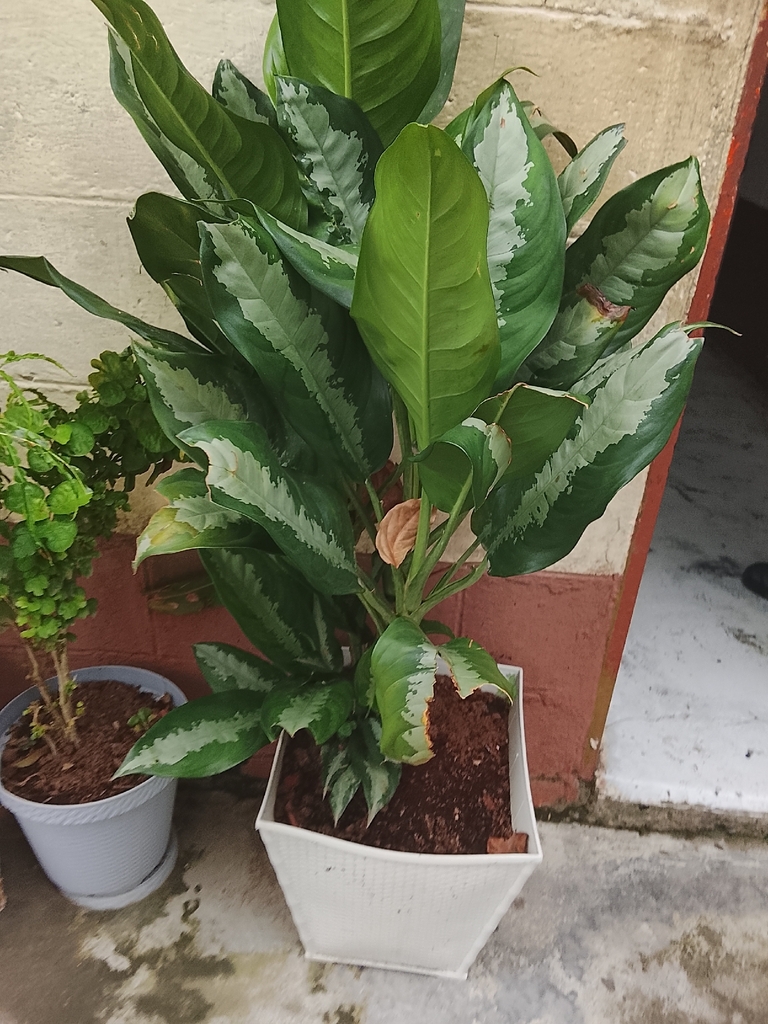
Silver Bay is the biggest and most shade-tolerant of the mainstream aglaonemas: broad leaves to 30cm on a bushy plant that reaches 90-120cm, and its silver markings are structural rather than variegated, so unlike a variegated cultivar it does not lose them in low light. That makes it the aglaonema to choose for genuinely dim rooms. It is toxic to cats and dogs, and typically costs $20-$45. Base guide: Chinese Evergreen.
Key facts
- Silver Bay's silver markings are a pigment-and-structure pattern rather than chimeral variegation, so it holds its colour in low light. The opposite of variegated cultivars like Peace Lily 'Domino' that revert to green.
- It is the largest common Aglaonema cultivar, reaching 90-120cm and roughly a metre across, where most aglaonemas top out around 60cm.
- The pink and red aglaonema cultivars (Siam Aurora, Red Valentine) need bright light to keep their colour; Silver Bay does not, which is why it dominates commercial office planting.
- Toxic to cats and dogs. Aglaonema contains insoluble calcium oxalate, and the whole genus is on the ASPCA toxic list.
Care requirements (and how Silver Bay differs from other aglaonemas)#
| Plant type | Indoor aroid foliage cultivar; a large-growing Chinese evergreen selection |
| Group page | Chinese Evergreen (Aglaonema). Baseline care for the whole genus |
| Growing medium | Standard peat-free houseplant mix with perlite; nothing special required |
| Light needs | Low to bright indirect. The widest usable range of any common aglaonema. Unlike the pink and red cultivars, Silver Bay keeps its markings in genuinely dim rooms. No direct sun |
| Water frequency | Every 7-14 days when the top 3-5cm is dry. In a dark corner it may want water only every 2-3 weeks |
| Humidity | 40%+; ordinary household humidity is fine |
| Temperature range | 18-27°C (65-80°F). Do not let it drop below 15°C. Aglaonemas develop grey-brown cold damage patches that never heal |
| Fertilizer | Half-strength balanced liquid feed every 6-8 weeks in spring and summer only |
| Soil pH | 5.6-6.5 |
| Drainage needs | High: in low light it uses water slowly, and rot is a bigger risk than drought |
| Pot recommendation | Wide, stable pot; a mature Silver Bay is heavy and bushy |
| Toxicity | Toxic to cats, dogs and humans. Calcium oxalate crystals cause mouth burning, drooling and swelling |
Growth & propagation#
| Mature size | 90-120cm tall and up to 1m wide. Significantly larger than typical aglaonemas at 45-60cm |
| Leaf size | Broad leaves up to 25-30cm long, which is what gives Silver Bay its bulk |
| Growth rate | Slow to moderate, and slower still in low light |
| Propagation methods | Division of basal suckers in spring; stem cuttings from a leggy old cane also root |
| Propagation difficulty | Beginner-friendly: divisions establish readily |
| Repotting schedule | Every 2-3 years in spring; it tolerates being rootbound well |
Common problems & troubleshooting#
| Symptom | Likely cause | Fix |
|---|---|---|
| Grey-brown sunken patches appearing across leaves in winter | Cold damage. Silver Bay is more cold-sensitive than most houseplants and suffers below 15°C | Move away from cold glass and draughty doorways; damaged tissue never recovers, so remove the worst leaves |
| Yellowing lower leaves in a dim corner | Overwatering, because water use drops sharply in low light and people keep to a fixed schedule | Water only when the top 5cm is genuinely dry, which in a dark room may be every 2-3 weeks |
| Bare, leggy cane with a tuft of leaves on top | Natural ageing, accelerated in very low light | Cut the cane back hard in spring, it reshoots from the base, and root the cut top as a new plant |
| Brown, crispy leaf tips | Fluoride and salts in tap water, or fertiliser buildup | Use filtered or rainwater and flush the pot with plain water every couple of months |
| Silver blaze looks narrow and dull on new leaves | Very deep shade. Silver Bay holds its markings far better than variegated cultivars, but there is still a floor | Move it to at least moderate indirect light; it does not need bright light, only more than near-darkness |
The one plant that copes with your dark room
Sodate checks whether your low-light corner is actually survivable for Silver Bay, and spaces its watering to match.
Seasonal care#
Varieties & cultivars#
| Variety | Distinguishing trait | Note |
|---|---|---|
| Aglaonema 'Silver Bay' (this plant) | Large broad leaves with a wide silver central blaze | The largest and most shade-tolerant common aglaonema |
| Aglaonema 'Silver Queen' | Narrower, more heavily silvered leaves on a smaller plant | Often confused with Silver Bay; noticeably more compact |
| Aglaonema 'Siam Aurora' / 'Red Valentine' | Pink and red leaf midribs and margins | Needs bright indirect light to hold its colour, not a low-light plant |
| Aglaonema 'Maria' | Dark green leaves with subtle grey-green feathering | The most shade-tolerant of all, but far less decorative |
Buying checklist#
- Leaves are broad and long, not narrow. Narrow silvered leaves usually mean 'Silver Queen', a smaller plant sold at similar prices
- Several stems emerging from the soil rather than a single cane, so the plant is bushy and stays that way
- No grey-brown sunken cold-damage patches, which are common on stock shipped in winter
- Silver blaze is broad and bright rather than thin and dull
- Firm stems at soil level with no soft dark tissue
Pricing by region#
| Region | Price range | Typical unit | Basis |
|---|---|---|---|
| US | $20 – $45 | 8-10in pot | Nursery + big-box retail |
| UK | $19 – $44 | 17-21cm pot | Garden centre retail |
| India | $5 – $16 | 8in pot | Urban nursery retail |
| Australia | $23 – $52 | 200mm pot | Nursery retail |
| Canada | $22 – $50 | 8-10in pot | Garden centre retail |
USD figures are approximate conversions for comparison; switch the dropdown to see each region's actual local-currency listing price.
Often confused with#
Name confusion warning#
'Silver Bay' and 'Silver Queen' are used interchangeably by many retailers even though they are different cultivars with different mature sizes. If you are buying for a large floor spot, judge by leaf width rather than the label.
Where it's actually grown#
Silver Bay is tissue-cultured at very large scale in Florida, Costa Rica, the Netherlands and Southeast Asia, largely for the commercial interior-landscaping market where its shade tolerance makes it a default specification. That volume production is why a big plant stays comparatively cheap.
Import & biosecurity restrictions#
| Region | Note |
|---|---|
| Australia | Live plant imports restricted under biosecurity law; produced domestically and widely stocked. |
| US | Domestic sale unrestricted; grown at scale in Florida. |
| UK | Plant health certificates required for imports; indoor-only given UK winter temperatures. |
| India | No restriction; performs well in shaded indoor spots, and Indian warmth removes the cold-damage risk that troubles it elsewhere. |
| Canada | CFIA import permit required for commercial imports; keep well away from cold windows in winter. |
Similar plants
Did you know?
Frequently asked questions
How is Aglaonema Silver Bay different from other aglaonemas?
It is the largest common cultivar at 90-120cm with broad silver-centred leaves, and its silver markings are structural rather than variegated, so it keeps them in low light where pink and red cultivars fade.
Can Aglaonema Silver Bay live in a dark room?
Yes, better than almost any other decorative houseplant. It tolerates low light, though growth slows considerably and you must water much less often in those conditions.
Is Aglaonema Silver Bay toxic to cats and dogs?
Yes. Like all aglaonemas it contains insoluble calcium oxalate crystals and is toxic to cats and dogs, causing mouth pain, drooling and swelling if chewed.
Why does my Silver Bay have grey-brown patches?
Almost certainly cold damage. Aglaonemas suffer below 15°C, and the sunken grey-brown patches that result are permanent. Move the plant away from cold glass and draughts.
Is Silver Bay the same as Silver Queen?
No. Silver Queen has narrower, more heavily silvered leaves and stays around 45-60cm, while Silver Bay has broad leaves with a central blaze and grows to 90-120cm.