 Sodate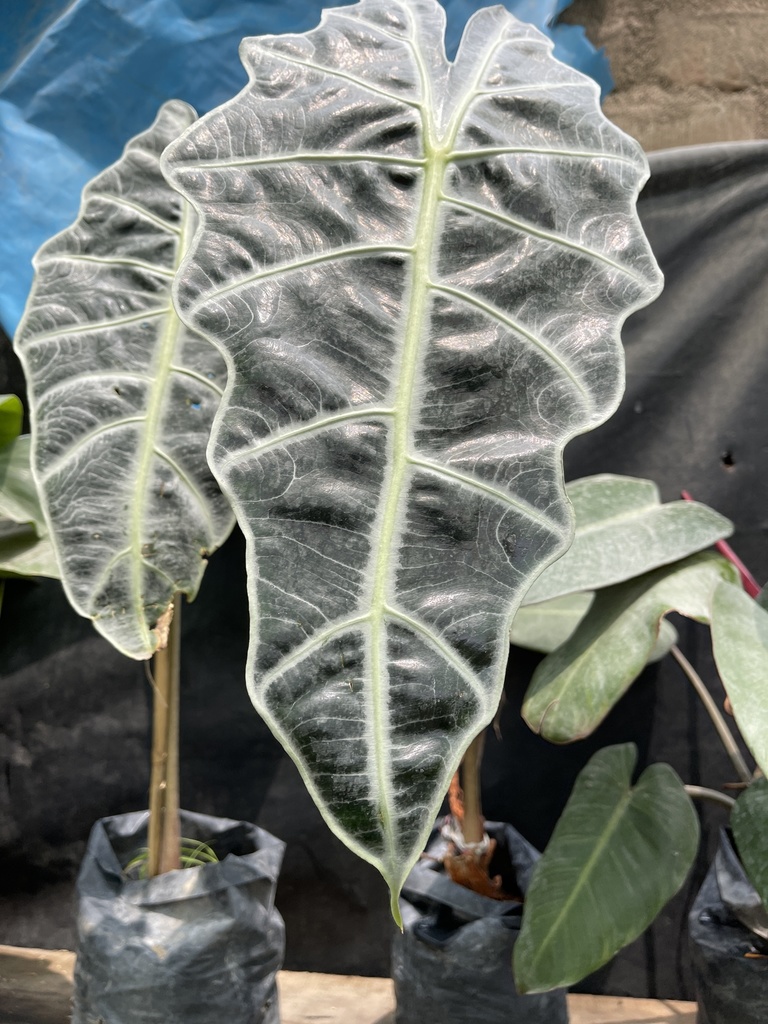
On this page
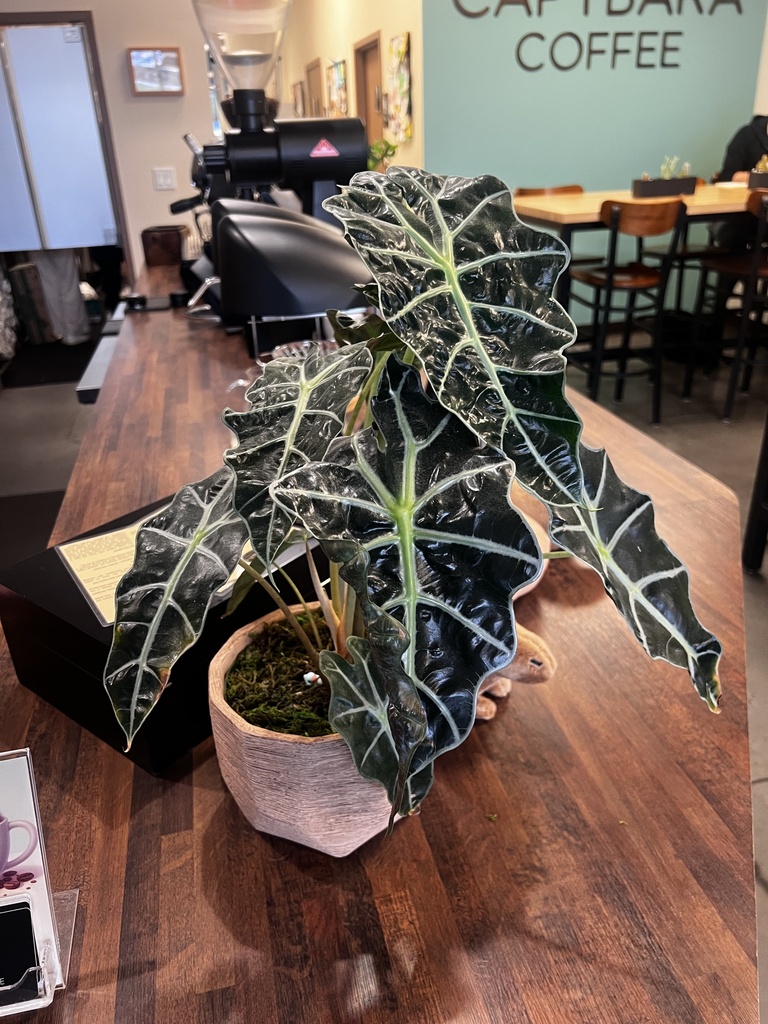
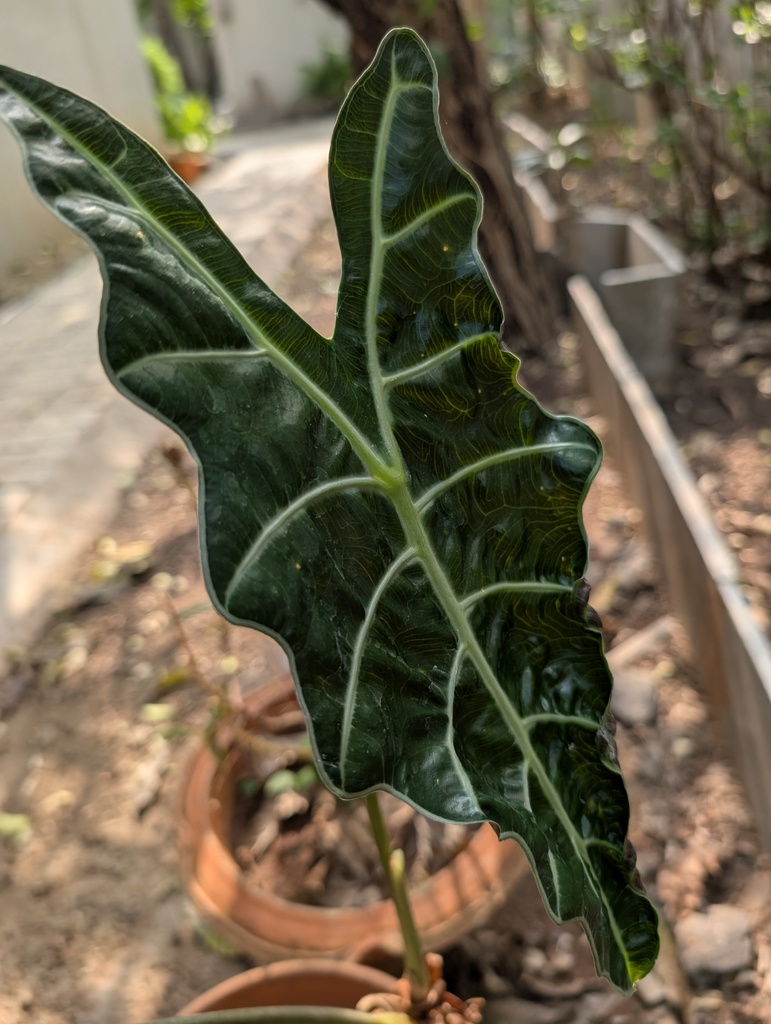
Alocasia Polly is a compact, dramatic aroid that rewards consistency: bright indirect light, evenly moist (never soggy) chunky soil, 60%+ humidity, and warmth above 18°C. It sulks after any change, drops leaves in winter dormancy, and is a spider-mite magnet in dry air. Toxic to pets. Typically $12-$30 in the US.
Key facts
- A greenhouse-bred hybrid (generally attributed to A. longiloba × A. sanderiana) created in the 1950s. 'amazonica' comes from the Miami nursery that raised it, not the Amazon.
- Grows from underground corms; a healthy plant produces small daughter corms you can pot up separately.
- Frequently enters partial or full dormancy in winter, dropping most leaves. The corm is still alive and resprouts in spring.
- Toxic to cats, dogs, and humans: insoluble calcium oxalate crystals cause immediate mouth pain and swelling if chewed.
Care requirements#
| Plant type | Indoor (outdoors only in humid shade, USDA 10-12) |
| Growing medium | Chunky, airy aroid mix. Potting soil with added perlite and orchid bark |
| Light needs | Bright indirect light; tolerates some gentle morning sun; deep shade produces weak, floppy stems |
| Water frequency | Keep evenly moist; water when the top 2-3cm dries. Roughly weekly in summer, much less in winter |
| Humidity | 60%+ ideal; below 40% expect crispy edges and spider mites |
| Temperature range | 18-27°C (65-80°F); below 15°C it starts shutting down toward dormancy |
| Fertilizer | Half-strength balanced liquid feed monthly in spring-summer; none in winter |
| Soil pH | 5.5-6.5 |
| Drainage needs | High: corms rot fast in stagnant wet soil |
| Pot recommendation | Snug plastic or glazed pot with drainage; alocasias like being slightly root-bound |
| Hardiness zone (outdoor) | USDA 10-12 |
| Toxicity | Toxic to cats, dogs, and humans (insoluble calcium oxalates) |
Growth & propagation#
| Mature size | 40-60cm tall and wide. One of the smallest alocasias |
| Growth rate | Moderate in warm months; typically holds only 4-8 leaves at a time, shedding the oldest as new ones open |
| Propagation methods | Corm division. Dig out and pot the small round corms found in the soil at repotting |
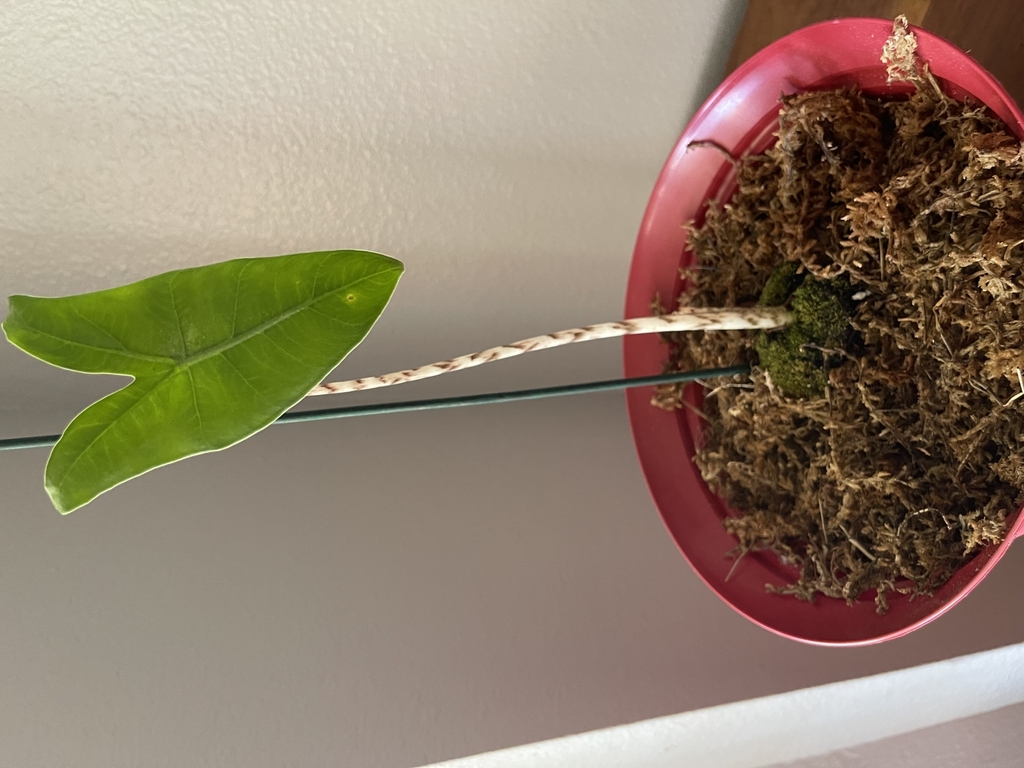
| Propagation difficulty | Moderate: corms sprout reliably in moist sphagnum or perlite with warmth and humidity |
| Repotting schedule | Every 1-2 years in spring; only go up one pot size |
| Pruning needs | Cut spent yellow leaves at the base; no shaping needed |
Common problems & troubleshooting#
| Symptom | Likely cause | Fix |
|---|---|---|
| Fine webbing and speckled, dusty leaves | Spider mites. Alocasia Polly is one of the most mite-prone houseplants, especially in dry air | Shower the foliage, treat both leaf surfaces with insecticidal soap or neem weekly for 3-4 weeks, and raise humidity |
| Leaves yellowing and dropping one after another | Normal leaf turnover if matched by new growth; overwatering or the onset of winter dormancy if not | Check the corm and roots. If firm, reduce watering and keep warm; if it's autumn, expect partial dormancy |
| All leaves died back | Winter dormancy triggered by cold or low light. The corm is usually still alive | Keep the pot barely moist and warm (18°C+); new shoots typically emerge from the corm in spring |
| Water droplets dripping from leaf tips | Guttation. The plant pushing out excess water, common after generous watering | Harmless, but persistent heavy dripping suggests you can ease off the watering slightly |
| Mushy stem base, sour-smelling soil | Corm and root rot from waterlogged mix | Unpot, cut away rot, rinse the corm, and repot in fresh chunky mix; water only when the top layer dries |
Alocasias punish inconsistent watering
Sodate keeps your watering rhythm steady through the seasons, so your Polly stops losing a leaf for every new one it grows.
Seasonal care#
Varieties & cultivars#
| Variety | Distinguishing trait | Note |
|---|---|---|
| Alocasia × amazonica 'Polly' | Compact form to ~50cm with wavy-edged, white-veined leaves | The standard trade plant on this page |
| 'Bambino' | Even smaller, with narrower arrow leaves | Good for terrariums and small shelves |
| Alocasia sanderiana | One of Polly's parents; deeply lobed, almost skeletal leaf outline | Sold as the 'kris plant' |
Buying checklist#
- Undersides of leaves are clean. No webbing, speckling, or mites
- At least 3-4 firm, upright leaves; droopy petioles suggest root problems
- Base of the plant is firm at the soil line, not soft
- Soil is moist but not swampy in the nursery pot
Pricing by region#
| Region | Price range | Typical unit | Basis |
|---|---|---|---|
| US | $12 – $30 | 4-6in pot | Garden center + online houseplant retail |
| UK | $10 – $25 | 12cm pot | Garden centre retail |
| India | $3 – $8 | 4-5in pot | Urban nursery + online |
| Australia | $10 – $26 | 130mm pot | Nursery + garden centre |
| Canada | $11 – $29 | 4-6in pot | Garden centre retail |
USD figures are approximate conversions for comparison; switch the dropdown to see each region's actual local-currency listing price.
Often confused with#
Name confusion warning#
The name is marketing, not geography. 'Alocasia amazonica' is a nursery-bred hybrid named after a Miami nursery. Its parent species come from Southeast Asia, not the Amazon. It's sold as Alocasia Polly, African mask plant, Amazon elephant ear, and kris plant, all referring to essentially the same hybrid group.
Where it's actually grown#
Nearly all Alocasia Polly plants are produced by tissue culture in labs in the Netherlands, Thailand, China, and Florida, then grown out in warm greenhouses. Which is why prices dropped from collector levels to big-box levels once lab production scaled in the 2010s.
Import & biosecurity restrictions#
| Region | Note |
|---|---|
| Australia | Live plant imports restricted under biosecurity law; buy tissue-cultured domestic stock. |
| US | Domestic sale unrestricted; mass-produced in Florida. |
| UK | No specific restriction; retail stock is largely Dutch-grown with phytosanitary paperwork handled by importers. |
| India | No restriction; thrives in humid Indian conditions but needs protection from harsh sun. |
| Canada | CFIA permits required for commercial imports; sold widely as a houseplant. |
Similar plants
Did you know?
Frequently asked questions
Is Alocasia Polly toxic to cats and dogs?
Yes. Like all alocasias, it contains insoluble calcium oxalate crystals that cause intense mouth pain, drooling, and swelling if chewed. Keep it out of reach of pets.
Why is my Alocasia Polly dropping leaves?
Alocasias hold a limited number of leaves and shed the oldest as new ones open, which is normal. Losing leaves without new growth usually means overwatering, cold, or the start of winter dormancy.
My Alocasia Polly died back completely. Is it dead?
Probably not. It grows from a corm that often goes dormant in winter; keep the pot barely moist and warm, and it usually resprouts in spring.
How do I propagate Alocasia Polly?
By corms: unpot the plant, collect the small round corms in the soil, and sprout them in moist sphagnum or perlite with warmth and high humidity. It cannot be grown from leaf cuttings.
How much does an Alocasia Polly cost?
A standard 4-6 inch plant runs $12-$30 in the US; large specimens and variegated forms cost significantly more.