 Sodate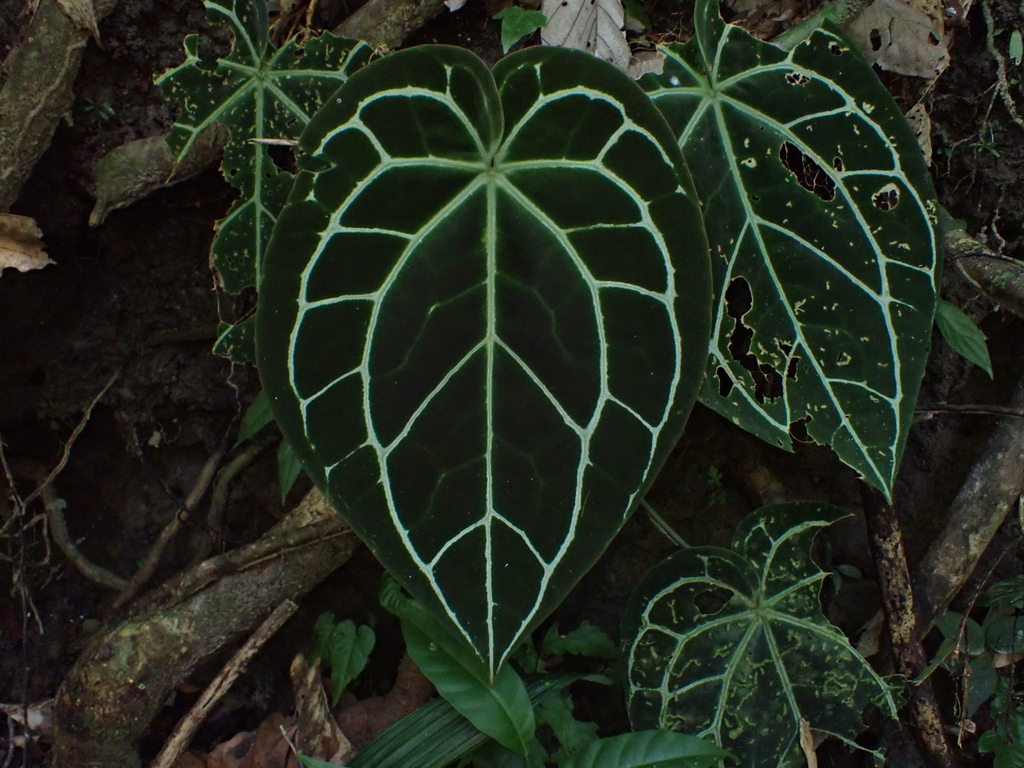
On this page
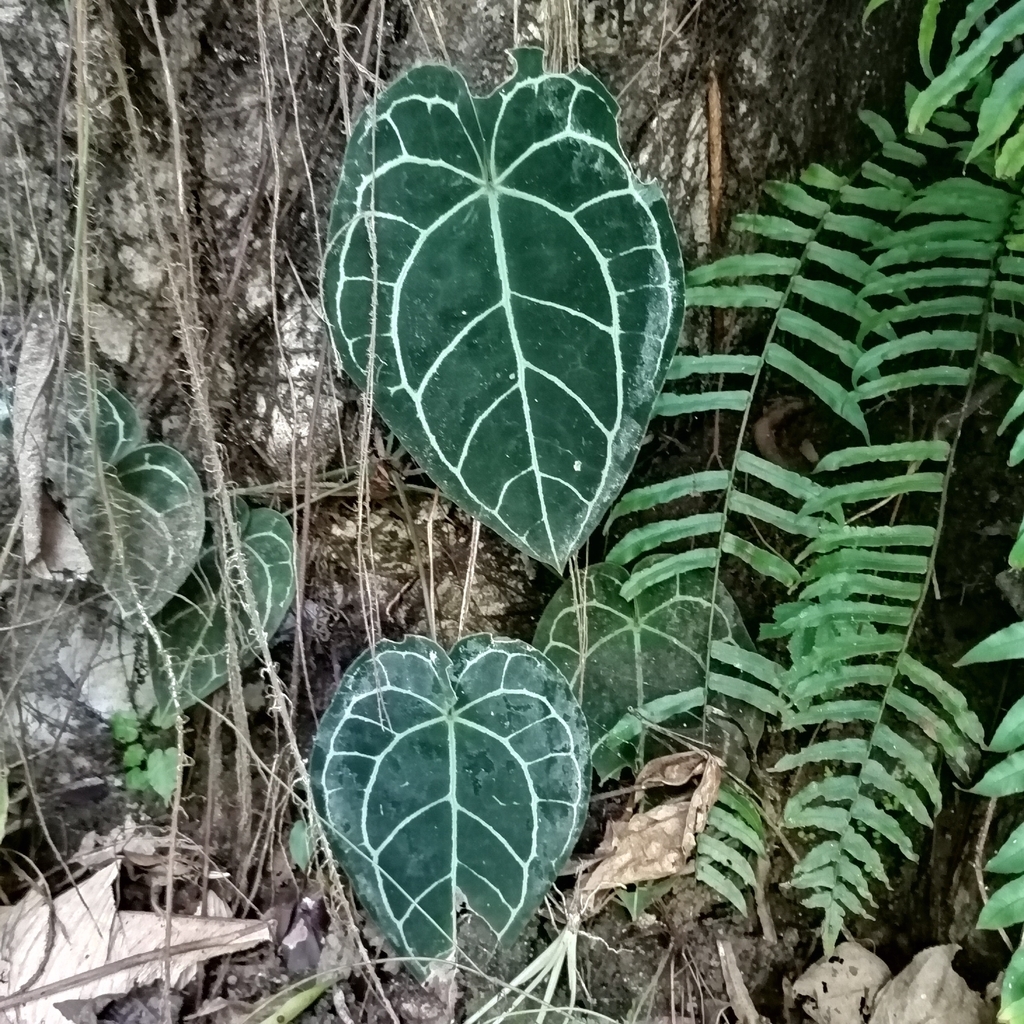
Anthurium crystallinum is grown for velvety leaves with silver veins, not flowers. It needs 70-80% humidity, a chunky bark-and-perlite aroid mix rather than potting soil, and bright indirect light. In ordinary dry room air the new leaves emerge crumpled and small. It is toxic to cats and dogs, prices run $30-$120+ depending on leaf size, and it is very commonly sold mislabelled as the near-identical Anthurium clarinervium.
Key facts
- The velvet texture comes from microscopic cell papillae that scatter light. This is also why water sitting on the leaf leaves permanent dull marks, so crystallinum should never be misted directly.
- It is an epiphyte that grows on rotting wood and leaf litter in the wild, so it suffocates in ordinary bagged potting soil and needs a chunky, airy aroid mix.
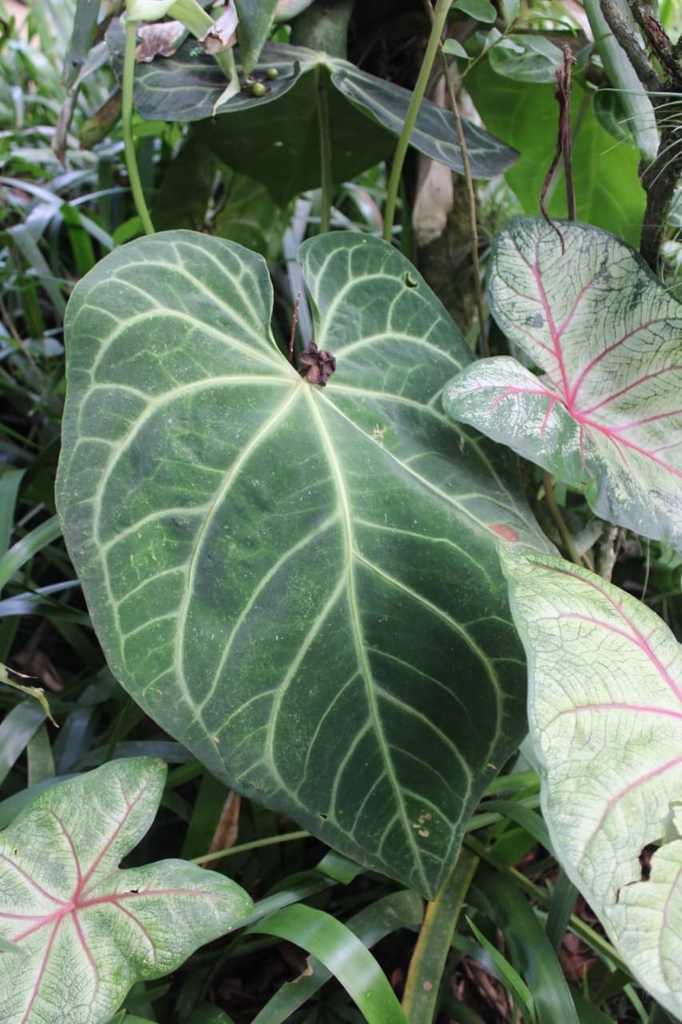
- Leaves get dramatically larger as the plant matures. A seedling leaf may be 8cm across while an established plant produces 40cm+ leaves from the same plant.
- Like all aroids it contains insoluble calcium oxalate crystals and is toxic to cats, dogs and humans if chewed.
Care requirements#
| Plant type | Indoor epiphytic aroid; a collector-grade foliage plant, not a beginner houseplant |
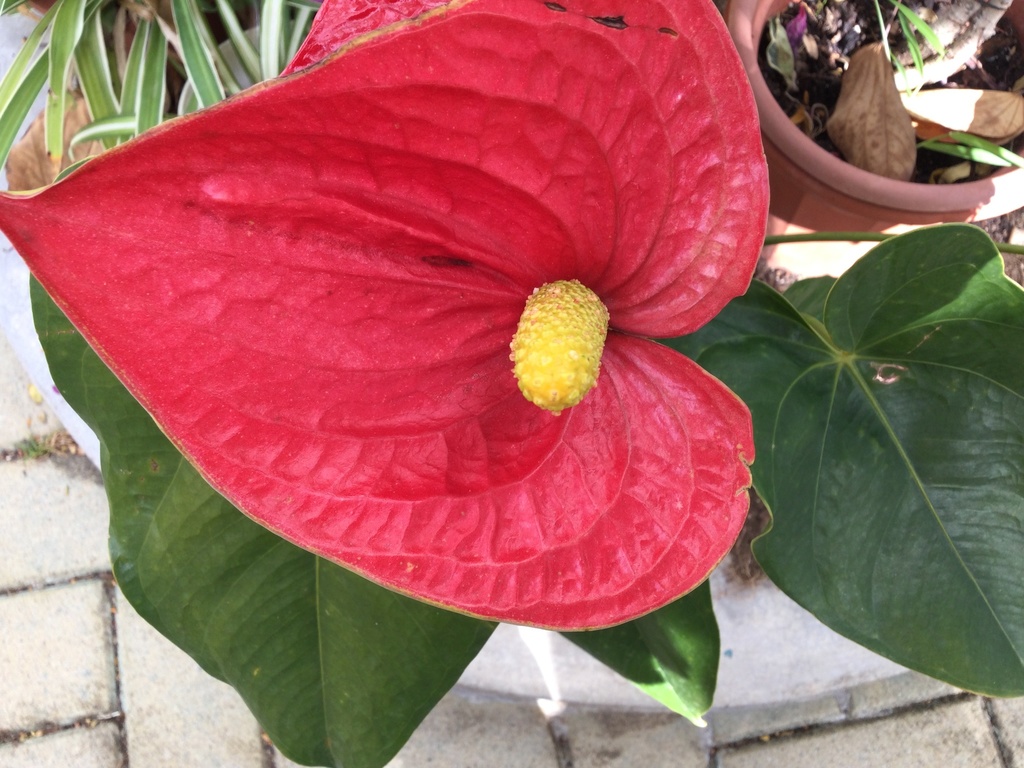
| Related easy plant | Flowering Anthurium (A. andraeanum): far easier, grown for red spathes rather than leaves |
| Growing medium | Chunky aroid mix: orchid bark, perlite, coco chips and a little charcoal. Ordinary potting soil kills it |
| Light needs | Bright indirect light only. The thin velvet leaves scorch in direct sun and stall in low light |
| Water frequency | Every 4-7 days; keep the chunky mix lightly moist but never soggy. It dries much faster than a soil pot |
| Humidity | 70-80%: the single hardest requirement. Below about 55% new leaves emerge crumpled, undersized or stuck in the sheath |
| Temperature range | 20-29°C (68-85°F); below 15°C growth stops and root rot risk climbs sharply |
| Fertilizer | Weak, frequent feeding: quarter-strength balanced liquid fertiliser at most waterings in spring and summer |
| Soil pH | 5.5-6.5 (slightly acidic) |
| Drainage needs | Very high. The mix must drain within seconds. Standing water rots the fleshy roots quickly |
| Pot recommendation | Snug plastic or net pot inside a cachepot; many growers use semi-hydro LECA for stable moisture |
| Toxicity | Toxic to cats, dogs and humans. Insoluble calcium oxalate causes intense mouth burning, drooling and swelling |
Growth & propagation#
| Mature size | 45-70cm tall and wide indoors; individual mature leaves reach 30-45cm |
| Growth rate | Slow: roughly one new leaf every 4-8 weeks in good conditions |
| Propagation methods | Division of the rhizome once multiple growth points exist; also grown commercially from seed |
| Propagation difficulty | Intermediate: divisions sulk unless kept in high humidity while re-rooting |
| Repotting schedule | Every 12-18 months, or whenever the bark mix breaks down into fines and stops draining |
| Pruning needs | Minimal. Remove spent leaves and cut off the inflorescences unless you want seed, since flowering diverts energy from leaf size |
Common problems & troubleshooting#
| Symptom | Likely cause | Fix |
|---|---|---|
| New leaf emerges small, crumpled or stuck half-unfurled | Humidity too low while the leaf was developing | Raise humidity to 70%+ with a humidifier or grow cabinet; the damaged leaf will not recover but the next one will be normal |
| Dull grey patches that break the velvet sheen | Water droplets sitting on the leaf surface, usually from misting or hard tap water | Never mist the leaves; raise ambient humidity instead, and water at the mix only |
| Yellowing lower leaves with black mushy stem base | Root rot from dense soil or overwatering | Unpot, cut away rotten roots, and repot into a fresh chunky bark mix; do not use bagged potting soil |
| Crispy brown leaf edges on otherwise healthy leaves | Dry air or fertiliser salt buildup in the mix | Increase humidity and flush the pot with plain water every couple of months to leach salts |
| Fine webbing and stippled, dusty-looking leaves | Spider mites, which thrive in the dry air that crystallinum is already suffering in | Isolate, wipe leaves gently with a soft cloth, treat with horticultural soap, and fix the humidity that let them establish |
Humidity is the whole game with this one
Sodate tracks your room's actual humidity and light and warns you before a new crystallinum leaf unfurls damaged.
Seasonal care#
Varieties & cultivars#
| Variety | Distinguishing trait | Note |
|---|---|---|
| Anthurium crystallinum (standard) | Matte velvet leaf, bright silver-white veins | The species form; leaf shape is a rounded heart |
| Anthurium clarinervium | Thicker, stiffer, more leathery leaf with a deeper cut sinus | Very frequently mislabelled as crystallinum; slightly more forgiving of dry air |
| Anthurium 'Crystallinum x Magnificum' | Larger leaves, square-ish petioles inherited from magnificum | A common hybrid sold as crystallinum in collector circles |
| Anthurium crystallinum 'Silver Blush' | Broader, paler silver venation | Selected form, priced above the standard species |
Buying checklist#
- Leaves have a matte velvet finish, not a glossy one. Glossy usually means clarinervium or a hybrid
- Growing medium is chunky bark, not dense black soil (a soil-potted plant may already have failing roots)
- Roots visible at the drainage holes are firm and pale, not brown and hollow
- No fine webbing between petioles. Spider mites are the standard pest on imported crystallinum
- Ask whether it was grown in a greenhouse at 80% humidity; if so, expect a period of acclimatisation damage at home
Pricing by region#
| Region | Price range | Typical unit | Basis |
|---|---|---|---|
| US | $30 – $120 | 4-6in pot | Specialist aroid nursery retail |
| UK | $32 – $110 | 12-15cm pot | Specialist online plant shops |
| India | $12 – $55 | 4-6in pot | Collector nursery + online sellers |
| Australia | $45 – $160 | 130mm pot | Domestic specialist nursery (import-restricted) |
| Canada | $35 – $130 | 4-6in pot | Specialist nursery retail |
USD figures are approximate conversions for comparison; switch the dropdown to see each region's actual local-currency listing price.
Often confused with#
Name confusion warning#
Crystallinum and clarinervium are routinely swapped by both retailers and importers, and a large share of plants sold online as 'crystallinum' are actually clarinervium or a crystallinum x magnificum hybrid. Check petiole cross-section and leaf thickness before paying a species premium.
Where it's actually grown#
Almost all retail Anthurium crystallinum is nursery-produced rather than wild-collected. The bulk is tissue-cultured or seed-grown in Indonesia, Thailand and the Netherlands, then finished by regional specialist growers. Wild collection from Colombian and Panamanian populations is now a conservation concern, so provenance is worth asking about.
Import & biosecurity restrictions#
| Region | Note |
|---|---|
| Australia | Live plant imports are heavily restricted under biosecurity law; buy from domestic growers, which is why AU prices are the highest of any region. |
| US | Importing requires a USDA phytosanitary certificate; domestic sale is unrestricted. |
| UK | Post-Brexit plant health certificates required for imports; domestic sale unrestricted. |
| India | No sale restriction; Indian summer heat is fine but indoor humidity often needs supplementing in dry northern winters. |
| Canada | CFIA import permit and phytosanitary certificate required; domestic sale unrestricted. |
Similar plants
Did you know?
Frequently asked questions
What humidity does Anthurium crystallinum need?
70-80% for full-sized, undamaged leaves. Below roughly 55% new leaves emerge crumpled or undersized, which is the most common reason people fail with this plant.
Should I mist my Anthurium crystallinum?
No. Water droplets sitting on the velvet surface leave permanent dull marks. Raise ambient humidity with a humidifier or enclosure instead.
Is Anthurium crystallinum toxic to pets?
Yes. Like all aroids it contains insoluble calcium oxalate crystals and is toxic to cats and dogs, causing severe mouth irritation, drooling and swelling if chewed.
How do I tell crystallinum from clarinervium?
Crystallinum has a thinner, softer, matte-velvet leaf with whiter veins; clarinervium's leaf is thick and stiff like cardboard with a deeper notch at the top and greener veins.
Why is my crystallinum's new leaf so small?
Either the plant is still juvenile, in which case leaves get bigger with each cycle, or humidity and light were too low while the leaf was forming.