 Sodate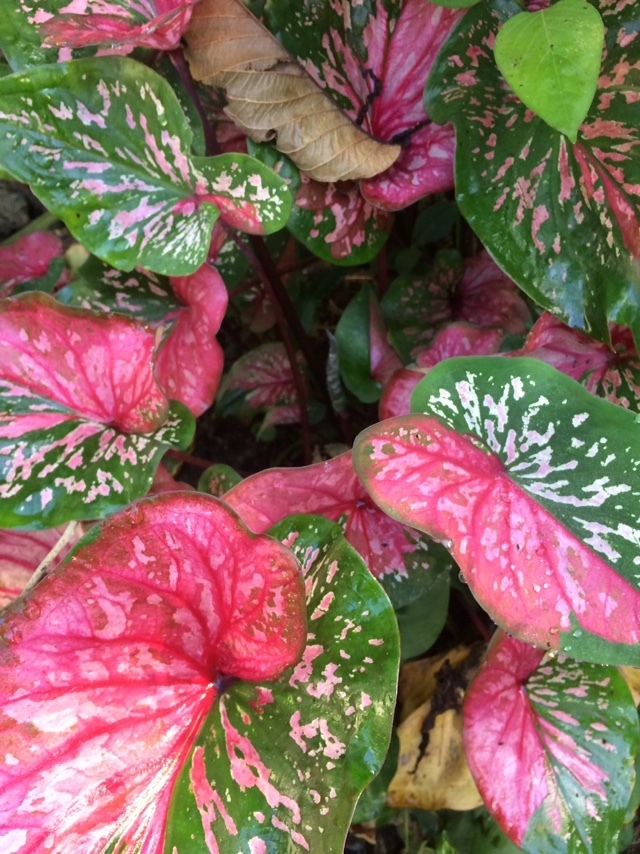
On this page
Caladium grows from a tuber and its spectacular paper-thin leaves last one growing season. The whole plant dies back to the tuber in autumn and regrows in spring. This is normal, not failure. Keep it warm and humid during growth, dry during dormancy, and away from pets (it's significantly toxic). Tubers typically cost $3-$8 each, potted plants $12-$25.
Key facts
- Native to South American forest edges and riverbanks, growing from underground tubers.
- Dies back completely to its tuber every autumn/winter. The leafless pot is dormancy, not death, and most caladiums are thrown away by owners who don't know this.
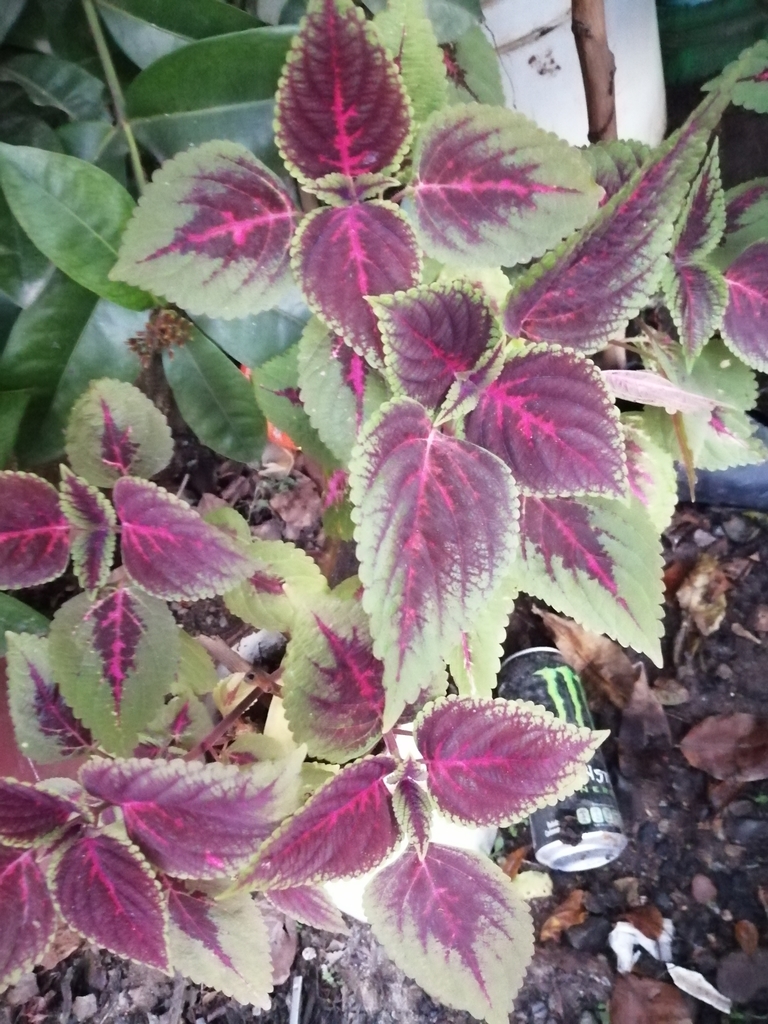
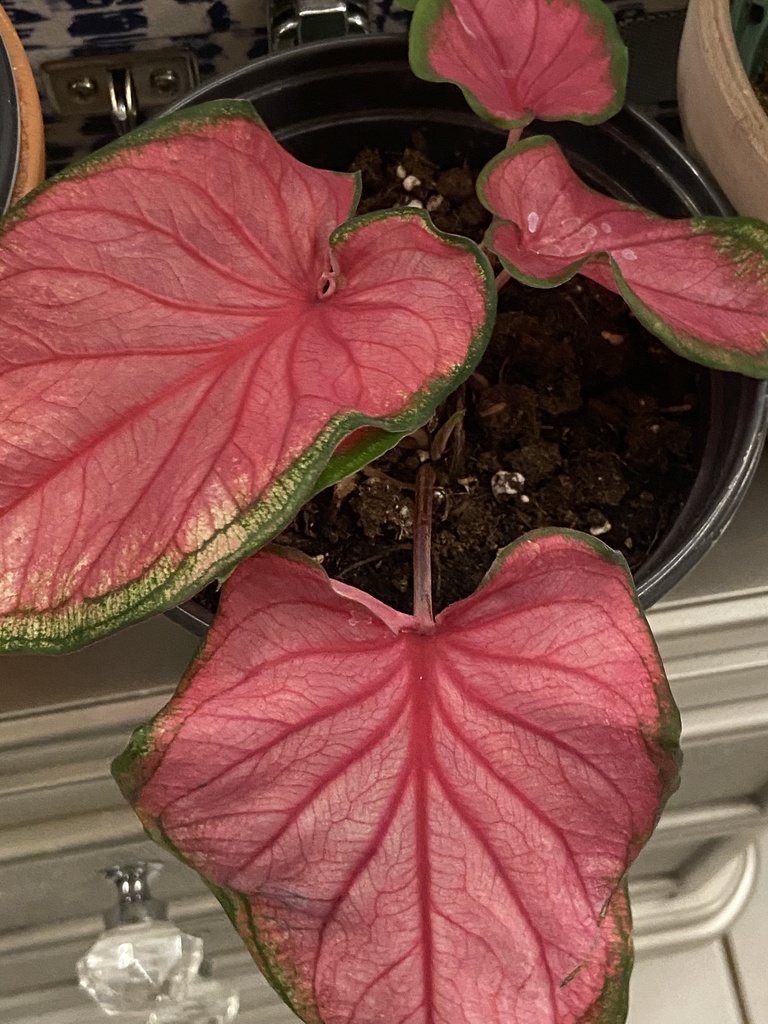
- Among the most dramatically colored foliage of any common plant, with paper-thin leaves in pink, red, white, and green combinations.
- Significantly toxic to pets and humans if chewed. Same calcium oxalate mechanism as dieffenbachia, its close relative.
Care requirements#
| Plant type | Indoor or shaded outdoor; seasonal grower from tuber |
| Growing medium | Rich, moisture-retentive but well-draining soil |
| Light needs | Bright indirect light or dappled shade; direct sun scorches the thin leaves |
| Water frequency | Every 3-5 days during growth; keep evenly moist. Stop almost entirely during winter dormancy |
| Humidity | 60%+ preferred: thin leaves crisp quickly in dry air |
| Temperature range | 21-29°C (70-85°F) during growth; tubers must stay above 13°C (55°F) even dormant |
| Fertilizer | Balanced liquid feed every 2 weeks during the growing season only |
| Soil pH | 5.5-6.5 (slightly acidic) |
| Drainage needs | Moderate-high; tubers rot in cold, wet soil |
| Pot recommendation | Any well-draining pot; plant tubers knobby-side up, 5cm deep |
| Hardiness zone (outdoor) | USDA 9-11 (tubers lifted and stored elsewhere) |
| Toxicity | Significantly toxic to pets and humans if chewed |
Growth & propagation#
| Mature size | 30-60cm tall in leaf |
| Growth rate | Fast during the warm season, from sprouting to full display in weeks |
| Propagation methods | Dividing tubers in spring before planting |
| Propagation difficulty | Easy: cut tubers into sections, each with at least one growth eye |
| Repotting schedule | Replant tubers fresh each spring |
| Pruning needs | Remove fully died-back foliage at dormancy; nothing else needed |
Common problems & troubleshooting#
| Symptom | Likely cause | Fix |
|---|---|---|
| All leaves dying back in autumn | Natural seasonal dormancy. Not a problem | Stop watering, store the pot (or lifted tuber) somewhere warm and dry, resume in spring |
| Brown, crispy leaf edges | Low humidity or direct sun | Raise humidity and move out of direct sunlight |
| Tuber soft and rotten at spring planting | Stored cold or wet during dormancy | Discard rotten sections; store future tubers dry and above 13°C |
| Drooping leaves | Underwatering during active growth | Water thoroughly. Actively growing caladiums are thirsty |
| Faded, washed-out color | Light too low or too intense | Bright indirect light produces the strongest coloration |
Know dormancy from death
Sodate tells you when your caladium's die-back is normal seasonal dormancy. Before you throw away a healthy tuber.
Seasonal care#
Varieties & cultivars#
| Variety | Distinguishing trait | Note |
|---|---|---|
| 'White Christmas' | White leaves with green veins | Classic fancy-leaf type |
| 'Red Flash' | Deep red centers with pink spots | Bold large-leaf variety |
| 'Miss Muffet' | Compact lime leaves with red speckles | Dwarf strap-leaf type |
Buying checklist#
- For tubers: firm, heavy, with visible growth eyes. Not soft, moldy, or shriveled
- For potted plants: leaves are crisp and vividly colored, not faded or drooping
- Confirm you're comfortable with seasonal dormancy before buying. The display is temporary by design
- Keep well out of reach of pets, toxicity is significant
Pricing by region#
| Region | Price range | Typical unit | Basis |
|---|---|---|---|
| US | $12 – $25 | Potted plant in leaf ($3-8/tuber) | Garden centre + tuber suppliers |
| UK | $10 – $22 | Potted plant in leaf | Garden centre retail |
| India | $2 – $5 | Potted plant | Urban nursery retail |
| Australia | $11 – $23 | Potted plant in leaf | Nursery + garden centre |
| Canada | $12 – $24 | Potted plant in leaf | Garden centre retail |
USD figures are approximate conversions for comparison; switch the dropdown to see each region's actual local-currency listing price.
Often confused with#
Where it's actually grown#
Over 90% of the world's caladium tubers are grown in the fields around Lake Placid, Florida, the self-declared 'Caladium Capital of the World', where they're harvested, graded by size, and shipped to nurseries and bulb catalogues globally each winter.
Import & biosecurity restrictions#
| Region | Note |
|---|---|
| Australia | Tuber and live plant imports restricted under biosecurity law; domestic nursery availability is seasonal. |
| US | Unrestricted domestically; nearly all supply originates from Florida tuber farms. |
| UK | No specific restriction; tubers sold seasonally through bulb merchants. |
| India | No restriction; grows outdoors easily in monsoon humidity. |
| Canada | CFIA rules for commercial imports; tubers sold through seasonal bulb catalogues. |
Similar plants
Did you know?
Frequently asked questions
My caladium lost all its leaves. Is it dead?
Almost certainly not. Caladiums die back to their tuber every autumn as natural dormancy. Stop watering, keep the pot warm and dry, and it regrows in spring.
How much does a caladium cost?
Dormant tubers cost $3-$8 each; a potted plant in full leaf runs $12-$25 in the US.
Is caladium pet-safe?
No. It's significantly toxic to cats and dogs if chewed, causing intense oral pain and swelling like its relative dieffenbachia.
Can caladium grow indoors year-round?
It grows indoors during its active season, but it will still go dormant in winter regardless. The die-back is driven by the tuber's internal clock, not just conditions.
How do I store caladium tubers over winter?
Once foliage dies back, keep the tuber dry and above 13°C (55°F). Either in its pot of dry soil or lifted and stored in dry peat until spring.