 Sodate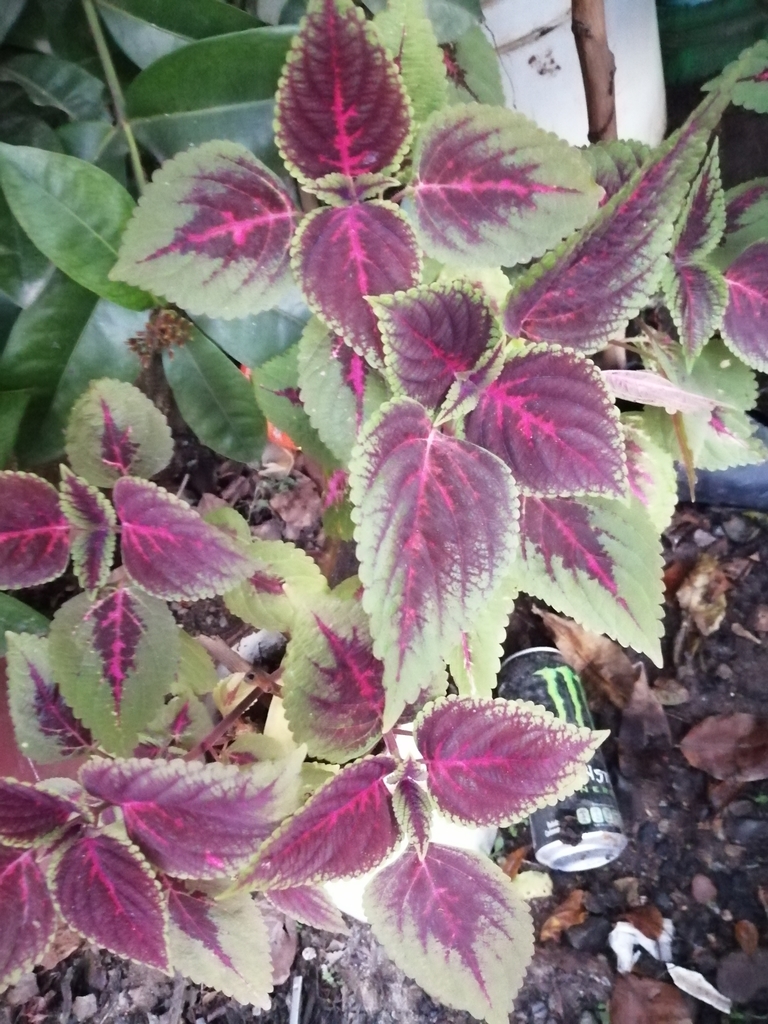
On this page
Coleus is fast, cheap and colourful, and it is one of the easiest plants to propagate: a cutting in a glass of water roots in about a week. Indoors it needs a bright spot and steady moisture, and it wants pinching every few weeks or it turns leggy and flowers, at which point the leaf colour fades. The important caveat is toxicity: coleus contains essential oils that are toxic to cats and dogs and can cause vomiting, diarrhoea and skin irritation. Typical price $4-$12.
Key facts
- Toxic to cats and dogs. The essential oils, including diterpene compounds, cause vomiting, diarrhoea, drooling and skin irritation, and the sap can irritate human skin too.
- Grown for foliage, not flowers. The small blue-purple flower spikes drain the plant and dull the leaf colour, so most growers pinch them off.
- Cuttings root in water in about a week, making it one of the fastest and cheapest plants to multiply.
- It is a true member of the mint family (Lamiaceae), which is why the stems are square in cross-section.
Care requirements#
| Plant type | Tender perennial grown indoors or as a summer bedding annual |
| Growing medium | Standard peat-free potting mix with perlite for drainage |
| Light needs | Bright indirect light indoors, with some direct morning sun; deep colours need good light, but hot afternoon sun scorches |
| Water frequency | Every 3-5 days; keep evenly moist, as it wilts dramatically when dry |
| Humidity | 40-60% preferred; average indoor air is usually acceptable |
| Temperature range | 18-27°C (65-80°F); frost-tender and damaged below 10°C (50°F) |
| Fertilizer | Balanced liquid feed at half strength every 2-4 weeks in spring and summer |
| Soil pH | 6.0-7.0 |
| Drainage needs | Moderate to high; soggy soil rots the soft stems |
| Pot recommendation | Any pot with drainage; plastic holds the moisture it prefers |
| Hardiness zone (outdoor) | USDA 10-11 as a perennial; grown as an annual elsewhere |
| Toxicity | Toxic to cats and dogs; sap may irritate human skin |
Growth & propagation#
| Mature size | 30-60cm tall indoors; some bedding cultivars reach 90cm outdoors |
| Growth rate | Fast: visible growth week to week in the growing season |
| Propagation methods | Stem cuttings in water or moist mix; seed for species and mixed strains |
| Propagation difficulty | Beginner-friendly; roots in water within about a week |
| Repotting schedule | Annually, or whenever it outgrows the pot; many growers simply restart from cuttings |
| Pruning needs | Pinch the growing tips every 2-4 weeks and remove flower spikes to keep it bushy and colourful |
Common problems & troubleshooting#
| Symptom | Likely cause | Fix |
|---|---|---|
| Tall bare stems with leaves only at the tips | Insufficient light, or no pinching | Move to a brighter spot and pinch back hard; the trimmings root as new plants |
| Sudden dramatic wilting | The pot dried out | Water thoroughly; coleus usually recovers within hours, but repeated wilting costs leaves |
| Leaf colour fading to green | Too little light, or the plant is putting energy into flowering | Increase light and pinch off flower spikes as they appear |
| Scorched, bleached patches on leaves | Hot direct afternoon sun through glass | Move back from the window or diffuse the light |
| Sticky leaves and clusters of small green insects | Aphids, which favour soft new coleus growth | Rinse under a tap and treat with insecticidal soap weekly until clear |
Fast growers need faster feedback
Sodate tracks your light and season and reminds you to water and pinch before a coleus goes leggy on you.
Seasonal care#
Varieties & cultivars#
| Variety | Distinguishing trait | Note |
|---|---|---|
| 'Wizard' series | Compact seed-grown mixes | Cheapest and most widely sold |
| 'Kong' series | Very large leaves with bold central blotches | Needs more shade than most |
| 'Black Dragon' | Deep near-black ruffled foliage | Slower and more compact |
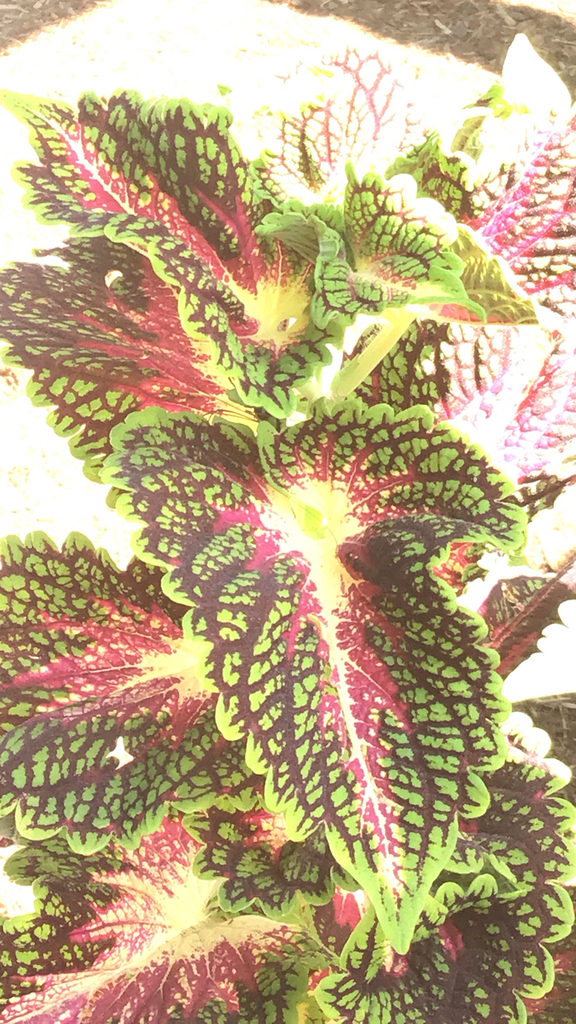
| 'Wasabi' | Bright chartreuse-lime leaves | Holds colour well in brighter light |
Buying checklist#
- The plant is bushy from the base, not a single leggy stem
- Leaf colour is strong and even, without bleached or faded patches
- No flower spikes forming, or be ready to pinch them straight away
- No aphids clustered on the soft growing tips
Pricing by region#
| Region | Price range | Typical unit | Basis |
|---|---|---|---|
| US | $4 – $12 | 4in pot | Big-box + garden centre retail |
| UK | $4 – $11 | 9-12cm pot | Garden centre retail |
| India | $1 – $4 | 4in pot | Urban nursery retail |
| Australia | $5 – $13 | 100mm pot | Nursery + garden centre |
| Canada | $4 – $12 | 4in pot | Garden centre retail |
USD figures are approximate conversions for comparison; switch the dropdown to see each region's actual local-currency listing price.
Often confused with#
Name confusion warning#
Coleus has been shuffled between genera repeatedly and appears on labels as Coleus blumei, Solenostemon scutellarioides and Plectranthus scutellarioides. All refer to the same plant; the accepted name is now Coleus scutellarioides. Do not confuse it with Coleus forskohlii (now Plectranthus barbatus), a different species sold as a herbal supplement.
Where it's actually grown#
Coleus is produced at enormous scale from seed and cuttings by bedding-plant growers in the US, Netherlands, Kenya and India. The species originates in Southeast Asia and Australasia; every retail plant is nursery-raised, and named cultivars are vegetative clones.
Import & biosecurity restrictions#
| Region | Note |
|---|---|
| Australia | Grown domestically as a bedding and indoor plant; live plant imports restricted under biosecurity law. |
| US | Domestic sale unrestricted; a staple seasonal bedding crop. |
| UK | Widely grown domestically; phytosanitary certificates apply to commercial imports. |
| India | No restriction; grows vigorously outdoors in the monsoon and as a shade plant year-round. |
| Canada | CFIA permits required for commercial imports; sold everywhere as a summer annual. |
Similar plants
Ranked in these guides
Did you know?
Frequently asked questions
Is coleus toxic to cats and dogs?
Yes. The essential oils in coleus are toxic to cats and dogs and cause vomiting, diarrhoea, drooling and skin irritation. Keep it well out of reach.
Why is my coleus losing its colour?
Usually too little light, or the plant is flowering. Move it somewhere brighter and pinch off the flower spikes.
How do I stop coleus getting leggy?
Pinch the growing tips out every two to four weeks and keep it in bright light. Use the trimmings as cuttings.
How fast does coleus root from a cutting?
About a week in a glass of water. It is one of the fastest houseplants to propagate.
How much does coleus cost?
Usually $4-$12 in the US for a 4-inch pot; seed mixes are cheaper than named cultivars.