 Sodate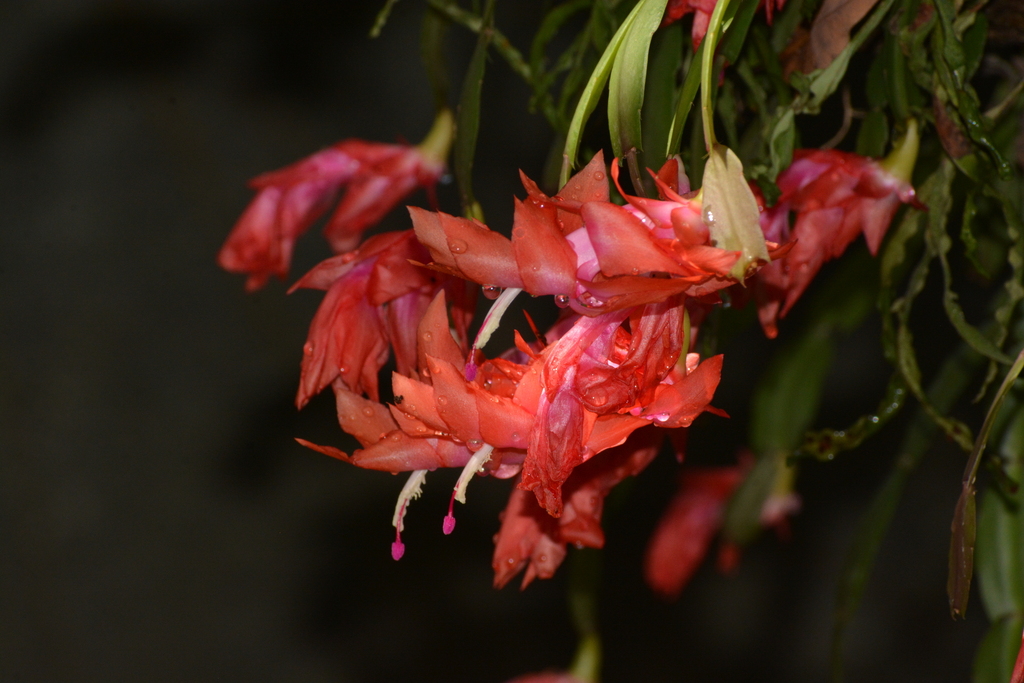
On this page
Christmas cactus needs bright indirect light, water when the top inch of soil is dry, and a period of shorter days and cooler nights in autumn to trigger its winter blooms. Unlike desert cacti, it's an epiphyte that prefers more humidity and consistent moisture. Non-toxic to pets and remarkably long-lived. Some specimens survive 20-30+ years and get passed down as heirlooms.
Key facts
- Native to the coastal mountain cloud forests of southeastern Brazil, growing as an epiphyte on trees and rocks, not in desert sand.
- Needs roughly 12-14 hours of uninterrupted darkness nightly for 6-8 weeks in autumn to set flower buds. A lit room at night can prevent blooming entirely.
- One of the longest-lived common houseplants, with well-cared-for specimens surviving multiple decades and often passed down through families.
- Non-toxic to cats and dogs, unlike many other popular flowering houseplants.
Care requirements#
| Plant type | Indoor (epiphytic succulent, not a desert cactus) |
| Growing medium | Well-draining soil, often a cactus/succulent mix with added organic matter |
| Light needs | Bright, indirect light year-round; avoid direct hot sun |
| Water frequency | Every 7-10 days; water when the top inch of soil is dry |
| Humidity | 40%+ preferred, higher than typical desert cacti |
| Temperature range | 18-24°C (65-75°F) most of the year; cooler nights (10-15°C/50-59°F) in autumn trigger blooming |
| Fertilizer | Balanced liquid feed monthly during active growth, spring-summer; stop during bud set and blooming |
| Soil pH | 6.0-6.5 (slightly acidic) |
| Drainage needs | High: despite liking more moisture than desert cacti, waterlogging still causes rot |
| Pot recommendation | Hanging baskets suit its trailing, segmented growth habit |
| Hardiness zone (outdoor) | USDA 10-12 (rarely grown outdoors) |
| Toxicity | Non-toxic to cats, dogs, and humans |
Growth & propagation#
| Mature size | 30-60cm trailing spread |
| Growth rate | Slow to moderate; very long-lived |
| Propagation methods | Stem segment cuttings (2-3 segments), rooted in soil or water |
| Propagation difficulty | Beginner-friendly: segments root readily in 3-4 weeks |
| Repotting schedule | Every 2-3 years; prefers being slightly rootbound to encourage blooming |
| Pruning needs | Pinch off a few segments after blooming to encourage bushier growth |
Common problems & troubleshooting#
| Symptom | Likely cause | Fix |
|---|---|---|
| Flower buds dropping before opening | Sudden temperature changes, drafts, or being moved during bud set | Keep the plant in a stable location with consistent temperature once buds form |
| No flowers at all | Insufficient darkness/cool nights in autumn, often due to artificial light at night | Give it 12-14 hours of uninterrupted darkness nightly for 6-8 weeks starting in early autumn |
| Limp, wrinkled segments | Underwatering | Water thoroughly and resume a regular schedule |
| Mushy, translucent segments at the base | Overwatering or root rot | Let soil dry out fully; repot in fresh, well-draining mix if rot is present |
Get a bloom-trigger reminder this autumn
Sodate tracks day length and reminds you when to start the dark treatment your Christmas cactus needs to flower on schedule.
Seasonal care#
Varieties & cultivars#
| Variety | Distinguishing trait | Note |
|---|---|---|
| Thanksgiving cactus (Schlumbergera truncata) | Pointed, saw-toothed segment edges, blooms slightly earlier | Often sold interchangeably with true Christmas cactus |
| 'White Christmas' | White/cream blooms instead of the classic pink or red | Popular color variant |
| Standard pink/red | Classic magenta-pink or red trumpet-shaped flowers | Most common form |
Buying checklist#
- Segments are plump and green, not wrinkled or shriveled
- No mushy or blackened tissue at the base
- If buying for holiday blooms, check for visible flower buds already forming
- Ask whether it's true Christmas cactus (S. bridgesii) or Thanksgiving cactus (S. truncata) if timing matters to you
Pricing by region#
| Region | Price range | Typical unit | Basis |
|---|---|---|---|
| US | $12 – $25 | 6in pot | Seasonal big-box + nursery retail |
| UK | $10 – $20 | 12-15cm pot | Garden centre retail |
| India | $2 – $5 | 6in pot | Urban nursery retail |
| Australia | $11 – $23 | 150mm pot | Nursery + garden centre |
| Canada | $12 – $24 | 6in pot | Garden centre retail |
USD figures are approximate conversions for comparison; switch the dropdown to see each region's actual local-currency listing price.
Often confused with#
Where it's actually grown#
Christmas cacti sold commercially are almost always Thanksgiving cactus hybrids (Schlumbergera truncata) grown for faster, more reliable seasonal blooming in large-scale nurseries in the Netherlands and North America, true S. bridgesii is less common in retail despite giving the plant its common name.
Import & biosecurity restrictions#
| Region | Note |
|---|---|
| Australia | Live plant imports restricted under biosecurity law; widely available domestically, especially around the holiday season. |
| US | Domestic sale unrestricted; grown as a houseplant everywhere given its cloud-forest origin. |
| UK | No specific restriction; grown strictly as a houseplant. |
| India | No restriction; less common than in temperate markets given the plant's cool-night bloom trigger. |
| Canada | CFIA permits required for commercial imports; grown as a houseplant. |
Similar plants
Ranked in these guides
Did you know?
Frequently asked questions
Why won't my Christmas cactus bloom?
It needs about 12-14 hours of uninterrupted darkness nightly for 6-8 weeks in autumn to set flower buds. A room with lights on at night can block blooming entirely.
How much does a Christmas cactus cost?
A standard 6-inch potted plant typically runs $12-$25 in the US, especially in season around the holidays.
Is Christmas cactus pet-safe?
Yes, it's non-toxic to cats and dogs.
Is Christmas cactus the same as a desert cactus?
No. It's an epiphyte from Brazilian cloud forests, so it needs more humidity and moisture than a typical desert cactus and should never be treated like one.
How long do Christmas cacti live?
Remarkably long. Well-cared-for plants often live 20-30+ years, with some heirloom specimens exceeding a century.