 Sodate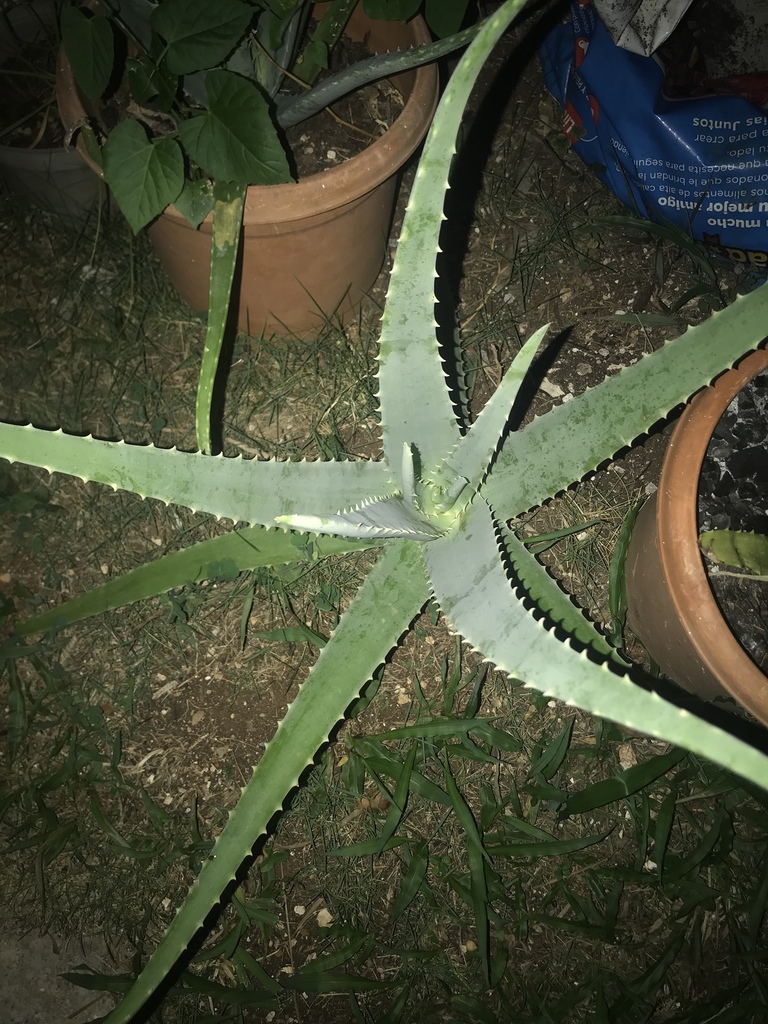
On this page
Aloe vera needs a genuinely bright spot, a south or west window, gritty succulent mix, and water only when the soil is fully dry (every 2-3 weeks). It multiplies via pups, so one plant becomes many. The gel is soothing on skin, but the yellow latex beneath the skin is a purgative: mildly toxic to cats and dogs, and the reason you shouldn't eat home-prepared leaves. $5-$25.
Key facts
- Cultivated for so long (documented in Egypt over 3,500 years ago) that its wild origin is uncertain. Likely the Arabian Peninsula; it now grows worldwide in warm climates.
- The clear inner gel is roughly 99% water and is the part used on minor burns and sunburn.
- The yellow latex (aloin) just under the leaf skin is a strong laxative. This is what makes aloe mildly toxic to cats and dogs, causing vomiting and diarrhea if chewed.
- Produces offsets (pups) freely: a healthy plant surrounds itself with babies you can pot up.
Care requirements#
| Plant type | Indoor / outdoor (year-round outdoors in USDA 9-11) |
| Growing medium | Gritty, fast-draining cactus/succulent mix |
| Light needs | Bright light with some direct sun. A south or west window; acclimate gradually to harsh summer sun |
| Water frequency | Every 2-3 weeks; soak thoroughly, then wait until the soil is completely dry |
| Humidity | Low; dry household air is ideal |
| Temperature range | 18-27°C (65-80°F); protect below 10°C (50°F); frost destroys the water-filled leaves |
| Fertilizer | Diluted succulent feed 2-3 times in spring-summer at most |
| Soil pH | 6.0-8.0 (unfussy) |
| Drainage needs | Very high. The number one care factor |
| Pot recommendation | Terracotta with a drainage hole, wide rather than deep (aloe roots are shallow) |
| Harvesting gel | Cut an outer leaf at the base, stand it upright 10 minutes to drain the yellow latex, then fillet out the clear gel |
| Toxicity | Mildly toxic to cats and dogs (aloin latex); gel is used topically on human skin |
Growth & propagation#
| Mature size | 30-60cm rosette indoors; larger in the ground |
| Growth rate | Moderate for a succulent. Several new leaves a year in good sun |
| Propagation methods | Pups (offsets) around the base; leaf cuttings generally fail because of the high water content |
| Propagation difficulty | Very easy via pups. Cut away with some roots and pot up |
| Repotting schedule | Every 2-3 years, or when pups crowd the pot or the plant gets top-heavy |
| Pruning needs | None: harvest or remove outer leaves at the base as needed; leaves don't grow back once cut |
Common problems & troubleshooting#
| Symptom | Likely cause | Fix |
|---|---|---|
| Mushy, water-soaked leaves collapsing at the base | Overwatering and root rot. The classic aloe killer | Unpot, cut away rotted roots and leaves, let the plant dry callous for a day or two, repot in dry gritty mix |
| Thin, curled, dull leaves | Long-term underwatering. The plant is consuming its own water reserves | Water deeply; leaves plump up over a week or two |
| Flat, pale, stretched growth leaning to the light | Not enough sun (etiolation) | Move to a south or west window gradually; new growth comes in compact |
| Leaves turning brown-red overall | Sun stress. Often after a sudden move into harsh direct summer sun | Usually harmless stress colouring; shift to slightly less intense light and it greens up |
| Brown, dry, sunken spots after a cold night | Chill or frost damage to the water-filled tissue | Keep above 10°C; trim destroyed leaves at the base, they won't recover |
Drought-built, drowning-prone
Sodate waits until your aloe's soil has fully dried before nudging you. Because watering too often is the only way most people kill one.
Seasonal care#
Varieties & cultivars#
| Variety | Distinguishing trait | Note |
|---|---|---|
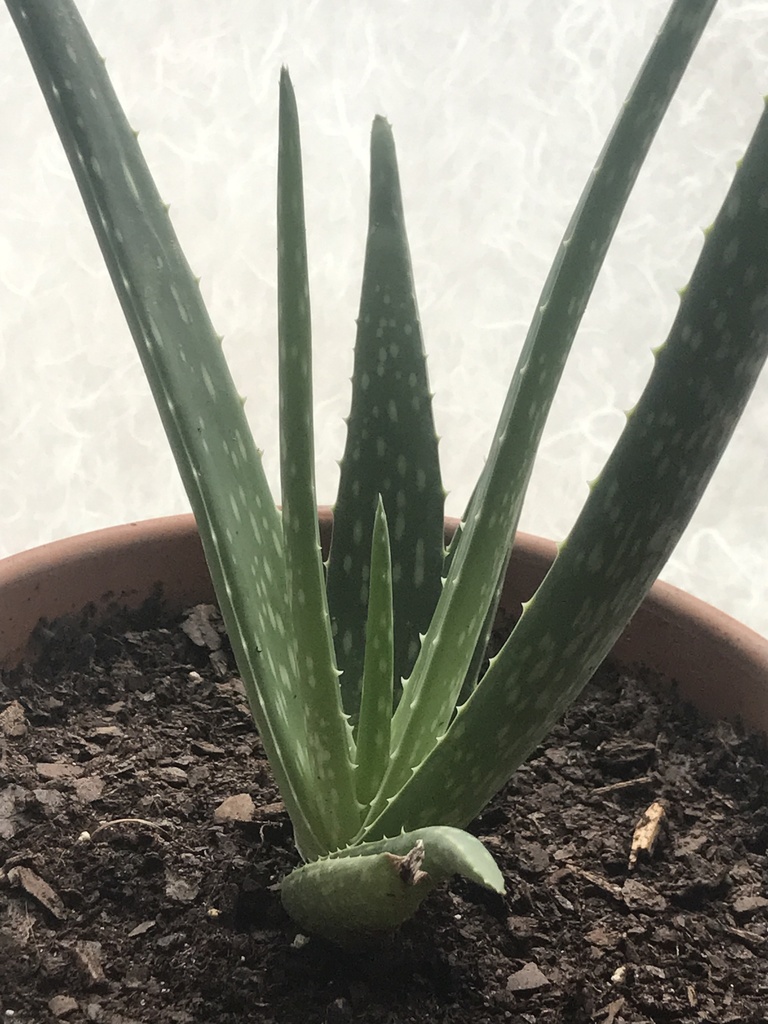
| Aloe vera var. chinensis | Smaller, spotted form common in the houseplant trade | Often sold as plain aloe vera; keeps white spots into adulthood |
| Aloe 'Minibelle' | Compact hybrid with heavily spotted slender leaves | Windowsill-sized |
| Aloe barbadensis 'Miller' | The thick-leaved commercial gel-production strain | The name you'll see on cosmetic labels |
Buying checklist#
- Leaves are fat, firm, and upright. Thin or floppy leaves mean stress
- Grey-green colour is normal; deep green with soft spots suggests overwatering
- Base of the plant is dry and firm, with no dark mushiness at the soil line
- Pups around the base are a bonus (free plants)
- Plant sits stable in its pot. A wobbly aloe often has a rotted root system
Pricing by region#
| Region | Price range | Typical unit | Basis |
|---|---|---|---|
| US | $5 – $25 | 4in pot to large rosette | Big-box + grocery + nursery retail |
| UK | $5 – $22 | 9cm pot to large plant | Garden centre + supermarket retail |
| India | $1 – $4 | small pot to mature plant | Local nursery + online |
| Australia | $5 – $23 | 100mm pot to large plant | Nursery + garden centre |
| Canada | $5 – $24 | 4in pot to large rosette | Garden centre + grocery retail |
USD figures are approximate conversions for comparison; switch the dropdown to see each region's actual local-currency listing price.
Often confused with#
Name confusion warning#
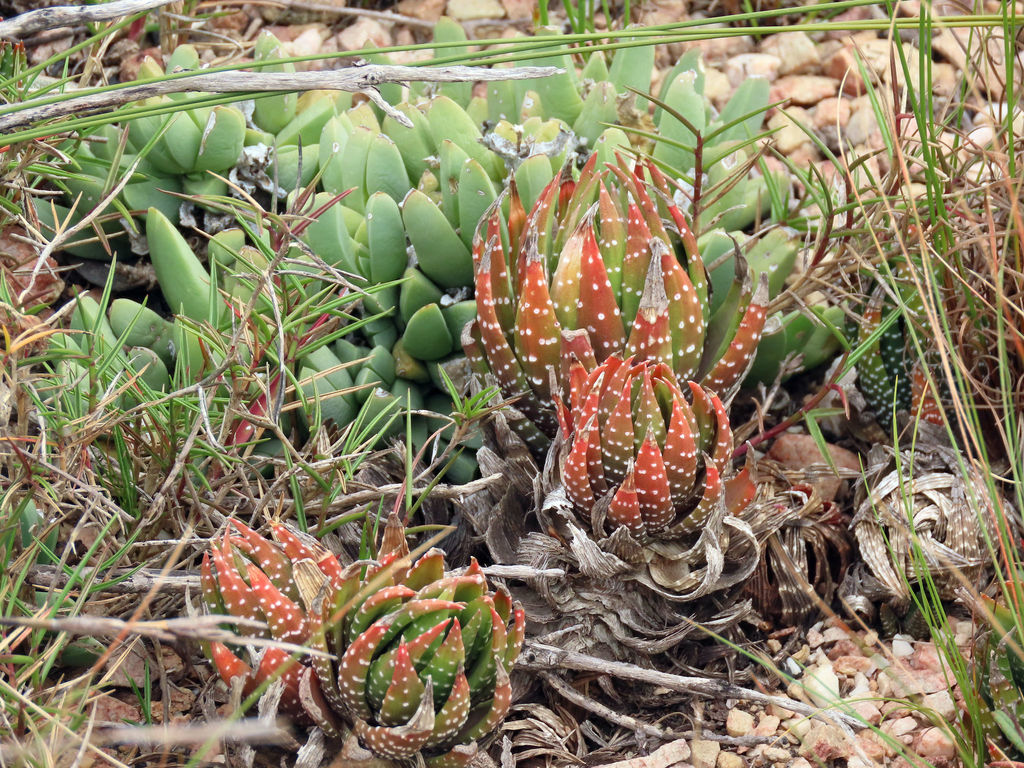
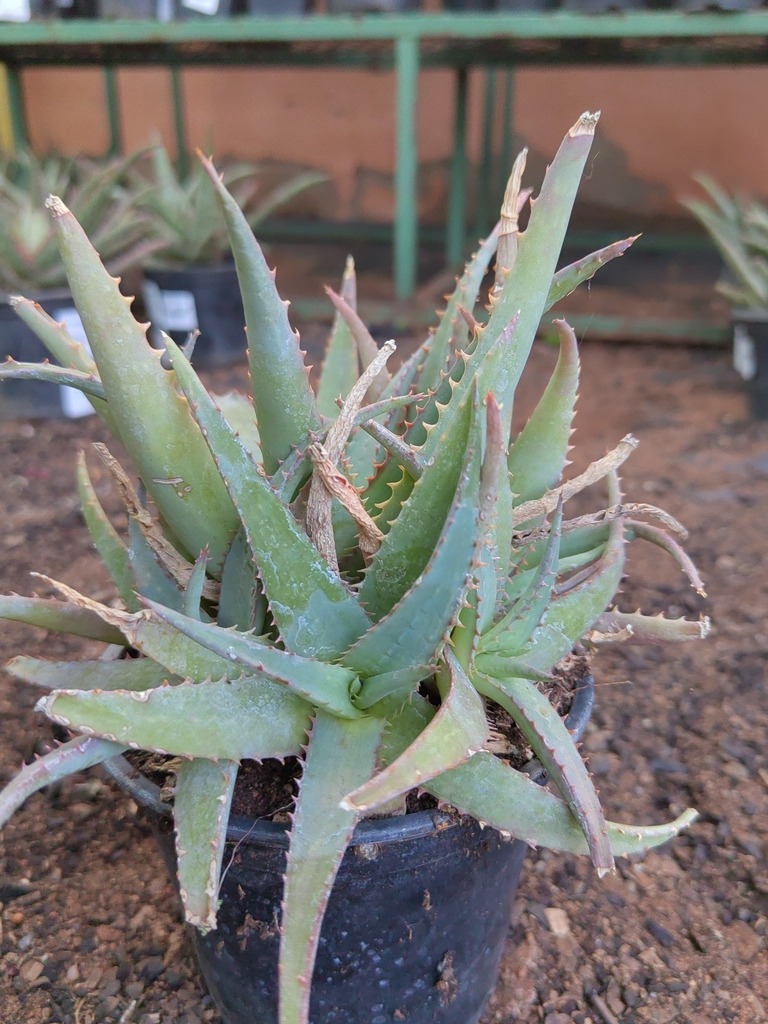
Not everything sold as "aloe" is Aloe vera. Shops mislabel haworthias, gasterias, and ornamental aloes as aloe vera. If you want the medicinal gel plant, look for thick, grey-green upright leaves. And never use gel from an unidentified lookalike on skin.
Where it's actually grown#
Potted aloe vera is mass-propagated from pups in succulent nurseries in Florida, California, Spain, and across Asia, while commercial gel comes from irrigated field plantations in Mexico, the Dominican Republic, Texas, and India. The two supply chains are entirely separate.
Import & biosecurity restrictions#
| Region | Note |
|---|---|
| Australia | Live plant imports restricted under biosecurity law; abundantly grown domestically. |
| US | Domestic sale unrestricted; hardy outdoors in the far south and southwest. |
| UK | No restriction; strictly indoors except in the mildest coastal spots. |
| India | No restriction; grown commercially at farm scale (notably in Rajasthan and Gujarat) and sold everywhere. |
| Canada | CFIA permits for commercial imports; a windowsill plant only. |
Similar plants
Ranked in these guides
Did you know?
Frequently asked questions
Is aloe vera toxic to cats and dogs?
Mildly, yes. The yellow latex under the leaf skin contains aloin, a purgative that causes vomiting and diarrhea if pets chew the leaves. It's rarely dangerous, but keep it out of reach of chewers.
How often should I water aloe vera?
Every 2-3 weeks. Soak it thoroughly, then wait until the soil is completely dry. In winter, once a month is plenty.
Can I use the gel straight from the plant?
For minor burns and skin irritation, yes: cut an outer leaf, stand it upright to drain the yellow latex, then use the clear inner gel. Don't eat home-prepared leaves. The latex layer is a strong laxative.
Why is my aloe floppy and thin?
Usually not enough light. Aloe needs real sun; in a dim corner the leaves stretch, flatten, and flop. A south or west window fixes new growth.
What do I do with the babies around my aloe?
Those pups are free plants. Once they're a few centimetres tall, cut them away with some roots at repotting time, let them dry a day, and pot them in succulent mix.