 Sodate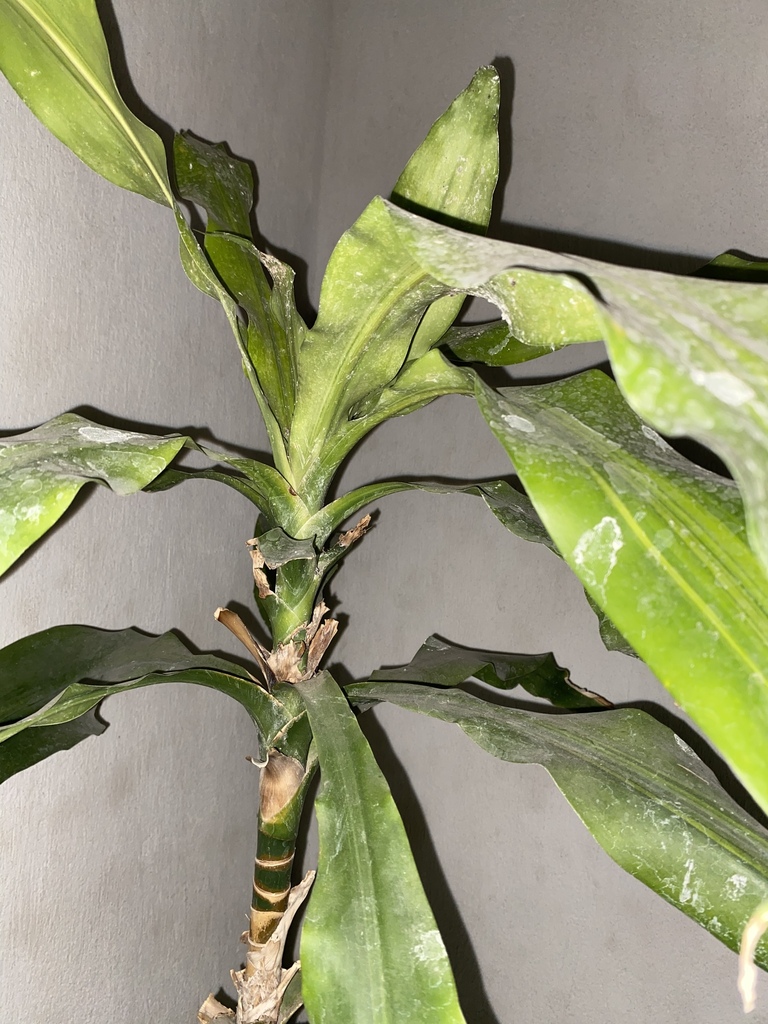
On this page
The corn plant is the cheapest way to put a tolerant, tree-sized plant in a dim corner: it handles low light, dry air, and forgetfulness. Water when the top half of the soil is dry (every 1-2 weeks), use filtered water if your tap is fluoridated (fluoride browns the leaf tips), and keep it away from cats and dogs. Dracaenas contain saponins that make pets vomit. $15-$100 depending on cane height.
Key facts
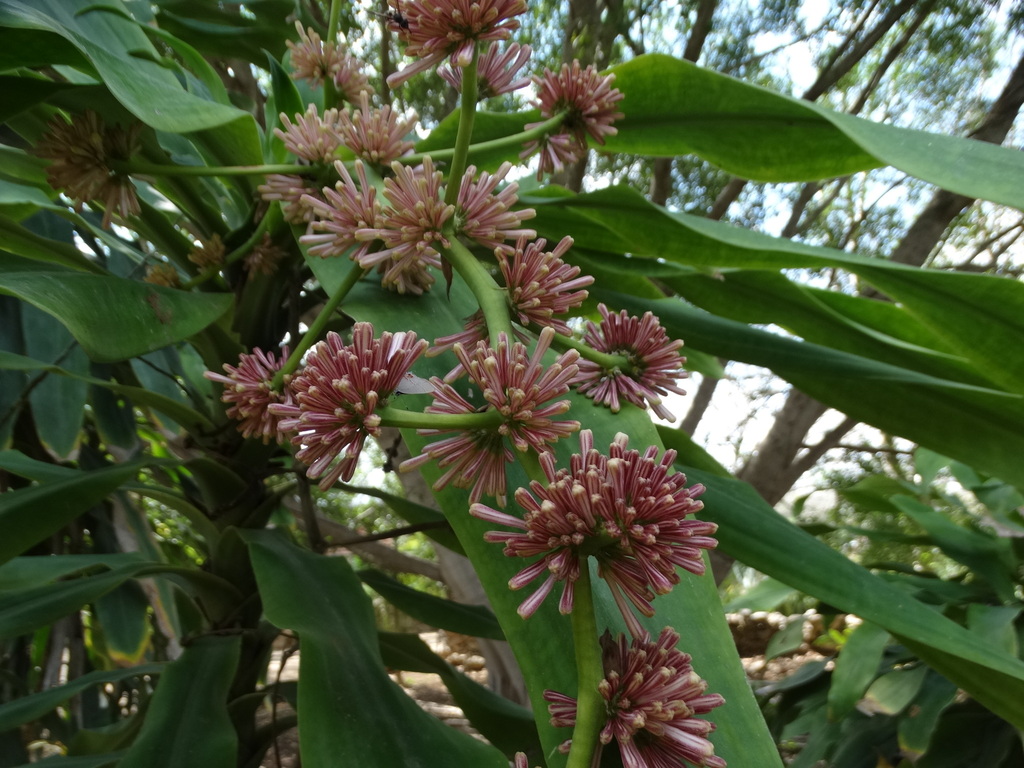
- Native to tropical Africa, from Sudan to Mozambique, where it grows as a shrubby tree up to 15m tall.
- Sold as thick cut canes that sprout leaf crowns from dormant buds. A single pot often holds 2-3 staggered canes.
- Toxic to cats and dogs: saponins cause vomiting, drooling, and in cats, dilated pupils.
- Featured in NASA's 1989 Clean Air Study, which drove its popularity as an office plant (real-room air-cleaning effect is negligible, but the toughness is real).
Care requirements#
| Plant type | Indoor (outdoor year-round only in USDA 10-12) |
| Growing medium | Standard well-draining potting mix; a handful of perlite helps |
| Light needs | Medium indirect light is ideal; tolerates low light (growth slows and stripes fade); avoid direct sun |
| Water frequency | Every 1-2 weeks; water when the top half of the pot is dry. It prefers slightly dry to wet |
| Water quality | Fluoride-sensitive: browned leaf tips often trace to fluoridated or softened tap water; filtered or rain water fixes it |
| Humidity | Average home humidity (40%+) is fine; very dry air browns tips |
| Temperature range | 16-27°C (60-80°F); damage below 10°C (50°F); keep off cold windowsills |
| Fertilizer | Balanced feed at half strength monthly in spring-summer; none in winter, dracaenas are salt-sensitive |
| Soil pH | 6.0-6.5 |
| Drainage needs | High: canes rot from the base in soggy soil |
| Pot recommendation | Stable, weighty pot with drainage; top-heavy canes tip in light plastic pots |
| Toxicity | Toxic to cats and dogs (saponins); mildly irritating to humans if ingested |
Growth & propagation#
| Mature size | 1.2-1.8m+ indoors; up to 15m in habitat |
| Growth rate | Slow: a few new leaves per crown per season |
| Propagation methods | Cane cuttings: cut a stem section and root it in water or moist soil; air layering also works |
| Propagation difficulty | Easy: even leafless cane sections sprout new crowns from dormant buds |
| Repotting schedule | Every 2-3 years; it tolerates being root-bound |
| Pruning needs | Cut the cane at any height to control size. New crowns sprout below the cut |
Common problems & troubleshooting#
| Symptom | Likely cause | Fix |
|---|---|---|
| Brown, dry leaf tips | Fluoride/salt buildup from tap water or fertilizer, or very dry air | Switch to filtered or rain water, flush the pot every few months, trim tips to shape |
| Yellowing lower leaves, mushy cane base | Overwatering leading to stem and root rot | Let the soil dry well; if the cane base is soft, cut above the rot and re-root the healthy top |
| Pale, bleached patches on leaves | Direct sun scorch | Move out of direct sun; damaged leaves won't recover but new growth will be clean |
| Leaves losing their stripe contrast | Light too low for variegated forms like 'Massangeana' | Move to medium-bright indirect light; new leaves regain the yellow band |
| Sudden shedding of healthy-looking leaves | Cold draft or a big temperature swing | Move away from doors, AC vents, and cold glass; it re-leafs once conditions stabilise |
Tough, but not immortal
Sodate spaces the waterings out to match how slowly a dracaena actually drinks. The one thing that kills it is enthusiasm.
Seasonal care#
Varieties & cultivars#
| Variety | Distinguishing trait | Note |
|---|---|---|
| 'Massangeana' (corn plant) | Broad yellow-lime central stripe down each leaf | The classic corn plant of offices and lobbies |
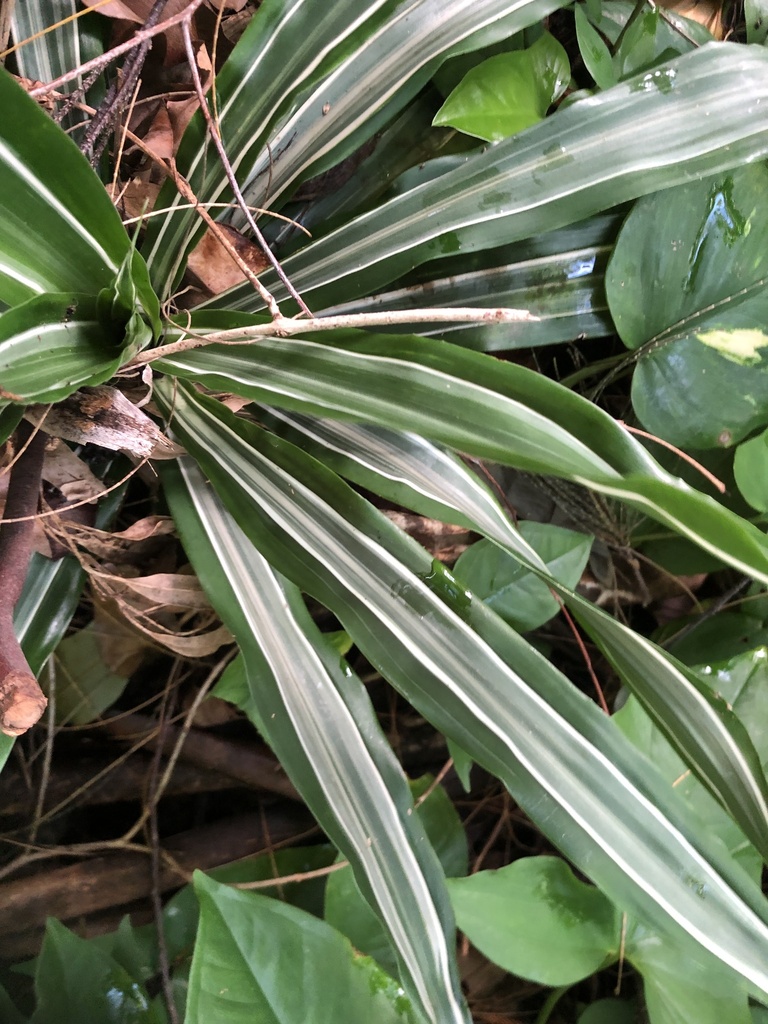
| 'Lindenii' | Reversed variegation. Yellow leaf edges, green centre | Less common than Massangeana |
| 'Compacta' (Janet Craig Compacta) | Short, dense, dark-green rosettes on a slow-growing cane | Sold for desks and dim spots |
| 'Limelight' | Uniform bright chartreuse leaves | Needs a bit more light to hold the colour |
Buying checklist#
- Cane is firm all the way to the soil line. Squeeze gently; softness means rot
- Leaf tips mostly clean (heavily browned tips signal water-quality neglect)
- Multiple crowns or canes per pot for a fuller look at the same price
- No sour smell from the soil
- Check leaf undersides for scale and mealybugs, common on stressed dracaenas
Pricing by region#
| Region | Price range | Typical unit | Basis |
|---|---|---|---|
| US | $15 – $100 | 6in pot to 5ft multi-cane | Big-box + nursery retail |
| UK | $13 – $90 | 12cm pot to 1.5m specimen | Garden centre + online retail |
| India | $2 – $25 | small pot to 4ft plant | Urban nursery + online |
| Australia | $13 – $105 | 140mm pot to 1.5m specimen | Nursery + garden centre |
| Canada | $15 – $95 | 6in pot to 5ft multi-cane | Garden centre retail |
USD figures are approximate conversions for comparison; switch the dropdown to see each region's actual local-currency listing price.
Often confused with#
Name confusion warning#
"Dracaena" covers many different plants. Shops use the name for corn plant (fragrans), dragon tree (marginata), lucky bamboo (sanderiana), and Janet Craig types alike. Care differs, so check the species. This page covers Dracaena fragrans, the corn plant.
Where it's actually grown#
Commercial corn plant canes are field-grown in Costa Rica, Honduras, and other Central American plantations, cut to length, shipped in bulk, and rooted in Florida and Dutch greenhouses. Which is why most pots contain identical staggered cane heights.
Import & biosecurity restrictions#
| Region | Note |
|---|---|
| Australia | Live plant imports restricted under biosecurity law; domestic nursery stock is plentiful. |
| US | Domestic sale unrestricted; canes largely originate from Central American farms via Florida. |
| UK | No consumer restriction; trade imports require phytosanitary certificates. |
| India | No restriction; widely grown and very cheap in local nurseries. |
| Canada | CFIA permits for commercial imports; retail supply routes through US growers. |
Similar plants
Ranked in these guides
Did you know?
Frequently asked questions
Is dracaena toxic to cats and dogs?
Yes. All dracaenas contain saponins that cause vomiting, drooling, and appetite loss in dogs and cats (cats may also get dilated pupils). It's rarely fatal, but keep it out of reach.
Why are my corn plant's leaf tips turning brown?
Most often fluoride and mineral salts from tap water, or very dry air. Switch to filtered or rain water and flush the pot occasionally; you can trim the brown tips to a point.
How often should I water a dracaena?
Every 1-2 weeks. Wait until the top half of the soil is dry. It handles drought far better than soggy soil.
Can a corn plant live in low light?
Yes, it's one of the better tall plants for dim corners. Growth slows and the yellow stripe fades, but the plant stays healthy.
Can I cut the top off my dracaena?
Yes. Cut the cane at whatever height you want. New crowns sprout from below the cut within weeks, and the removed top can be rooted as a new plant.