 Sodate
On this page
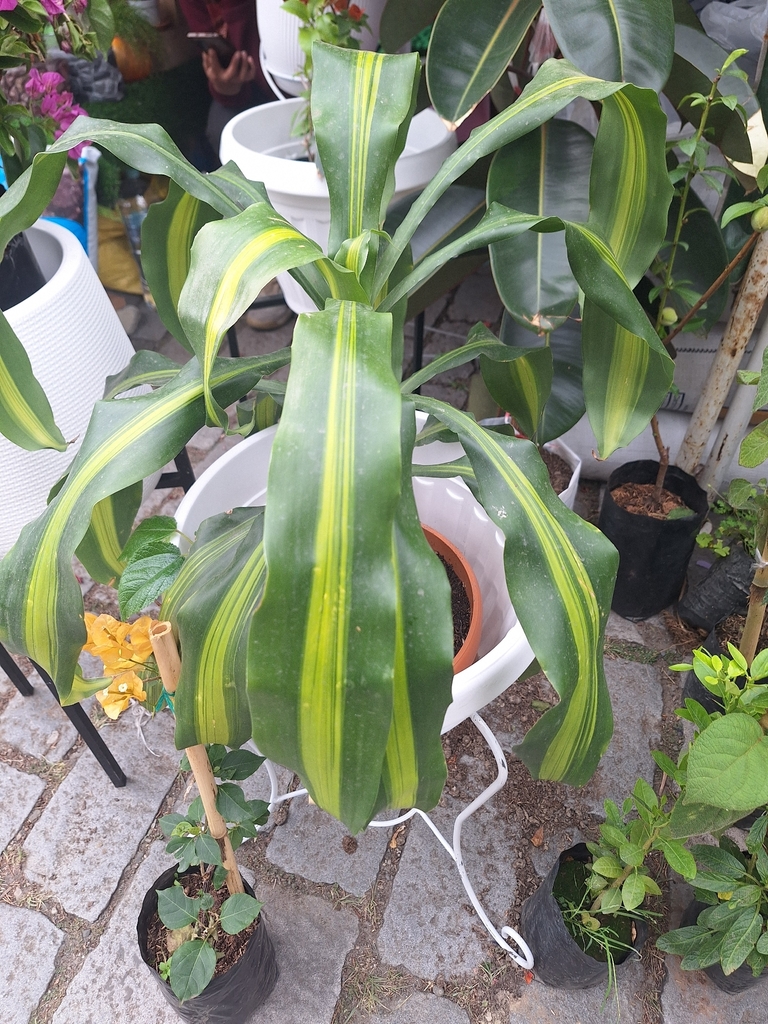
Warneckii is the white-striped dracaena cultivar. Care is the same as the base dracaena, infrequent watering, fluoride sensitivity, toxic to pets, with one delta: the white-striped leaves have less chlorophyll, so it needs brighter light than a plain green dracaena and grows noticeably slower. In deep shade the stripes fade and new leaves come in thin. Expect to pay a few dollars more than an all-green dracaena of the same size.
Key facts
- A cultivar of Dracaena deremensis (also listed as D. fragrans Deremensis Group): see the main dracaena guide for the base species.
- The white stripes are chlorophyll-free tissue: Warneckii photosynthesizes less per leaf, so it needs brighter light and grows slower than green dracaenas.
- Like all dracaenas it is sensitive to fluoride in tap water. Brown leaf tips are the classic symptom, and they show more on the white striping.
- Toxic to cats and dogs (saponins), like every dracaena.
Care requirements#
| Plant type | Indoor (outdoors year-round only in USDA 10-12) |
| Growing medium | Well-draining houseplant mix with added perlite |
| Light needs | Bright indirect light. Noticeably more than a plain green dracaena needs; stripes fade and growth thins in low light |
| Water frequency | Every 10-14 days, when the top half of the soil is dry; use filtered or rain water where tap water is fluoridated |
| Humidity | Tolerates ordinary home humidity; 40%+ keeps leaf tips cleaner |
| Temperature range | 18-27°C (65-80°F); keep above 12°C (55°F) |
| Fertilizer | Half-strength balanced feed monthly in spring-summer; overfeeding scorches the white striping first |
| Soil pH | 6.0-6.5 |
| Drainage needs | High: soggy soil rots the cane base |
| Pot recommendation | Heavy pot with drainage; the cane form gets top-heavy |
| Hardiness zone (outdoor) | USDA 10-12 |
| Toxicity | Toxic to cats and dogs (saponins); vomiting and drooling if chewed |
Growth & propagation#
| Mature size | 0.6-1.5m indoors, slowly forming a cane |
| Growth rate | Slow: slower than green dracaenas because of the reduced chlorophyll |
| Propagation methods | Cane cuttings and top cuttings rooted in water or moist mix |
| Propagation difficulty | Easy: dracaena canes root reliably |
| Repotting schedule | Every 2-3 years; it prefers being slightly root-bound |
| Pruning needs | Cut the cane to height; it re-sprouts below the cut |
Common problems & troubleshooting#
| Symptom | Likely cause | Fix |
|---|---|---|
| Brown, crispy leaf tips | Fluoride/chlorine in tap water or dry air. The classic dracaena complaint, extra visible on white stripes | Switch to filtered, distilled, or rain water and trim tips to shape |
| Stripes fading, new leaves mostly green | Insufficient light. The plant compensates by making more chlorophyll | Move to bright indirect light; new growth regains contrast |
| Yellowing lower leaves and mushy cane base | Overwatering | Let soil dry properly between waterings; repot into fresh dry mix if the base is soft |
| Bleached or scorched patches on leaves | Direct midday sun burning the low-chlorophyll white tissue | Pull back from the window; white striping burns before green tissue does |
| Fine webbing and stippled leaves | Spider mites in dry air | Shower the foliage, treat with insecticidal soap, raise humidity |
Water less, not more
Sodate spaces out watering reminders so your dracaena's soil actually dries between drinks.
Seasonal care#
Varieties & cultivars#
| Variety | Distinguishing trait | Note |
|---|---|---|
| 'Lemon Lime' | The same striping in chartreuse and green | A sport of Warneckii, see our separate guide |
| 'Janet Craig' | Solid glossy dark green, no stripes | The plain sibling; tolerates lower light than Warneckii |
| 'Ulises' | Compact Warneckii-type with tighter heads | Popular in newer nursery stock |
Buying checklist#
- Stripes should be crisp white. Grey-green, muddy striping means it was grown or held in low light
- Check leaf tips: widespread browning suggests fluoride stress already underway
- Cane should be firm at the soil line, never soft
- Verify the label: plain green 'Janet Craig' is often racked alongside and mislabeled
Pricing by region#
| Region | Price range | Typical unit | Basis |
|---|---|---|---|
| US | $15 – $40 | 6-10in pot | Big-box + nursery retail; a few dollars above green forms |
| UK | $13 – $38 | 12-21cm pot | Garden centre retail |
| India | $2 – $8 | 6-10in pot | Urban nursery + online |
| Australia | $13 – $33 | 140-200mm pot | Nursery + garden centre |
| Canada | $15 – $37 | 6-10in pot | Garden centre retail |
USD figures are approximate conversions for comparison; switch the dropdown to see each region's actual local-currency listing price.
Often confused with#
Where it's actually grown#
Warneckii is mass-produced from cane cuttings in Costa Rican, Honduran, and Florida foliage farms, shipped as bare canes and rooted in destination greenhouses. The same supply chain as all commercial dracaenas.
Import & biosecurity restrictions#
| Region | Note |
|---|---|
| Australia | Live plant imports restricted under biosecurity law; grown domestically. |
| US | No restriction; a staple of the interior landscaping trade. |
| UK | No restriction; common garden-centre stock. |
| India | No restriction; widely grown in Pune and Kolkata nursery belts. |
| Canada | CFIA permits for commercial imports; retail stock is nursery-grown. |
Similar plants
Ranked in these guides
Did you know?
Frequently asked questions
How is Warneckii different from a regular dracaena?
It's a white-striped cultivar of the same species. Care is identical except it needs brighter light, grows slower, and costs slightly more, because the white leaf tissue has no chlorophyll.
Why are my Warneckii's leaf tips brown?
Almost always fluoride or chlorine in tap water, sometimes dry air. Dracaenas are famously fluoride-sensitive, so switch to filtered or rain water.
Is Dracaena Warneckii safe for pets?
No. Like all dracaenas it contains saponins and is toxic to cats and dogs, typically causing vomiting and drooling.
Why are the white stripes fading?
Too little light. The plant produces more chlorophyll to compensate, greening the new leaves. Move it to bright indirect light.
How much does Warneckii cost?
Typically $15-$40 in the US depending on cane height, a few dollars more than an all-green dracaena of the same size.