 Sodate
On this page
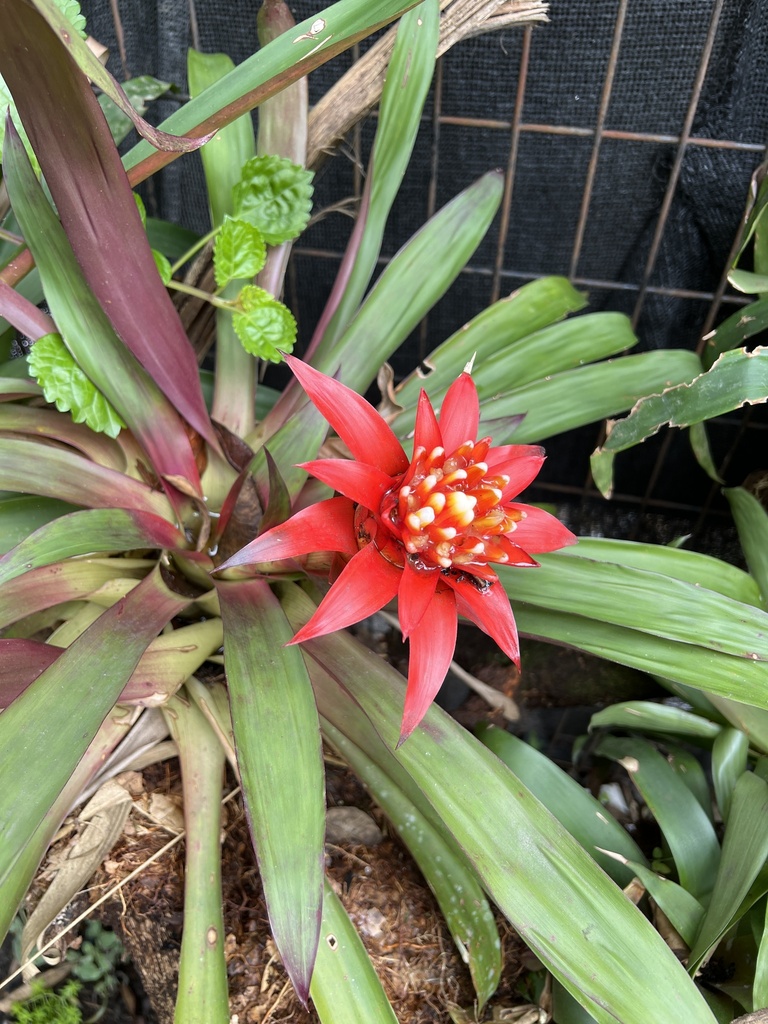
Guzmania is watered mainly through the central cup (tank) formed by its leaves. Keep it a quarter full with filtered water, flushed monthly. The colorful 'flower' is a bract that lasts 2-4 months, after which the mother plant slowly declines and produces pups that replace it. This one-bloom life cycle is normal. Pet-safe, and typically costs $12-$30.
Key facts
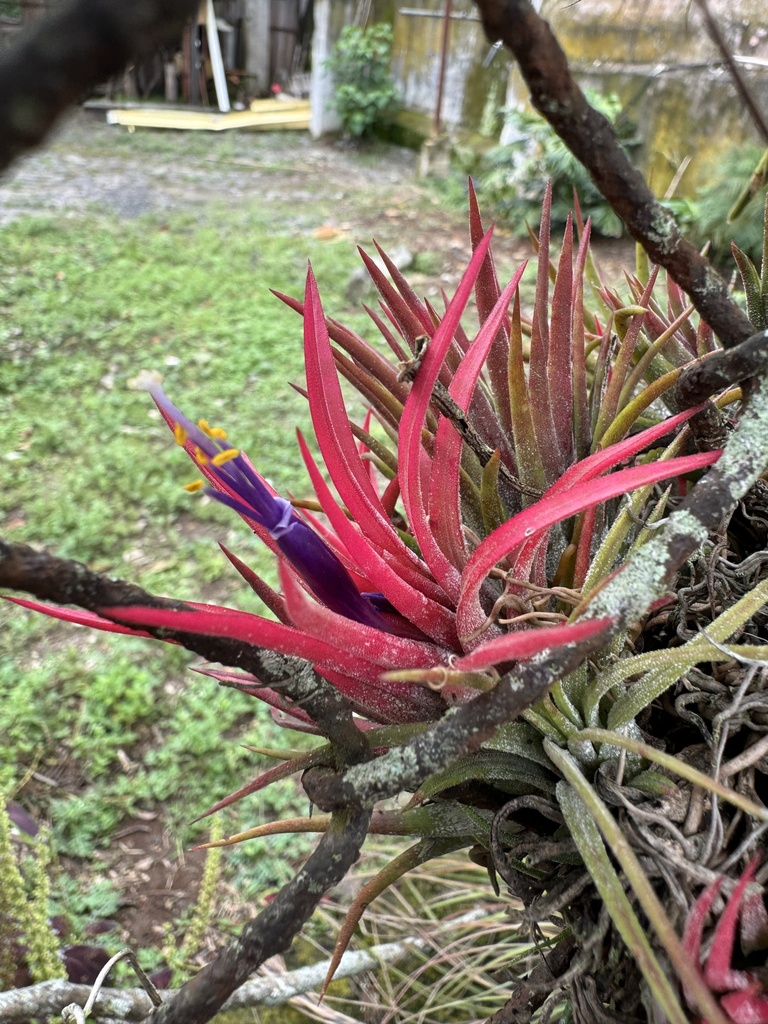
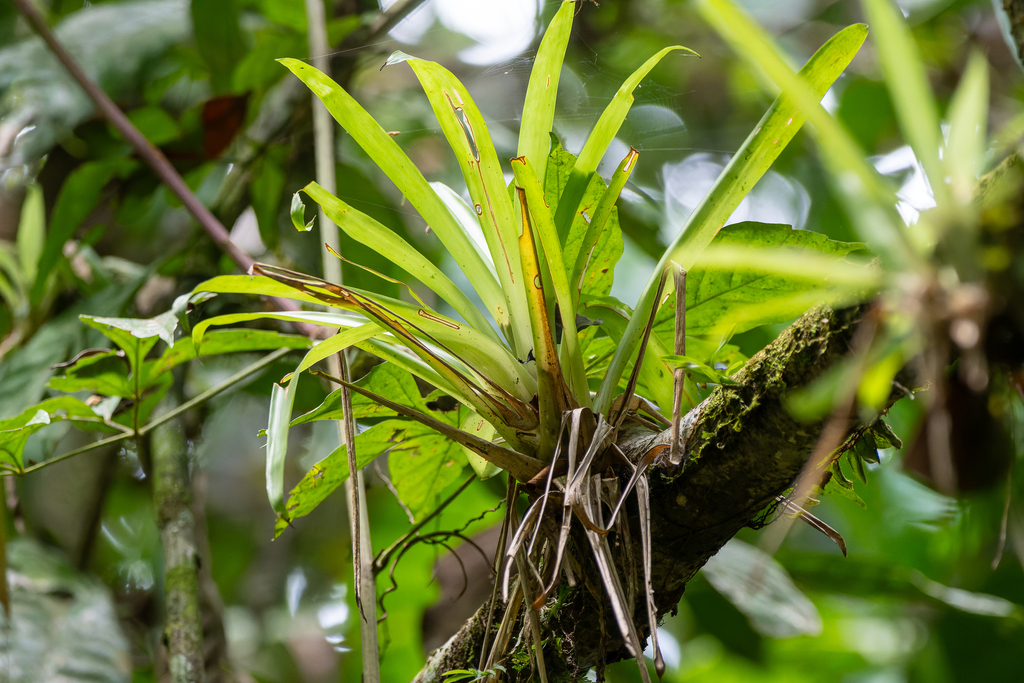
- An epiphytic tank bromeliad. In nature it grows on tree branches and collects water in the cup formed by its leaf rosette.
- The vivid red/orange/yellow 'flower' is actually a long-lasting bract; the true flowers are the small white blooms inside it.
- Each plant blooms once, then declines over months while producing pups at its base. The pups mature and repeat the cycle in 1-3 years.
- Non-toxic to cats and dogs.
Care requirements#
| Plant type | Indoor epiphytic bromeliad |
| Growing medium | Loose orchid-bark/bromeliad mix. Roots are mainly anchors, not feeders |
| Light needs | Bright, indirect light; direct sun bleaches the leaves |
| Water frequency | Keep central cup ¼ full with filtered/rain water; flush and refill monthly. Lightly moisten the mix weekly |
| Humidity | 50%+ preferred: a bright bathroom is ideal |
| Temperature range | 18-27°C (65-80°F); avoid below 13°C (55°F) |
| Fertilizer | Rarely needed; at most quarter-strength foliar/tank feed monthly in summer |
| Soil pH | 5.5-6.5 (bark medium) |
| Drainage needs | Very high. Soggy medium rots the minimal root system |
| Pot recommendation | Small pot, just enough to anchor; the plant feeds through its tank |
| Hardiness zone (outdoor) | USDA 10-12 (shade only) |
| Toxicity | Non-toxic to cats, dogs, and humans |
Growth & propagation#
| Mature size | 30-50cm tall including bract |
| Growth rate | Slow; a pup takes 1-3 years to reach blooming size |
| Propagation methods | Pups (offsets) separated from the declining mother once one-third her size |
| Propagation difficulty | Easy: pups often root themselves while still attached |
| Repotting schedule | Rarely needed; pot pups once separated |
| Pruning needs | Trim the spent bract at its base; remove the mother's dying leaves as pups take over |
Common problems & troubleshooting#
| Symptom | Likely cause | Fix |
|---|---|---|
| Mother plant declining after bloom | Natural monocarpic life cycle. Every bromeliad does this | Nothing to fix; nurture the pups forming at the base, which replace her |
| Brown, mushy base of the rosette | Rot from stagnant tank water or soggy medium | Flush the tank monthly with fresh water; keep the potting mix barely moist, never wet |
| Bleached, washed-out leaves | Too much direct sun | Move to bright indirect light |
| Brown leaf tips | Tap water minerals or low humidity | Use filtered or rain water in the tank; raise humidity |
| No bloom on a mature pup | Insufficient light or immaturity | Brighter indirect light; enclosing the plant with a ripe apple for a week (ethylene) can trigger blooming |
Track the pup handover
Sodate reminds you to flush the tank monthly and tracks pup growth so the next generation is ready when the mother fades.
Seasonal care#
Varieties & cultivars#
| Variety | Distinguishing trait | Note |
|---|---|---|
| 'Rana' / scarlet types | Classic red bract | The supermarket staple |
| 'Ostara' | Deep red, long-lasting bract | Bred for extended display |
| Yellow/orange hybrids | Bracts in warm yellows and oranges | Same care, different color |
Buying checklist#
- Bract is vividly colored with small white true flowers not yet all spent. A fresher bloom means months more display
- Central cup is clean, without foul-smelling stagnant water
- No mushiness at the base of the rosette
- Pups at the base are a bonus. The next generation already started
Pricing by region#
| Region | Price range | Typical unit | Basis |
|---|---|---|---|
| US | $12 – $30 | Blooming plant, 5-6in pot | Supermarket + garden centre retail |
| UK | $10 – $24 | 12cm pot in bloom | Garden centre retail |
| India | $4 – $10 | Blooming plant | Urban nursery + online |
| Australia | $11 – $28 | Blooming plant | Nursery + garden centre |
| Canada | $12 – $28 | Blooming plant | Garden centre retail |
USD figures are approximate conversions for comparison; switch the dropdown to see each region's actual local-currency listing price.
Often confused with#
Where it's actually grown#
Retail guzmanias are produced almost entirely in Dutch and Belgian greenhouse operations (with Florida serving North America), grown from tissue culture and gassed with ethylene to force synchronized blooming for year-round supermarket supply.
Import & biosecurity restrictions#
| Region | Note |
|---|---|
| Australia | Live plant imports restricted under biosecurity law; domestic nursery supply available. |
| US | Domestic sale unrestricted; Florida is the main North American production hub. |
| UK | No specific restriction; supplied mainly via Dutch growers, with post-Brexit phytosanitary paperwork. |
| India | No restriction; suits humid Indian conditions in bright shade. |
| Canada | CFIA permits required for commercial imports. |
Similar plants
Ranked in these guides
Did you know?
Frequently asked questions
Why is my bromeliad dying after flowering?
Every bromeliad blooms once and then declines over months. It's the natural life cycle. The pups forming at the base are her replacement; nurture them and the display continues.
How do I water a guzmania?
Mainly through the central cup. Keep it about a quarter full with filtered or rain water, and flush it out monthly to prevent stagnation. Keep the potting mix only barely moist.
Is guzmania pet-safe?
Yes, bromeliads are non-toxic to cats and dogs.
How much does a guzmania cost?
A blooming plant typically runs $12-$30 in the US.
How long until pups bloom?
Separated pups typically take 1-3 years to reach maturity and produce their own bract.