 Sodate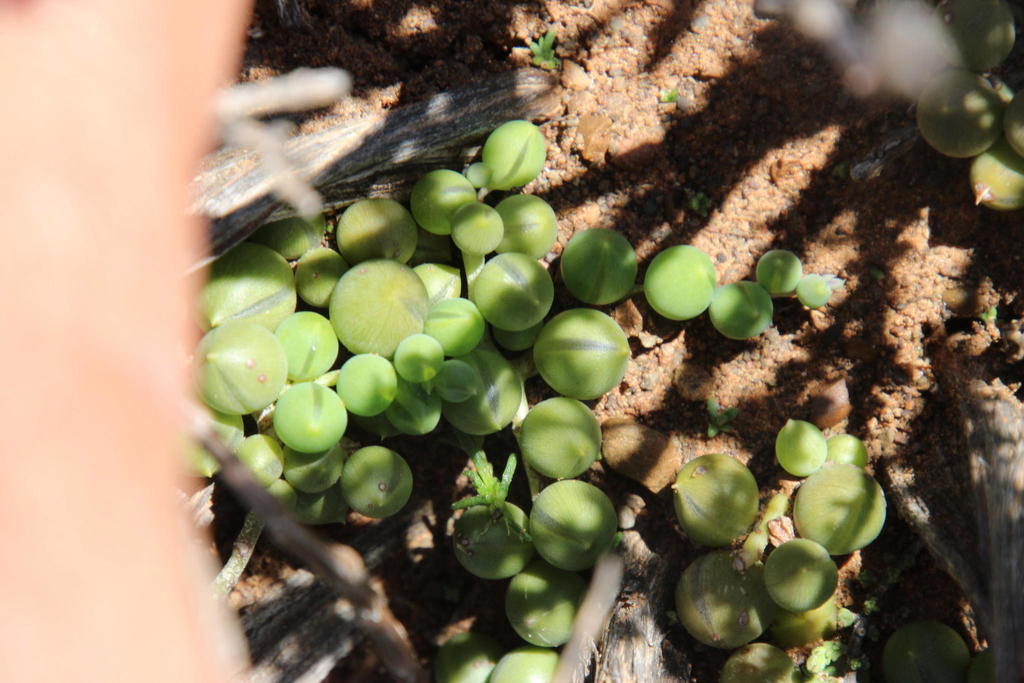
On this page
String of pearls dies from wet soil faster than any beginner succulent, so treat it like a cactus: very gritty mix, a shallow pot, bright light with some gentle direct sun, and water only when the pearls just start to lose their gloss (every 2-3 weeks). The sap is toxic to cats and dogs. A real concern for a plant designed to dangle temptingly. $8-$25.
Key facts
- Native to the arid Eastern Cape of South Africa, where it creeps along the ground under bushes, rooting as it goes.
- Each 'pearl' is a leaf rolled into a sphere. The shape that stores the most water with the least surface to lose it; a narrow translucent 'window' stripe lets light into the leaf interior.
- Toxic to cats and dogs (and irritating to people): chewing causes drooling, vomiting, and lethargy. And trailing stems are cat bait, so hang it out of reach.
- Its roots are shallow by design; deep pots hold a reservoir of wet soil the roots never touch, which is why so many die in standard planters.
Care requirements#
| Plant type | Indoor (outdoor year-round only in USDA 9-11, in bright shade) |
| Growing medium | Very gritty succulent/cactus mix, cut further with perlite or pumice |
| Light needs | Bright light with gentle direct sun (morning sun ideal); harsh midday sun scorches pearls |
| Water frequency | Every 2-3 weeks; water when soil is fully dry and pearls just begin to dull or soften |
| Humidity | Low; dry air preferred |
| Temperature range | 18-27°C (65-80°F); keep above 10°C (50°F); cool dry winters encourage flowering |
| Fertilizer | Diluted succulent feed once or twice in spring-summer, it needs very little |
| Soil pH | 6.0-7.0 |
| Drainage needs | Extreme: the defining care factor for this species |
| Pot recommendation | Shallow terracotta or hanging pot with drainage; avoid deep planters entirely |
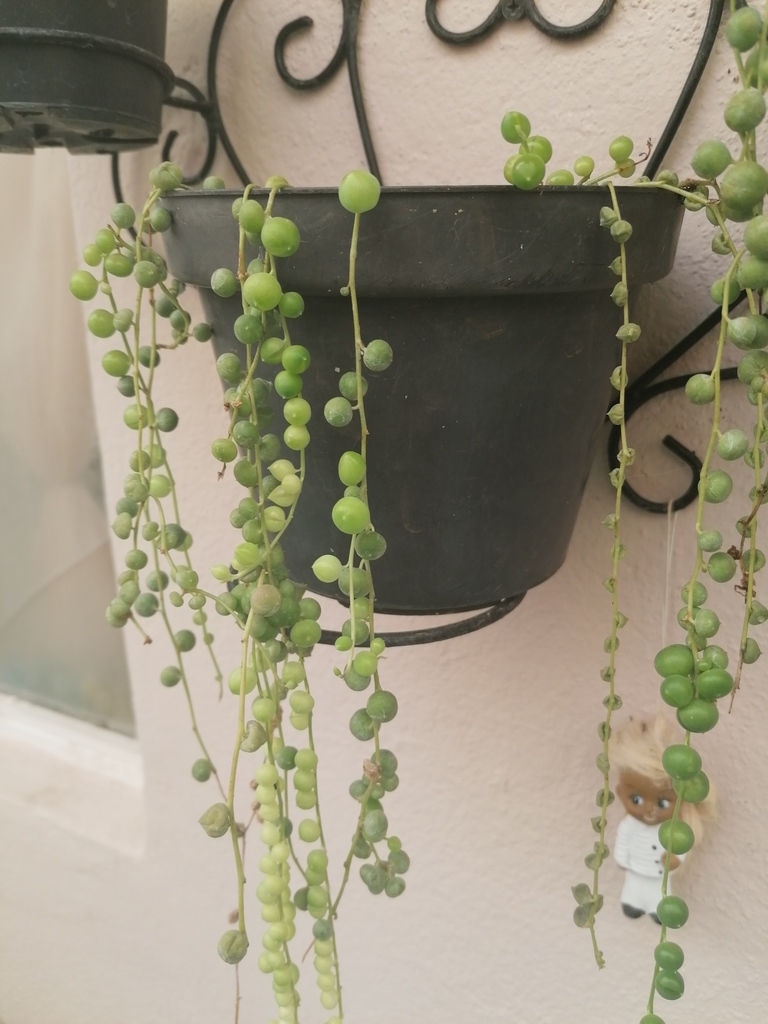
| Placement | Hang or shelf it high. Out of pet reach and where strands can trail |
| Toxicity | Toxic to cats and dogs; sap can irritate human skin |
Growth & propagation#
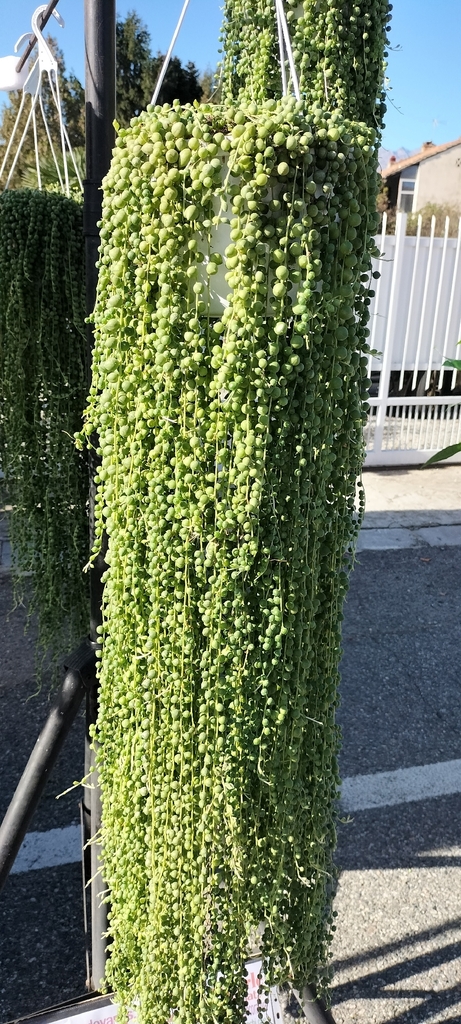
| Mature size | 5cm tall mat with stems trailing 60-90cm |
| Growth rate | Fast in season for a succulent. Stems can add 30cm+ a year in good light |
| Propagation methods | Stem cuttings laid on top of soil root at every node; water propagation works but rot risk is higher |
| Propagation difficulty | Easy: coil a cutting on the soil surface and pin it down |
| Repotting schedule | Every 2-3 years at most; it prefers snug, shallow quarters |
| Pruning needs | Trim leggy or balding strands; recycle every trimming back into the pot for a fuller top |
Common problems & troubleshooting#
| Symptom | Likely cause | Fix |
|---|---|---|
| Pearls turning translucent, mushy, then bursting | Overwatering. Cells rupturing from excess water | Stop watering immediately, cut healthy strands for backup propagation, repot into dry gritty mix in a shallower pot |
| Pearls shrivelling and puckering like raisins | Underwatering. Or root rot mimicking drought (roots dead, water untaken) | Check the soil first: if dry, water deeply; if damp, treat as rot and re-propagate |
| Long bare gaps between pearls, thin weak strands | Not enough light | Move to a brighter spot with some morning sun; trim leggy strands and re-root the tips |
| Flat, matte, scarred pearls after a heatwave | Sunburn through hot glass | Pull back from the pane or filter midday sun; damaged pearls don't heal, new growth will |
| Strands drying out from the pot outward, top going bald | The crown (top of pot) getting too dry or too old while tips stay hydrated | Coil a few healthy strands back on top of the soil and pin them so they re-root and refill the crown |
The most overwatered plant we track
Sodate holds the reminder until your pearls' soil is truly bone dry. The single habit that keeps this plant alive.
Seasonal care#
Varieties & cultivars#
| Variety | Distinguishing trait | Note |
|---|---|---|
| 'Variegata' | Pearls marbled cream and green | Slower and pricier; needs more light |
| String of tears (Curio citriformis) | Teardrop-shaped leaves | A related species, often sold alongside |
| String of bananas (Curio radicans) | Banana-shaped leaves, faster and more forgiving | The recommended starter alternative |
Buying checklist#
- Pearls plump, glossy, and evenly green. No translucent (overwatered) or puckered (dying roots) beads
- Dense coverage at the top of the pot, not a bald crown with long strands
- Soil dry or barely moist at purchase
- Shallow nursery pot is a good sign the grower knew the species
- Check strands near the soil for mealybugs
Pricing by region#
| Region | Price range | Typical unit | Basis |
|---|---|---|---|
| US | $8 – $25 | 4in pot to 6-8in hanging basket | Succulent nursery + online retail |
| UK | $7 – $22 | 9cm pot to hanging basket | Garden centre + online retail |
| India | $2 – $8 | small pot to basket | Online succulent sellers + urban nurseries |
| Australia | $8 – $26 | 100mm pot to hanging basket | Nursery + garden centre |
| Canada | $8 – $25 | 4in pot to hanging basket | Garden centre retail |
USD figures are approximate conversions for comparison; switch the dropdown to see each region's actual local-currency listing price.
Often confused with#
Name confusion warning#
Sold under two botanical names. Labels still say Senecio rowleyanus; botanists reclassified it as Curio rowleyanus in 1997. Same plant. The bigger trap is the "string of" shelf itself. Pearls, bananas, tears (toxic) sit next to hearts and turtles (pet-safe), so identify by species, not vibe.
Where it's actually grown#
Commercial string of pearls is grown from cuttings in succulent nurseries in California, the Netherlands, South Korea, and China; because strands ship badly, much retail stock arrives as young plugs and is finished locally. The fullest baskets are usually the ones a local grower kept longest.
Import & biosecurity restrictions#
| Region | Note |
|---|---|
| Australia | Live plant imports restricted under biosecurity law; buy domestic nursery stock. |
| US | Domestic sale unrestricted. |
| UK | No consumer restriction; trade imports need phytosanitary certificates. |
| India | No restriction; sold mainly through online succulent specialists. Inspect for transit rot on arrival. |
| Canada | CFIA permits for commercial imports; avoid mail-order in freezing months. |
Similar plants
Did you know?
Frequently asked questions
Is string of pearls toxic to cats and dogs?
Yes. Chewing causes drooling, vomiting, and lethargy in pets, and the sap can irritate skin. Since the dangling strands attract cats, hang it well out of reach.
How often should I water string of pearls?
Every 2-3 weeks at most: wait until the soil is completely dry and the pearls just start to lose their gloss. Overwatering is the number one killer of this plant.
Why are my pearls shrivelling?
Check the soil. Dry soil means it's thirsty, water deeply. Damp soil means the roots have rotted and can't drink; take healthy cuttings and restart in fresh dry mix.
Why is my string of pearls going bald on top?
The crown gets old, sun-starved, or too dry while the tips thrive. Coil healthy strands back over the soil surface and pin them down. They root at each node and refill the pot.
Does string of pearls flower?
Yes. Small white brush-like flowers that smell of cinnamon, usually after a cool, dry, bright winter rest.