 Sodate
On this page
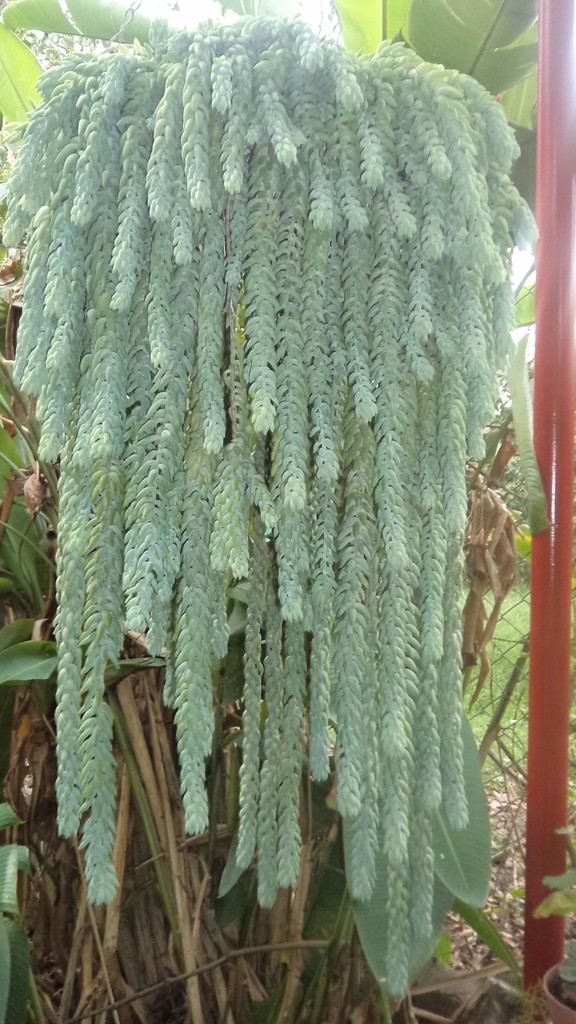
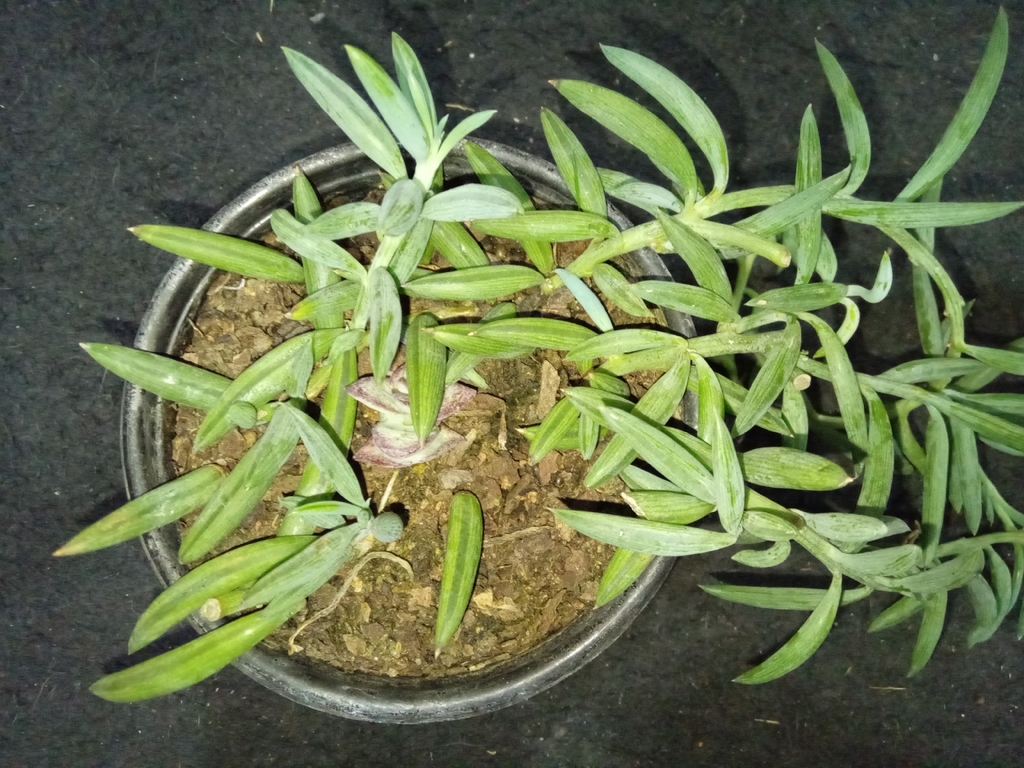
String of bananas is the trailing succulent to buy if string of pearls keeps dying on you: faster growing, more drought- and error-tolerant, and just as pretty in a bright window. One important caveat: like string of pearls, it is toxic to cats and dogs, so hang it out of reach. Water when fully dry; typically $10-$25.
Key facts
- Noticeably easier than string of pearls: the banana-shaped leaves store more water and the stems root as they grow, so it recovers from mistakes pearls won't survive.
- Toxic to cats and dogs. Both Curio species (bananas AND pearls) contain irritant sap that causes vomiting and drooling; neither is the 'safe one'.
- Fast for a succulent: stems can add 30cm+ in a season and trail past a meter in a bright spot.
- Reclassified from Senecio to Curio, so labels show both names; it's the same plant.
Care requirements#
| Plant type | Indoor (outdoors year-round in USDA 10-11) |
| Growing medium | Gritty, fast-draining cactus/succulent mix |
| Light needs | Bright light with a few hours of gentle direct sun; tolerates bright indirect light better than string of pearls |
| Water frequency | When soil is completely dry. Every 1-2 weeks in summer, every 3-4 weeks in winter |
| Humidity | Low; ordinary dry room air is ideal |
| Temperature range | 18-27°C (65-80°F); protect below 5°C (40°F) |
| Fertilizer | Diluted succulent feed monthly in spring-summer |
| Soil pH | 6.0-7.0 |
| Drainage needs | Very high. The main way to kill it is a soggy pot |
| Pot recommendation | Hanging basket or shelf pot with drainage, hung out of pets' reach |
| Hardiness zone (outdoor) | USDA 10-11 |
| Toxicity | Toxic to cats and dogs (irritant sap causing vomiting, drooling); can irritate human skin |
Growth & propagation#
| Mature size | Stems trail 60-100cm+ indoors |
| Growth rate | Fast for a succulent. Visibly longer within a single season |
| Propagation methods | Stem cuttings laid on or stuck into dry mix; stems also self-root where they touch soil |
| Propagation difficulty | Very easy. Among the easiest trailing succulents to multiply |
| Repotting schedule | Every 2 years or when the pot is packed; shallow pots suit its surface roots |
| Pruning needs | Trim to length any time; cuttings replanted on top thicken the pot |
Common problems & troubleshooting#
| Symptom | Likely cause | Fix |
|---|---|---|
| Mushy, translucent 'bananas' and rotting stems | Overwatering or slow-draining soil | Take healthy cuttings, let them callus, and restart in gritty mix; water only when bone dry |
| Flat, wrinkled, deflating leaves | Underwatering beyond its reserves | Water deeply; leaves replump within days |
| Long bare gaps between leaves | Insufficient light (etiolation) | Move to a brighter window; loop leggy stems back over the soil to root and refill the top |
| Stems dying back from the soil while tips look fine | Rot at the crown from water sitting in the dense top growth | Water the soil, not the foliage, and improve airflow; restart from tip cuttings if the crown is lost |
| Sticky patches and tiny insects on new growth | Aphids, which favor the tender tips and flower stalks | Rinse off and treat with insecticidal soap |
Easy: but not un-killable
Sodate keeps string of bananas on the dry-out-then-drench cycle it wants, so the only fast thing about it is the growth.
Seasonal care#
Varieties & cultivars#
| Variety | Distinguishing trait | Note |
|---|---|---|
| Curio radicans 'Glauca' (string of fishhooks) | Longer, curved, blue-grey leaves like fishhooks | Even more drought-tolerant; often sold as a separate plant |
Buying checklist#
- Plump, glossy leaves with no translucent or blackened sections
- Multiple stems rooted across the pot surface, not one sparse strand
- Soil dry or barely moist at purchase
- Check the hanging spot at home is out of reach of cats and dogs, this one is toxic
Pricing by region#
| Region | Price range | Typical unit | Basis |
|---|---|---|---|
| US | $10 – $25 | 4-6in pot/basket | Succulent nursery + big-box retail |
| UK | $8 – $25 | 9-14cm pot | Garden centre + online retail |
| India | $2 – $7 | 4-6in pot | Succulent nursery + online |
| Australia | $8 – $27 | 100-140mm pot | Nursery + garden centre |
| Canada | $10 – $27 | 4-6in pot | Garden centre retail |
USD figures are approximate conversions for comparison; switch the dropdown to see each region's actual local-currency listing price.
Often confused with#
Name confusion warning#
Senecio or Curio? Labels show both Senecio radicans (the old name) and Curio radicans (the current one). It is the same plant. And don't assume the "string of" plants differ on safety: bananas, pearls, and fishhooks are all toxic to cats and dogs.
Where it's actually grown#
Mass-propagated from cuttings in succulent nurseries in California, the Netherlands, South Korea, and China; because a single hanging basket yields dozens of cuttings, supply is abundant and cheap year-round.
Import & biosecurity restrictions#
| Region | Note |
|---|---|
| Australia | Live plant imports restricted under biosecurity law; widely available domestically. |
| US | Domestic sale unrestricted. |
| UK | No specific restriction; sold as a houseplant. |
| India | No restriction; common in online succulent shops. |
| Canada | CFIA permits required for commercial imports; grown as a houseplant. |
Similar plants
Ranked in these guides
Did you know?
Frequently asked questions
Is string of bananas toxic to cats and dogs?
Yes. Like string of pearls, it contains irritant sap that causes vomiting and drooling in pets, so hang it well out of reach.
Is string of bananas easier than string of pearls?
Yes, noticeably: its leaves store more water, it tolerates watering mistakes better, and it grows much faster. But the two are equally toxic to pets.
How often should I water string of bananas?
Only when the soil is completely dry. Every 1-2 weeks in summer and every 3-4 weeks in winter.
Why is my string of bananas sparse near the top?
Usually low light; move it brighter and loop stems back over the soil surface, where they will root and refill the crown.
How do I propagate string of bananas?
Snip 10cm stem sections, let them dry a day, and lay or stick them into barely-moist succulent mix; they root within a couple of weeks.