 Sodate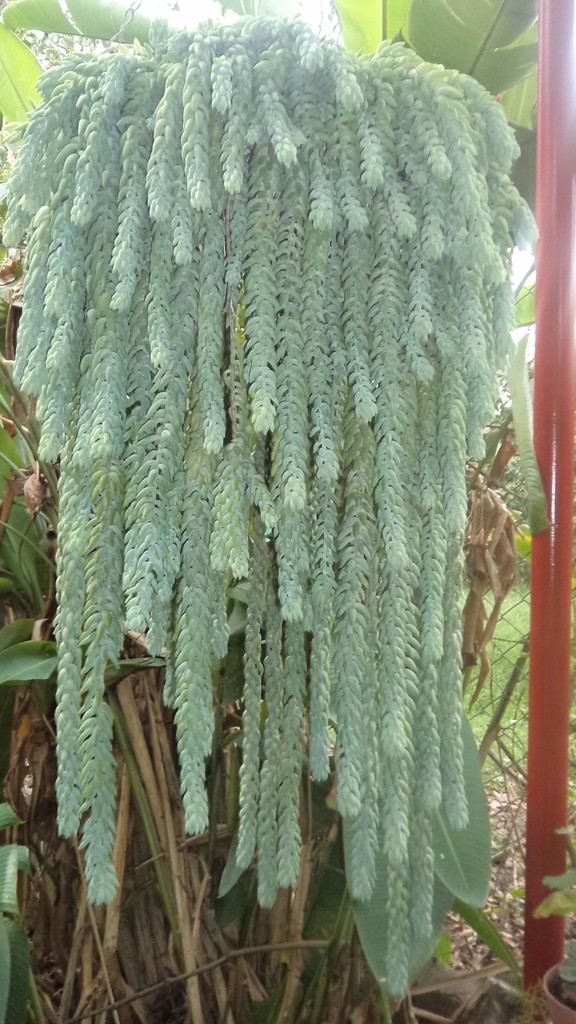
On this page
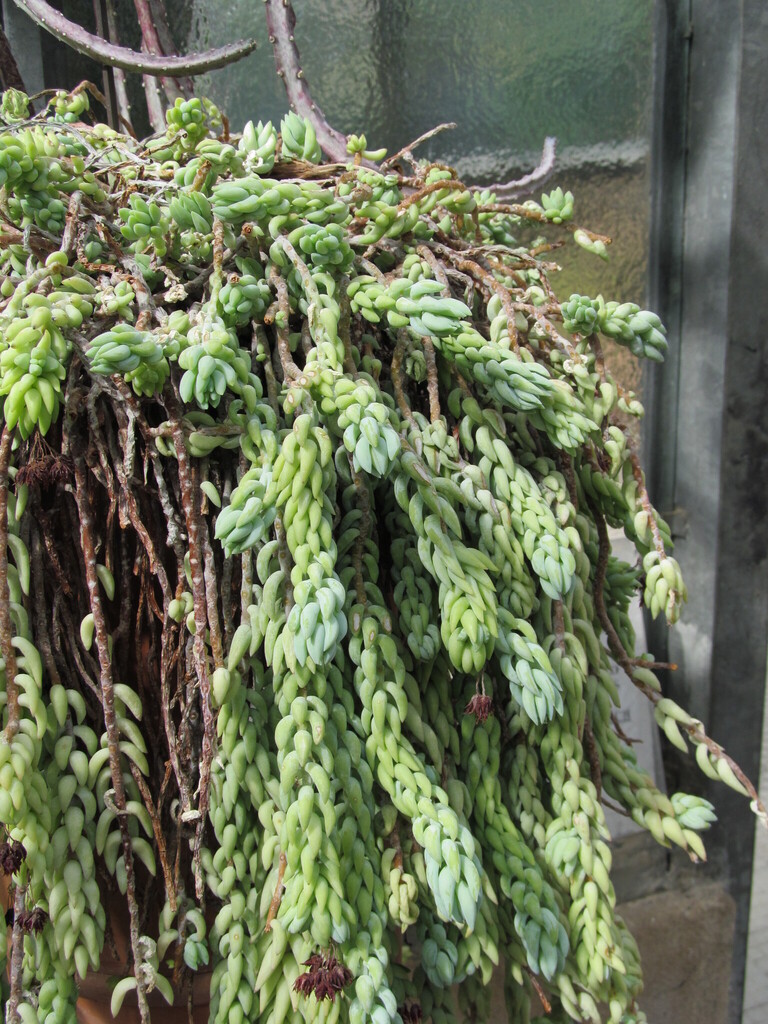
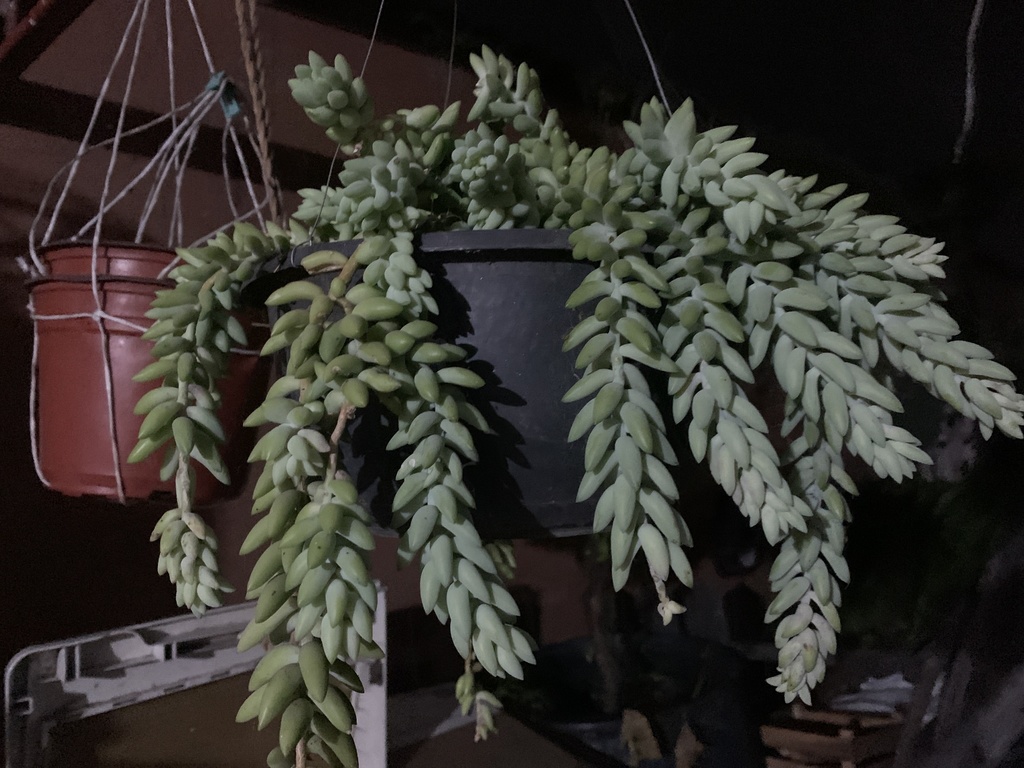
Burro's tail is an easy, pet-safe trailing succulent with one defining quirk: its plump leaves detach at the slightest touch, so hang it somewhere it will never be brushed, bumped, or rearranged. Give it bright light with some direct sun, water only when the soil is fully dry, and every dropped leaf can be rooted into a new plant. Typically $10-$35.
Key facts
- The leaves drop at the slightest touch. This is the single most important thing to know before buying; a careless brush can strip a whole section of stem bare.
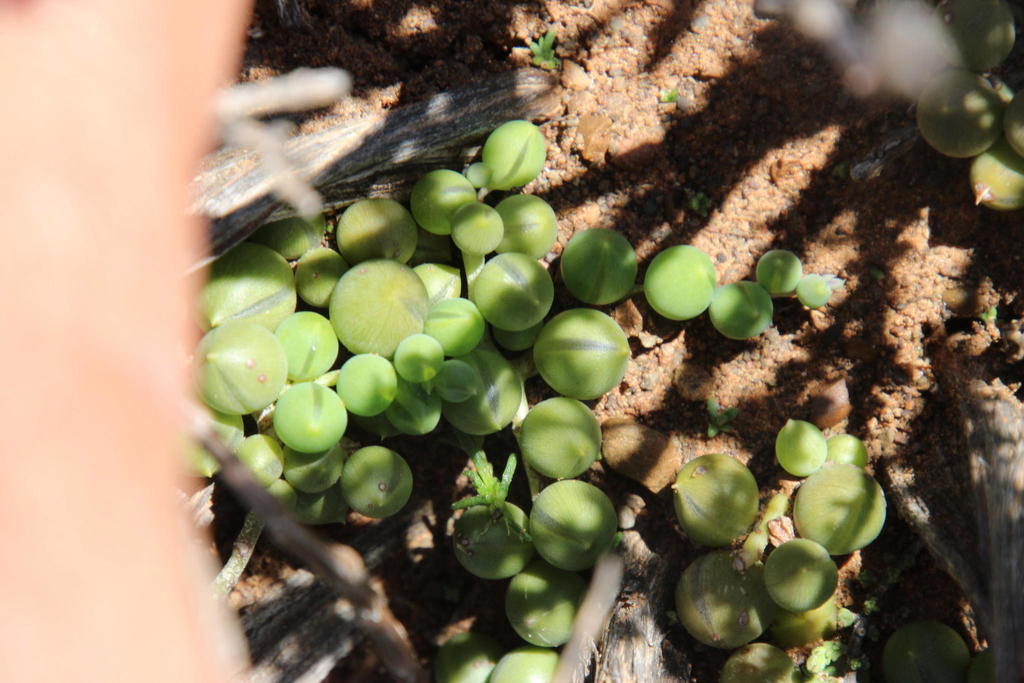
- Every fallen leaf is a propagule: laid on dry soil, most will root and sprout a new plantlet, which is how the species mainly spreads.
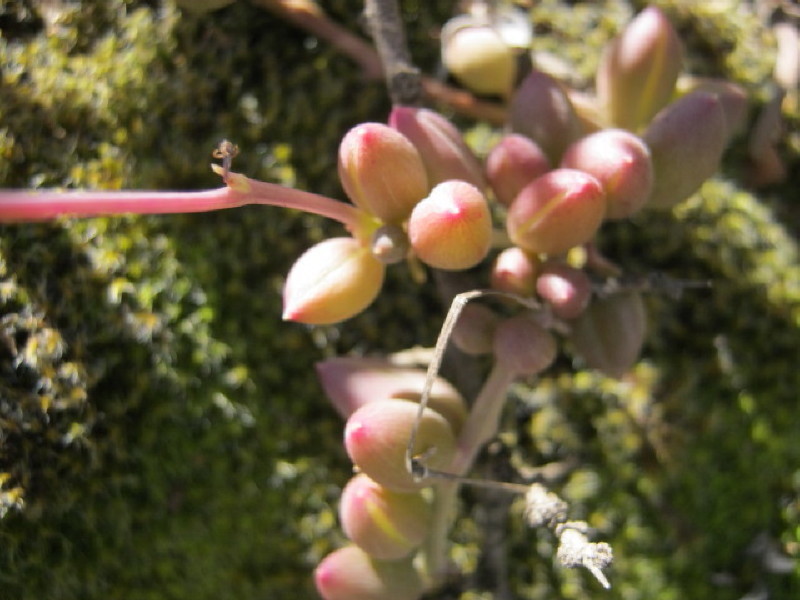
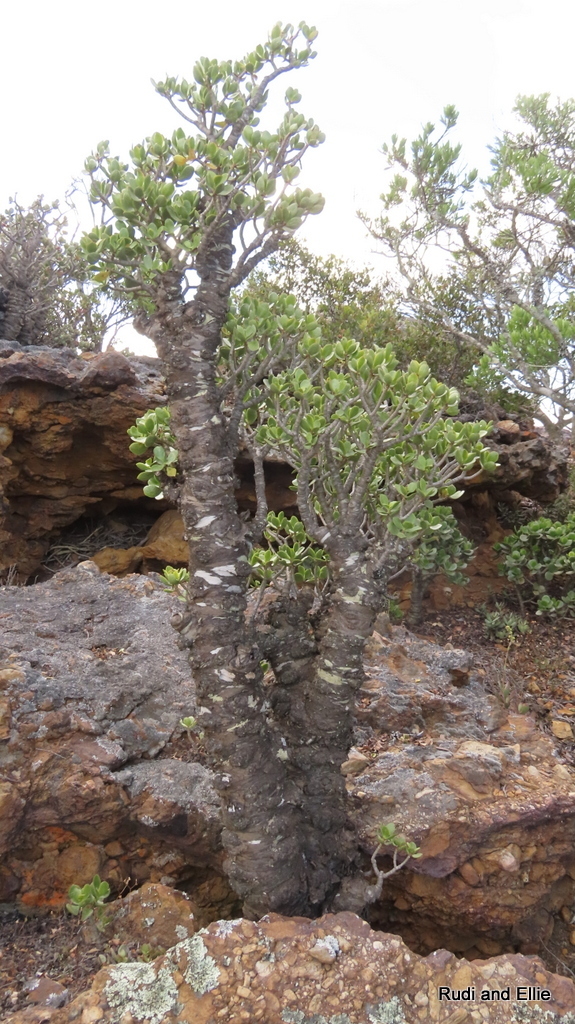
- Native to southern Mexico, where it hangs from rocky cliffs; wild populations are rare even though the plant is grown worldwide.
- Non-toxic to cats and dogs.
Care requirements#
| Plant type | Indoor (outdoors year-round in USDA 10-11) |
| Growing medium | Gritty, fast-draining cactus/succulent mix |
| Light needs | Bright light with a few hours of gentle direct sun; morning sun is ideal, harsh midday sun can scorch |
| Water frequency | Every 2-3 weeks in the growing season, only when soil is completely dry; monthly or less in winter |
| Humidity | Low; dry air suits it |
| Temperature range | 18-27°C (65-80°F); tolerates brief dips to around 5°C (40°F) if dry |
| Fertilizer | Diluted succulent feed 2-3 times in spring-summer |
| Soil pH | 6.0-7.0 |
| Drainage needs | Very high. Soggy soil rots the stems |
| Pot recommendation | Hanging basket or tall shelf pot in a spot nothing ever brushes against |
| Hardiness zone (outdoor) | USDA 10-11 |
| Toxicity | Non-toxic to cats, dogs, and humans |
Growth & propagation#
| Mature size | Stems trail 30-60cm indoors; up to 1m+ on old plants |
| Growth rate | Slow: long, full 'tails' represent years of undisturbed growth |
| Propagation methods | Individual leaves laid on dry mix, or stem cuttings callused then planted |
| Propagation difficulty | Very easy. Dropped leaves root almost on their own |
| Repotting schedule | Rarely; every 3+ years, and only when necessary, since repotting inevitably sheds leaves |
| Pruning needs | None required; trim stems only to shape or propagate |
Common problems & troubleshooting#
| Symptom | Likely cause | Fix |
|---|---|---|
| Leaves raining off when handled | Normal. The abscission zone on each leaf is hair-trigger by design | Accept it: pick a permanent spot, stop handling the plant, and root the fallen leaves |
| Mushy, translucent leaves and blackening stems | Overwatering or poorly draining soil | Cut back healthy stem sections, let them callus and replant; water only when fully dry |
| Wrinkled, deflated leaves | Underwatering past its considerable drought tolerance | Water deeply; leaves replump within a week |
| Long gaps between leaves, pale growth | Not enough light (etiolation) | Move to a brighter window with some direct sun; new growth will be dense again |
| White cottony tufts between leaves | Mealybugs hiding in the dense leaf ranks | Dab with alcohol swabs and repeat weekly; heavy infestations may justify restarting from clean cuttings |
Water rarely, touch never
Sodate spaces burro's tail waterings weeks apart so you're never tempted to fuss with, and shed, those fragile stems.
Seasonal care#
Varieties & cultivars#
| Variety | Distinguishing trait | Note |
|---|---|---|
| Sedum morganianum 'Burrito' | Shorter, rounder, more tightly packed leaves | Slightly less prone to shedding; often sold as 'baby burro's tail' |
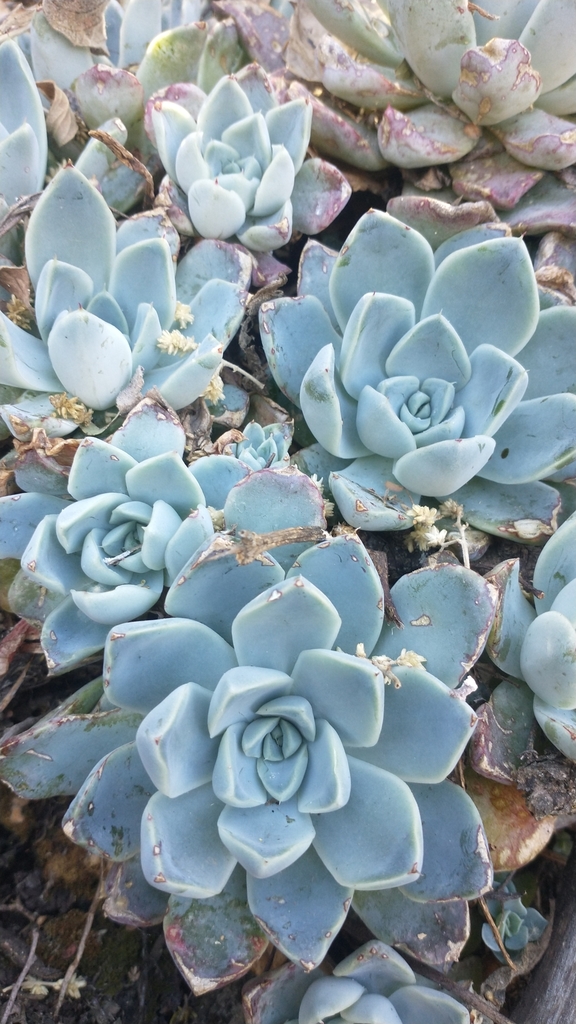
| Sedeveria 'Harry Butterfield' (super burro's tail) | Larger, flatter leaves on a hybrid with Echeveria | Faster growing and a little sturdier |
Buying checklist#
- Dense, unbroken leaf coverage along the stems. Bare patches never refill on that section
- Firm, plump leaves with a powdery blue-green bloom
- No mushiness where stems meet the soil
- Plan the trip home: loose in a car seat, a burro's tail will shed a carpet of leaves
Pricing by region#
| Region | Price range | Typical unit | Basis |
|---|---|---|---|
| US | $10 – $35 | 4-8in pot/basket | Succulent nursery + big-box retail |
| UK | $8 – $30 | 9-15cm pot | Garden centre + online retail |
| India | $2 – $8 | 4-6in pot | Succulent nursery + online |
| Australia | $8 – $33 | 100-140mm pot | Nursery + garden centre |
| Canada | $10 – $37 | 4-8in pot | Garden centre retail |
USD figures are approximate conversions for comparison; switch the dropdown to see each region's actual local-currency listing price.
Often confused with#
Name confusion warning#
Burro's tail vs. donkey's tail vs. 'Burrito'. All three names circulate for Sedum morganianum and its compact form; shops use them interchangeably. Care is the same, so the mix-up is harmless. But if you specifically want the tighter-leaved 'Burrito' form, check the leaf shape, not the label.
Where it's actually grown#
Commercially propagated by the millions from leaves and cuttings in succulent nurseries in California, Mexico, the Netherlands, and South Korea; ironically, truly wild Sedum morganianum is known from only a handful of ravine sites in Veracruz, Mexico.
Import & biosecurity restrictions#
| Region | Note |
|---|---|
| Australia | Live plant imports restricted under biosecurity law; common in domestic succulent nurseries. |
| US | Domestic sale unrestricted. |
| UK | No specific restriction; sold as a houseplant. |
| India | No restriction; increasingly common in online succulent shops. |
| Canada | CFIA permits required for commercial imports; grown as a houseplant. |
Similar plants
Ranked in these guides
Did you know?
Frequently asked questions
Why do burro's tail leaves fall off so easily?
The leaves are attached with a hair-trigger abscission zone; shedding on contact is how the plant propagates itself, so place it where nothing brushes it.
Is burro's tail safe for cats and dogs?
Yes, Sedum morganianum is non-toxic to cats and dogs.
Can I grow new plants from the dropped leaves?
Yes. Lay them on dry succulent mix and most will root and sprout plantlets within weeks.
How often should I water burro's tail?
Only when the soil is completely dry, roughly every 2-3 weeks in the growing season and monthly in winter.
How long do the stems get?
Indoors, typically 30-60cm; old, undisturbed plants can trail past a meter, but each tail takes years.