 Sodate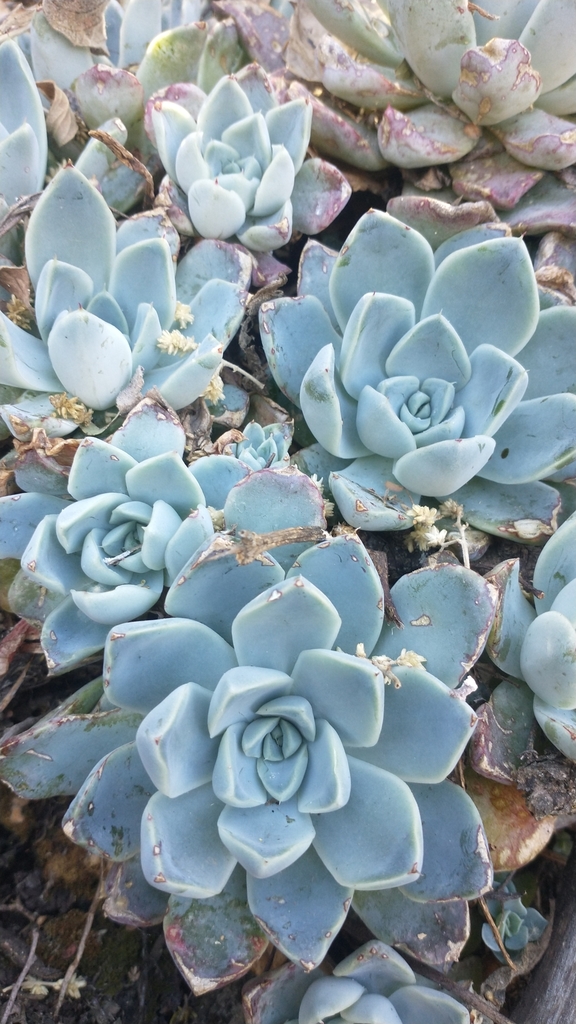
On this page
Echeveria needs more direct sun than almost any other common houseplant. A south-facing windowsill at minimum, or it stretches and loses its tight rosette shape. Water only when soil is fully dry, never let water sit in the rosette, and use gritty succulent mix. Non-toxic to pets and typically costs $5-$15.
Key facts
- Native to semi-desert highlands of Mexico, growing in full sun on rocky slopes.
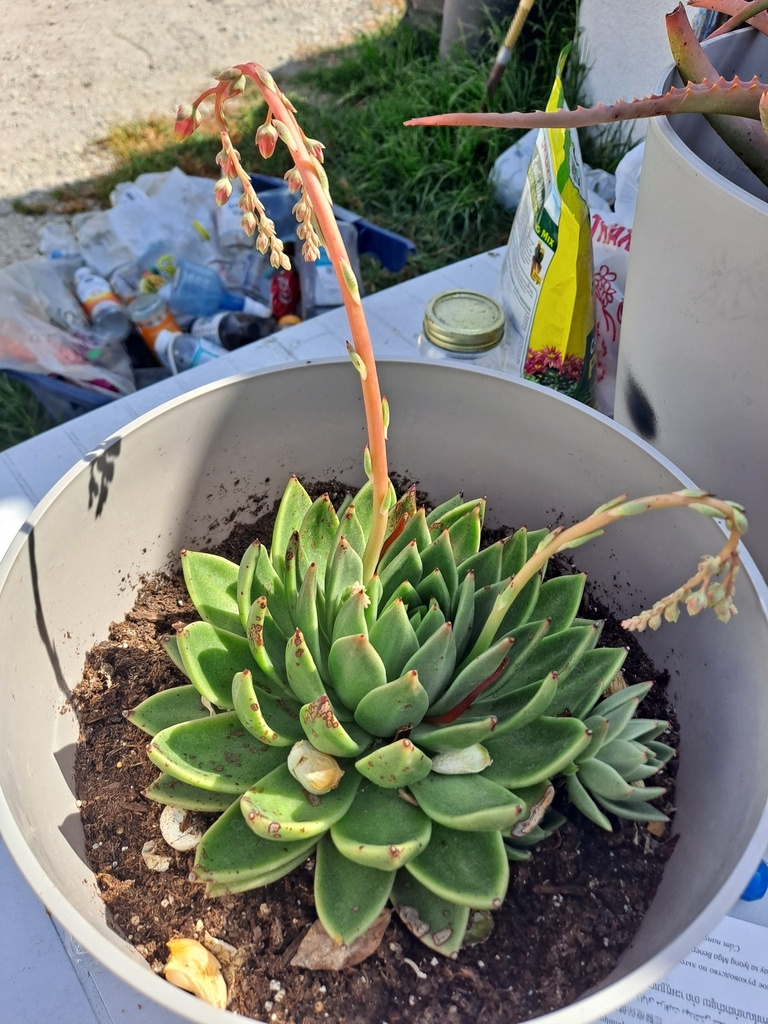
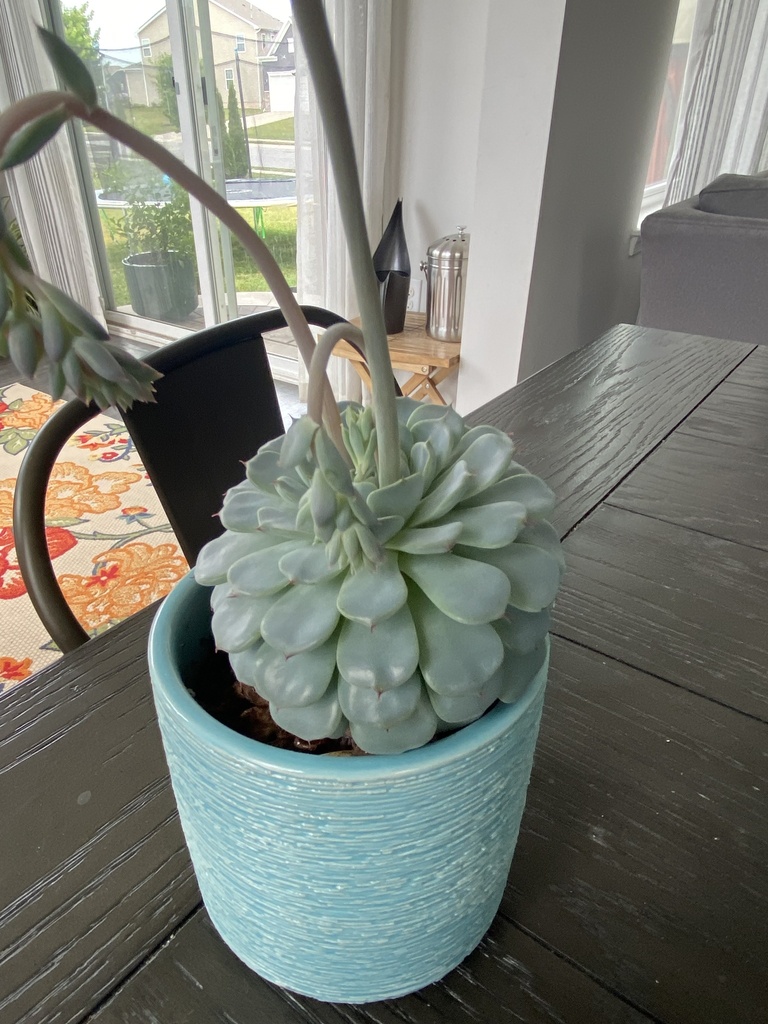
- The most common failure indoors is etiolation. Stretching into a leggy, open shape from insufficient light, which is irreversible on existing growth.
- Water pooling in the rosette's center causes crown rot; always water at the soil, not over the top.
- Non-toxic to cats and dogs.
Care requirements#
| Plant type | Indoor on a very bright sill, or outdoors in mild climates |
| Growing medium | Gritty, fast-draining cactus/succulent mix |
| Light needs | Bright direct light. 4-6+ hours of sun; the most light-hungry common succulent |
| Water frequency | Every 2-3 weeks; only when soil is completely dry |
| Humidity | Low humidity preferred |
| Temperature range | 18-27°C (65-80°F); many species tolerate brief near-freezing dips when dry |
| Fertilizer | Diluted succulent feed 2-3 times during spring-summer only |
| Soil pH | 6.0-7.0 |
| Drainage needs | Very high. Never let it sit in wet soil |
| Pot recommendation | Shallow terracotta pot with drainage hole |
| Hardiness zone (outdoor) | USDA 9-11 |
| Toxicity | Non-toxic to cats, dogs, and humans |
Growth & propagation#
| Mature size | 5-20cm rosette diameter depending on species |
| Growth rate | Slow |
| Propagation methods | Leaf cuttings, offsets (chicks), or beheading stretched plants |
| Propagation difficulty | Easy and famously satisfying. Single leaves produce whole new rosettes |
| Repotting schedule | Every 2 years, or when offsets crowd the pot |
| Pruning needs | Remove dried lower leaves to prevent pest harborage |
Common problems & troubleshooting#
| Symptom | Likely cause | Fix |
|---|---|---|
| Stretched, open rosette with wide leaf gaps | Insufficient light (etiolation). The classic indoor failure | Move to direct sun; existing stretch is permanent, but you can behead and re-root the compact top |
| Mushy, translucent leaves | Overwatering | Stop watering, remove affected leaves, let soil dry fully; repot in grittier mix |
| Rot in the rosette center | Water sitting in the crown | Always water at soil level; if rot is limited, remove affected leaves and keep the crown dry |
| Wrinkled, deflated leaves | Underwatering | Water deeply; leaves rehydrate within days |
Is your windowsill actually bright enough?
Sodate measures the real light where this plant sits and tells you if it's enough to keep the rosette compact, before it stretches.
Seasonal care#
Varieties & cultivars#
| Variety | Distinguishing trait | Note |
|---|---|---|
| 'Perle von Nürnberg' | Purple-grey pearlescent rosette | Most popular colored hybrid |
| 'Lola' | Pale lavender-grey, tight symmetrical form | Popular for arrangements |
| 'Black Prince' | Deep purple-black leaves | Striking dark form |
| Echeveria elegans (standard) | Pale blue-green rosette | The classic hens-and-chicks type |
Buying checklist#
- Rosette is tight and compact. A stretched plant has been kept in low light
- Leaves are firm with intact powdery coating (farina) if the type has one
- No mushy leaves at the base or center
- Soil is dry at purchase, never waterlogged
Pricing by region#
| Region | Price range | Typical unit | Basis |
|---|---|---|---|
| US | $5 – $15 | 2-4in pot | Big-box + succulent nursery retail |
| UK | $4 – $12 | 5-9cm pot | Garden centre retail |
| India | $1 – $4 | 3in pot | Urban nursery + online |
| Australia | $5 – $13 | 70-100mm pot | Nursery + garden centre |
| Canada | $5 – $14 | 2-4in pot | Garden centre retail |
USD figures are approximate conversions for comparison; switch the dropdown to see each region's actual local-currency listing price.
Often confused with#
Name confusion warning#
"Hens and chicks" refers to two different plants. In cold climates it usually means frost-hardy Sempervivum; in warm climates it often means Echeveria. They look similar but have opposite cold tolerance. Planting the wrong one outdoors can kill it the first winter.
Where it's actually grown#
Echeverias are mass-produced in specialized succulent nurseries in South Korea, China, California, and the Canary Islands, with Korean nurseries in particular driving the collector market for perfectly symmetrical, stress-colored specimens that sell at many times standard retail prices.
Import & biosecurity restrictions#
| Region | Note |
|---|---|
| Australia | Live plant imports restricted under biosecurity law; widely available domestically. |
| US | Domestic sale unrestricted; popular outdoors in California and the Southwest. |
| UK | No specific restriction; grown as a houseplant or summer patio plant. |
| India | No restriction; suits dry Indian climates, struggles in humid monsoon regions. |
| Canada | CFIA permits required for commercial imports; grown as a houseplant. |
Similar plants
Ranked in these guides
Did you know?
Frequently asked questions
Why is my echeveria stretching out?
Insufficient light. Echeveria needs 4-6+ hours of direct sun to stay compact. The stretch (etiolation) is permanent on existing growth, but you can behead and re-root the top.
How much does an echeveria cost?
A standard small potted plant typically runs $5-$15 in the US; rare hybrids and arrangement-grade specimens cost more.
Is echeveria pet-safe?
Yes, it's non-toxic to cats and dogs.
How often should I water echeveria?
Every 2-3 weeks, only when the soil is completely dry. And always at the soil level, never over the rosette.
Can echeveria survive indoors?
Only on a very bright, preferably south-facing windowsill. In typical room light it stretches and loses its shape within weeks.