 Sodate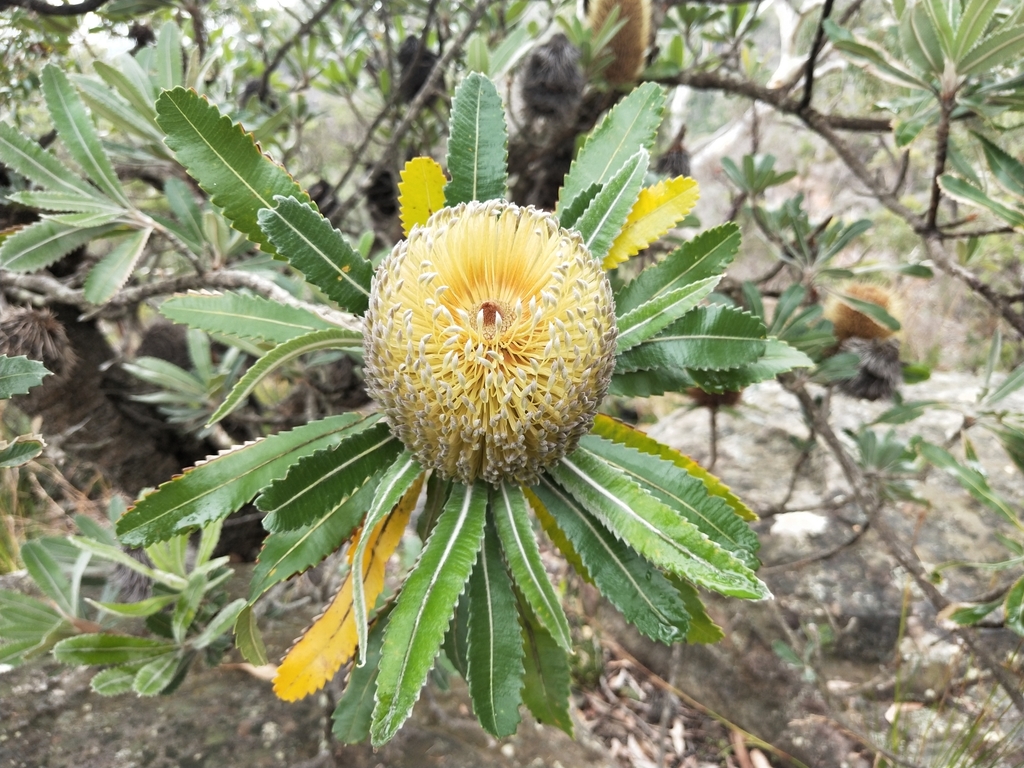
On this page
Banksia thrives on neglect in the right spot: full sun, sandy fast-draining soil, and almost no feeding. The one rule that kills more banksias than anything else: never use standard fertiliser. Like all Proteaceae, its specialised roots are poisoned by high phosphorus. Use a low-P native formulation (P under 2%) or nothing. Water weekly for the first summer, then leave it alone. Grows slowly to 5-15m.
Key facts
- Native to Australia's east coast; one of the four plants collected at Botany Bay in 1770 by Joseph Banks, after whom the genus is named.
- Proteaceae warning: banksias have proteoid (cluster) roots that mine phosphorus so efficiently that ordinary high-P fertiliser is toxic to them. Feed only with low-phosphorus native fertiliser (P below about 2%) or not at all.
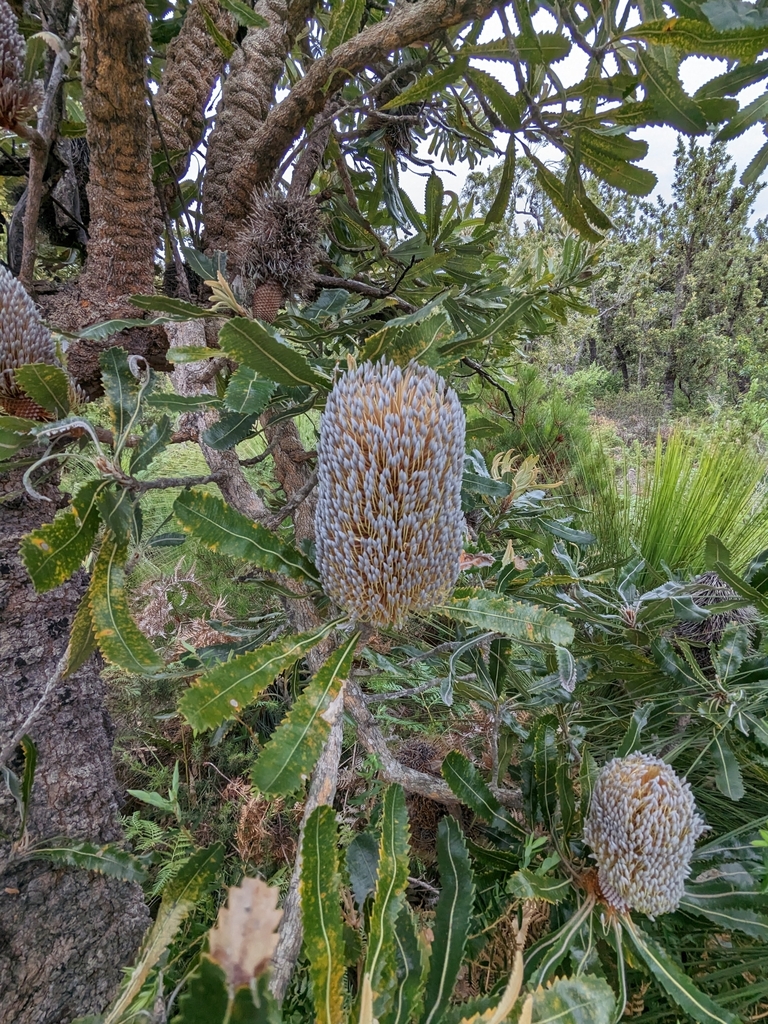
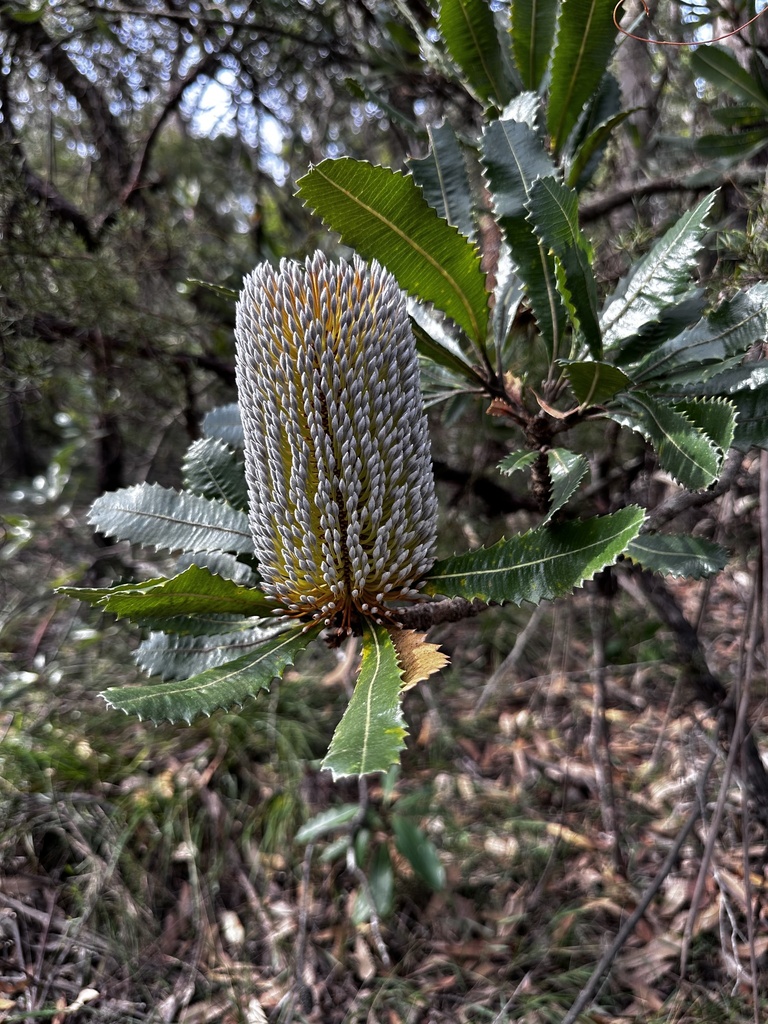
- The candle-like flower spikes carry thousands of individual flowers and are a major nectar source for honeyeaters, lorikeets, pygmy possums, and bees.
- The woody seed 'cones' often need bushfire heat to open. The inspiration for the villainous Banksia Men in the classic Australian children's books.
Care requirements#
| Plant type | Outdoor evergreen tree/large shrub |
| Growing medium | Sandy, fast-draining, low-nutrient soil; raised beds on clay |
| Light needs | Full sun |
| Watering (establishment) | Weekly deep soak through the first summer |
| Watering (mature) | Rain-fed; highly drought-tolerant once established |
| Fertilizer | CRITICAL: low-phosphorus native fertiliser only (P < 2%), once a year at most, standard fertiliser kills Proteaceae |
| Soil pH | 5.5-6.5; dislikes alkaline soil |
| Temperature range | Warm temperate; established plants take light frost to about -4°C |
| Drainage needs | Very high. Root rot in heavy wet soil is the other big killer |
| Spacing | 4-6m from structures; slow but eventually substantial |
| Hardiness zone (outdoor) | USDA 9-11 |
| Toxicity | Not listed as toxic to cats or dogs; spent flower spikes are a chew/choke hazard at most |
Growth & propagation#
| Mature size | Typically 5-10m in gardens, to 15m in the wild; gnarled and sculptural with age |
| Growth rate | Slow: expect 30cm a year or less |
| Time to first flower | Often 4-6 years from seed; faster from advanced plants |
| Propagation methods | Seed extracted from heat-opened follicles; cuttings difficult |
| Propagation difficulty | Moderate: seed germinates well but seedlings resent root disturbance |
| Pruning needs | Light tip pruning after flowering; it reshoots from a lignotuber if cut hard |
Common problems & troubleshooting#
| Symptom | Likely cause | Fix |
|---|---|---|
| Yellowing leaves, collapse weeks after feeding | Phosphorus toxicity from standard fertiliser, the classic banksia killer | Never use general-purpose or rose/citrus feeds; if it happens, flush soil heavily with water and remove fertiliser granules, recovery is uncertain |
| Sudden wilting and death in wet or heavy soil | Phytophthora cinnamomi root rot, to which many banksias are highly susceptible | Plant in sand or raised mounds, never overwater; there is no cure once infected, prevention is everything |
| Sparse, leggy growth and few flowers | Too much shade | Banksias need full sun; prune surrounding growth or relocate while young |
| New leaves yellow with green veins | Iron chlorosis on alkaline soil | Apply iron chelate and acidify with sulfur, or grow lime-tolerant species (B. integrifolia) instead |
| Flower spikes eaten or shredded | Cockatoos after the seed. A badge of honour, not a disease | None needed; the birds are part of the point of growing banksia |
First-summer watering, then hands off
Sodate schedules the weekly first-summer soaks, then tapers to nothing. Exactly how a banksia wants to live.
Seasonal care#
Varieties & cultivars#
| Variety | Distinguishing trait | Note |
|---|---|---|
| Banksia serrata 'Pygmy Possum' | Prostrate coastal form under 1m tall | Old man banksia character for small gardens and pots |
| Banksia spinulosa 'Birthday Candles' | Dwarf (50cm) with masses of gold spikes | The best-selling garden banksia in Australia |
| Banksia integrifolia (coast banksia) | Faster, tougher, tolerates some lime and salt | The forgiving beginner's banksia |
Buying checklist#
- Healthy plant in a tall (native) tube or pot. Banksias hate circled, disturbed roots
- No yellowing foliage, which can signal phosphorus damage or root rot already underway
- Ask if stock is Phytophthora-accredited, especially in WA and sandy coastal areas
- Buy small; tubestock overtakes larger pot-bound plants within a couple of years
Pricing by region#
| Region | Price range | Typical unit | Basis |
|---|---|---|---|
| US | $20 – $60 | 1-5 gal pot | California/Proteaceae specialty nurseries only |
| UK | $25 – $65 | 2-5L pot | Rare-plant specialists; conservatory plant |
| India | $12 – $35 | potted plant | Rare-import specialty only; not commonly stocked |
| Australia | $7 – $26 | tubestock to 200mm pot | Native nursery retail nationwide |
| Canada | $25 – $60 | potted plant | Specialty greenhouse growers only |
USD figures are approximate conversions for comparison; switch the dropdown to see each region's actual local-currency listing price.
Often confused with#
Where it's actually grown#
Nearly all garden banksias are grown by Australian native tubestock nurseries from seed or cutting-raised named cultivars; outside Australia, small numbers are raised by Proteaceae specialists in California, and the cut-flower banksia trade is centred in Australia, South Africa, and Israel.
Import & biosecurity restrictions#
| Region | Note |
|---|---|
| Australia | Native and unrestricted domestically; live plant imports into Australia are biosecurity-restricted. WA additionally restricts plant movement to keep Phytophthora and other pests out. |
| US | No federal restriction; realistically available only from Californian native/Proteaceae specialists. |
| UK | No restriction; frost-tender, so grown in pots under glass in most of the country. |
| India | Phytosanitary import permit required; effectively a rare collector's plant. |
| Canada | CFIA phytosanitary rules apply; greenhouse specialty only. |
Similar plants
Ranked in these guides
Did you know?
Frequently asked questions
Why can't I use normal fertiliser on banksia?
Banksias, like all Proteaceae, have specialised cluster roots adapted to phosphorus-starved soils; standard fertiliser's phosphorus levels are toxic to them and commonly fatal. Use a native low-P formula (P under 2%) or none.
How fast does banksia grow?
Slowly, around 30cm a year. Old man banksia is a long-game plant that gets more sculptural every decade.
Is banksia safe for pets?
It isn't listed as toxic to cats or dogs; the woody seed cones are a chewing hazard rather than a poisoning one.
Can I grow banksia in clay soil?
Only in a raised mound or bed of sandy soil. Banksias are highly prone to root rot in heavy, wet ground.
Will banksia attract birds?
Yes, spectacularly. The nectar-rich spikes feed honeyeaters, wattlebirds, and lorikeets for months, which is the main reason Australians plant it.