 Sodate
On this page
Golden wattle is Australia's national floral emblem and one of the fastest ways to get flowers and screening into a dry native garden. The critical care fact: like most Australian natives it is phosphorus-sensitive, and standard garden fertiliser can kill it. Use a low-phosphorus native feed or none at all. It is short-lived, typically 15-30 years, and fixes its own nitrogen. Pollen and wattle seed are not the main hay fever culprit people assume.
Key facts
- Australia's official national floral emblem, proclaimed in 1988, and the source of the green and gold national colours.
- Phosphorus-sensitive: standard fertilisers high in phosphorus can kill it. Use native low-phosphorus feed or nothing.
- A legume that fixes its own nitrogen, so it establishes fast on poor soils without feeding.
- Short-lived by tree standards, usually 15-30 years, so it works as a fast pioneer rather than a permanent feature.
- The 'wattle' hay fever reputation is largely misplaced. Its heavy, sticky, insect-carried pollen rarely goes airborne, unlike grass pollen flowering at the same time.
Care requirements#
| Plant type | Fast-growing small evergreen tree or large shrub; hardy in Australian zones and roughly USDA 9-11 |
| Native range | Southeastern Australia. Victoria, South Australia, southern New South Wales |
| Light needs | Full sun; it flowers poorly and grows leggy in shade |
| Soil | Well-drained sandy or loamy soil; dislikes heavy wet clay |
| Soil pH | 5.5-7.5, tolerating mildly acidic to neutral soils |
| Phosphorus sensitivity | Critical: Australian natives evolved on ancient phosphorus-poor soils and standard fertiliser causes toxicity and death. Use only native/low-phosphorus feed |
| Fertilizer | Usually none. If feeding, use a native-specific low-phosphorus formulation at half the label rate, once in spring |
| Water needs | Water through the first summer, then drought-tolerant; overwatering is a common cause of loss |
| Spacing | 4-6m apart; allow for a spreading crown |
| Pruning | Tip-prune lightly after flowering to keep it dense; never cut hard into old bare wood, which rarely reshoots |
| Wildlife value | Heavy pollen source for native bees, and the seeds feed parrots and other birds |
| Toxicity | Not considered significantly toxic to cats and dogs, though seeds and pods should not be eaten in quantity by pets or people |
Growth & propagation#
| Mature size | 4-8m tall with a 3-5m spread |
| Growth rate | Fast: often 1-2m a year when young |
| Lifespan | Short, typically 15-30 years |
| Propagation methods | Seed, which needs hot-water or smoke treatment to break the hard coat |
| Propagation difficulty | Easy once the seed coat is broken; germination is poor without it |
| Flowering age | Usually flowers from two to four years old |
Common problems & troubleshooting#
| Symptom | Likely cause | Fix |
|---|---|---|
| Yellowing leaves, blackened tips and sudden decline after feeding | Phosphorus toxicity from standard garden fertiliser | Stop feeding immediately, leach the soil with deep watering, and only ever use native low-phosphorus feed |
| Tree dies suddenly at 15-20 years | Normal short lifespan, not a care failure | Plan successional planting; wattles are pioneers rather than permanent trees |
| Swollen galls on stems and branches | Wattle gall wasp or rust gall fungus | Prune out and destroy affected branches; a vigorous tree tolerates a moderate infestation |
| Root rot and collapse in wet weather | Poor drainage or Phytophthora, to which acacias are susceptible | Plant on a mound in free-draining soil and never irrigate an established tree heavily |
| Seed sown but nothing germinates | The hard seed coat was not treated | Pour just-boiled water over the seed and soak overnight before sowing |
The fertiliser that kills natives
Sodate flags which of your plants need low-phosphorus feed, so a standard all-purpose fertiliser never goes near them.
Seasonal care#
Varieties & cultivars#
| Variety | Distinguishing trait | Note |
|---|---|---|
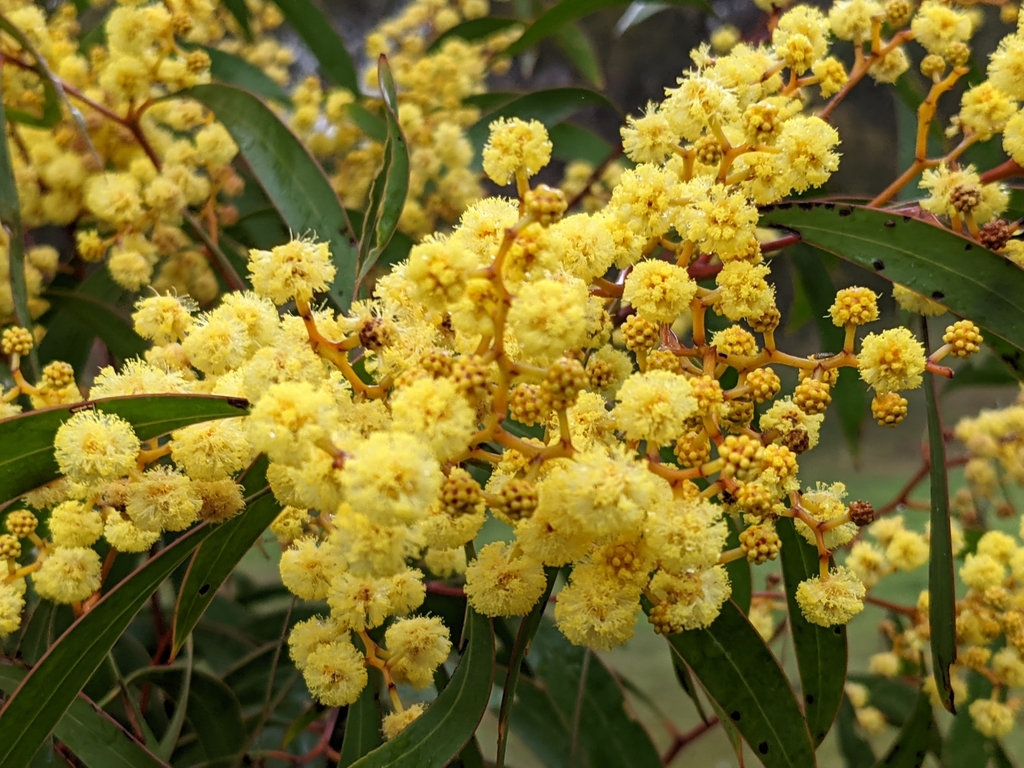
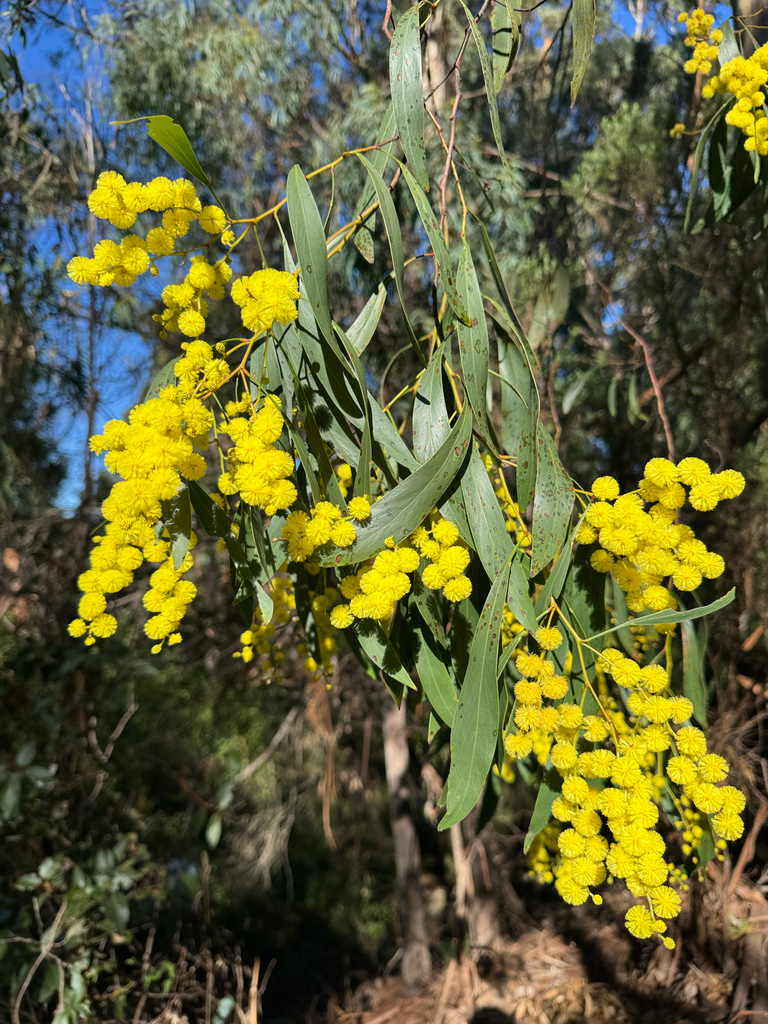
| A. pycnantha (species) | Golden pom-pom flowers, sickle-shaped phyllodes | The national floral emblem; the standard form |
| Acacia baileyana (Cootamundra wattle) | Silvery-blue ferny foliage | Popular but weedy outside its natural range in Australia |
| Acacia dealbata (silver wattle) | Taller, ferny foliage, very fragrant | The 'mimosa' of the European cut-flower trade |
| Acacia cognata dwarf forms | Compact weeping shrubs | Better suited to small gardens than a full-size wattle |
Buying checklist#
- Check the botanical name. 'wattle' covers roughly a thousand Acacia species with very different sizes
- Buy small: wattles establish poorly from large pot-bound stock
- No circling roots in the pot, which cause later wind-throw
- Ask whether the nursery used low-phosphorus native potting mix
Pricing by region#
| Region | Price range | Typical unit | Basis |
|---|---|---|---|
| Australia | $10 – $30 | 140-200mm pot | Native nursery retail |
| US | $20 – $60 | sapling | Specialist nursery, mainly California |
| UK | $25 – $70 | potted tree | Specialist nursery; needs a mild sheltered site |
| India | $5 – $18 | sapling | Nursery retail; other acacias far more common |
| Canada | $25 – $70 | potted tree | Specialist nursery; conservatory or mild coastal only |
USD figures are approximate conversions for comparison; switch the dropdown to see each region's actual local-currency listing price.
Often confused with#
Name confusion warning#
'Wattle' covers roughly a thousand Australian Acacia species. Acacia pycnantha specifically is the national floral emblem. Separately, African and American 'acacias' were reclassified into Vachellia and Senegalia, so the name Acacia now belongs primarily to the Australian group.
Where it's actually grown#
Nursery wattles are seed-grown by native plant nurseries throughout southern Australia; commercially, related acacias are grown for cut flowers in southern Europe and for tannin and timber in South Africa and Brazil.
Import & biosecurity restrictions#
| Region | Note |
|---|---|
| Australia | Native and unrestricted, but some wattles are weedy outside their natural range. Plant species local to your region. |
| US | Grown in California and the Southwest; some acacias are regulated as invasive in parts of the country, so check state rules. |
| UK | Imports need phytosanitary paperwork; grows only in mild sheltered coastal gardens or under glass. |
| India | No specific restriction; other acacias dominate the trade and some introduced species are invasive. |
| Canada | CFIA permits required for imports; not hardy outdoors except in the mildest coastal pockets. |
Similar plants
Ranked in these guides
Did you know?
Frequently asked questions
What is Australia's national floral emblem?
The golden wattle, Acacia pycnantha, proclaimed the national floral emblem in 1988 and the origin of the national green and gold.
Why can't I use normal fertiliser on a wattle?
Australian natives evolved on ancient phosphorus-poor soils and cannot regulate phosphorus uptake. Standard high-phosphorus garden fertiliser causes toxicity and can kill the plant, so use a low-phosphorus native feed or none at all.
How long does a wattle tree live?
Usually only 15-30 years. Wattles are fast pioneer species rather than long-term landscape trees, so plan for succession.
Does wattle cause hay fever?
Rarely. Wattle pollen is heavy and sticky and is carried by insects rather than wind. It gets blamed because it flowers at the same time as the grasses that actually cause most hay fever.
How do I grow wattle from seed?
The seed coat is hard and impermeable, so pour just-boiled water over the seed and soak overnight before sowing. Untreated seed germinates poorly.