 Sodate
On this page
Safety first: every part of a foxglove, leaves, flowers, seeds, sap, even the water in a vase of cut stems, contains cardiac glycosides, the compounds refined into the heart drug digoxin. Ingestion can cause vomiting, visual disturbance, and dangerous heart-rhythm changes in people and pets, so plant it away from children, dogs, cats, and grazing animals, and wear gloves. Grown with that respect, it's an easy UK-native biennial: sow or plant in part shade, get a leaf rosette in year one and 1.5m bee-magnet spires in year two, and let it self-seed.
Key facts
- HIGHLY TOXIC: the defining fact of this plant. All parts contain cardiac glycosides (digitoxin, digoxin precursors); eating even a small amount can trigger nausea, vomiting, hallucinations of yellow-tinged vision, slowed or irregular heartbeat, and in serious cases death. Toxic to humans, dogs, cats, and horses alike.
- The same poison is the medicine: William Withering's 1785 study of foxglove for 'dropsy' founded modern cardiology, and pharmaceutical digoxin is still derived from Digitalis species. Never self-medicate: the gap between dose and overdose is tiny.
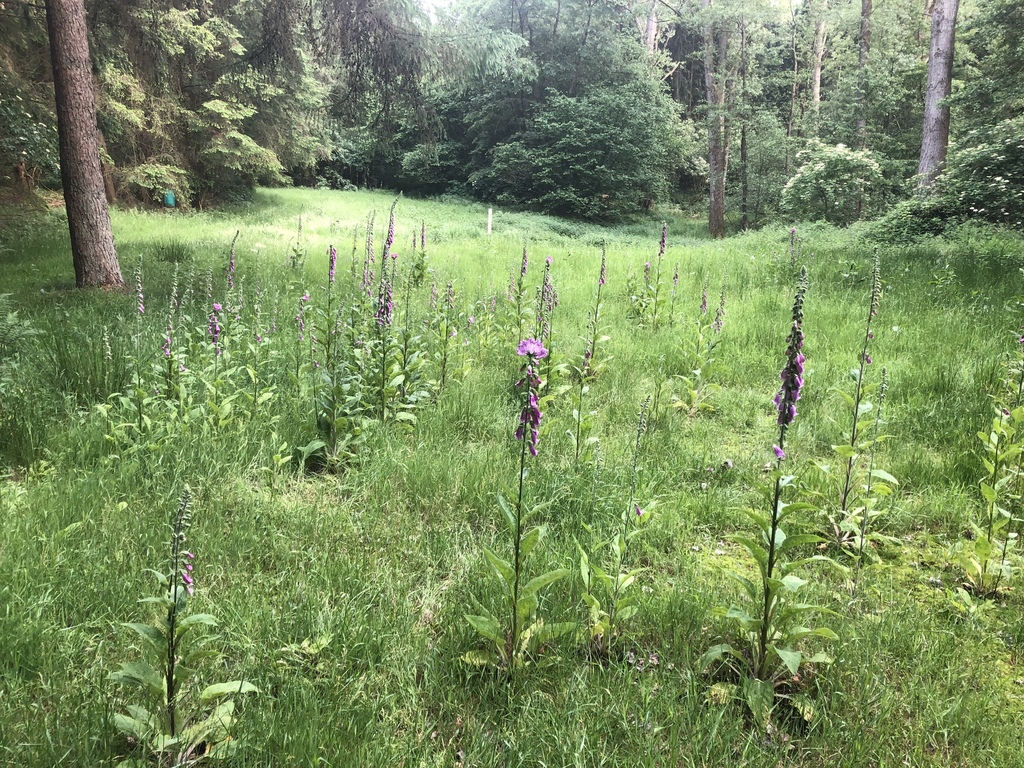
- Native to the UK and western Europe, thriving on acid soils in woodland clearings, hedge banks, and heaths. A classic first coloniser of cleared or burnt ground.
- A biennial: year one is a low leaf rosette, year two the flowering spire, then it dies and self-seeds. Each plant can shed over a million dust-fine seeds.
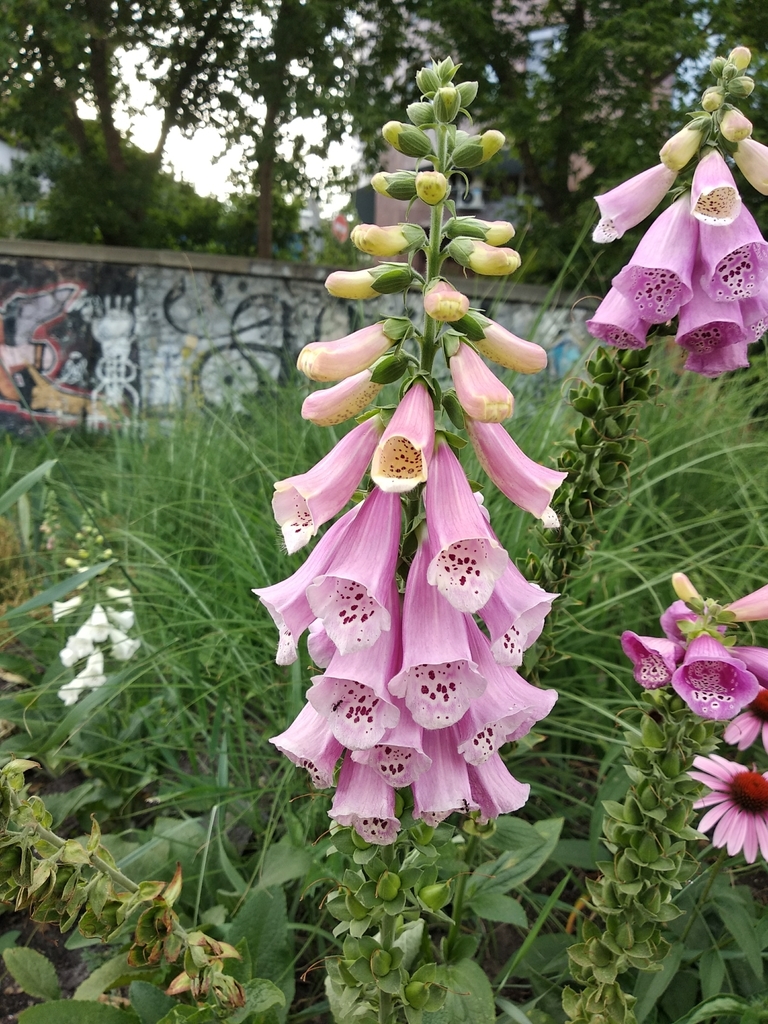
- One of the best UK plants for long-tongued bumblebees, which crawl right inside the spotted thimbles; the spots are nectar guides.
Care requirements#
| Plant type | Outdoor biennial (occasionally short-lived perennial) |
| Growing medium | Humus-rich, moist but drained soil; happiest on slightly acid ground |
| Light needs | Part shade to dappled woodland-edge light; tolerates full sun in cool climates if soil stays moist |
| Water frequency | Keep rosettes from drying out in year one; established plants need water only in drought |
| Sowing | Surface-sow (seed needs light) in early summer for flowers the following year |
| Temperature range | Fully hardy in the UK; USDA 4-9 |
| Fertilizer | Little needed; leaf mould or compost mulch is plenty |
| Soil pH | 4.5-6.5 preferred; tolerates neutral |
| Drainage needs | Moderate: dislikes winter waterlogging |
| Spacing | 30-45cm for strong single spires |
| Handling | Wear gloves; wash hands after any contact, sap can transfer glycosides |
| Toxicity | SEVERELY toxic to humans, dogs, cats, and horses. Every part, fresh or dried; keep away from children, pets, and forage |
Growth & propagation#
| Mature size | Rosette 30cm in year one; flowering spire 1.5-2m in year two |
| Growth rate | Fast for a biennial. Full cycle in two seasons |
| Propagation methods | Seed only; surface-sown, self-seeds prolifically |
| Propagation difficulty | Very easy. The challenge is thinning, not germinating |
| Self-seeding | A single spire sheds hundreds of thousands of seeds; expect volunteers for years |
| Pruning needs | Cut the main spent spire to a side shoot for a second flush, or leave to seed and remove the dead plant |
Common problems & troubleshooting#
| Symptom | Likely cause | Fix |
|---|---|---|
| Pet or child has chewed any part of the plant | Cardiac glycoside poisoning risk. This is an emergency, not a gardening problem | Contact a doctor/poison centre or vet immediately, taking a sample of the plant; do not wait for symptoms (vomiting, drooling, slow or irregular heartbeat) |
| Fluffy brown pustules under leaves | Foxglove rust | Remove worst leaves, space plants for airflow; rarely fatal, plants still flower |
| Rosettes rot over winter | Waterlogged or heavy soil | Improve drainage with grit and leaf mould, or grow on a bank/slope as it does in the wild |
| Plants flowered then all died | Normal biennial life cycle, not disease | Let spires shed seed before removal, or sow fresh seed each early summer so you always have both year-one and year-two plants |
| Leaves skeletonised in spring | Slugs and snails on young rosettes (mammals, notably, leave foxglove alone) | Bait or beer-trap around rosettes in autumn and early spring |
Remember the year-two payoff
Sodate tracks your biennials so you know which rosettes are due to spire next spring. And which patch just self-seeded.
Seasonal care#
Varieties & cultivars#
| Variety | Distinguishing trait | Note |
|---|---|---|
| 'Excelsior' hybrids | Flowers held all around the stem, pastel range | The classic tall border strain |
| 'Dalmatian' series | Flowers in year one from an early sowing | Behaves like an annual |
| f. albiflora | Pure white wild form | Comes largely true from seed in isolation |
| 'Sutton's Apricot' | Soft apricot-pink spires | Cottage-garden favourite |
Buying checklist#
- Buy year-one rosettes in autumn for guaranteed flowers the next summer
- Healthy grey-green, softly hairy leaves with no rust pustules
- Label the bed: everyone in the household should know this plant is poisonous
- For wildlife value, choose the straight native purpurea over fancy hybrids
Pricing by region#
| Region | Price range | Typical unit | Basis |
|---|---|---|---|
| US | $5 – $15 | quart pot / seed packet $3-5 | Garden centre + seed catalogues |
| UK | $4 – $11 | 9cm-2L pot / seed £2-3 | Garden centre + wildflower suppliers |
| India | $1 – $4 | seed packet / seedling | Hill-station and online seed sellers (cool regions only) |
| Australia | $5 – $12 | 140mm pot / seed | Cool-climate nurseries |
| Canada | $5 – $14 | quart pot / seed | Garden centre retail |
USD figures are approximate conversions for comparison; switch the dropdown to see each region's actual local-currency listing price.
Often confused with#
Name confusion warning#
Deadly forager's error. Before flowering, foxglove is just a fuzzy leaf rosette that has been mistaken for comfrey, borage, and even plantain by foragers. With hospitalisations to show for it. If you forage leaves for tea, learn this rosette first, and never pick leafy herbs within sight of foxgloves.
Where it's actually grown#
Seed strains are produced by European flower-seed houses and wildflower specialists; potted plants are grown by ordinary bedding nurseries. Pharmaceutical digitalis leaf is farmed separately under contract (historically Digitalis lanata for digoxin). Garden plants play no role in the drug supply.
Import & biosecurity restrictions#
| Region | Note |
|---|---|
| UK | Native and unrestricted to grow; general law against uprooting any wild plant without the landowner's permission applies. |
| US | No federal restriction; naturalised (sometimes weedy) in the Pacific Northwest. Deadhead to limit spread there. |
| Australia | Live plant/seed imports restricted under biosecurity law; naturalised in cool wet regions like Tasmania, where it's treated as an environmental weed, check state lists. |
| India | No restriction; viable only in cool hill regions. Digitalis was historically farmed in Himalayan stations for medicine. |
| Canada | CFIA phytosanitary rules for imports; naturalised on both coasts. |
Similar plants
Ranked in these guides
Did you know?
Frequently asked questions
How poisonous is foxglove really?
Seriously: every part contains cardiac glycosides that disrupt heart rhythm, and small ingested amounts can hospitalise a child or kill a pet. It's the original source of the heart drug digoxin. Medicine at a controlled microdose, poison at any other.
Is it safe to touch a foxglove?
Brushing past is fine; the risk is sap and residue transferring to mouth or eyes. Wear gloves for pruning and wash your hands, and don't let children pick the 'glove' flowers.
Should I grow foxglove if I have dogs or cats?
Only where they can't chew it. Poisoning is uncommon because it tastes bitter, but cases occur, including from vase water. If a pet eats any, call the vet immediately.
Why didn't my foxglove flower this year?
It's a biennial: it makes a leaf rosette in year one and flowers in year two. Sow seed two years running and it will flower every year thereafter from self-sown plants.
Are foxgloves good for bees?
Excellent. The deep thimbles are tailored to long-tongued bumblebees, and a patch in part shade flowers for weeks in early summer when queens are provisioning nests.