 Sodate
On this page
Neem is one of the toughest shade trees you can plant in a hot, dry climate: it handles poor soil, long droughts, and 45°C heat, but it will not survive frost. Plant it in full sun with room for a 15-20m tree, water weekly for the first two years, then leave it alone. Saplings cost ₹30-₹150 in India; expect $20-$60 for a potted plant in the US.
Key facts
- Native to the Indian subcontinent and dry parts of Southeast Asia, and naturalised across Africa and the Middle East as a drought-proof shade tree.
- Seeds yield azadirachtin, the active compound in neem oil. A natural insect growth disruptor used in organic farming worldwide.
- Known in India as the 'village pharmacy': twigs are used as toothbrushes and leaves in traditional medicine and grain storage.
- Frost is its one hard limit. Young trees die below about 4°C, so it is strictly a tropical/subtropical outdoor tree.
Care requirements#
| Plant type | Outdoor evergreen tree (semi-deciduous in severe drought) |
| Growing medium | Any well-drained soil, including poor, sandy, or slightly saline soils |
| Light needs | Full sun. At least 6 hours direct |
| Watering (establishment) | Deep soak weekly for the first 1-2 years |
| Watering (mature) | Rain-fed; occasional deep watering in extreme drought |
| Temperature range | Thrives 21-45°C; damaged below 4°C, killed by frost |
| Fertilizer | Rarely needed; compost or balanced feed once a year for young trees |
| Soil pH | 6.2-7.5, tolerates up to 8.5 |
| Spacing | 8-10m from buildings and other trees |
| Planting time | Start of monsoon (June-July) in India; spring elsewhere |
| Hardiness zone (outdoor) | USDA 10-12 |
| Toxicity | Neem oil and seeds can be harmful to pets and small children if ingested in quantity; leaves are intensely bitter, which deters chewing |
Growth & propagation#
| Mature size | 15-20m tall with a broad 10-15m crown |
| Growth rate | Fast: 1.5-2m per year once established |
| Time to first fruit | 3-5 years |
| Propagation methods | Fresh seed (viable only 2-4 weeks), plus root suckers and cuttings |
| Propagation difficulty | Easy from fresh seed; old seed almost never germinates |
| Pruning needs | Shape in early years; remove deadwood on mature trees |
Common problems & troubleshooting#
| Symptom | Likely cause | Fix |
|---|---|---|
| Sapling collapses after a cold night | Frost or chill damage. Neem's main killer outside the tropics | Only plant in frost-free zones; protect young trees with fleece if a rare cold snap threatens |
| Yellowing leaves and dieback in waterlogged ground | Root rot. Neem hates standing water despite its toughness | Plant on a mound or in free-draining soil; never irrigate to the point of pooling |
| Sooty black coating on leaves | Honeydew from scale insects or whitefly (ironically, pests do attack neem) | Hose off, prune infested twigs; established trees usually shrug it off |
| Sparse crown and leaf drop in a long drought | Semi-deciduous drought response, not disease | One or two deep waterings restore the canopy; no other action needed |
| Seedlings damping off in trays | Overwatering and fungal attack in humid nurseries | Sow in gritty mix, water sparingly, give airflow |
Get establishment watering right
Sodate reminds you through the critical first two summers, then tapers the schedule as your neem becomes self-sufficient.
Seasonal care#
Buying checklist#
- Straight single leader with no girdled or circling roots in the bag
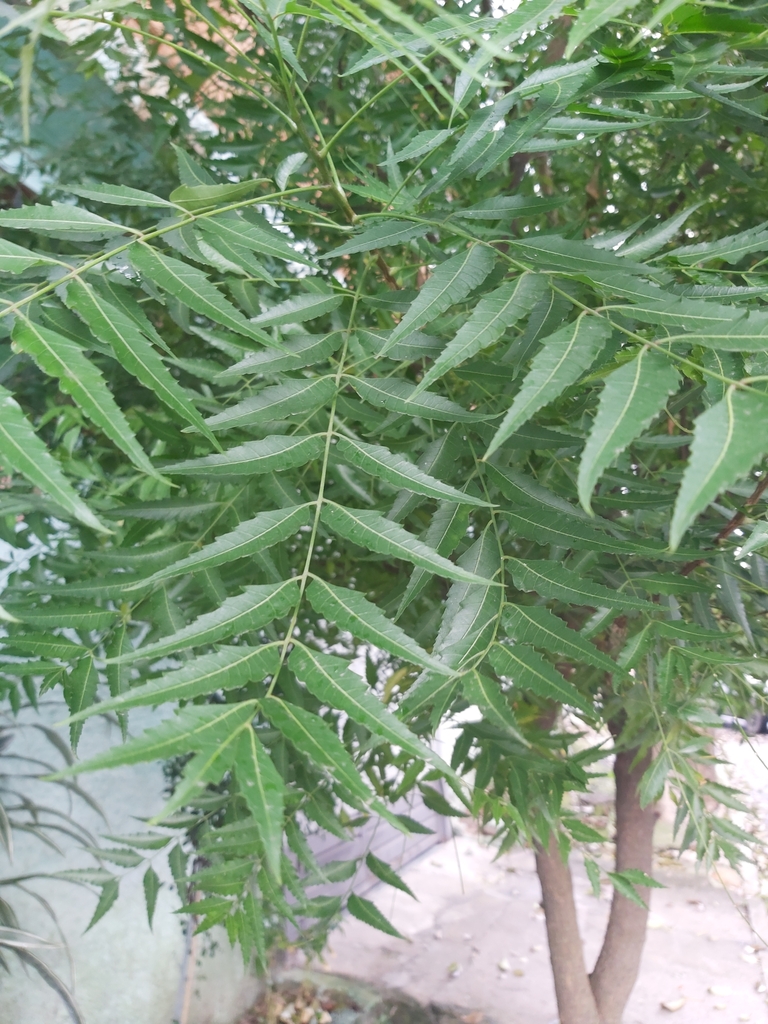
- Deep green pinnate leaves, no yellowing or leaf spot
- Sapling 60cm-1m tall establishes faster than an overgrown one
- Ask whether it is seed-grown local stock. Best adapted to your area
Pricing by region#
| Region | Price range | Typical unit | Basis |
|---|---|---|---|
| US | $20 – $60 | 1-3 gal pot | Specialty tropical nursery / online |
| UK | $25 – $65 | potted young plant | Specialist online sellers (conservatory plant only) |
| India | $0.4 – $2 | polybag sapling | Government + local nurseries |
| Australia | $15 – $40 | potted sapling | Northern nurseries (restricted in NT. See import notes) |
| Canada | $22 – $55 | potted plant | Online tropical specialists (greenhouse only) |
USD figures are approximate conversions for comparison; switch the dropdown to see each region's actual local-currency listing price.
Often confused with#
Name confusion warning#
Neem vs "bakain" (chinaberry). In North India, Melia azedarach is widely called bakain or "Persian neem" and looks similar as a young tree. Chinaberry berries are poisonous to people and pets, so verify you have true Azadirachta indica before using leaves for any traditional purpose.
Where it's actually grown#
Almost all commercial neem stock is seed-grown; India's state forest nurseries raise millions of saplings a year for roadside and agroforestry planting, while US and European stock comes from small tropical specialists in Florida and greenhouse growers.
Import & biosecurity restrictions#
| Region | Note |
|---|---|
| Australia | Live plant imports restricted under biosecurity law. Neem is a declared weed in parts of the Northern Territory, where planting is banned, check state rules. |
| US | No federal restriction; grows outdoors only in zones 10-12 (south Florida, south Texas, Hawaii). |
| UK | No restriction, but it cannot survive outdoors, conservatory/greenhouse only. |
| India | Native and actively promoted; saplings distributed cheaply through state nursery schemes. |
| Canada | CFIA phytosanitary rules apply to imports; strictly a greenhouse plant. |
Similar plants
Ranked in these guides
Did you know?
Frequently asked questions
Can I grow neem outside the tropics?
Only in frost-free climates (USDA 10-12); a single hard frost kills young trees. Elsewhere it can be kept as a container plant moved indoors for winter.
How fast does neem grow?
Fast. An established sapling puts on 1.5-2m a year and can be a usable shade tree within 5-7 years.
Is neem safe for pets?
The tree itself is rarely a problem because the leaves are intensely bitter, but concentrated neem oil and seeds can cause vomiting and lethargy if pets ingest them, so store products safely.
How much water does a neem tree need?
Deep weekly watering for the first two years; after that it is essentially rain-fed and famously drought-proof.
How much does a neem sapling cost?
In India, ₹30-₹150 from local nurseries; in the US expect $20-$60 for a potted plant from tropical specialists.