 Sodate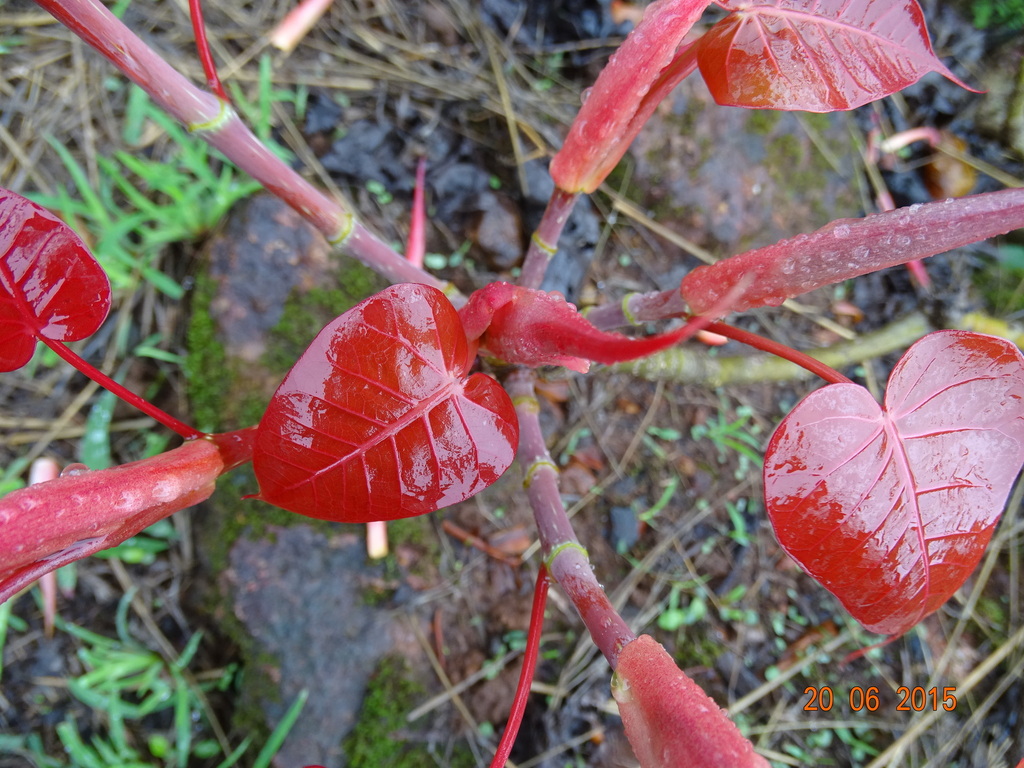
On this page
The peepal is a magnificent, fast, nearly indestructible tree for large open ground in warm climates. And a menace within 20m of any structure, since its roots famously crack walls, platforms, and pipes. Plant at monsoon onset in full sun, water weekly for two years, then it needs nothing. Sacred to over a billion people, so site it with the respect a 150-year tree deserves. Frost-tender; makes an excellent bonsai.
Key facts
- Sacred across Hinduism, Buddhism, and Jainism: the Buddha attained enlightenment beneath a peepal at Bodh Gaya (the Bodhi tree), and in Hindu tradition the trimurti of Brahma, Vishnu, and Shiva are associated with the tree, which is often circumambulated in worship and rarely cut.
- The Jaya Sri Maha Bodhi in Anuradhapura, Sri Lanka, grown from a cutting of the original Bodhi tree in 288 BCE, is among the oldest human-planted trees with a known planting date still alive.
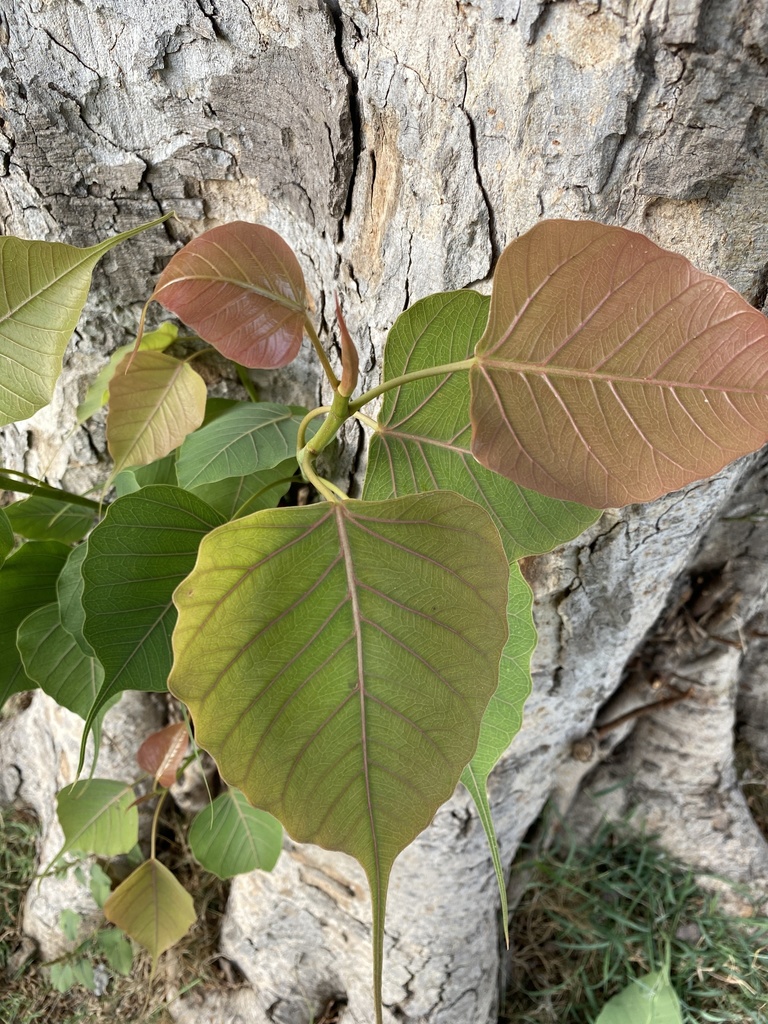
- The heart-shaped leaf's long 'drip tip' sheds monsoon rain, and the flexible petiole makes the whole canopy shimmer and rustle in near-still air.
- Roots are aggressively invasive. Peepal seedlings sprout from building cracks and mature roots break masonry, so it belongs on open land, 20m+ from structures.
Care requirements#
| Plant type | Outdoor large deciduous/semi-evergreen tree (drops leaves briefly in dry season) |
| Growing medium | Any deep, well-drained soil; famously tolerant of poor and rocky ground |
| Light needs | Full sun to light shade |
| Watering (establishment) | Deep soak weekly for the first two years |
| Watering (mature) | Rain-fed; drought-hardy |
| Temperature range | Thrives 20-40°C; young trees damaged below ~5°C, frost-tender |
| Fertilizer | None needed in open ground; monthly balanced feed for container/bonsai plants |
| Soil pH | 6.0-8.0: handles alkaline soil better than most figs |
| Spacing / siting | Minimum 20m from buildings, compound walls, drains, and roads |
| Planting time | Monsoon onset (June-July) |
| Hardiness zone (outdoor) | USDA 10-12 |
| Toxicity | Milky latex can irritate skin; mildly toxic to cats and dogs if chewed, like other ficus |
Growth & propagation#
| Mature size | 20-30m tall with a wide, irregular crown and often a buttressed, fluted trunk |
| Growth rate | Fast: 1-2m per year when young |
| Lifespan | Commonly 150-250 years; sacred specimens documented over 1,000 (and one over 2,300) years old |
| Propagation methods | Cuttings and air-layering strike easily; birds spread seed everywhere in its native range |
| Propagation difficulty | Very easy from cuttings in warm weather |
| Pruning needs | Minimal; remove deadwood. Note many communities consider cutting a peepal taboo, so prune thoughtfully |
Common problems & troubleshooting#
| Symptom | Likely cause | Fix |
|---|---|---|
| Cracks appearing in nearby walls, platforms, or pipes | Root invasion. The peepal's signature problem, siting was too close | Nothing but removal or professional root barriers helps; plant new trees 20m+ away from anything built |
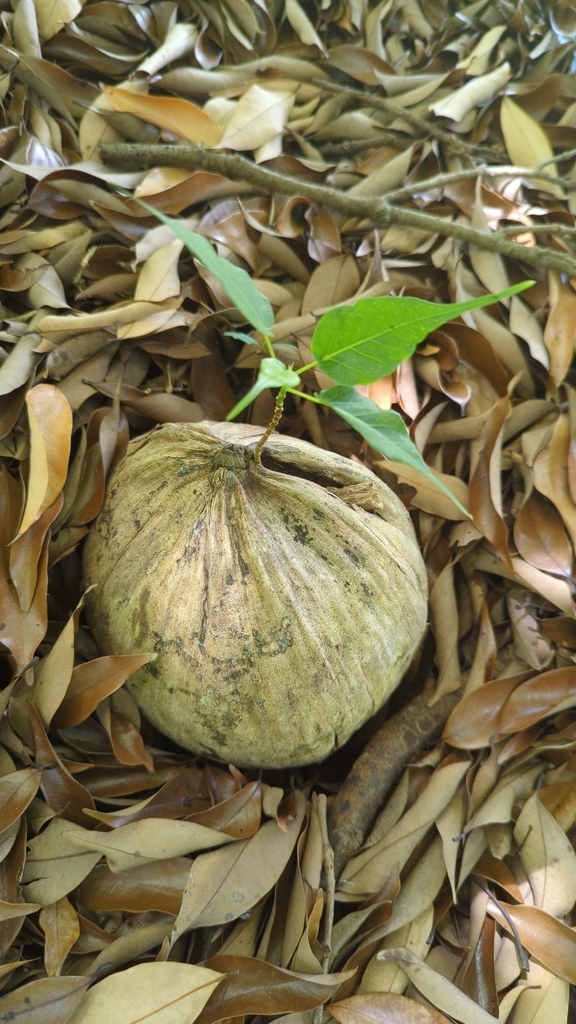
| Seedlings erupting from roof joints, wall cracks, and other trees | Birds spread the figs; seeds germinate epiphytically like a strangler | Pull volunteers while tiny. A peepal established in masonry will eventually break it |
| Sapling defoliates after a cold night | Chill/frost damage. It is a strictly warm-climate tree | Grow outdoors only in frost-free zones; container plants come inside below ~10°C |
| Total leaf drop in early summer alarms new owners | Normal brief deciduous phase before fresh pink-bronze flush | None. New leaves emerge within weeks and the flush is one of the tree's best moments |
| Sticky leaves and sooty mould on bonsai/indoor plants | Scale or mealybug | Wipe leaves with dilute neem oil weekly until clear |
Two monsoons of care, centuries of shade
Sodate keeps the sapling's establishment watering on track. After that, the peepal outlives every reminder.
Seasonal care#
Buying checklist#
- Verify the species: heart-shaped leaf with a long whip-like drip tip = peepal; broad oval leathery leaf = banyan
- Straight stem and fresh growth, no leaf spotting
- Cutting-grown saplings establish fastest
- Confirm you have genuinely open land. This tree's roots forgive nothing built nearby
Pricing by region#
| Region | Price range | Typical unit | Basis |
|---|---|---|---|
| US | $20 – $60 | 1-3 gal pot | Tropical/bonsai specialty nurseries |
| UK | $18 – $50 | potted young plant | Bonsai and rare-plant sellers; indoor only |
| India | $0.5 – $3 | polybag sapling | Local + government nurseries; often given free for plantation drives |
| Australia | $18 – $45 | potted plant | Tropical nurseries + bonsai trade |
| Canada | $20 – $50 | potted plant | Bonsai/houseplant specialists only |
USD figures are approximate conversions for comparison; switch the dropdown to see each region's actual local-currency listing price.
Often confused with#
Name confusion warning#
Peepal vs banyan confusion is constant. Both are sacred Indian figs and nurseries do mislabel them. Check the leaf: heart-shaped with a long whip-like tip = peepal (Ficus religiosa); broad oval with aerial roots = banyan (Ficus benghalensis).
Where it's actually grown#
Peepal saplings are propagated from cuttings in Indian state forest and temple nurseries at enormous scale; internationally, bonsai nurseries in Taiwan, Florida, and India supply the trade, and documented cuttings descended from the Bodh Gaya and Anuradhapura trees are distributed to Buddhist temples worldwide.
Import & biosecurity restrictions#
| Region | Note |
|---|---|
| Australia | Live plant imports restricted under biosecurity law; available domestically from tropical and bonsai nurseries. |
| US | No federal restriction; naturalised in south Florida. As with other figs, avoid planting near infrastructure. |
| UK | No restriction; survives only as an indoor/bonsai plant. |
| India | Native and sacred; several states restrict felling of mature peepal trees under tree preservation laws, so plant where it can stay forever. |
| Canada | CFIA phytosanitary rules apply; indoor plant only. |
Similar plants
Ranked in these guides
Did you know?
Frequently asked questions
Why is the peepal tree sacred?
The Buddha attained enlightenment beneath a peepal (the Bodhi tree) at Bodh Gaya, and in Hindu tradition the tree is associated with Brahma, Vishnu, and Shiva; it is worshipped, circumambulated, and traditionally never cut.
Can I plant a peepal near my house?
No. Its roots are notorious for cracking walls, floors, and pipes. Keep it at least 20m from any structure, or grow it as a container bonsai.
How long does a peepal live?
Easily 150-250 years, and sacred specimens are documented at over 1,000. The Anuradhapura Bodhi tree has lived more than 2,300 years.
Is peepal safe for pets?
Its milky latex is a mild irritant and mildly toxic to cats and dogs if chewed, the same as other ficus. Mainly a concern for indoor bonsai.
How much does a peepal sapling cost?
₹40-₹250 in Indian nurseries (often free in plantation drives); $20-$60 from tropical or bonsai specialists in the US.