 Sodate
On this page
Be honest with yourself before planting a banyan: this is NOT a garden tree. It grows 20-30m tall, spreads via aerial prop roots into a grove that can cover half a hectare, and its roots destroy pipes, walls, and foundations. Plant it only on farms, temple grounds, parks, or large open land, at least 30m from any structure, or grow it as a container bonsai, which it suits beautifully. Frost kills it; the sap irritates skin and is mildly toxic to pets.
Key facts
- India's national tree, deeply woven into Hindu culture. Village banyans have served as shade, meeting place, and shrine for millennia, and the tree symbolises eternal life in Hindu tradition. The name comes from 'banias', the merchants who traded beneath them.
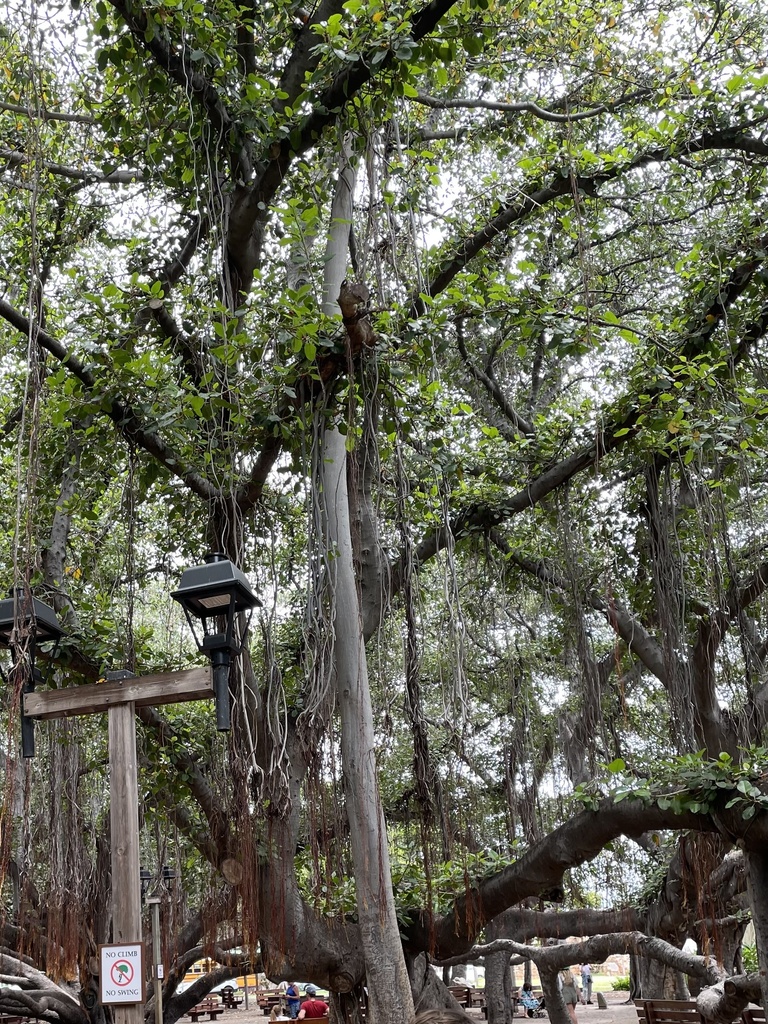
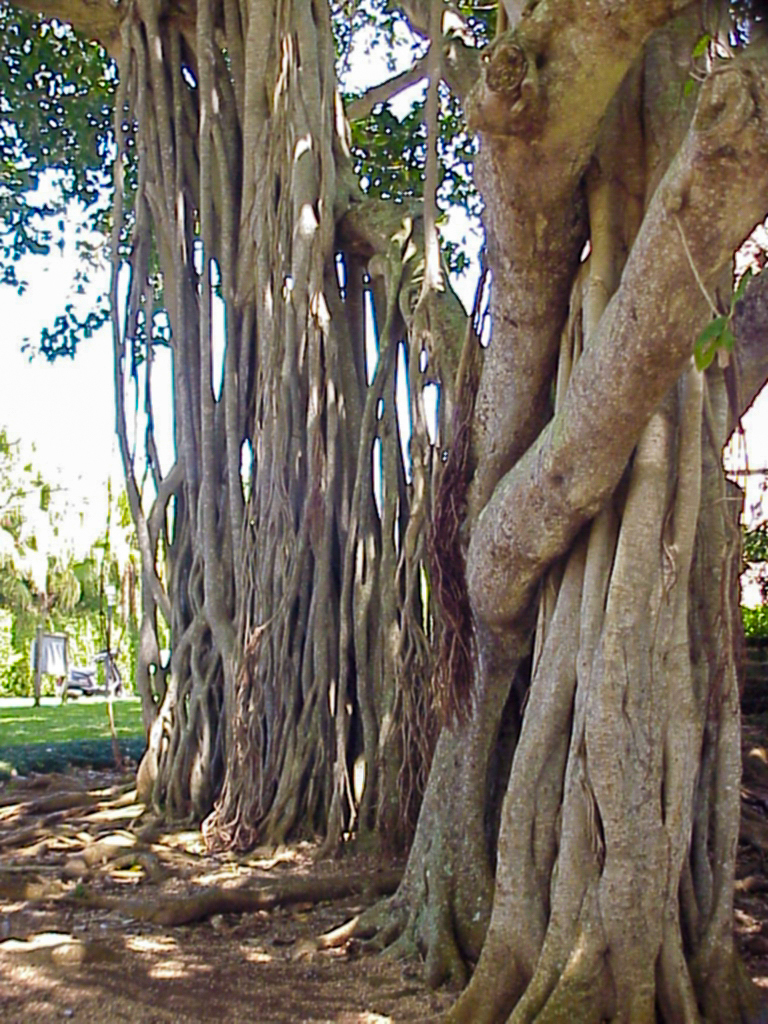
- Aerial roots dropped from branches take root and thicken into full trunks, letting one tree walk outward indefinitely: The Great Banyan in Kolkata covers about 4.7 acres and Thimmamma Marrimanu in Andhra Pradesh over 19,000 m². Among the largest tree canopies on Earth.
- It begins life as a strangler fig, often germinating in the crown of a host tree (or a building crack) and sending roots down to eventually engulf it.
- Space demand is extreme and non-negotiable: mature spread of 30m+ with invasive surface roots. It also makes an excellent, forgiving indoor bonsai. The only way most home growers should own one.
Care requirements#
| Plant type | Outdoor evergreen giant tree (container bonsai for home growers) |
| Growing medium | Any deep, well-drained soil; unfussy once established |
| Light needs | Full sun |
| Watering (establishment) | Deep soak weekly for the first 1-2 years |
| Watering (mature) | Rain-fed; fully self-sufficient |
| Temperature range | Tropical/subtropical, 20-40°C; damaged below ~5°C, killed by frost |
| Fertilizer | Unnecessary in open ground; balanced liquid feed monthly for bonsai |
| Soil pH | 5.5-7.5, very tolerant |
| Spacing / siting | Minimum 30m from buildings, wells, pipes, and boundaries. Roots and canopy both demand it |
| Planting time | Monsoon onset (June-July) in India |
| Hardiness zone (outdoor) | USDA 10-12 |
| Toxicity | Milky latex sap irritates skin and is mildly toxic to cats and dogs if chewed, like other ficus |
Growth & propagation#
| Mature size | 20-30m tall; canopy spreading 30m to (over centuries) whole acres via prop roots |
| Growth rate | Fast: 1-2m a year in tropical conditions |
| Lifespan | Several hundred years; some sacred banyans are estimated over 500 |
| Propagation methods | Cuttings and air-layering root readily; seed needs a pollinating fig wasp and passes through birds in nature |
| Propagation difficulty | Easy from large cuttings. Even branch sections root in monsoon |
| Pruning needs | Minimal in open ground; regular pruning and root-trimming as bonsai |
Common problems & troubleshooting#
| Symptom | Likely cause | Fix |
|---|---|---|
| Cracked paving, blocked drains, damaged walls nearby | The tree was planted too close to infrastructure. Its surface roots and prop roots are unstoppable | There is no fix but removal or relocation; this is why siting 30m+ away (or bonsai) is the entire game |
| Sapling drops leaves after a cold snap | Chill stress. Banyan is strictly frost-tender | Grow only in frost-free climates; container plants must come indoors below ~10°C |
| Leaves yellow and drop on an indoor/bonsai plant | Sudden relocation or low light. Ficus species sulk when moved | Give it the brightest spot available and leave it there; it releafs within weeks |
| Sticky honeydew and sooty mould on bonsai foliage | Scale insects or mealybugs, common on indoor ficus | Wipe with diluted neem oil weekly until clear |
| Seedlings sprouting from walls and other trees nearby | Birds spreading figs. Banyan is a strangler and can be invasive outside its native range | Remove volunteers young; in places like south Florida and Hawaii, think twice before planting at all |
Establishment care for a giant
Sodate schedules the young banyan's weekly soaks. The only period in its centuries-long life when it needs you.
Seasonal care#
Varieties & cultivars#
| Variety | Distinguishing trait | Note |
|---|---|---|
| 'Krishna' (Krishna's buttercup) | Leaves curl into cup shapes at the base | Legend says Lord Krishna used the leaf-cups to hold butter; a prized temple and collector form |
| Ficus benghalensis 'Audrey' | Compact, velvet-leaved houseplant selection | The banyan the houseplant trade actually sells, a popular fiddle-leaf-fig alternative |
Buying checklist#
- Be sure you truly have the space, 30m clear in every direction, before buying for open ground
- Straight-stemmed sapling with healthy deep-green leaves and no leaf spot
- For bonsai, look for a thick trunk base and aerial-root potential
- Confirm species: nurseries mix up banyan (F. benghalensis) and peepal (F. religiosa) saplings
Pricing by region#
| Region | Price range | Typical unit | Basis |
|---|---|---|---|
| US | $25 – $70 | 3-7 gal pot / 'Audrey' houseplant | FL/HI tropical nurseries + houseplant trade |
| UK | $20 – $55 | houseplant ('Audrey') | Houseplant retail. Outdoor growing impossible |
| India | $0.6 – $4 | polybag sapling | Local + government nurseries; bonsai starters cost more |
| Australia | $20 – $50 | potted plant | Tropical QLD/NT nurseries + indoor plant trade |
| Canada | $22 – $55 | houseplant ('Audrey') | Indoor plant retail only |
USD figures are approximate conversions for comparison; switch the dropdown to see each region's actual local-currency listing price.
Often confused with#
Name confusion warning#
"Banyan" gets applied to many figs. In Florida and Hawaii, several Ficus species (F. microcarpa, F. altissima) are casually called banyans. True banyan is Ficus benghalensis. All share the invasive root behaviour, so the siting warnings apply to the lot.
Where it's actually grown#
In India, banyan saplings are raised by the million in state forest and temple-town nurseries from cuttings; Western supply is almost entirely the 'Audrey' houseplant cultivar, produced in Florida and Dutch greenhouse operations.
Import & biosecurity restrictions#
| Region | Note |
|---|---|
| Australia | Live plant imports restricted under biosecurity law; sold domestically in tropical states and as an indoor plant. |
| US | No federal restriction, but ficus species (including banyans) are flagged as problem/invasive trees in south Florida. Check local guidance before landscape planting. |
| UK | No restriction; survives only as a houseplant. |
| India | Native, sacred, and freely available. Note: felling mature banyans is restricted in several states under tree preservation acts. |
| Canada | CFIA phytosanitary rules for imports; houseplant only. |
Similar plants
Ranked in these guides
Did you know?
Frequently asked questions
Can I plant a banyan in my home garden?
Honestly, no. It needs at least 30m clearance from any structure and will eventually spread further via prop roots, destroying pipes and foundations closer in. Grow it as a container bonsai instead, which it suits very well.
Why is the banyan sacred in India?
It is India's national tree and symbolises eternal life in Hindu tradition; village banyans have sheltered markets, councils, and shrines for millennia, and many temples are built around ancient specimens.
How big does a banyan actually get?
20-30m tall, but the spread is the real number: prop roots let it widen indefinitely. The largest specimens cover 1-5 acres.
Is banyan safe for pets?
Its milky latex is a skin irritant and mildly toxic to cats and dogs if chewed, like most ficus. An issue mainly for indoor bonsai plants within reach.
How fast does a banyan sapling grow?
Fast in tropical heat, 1-2m a year, and it starts dropping aerial roots once the canopy develops, usually within its first couple of decades.