 Sodate
On this page
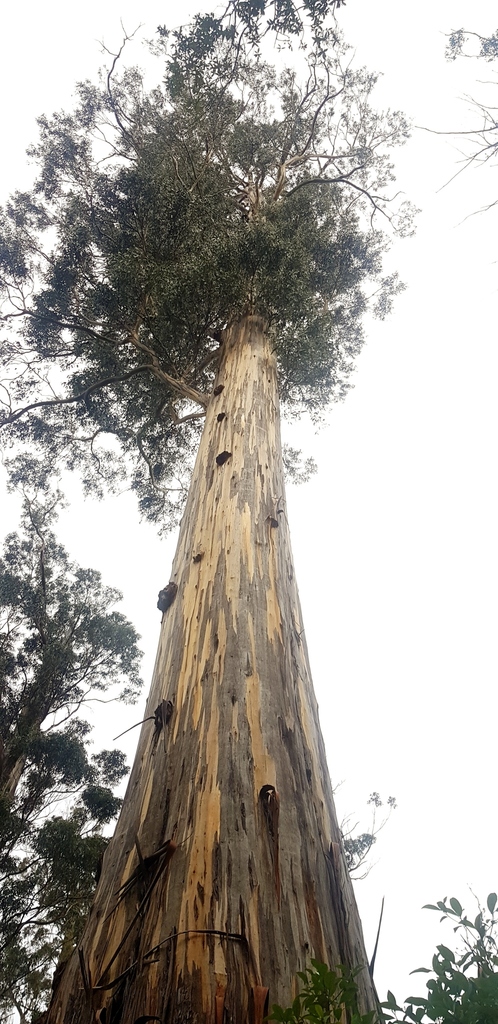
Blue gum is spectacular but demands honesty: it can grow 2-3m a year and top 45m, sheds bark and limbs, is highly flammable, and is classified invasive in parts of California and elsewhere. Plant it only on large properties in full sun, well away from structures. Or grow it as a coppiced shrub or potted juvenile for the silver foliage. Water young trees weekly; mature trees need nothing. Toxic to pets if eaten.
Key facts
- Native to Tasmania and coastal southern Victoria, Australia; one of the most widely planted trees on Earth for timber, pulp, and eucalyptus oil.
- One of the fastest-growing trees in cultivation. 2-3m a year when young, reaching 30-45m and sometimes more.
- Considered invasive and a serious fire hazard in parts of California, Spain, Portugal, and South Africa: its oil-rich litter burns intensely, a factor in the Oakland Hills fires. Check local rules before planting.
- The round silver-blue 'florist eucalyptus' leaves are juvenile foliage; mature trees switch to long, sickle-shaped green leaves. Coppicing keeps it juvenile.
Care requirements#
| Plant type | Outdoor evergreen tree; grown as coppiced shrub or annual pot plant in cold climates |
| Growing medium | Deep, well-drained soil; tolerates poor and slightly acidic soils |
| Light needs | Full sun, no exceptions |
| Watering (establishment) | Deep soak weekly for the first 1-2 summers |
| Watering (mature) | None: deep roots find their own water (and can dry out surrounding soil) |
| Temperature range | Best 10-30°C; established trees take brief frosts to about -5°C, saplings are frost-tender |
| Fertilizer | Little to none; low-phosphorus native feed only if soil is very poor |
| Soil pH | 5.5-7.0 |
| Spacing / siting | At least 15m from buildings, drains, and pools. Roots and falling limbs are real risks |
| Planting time | Spring, from small saplings. Small plants establish far better than big ones |
| Hardiness zone (outdoor) | USDA 9-11 |
| Toxicity | Toxic to cats, dogs, and horses if eaten (eucalyptol); keep pets from chewing leaves |
Growth & propagation#
| Mature size | 30-45m tall in open ground; can be coppiced to a 2-3m shrub indefinitely |
| Growth rate | Extreme: 2-3m per year when young |
| Propagation methods | Seed (needs light to germinate); cuttings are very difficult |
| Propagation difficulty | Easy from seed; sow shallow in spring |
| Coppicing | Cut to 30-45cm each early spring to keep juvenile silver foliage and shrub size |
| Pruning needs | Formative pruning young; mature trees drop limbs and need professional attention |
Common problems & troubleshooting#
| Symptom | Likely cause | Fix |
|---|---|---|
| Sapling snaps or leans badly in wind | Grew too fast for its roots. A blue gum classic, worsened by staking too rigidly | Plant small, stake loosely and briefly, and let the stem flex to build strength |
| Large limbs drop without warning | 'Summer branch drop', a known eucalyptus hazard, especially in drought | Never place seating or parking under a mature gum; have an arborist assess large trees |
| Leaves turn bronze-purple then brown after a cold snap | Frost damage, E. globulus is one of the less hardy gums | Grow hardier species (E. gunnii) in marginal climates, or coppice so regrowth comes from protected wood |
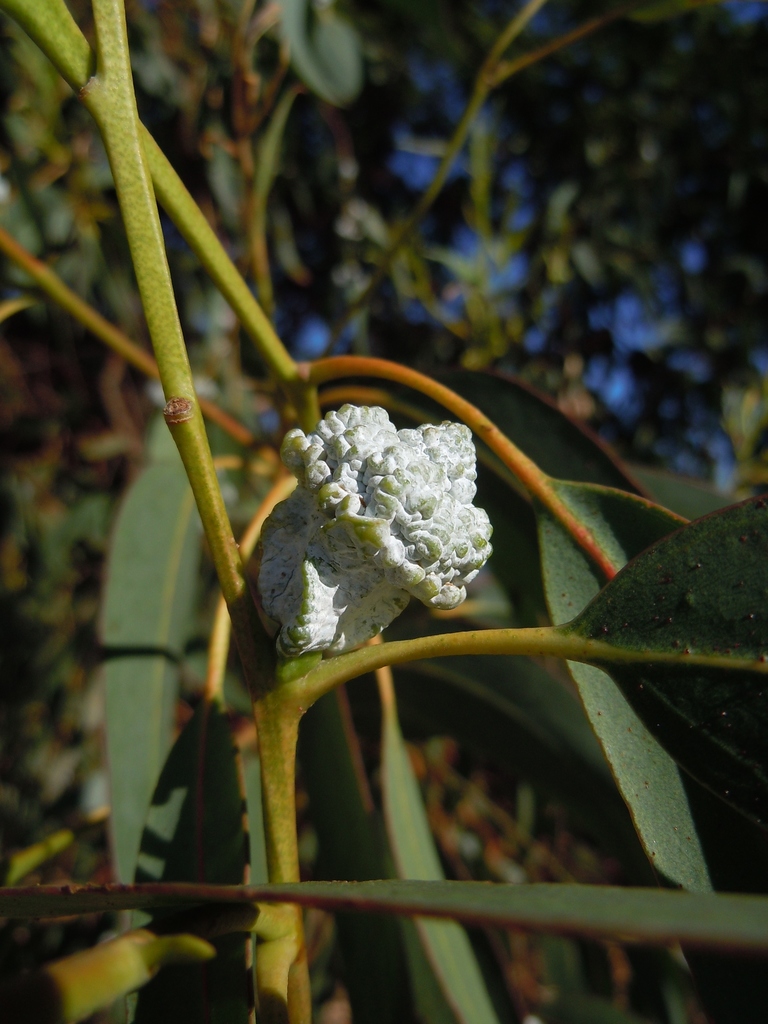
| Bubbly white residue and dieback on twigs | Eucalyptus longhorned borer or psyllids, common where gums are stressed abroad | Water deeply in drought to reduce stress; remove and destroy infested wood |
| Nothing grows under the tree | Dense root mat, heavy oil-rich litter, and allelopathic leaf chemicals | Accept mulch-only ground beneath it, or plant tough dry-shade natives at the drip line |
Establishment watering, then hands off
Sodate schedules the deep weekly soaks a young gum needs, then retires the reminders once the tree is on its own.
Seasonal care#
Varieties & cultivars#
| Variety | Distinguishing trait | Note |
|---|---|---|
| Eucalyptus globulus 'Compacta' | Multi-stemmed, slower form to ~10m | Still a big plant, 'compact' is relative |
| Eucalyptus gunnii (cider gum) | Much hardier (to -14°C), classic round silver leaves | The usual florist/garden substitute in the UK and cool climates |
| Eucalyptus gunnii 'Azura' | Compact, very blue, bred for gardens | Best small-garden choice if you just want the foliage |
Buying checklist#
- Buy small (under 1m). Big potted gums have coiled roots and fall over for years
- Check the rootball: circling roots at the pot base are a dealbreaker for a tree this fast
- Confirm the species: 'eucalyptus' pots are often unlabelled gunnii, globulus, or others with very different hardiness
- In fire-prone or invasive-listed areas, check local planting rules first
Pricing by region#
| Region | Price range | Typical unit | Basis |
|---|---|---|---|
| US | $15 – $45 | 1-5 gal pot | West-coast nursery retail; restricted/discouraged in some CA counties |
| UK | $15 – $50 | 2-10L pot | Garden centre (usually E. gunnii) |
| India | $0.5 – $3 | polybag sapling | Plantation/forestry nurseries |
| Australia | $4 – $25 | tubestock to 200mm pot | Native nursery retail. Cheapest as tubestock |
| Canada | $12 – $35 | potted annual/patio plant | Seasonal garden centre stock (not winter-hardy) |
USD figures are approximate conversions for comparison; switch the dropdown to see each region's actual local-currency listing price.
Often confused with#
Name confusion warning#
"Eucalyptus" covers 700+ species. Florist eucalyptus, hardy garden gums (E. gunnii), and giant timber blue gums (E. globulus) are different plants with wildly different sizes and hardiness. Know which species you are buying before it is 20 metres tall.
Where it's actually grown#
Australian native nurseries raise blue gum by the million as forestry tubestock; overseas supply comes from seed-raised plants in Californian, Spanish, and Indian plantation nurseries, while the cut-foliage trade grows coppiced gunnii and globulus in Portugal, Israel, and California.
Import & biosecurity restrictions#
| Region | Note |
|---|---|
| Australia | Native and unrestricted domestically; live plant imports into Australia are biosecurity-restricted as always. |
| US | Legal federally, but classified invasive in parts of coastal California, and several fire authorities discourage or restrict new plantings near structures. |
| UK | No restriction; E. globulus is borderline hardy, most gardeners grow E. gunnii instead. |
| India | Widely planted in forestry, but some states (e.g. Karnataka) have banned new eucalyptus plantations over groundwater depletion concerns. |
| Canada | CFIA rules apply to imports; grown only as a seasonal patio or greenhouse plant. |
Similar plants
Ranked in these guides
Did you know?
Frequently asked questions
Is eucalyptus invasive?
Outside Australia, yes in some regions, E. globulus is listed as invasive in parts of California, Spain, Portugal, and South Africa, and its oil-rich litter is a documented fire hazard. Check local guidance before planting.
Can I keep a eucalyptus small?
Yes. Coppice it (cut to 30-45cm) every spring and it stays a 2-3m shrub with the prized round silver juvenile leaves indefinitely.
Is eucalyptus safe for pets?
No. The leaves and oil are toxic to cats, dogs, and horses if eaten, causing drooling, vomiting, and weakness. Koalas are the exception, not the rule.
How fast does a blue gum grow?
Among the fastest trees in the world: 2-3m a year when young, reaching 30m+ within a couple of decades in good conditions.
How far from my house should I plant one?
At least 15m. Mature gums drop limbs and bark, their roots seek drains and dry out foundations, and in fire-prone areas defensible-space rules may require even more distance.